In a powerful display of technological maturity and strategic readiness, the People’s Liberation Army (PLA) recently demonstrated the precision strike capabilities of its PCL-181 155mm wheeled self-propelled howitzer in a high-altitude mountainous region under the Xinjiang Military Command. The live-fire exercise was not only a test of the system’s long-range lethality but a validation of its reliability in extreme operational environments marked by thin air, steep gradients, and frigid temperatures.
The PCL-181, developed by China’s defense industry heavyweight NORINCO, has long been a symbol of the PLA’s push toward digitally integrated, mobile artillery systems. This latest exercise, conducted in Western China’s rugged terrain, provided a real-world proving ground for the howitzer’s network-enabled firepower, reinforcing its operational effectiveness under stressors that would degrade most traditional artillery systems.
Cutting-Edge Design of the PCL-181
The PCL-181 is a 155mm L52-caliber wheeled self-propelled howitzer mounted on a 6×6 truck chassis, offering a blend of tactical mobility, high-speed maneuverability, and advanced fire control. Officially inducted into service in 2019, the howitzer embodies a shift from bulky, towed systems to digitally integrated, mobile warfare platforms capable of precision engagement in hybrid and highland combat scenarios.
Its fire control suite is fully digitized, incorporating satellite navigation, automated gun laying, and real-time battlefield communication systems. Capable of firing NATO-standard 155mm munitions, the PCL-181 supports an array of projectile types including:
- High-Explosive (HE)
- Base-Bleed (BB)
- Rocket-Assisted Projectiles (RAP)
- Precision-Guided Munitions (PGM), notably the GP6 and GP155 series
This arsenal enables target engagements at ranges exceeding 40 kilometers, even under low GPS signal conditions or reduced visibility—an increasingly vital attribute in modern electronic warfare theaters.
Field Performance Under Harsh Conditions
During the recent live-fire trial, the howitzers engaged multiple targets at varying elevations, relying on both onboard computers and external reconnaissance assets for targeting data. The exercise illustrated the system’s capacity to operate seamlessly in low-oxygen, high-altitude environments, where conventional artillery systems face serious limitations.
Despite challenges such as sub-zero temperatures and unforgiving terrain, the PCL-181 exhibited remarkable platform stability, accuracy, and rapid mobility. With a firing rate of 4–6 rounds per minute, the system used its semi-automatic loading mechanism to deliver synchronized fire missions across dispersed firebases.
What sets the PCL-181 apart is its exceptionally low response time: the system can deploy and fire in under three minutes, then relocate before enemy counter-battery fire can be launched. This agility makes it an ideal fit for shoot-and-scoot tactics often employed in peer-level conflicts.
Mobility and Strategic Deployment
One of the key advantages of the PCL-181 is its outstanding mobility. With a top speed of 90 km/h and a range of over 600 kilometers, the howitzer can be rapidly deployed across mountainous frontiers, coastal zones, and remote inland theaters. Compared to older, towed systems or heavier tracked SPHs, the PCL-181 is lighter, faster, and more logistically sustainable.
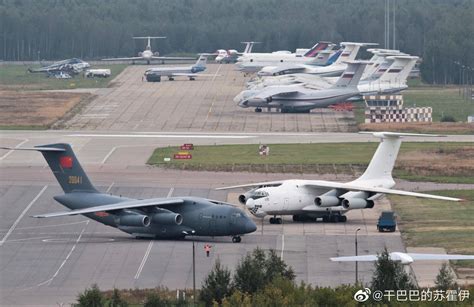
Its relatively compact configuration also enables airlift via China’s Y-20 military transport aircraft, expanding the PLA’s strategic mobility and allowing rapid force projection to remote or contested areas, including potential flashpoints.
Geopolitical and Tactical Relevance
The PLA’s decision to stage this demonstration in Xinjiang was no accident. The region’s proximity to contested border areas, particularly the Line of Actual Control (LAC) with India, underscores the tactical importance of the PCL-181 in China’s high-altitude military strategy. The 2020 Galwan Valley clashes were a stark reminder of the need for quick-deploying, high-precision artillery that can function without full logistical support in remote, elevated theaters.
The PCL-181 directly addresses key shortcomings exposed during those clashes. Its wheeled chassis allows it to be driven to rugged outposts, often unreachable by older systems. Once in position, its digitally assisted targeting ensures that any fire mission launched will have maximum impact with minimal setup time, an increasingly critical advantage in constrained mountain warfare.
Beyond the Indian frontier, the PCL-181’s versatility makes it equally relevant for China’s military posturing in the Taiwan Strait, the South China Sea, and along its southern and western borders. The howitzer is well-suited for roles in multi-domain joint operations, including integration with UAVs, satellite feeds, and real-time command-and-control (C2) networks.
Battlefield Integration and Network-Centric Warfare
The PLA is moving rapidly toward a doctrine of network-centric warfare, where integrated systems and real-time data flows replace manual fire missions and analog communications. The PCL-181 fits squarely into this paradigm.
Each battery is connected through encrypted digital links to reconnaissance drones, forward observers, and satellite assets, creating a sensor-to-shooter loop that is both fast and flexible. Once a target is identified, fire orders are transmitted in seconds to gunners who rely on onboard computers to adjust firing solutions, even while on the move.
This capability was fully employed during the exercise, where multiple fire platforms across disparate locations executed synchronized volleys with minimal human intervention. The howitzer’s digital backbone also allows post-mission data to be relayed instantly for battle damage assessment (BDA), feeding back into the mission cycle.
Strategic Implications and PLA Modernization
The performance of the PCL-181 in this exercise reinforces its status as a cornerstone of China’s artillery modernization strategy. It signals the PLA’s readiness to wage digitally enabled, rapid-response, long-range warfare in environments that once limited the effectiveness of conventional systems.
More broadly, the howitzer embodies the PLA’s shift toward smart warfighting platforms, where precision, speed, and survivability are prioritized over brute firepower. The PCL-181 is not just a weapon—it is a node in a broader information-driven warfighting architecture, capable of both initiating and supporting complex, joint-force campaigns.
In the face of growing regional competition and an increasingly contested Indo-Pacific theater, China’s ability to deploy digitally integrated, high-performance artillery across multiple strategic axes grants it a significant operational edge. Whether in mountain warfare scenarios, island defense postures, or border reinforcement missions, the PCL-181’s versatility, agility, and firepower are aligned with the PLA’s doctrine of informationized warfare and regional deterrence.
Conclusion: A Howitzer Shaped for Modern Conflict
The high-altitude performance of the PCL-181 during this exercise is not merely a technological showcase—it is a message. China is preparing its ground forces for intense, fast-moving, information-centric conflict across diverse geographies. With its precision strike capability, digital integration, and unmatched mobility, the PCL-181 howitzer is an instrument of both tactical excellence and strategic influence.
As highland and hybrid warfare continue to define the fault lines of 21st-century conflict, systems like the PCL-181 will play a decisive role in shaping operational outcomes and geopolitical balances. Its emergence marks a new era in artillery warfare—one where mobility, precision, and digital synergy determine not just survivability, but dominance.