The U.S. Army has executed a landmark demonstration of long-range rotary-wing combat power, flying more than 1,300 miles across the Korean Peninsula during Exercise Talon Reach, a high-intensity readiness operation designed to validate aviation capabilities under contested conditions. Conducted on March 12, 2026, the exercise showcased how modern Army aviation can project force, sustain operations, and deliver precision strikes far beyond traditional range limitations.
At the center of this demonstration was the 2nd Combat Aviation Brigade, operating from Camp Humphreys. The mission was not a simple endurance test—it was a complex, synchronized, multi-domain operation that integrated attack, transport, medical evacuation, and sustainment elements across extended distances. The objective was clear: prove that rotary-wing assets can maintain lethality and operational tempo even after long-range deployment into a high-threat environment.
A New Era of Long-Range Rotary-Wing Warfare
The scale and ambition of Talon Reach signal a decisive shift in how the U.S. Army approaches aviation warfare. Traditionally, helicopters have been constrained by range and dependence on forward bases. This exercise shattered that limitation by demonstrating a distributed, resilient operational model that allows aviation units to strike deep while remaining mobile and unpredictable.
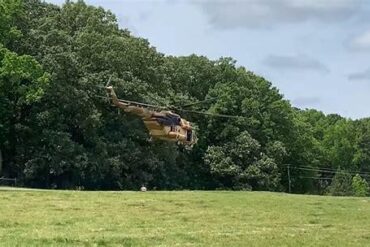
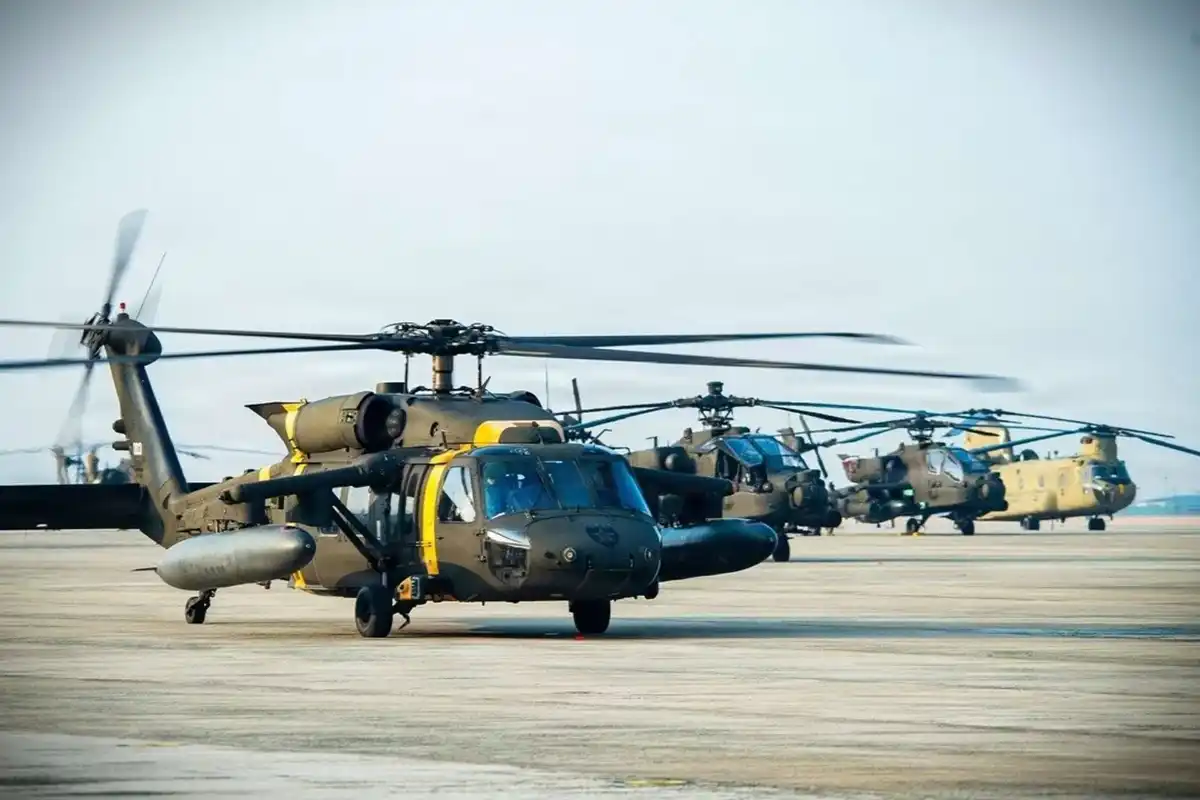
The operation combined multiple aircraft platforms, including AH-64 Apache attack helicopters, UH-60 Black Hawks, and CH-47 Chinooks, alongside unmanned systems and command-and-control units from the 4th Battalion, 2nd Aviation Regiment. Each asset played a specific role in creating a cohesive and adaptive combat system capable of operating across vast distances.
Rather than following a linear mission profile, the brigade executed simultaneous operations across the battlespace, stressing coordination, communication, and logistical networks in real time. This approach reflects the evolving doctrine of multi-domain operations, where speed, flexibility, and synchronization are critical to battlefield success.
Integrated Aviation Power: Precision, Mobility, and Sustainment
The effectiveness of the exercise rested on the seamless integration of diverse aviation capabilities. The AH-64 Apache served as the spearhead of offensive operations, delivering precision fires against simulated high-value targets using advanced targeting systems. Its ability to engage threats after a prolonged maneuver underscores a critical advancement: sustained lethality at range.
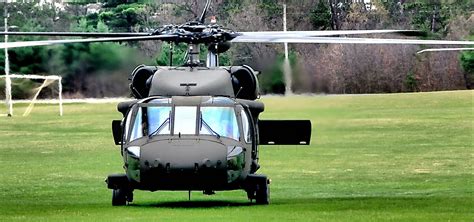
Supporting this offensive edge, the UH-60 Black Hawk provided essential mobility and versatility. It transported troops, facilitated command movement, and executed MEDEVAC missions, ensuring that operational momentum was never compromised by casualties or logistical disruptions.
Meanwhile, the CH-47 Chinook proved indispensable in maintaining operational endurance. Its heavy-lift capacity enabled the transport of fuel, equipment, and personnel, effectively extending the reach of the entire formation. This triad of platforms created a balanced ecosystem where strike capability, mobility, and sustainment reinforced one another.
Distributed Sustainment: The Backbone of Extended Reach
One of the most decisive elements of Talon Reach was the implementation of a distributed sustainment network. The brigade established seven forward arming and refueling points (FARPs) across the peninsula, including an advanced eight-point configuration that allowed multiple aircraft to refuel simultaneously.
This network minimized turnaround times and eliminated reliance on fixed infrastructure, a critical advantage in a contested environment where static bases are vulnerable to missile or artillery strikes. The result was a continuous operational tempo with zero reported delays, a remarkable achievement given the scale and complexity of the mission.
By decentralizing logistics, the Army demonstrated a resilient sustainment model capable of supporting high-intensity aviation operations even under persistent threat conditions. This capability is particularly vital in regions like the Korean Peninsula, where geography and adversary proximity compress decision-making timelines.
Strategic Implications for the Korean Theater
The ability to conduct a 1,300-mile rotary-wing mission carries profound strategic implications. In a theater defined by dense air defenses, rugged terrain, and limited warning time, the capacity to rapidly reposition forces introduces a new layer of operational unpredictability.
This unpredictability complicates adversary targeting and reduces the effectiveness of preemptive strikes. Instead of relying on fixed bases, U.S. forces can disperse, maneuver, and mass combat power dynamically, striking where and when it is least expected.
Moreover, this capability enhances the ability to conduct deep attacks, rapid air assaults, and the seizure of critical terrain, including coastal and island objectives. It effectively transforms helicopters from short-range tactical assets into strategic instruments of power projection.
From Concept to Operational Reality
Talon Reach represents more than a successful exercise—it marks the transition of long-range Army aviation from theoretical concept to proven operational capability. By integrating extended reach, distributed sustainment, and synchronized multi-mission execution, the U.S. Army has redefined what combat aviation brigades can achieve.
The exercise also aligns with broader strategic priorities in the Indo-Pacific, where distance and dispersion dominate military planning. In such an environment, the ability to project and sustain combat power across vast areas is not just advantageous—it is essential.
The demonstration sends a clear message: U.S. Army aviation can operate at scale, at distance, and under threat without sacrificing effectiveness. This capability strengthens deterrence by presenting adversaries with a highly mobile, resilient force that is difficult to target and capable of rapid escalation.
Redefining the Future of Combat Aviation
The success of the 2nd Combat Aviation Brigade during Talon Reach underscores a broader transformation in military aviation doctrine. The emphasis is no longer solely on firepower, but on the integration of reach, survivability, and sustainment into a unified operational framework.
This evolution reflects the realities of modern warfare, where adversaries possess advanced anti-access and area-denial capabilities. To overcome these challenges, forces must be able to operate independently, adapt quickly, and sustain themselves across dispersed environments.
By proving that helicopters can fly extended distances, execute complex missions, and maintain combat effectiveness, the U.S. Army has set a new benchmark for rotary-wing operations. The implications extend beyond the Korean Peninsula, shaping how future conflicts may be fought across the globe.
In a strategic landscape defined by uncertainty and rapid change, long-range rotary-wing strike capability emerges as a decisive advantage, ensuring that U.S. forces remain agile, lethal, and ready to respond wherever the mission demands.