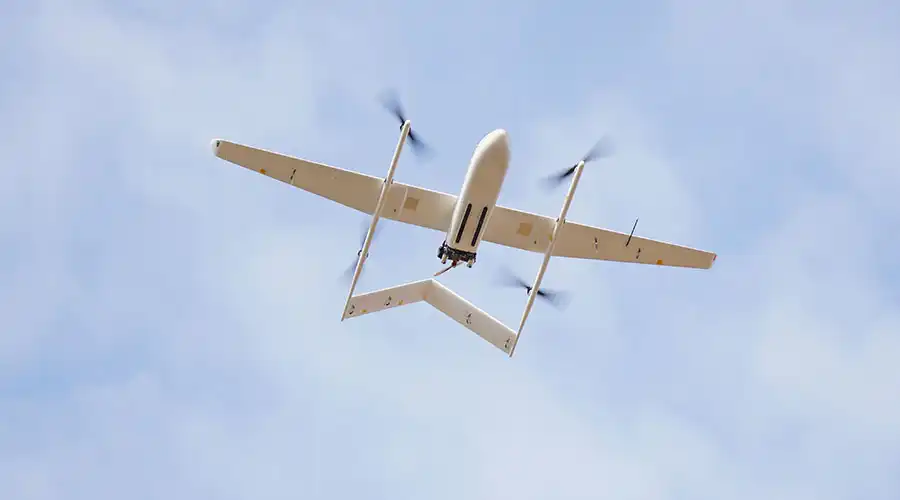
So, you’ve got your drone ready for takeoff and you’re eager to see the world from a new angle. But before you send it flying, there’s one key factor you need to know: how high your drone can go. Legally, drone flights have a set altitude limit. In the United States, as well as many other countries, the law restricts drone flights to a maximum of 400 feet above ground level. While drones could technically reach altitudes as high as 10 kilometers (33,000 feet), practical factors like battery life and controller range keep them grounded much lower. Let’s take a closer look at altitude regulations, how they vary across regions, and what the highest-flying drones can do.
FAA Regulations on Drone Altitude
FAA regulations play a big role in determining how high drones can fly safely. The Federal Aviation Administration (FAA) enforces these rules to keep things safe in the sky. The rules differ for recreational and commercial drone pilots, so let’s break them down.
Are there different rules for professionals and hobbyists?
- Recreational drone pilots: The FAA Reauthorization Act of 2018 made some big changes. While guidelines were once somewhat flexible, now, pilots must stick to strict rules. Recreational flights must stay below 400 feet in uncontrolled airspace. In controlled airspace, the limit is still 400 feet, with no exceptions or waivers. So, if you’re flying for fun, the altitude limit is clear: 400 feet, period.
- Commercial drone pilots: Licensed under Part 107, commercial pilots can fly above 400 feet if they’re operating near a structure. This is because certain jobs—like tower inspections or industrial checks—require higher altitudes. The idea is that manned aircraft will stay clear of these structures, allowing drones to fly higher safely. But commercial pilots need to know how to handle these situations to avoid accidents.
Important Note: The 400-foot rule refers to altitude above the ground, not from the drone’s takeoff point. So, if you’re launching from a building 100 feet tall, you’re still limited to 400 feet above the ground. Essentially, this means you can only fly 300 feet higher than your launch point.
What happens if you exceed 400 feet?
Flying above the legal altitude limit can lead to serious consequences. The FAA enforces these rules to protect everyone in the air. If you’re caught flying too high without authorization, you could face fines, penalties, or legal action. It’s vital to follow the rules and fly responsibly.
How high can you fly at night?
When flying a drone at night, the same 400-foot limit applies. However, there are some additional safety measures. Drones flying after dark must have anti-collision lights visible from at least three statute miles. These lights help others spot the drone and avoid collisions. Commercial pilots who want to fly at night must also get special FAA waivers. Proving their expertise and understanding of safety protocols is crucial. So, if you plan a nighttime flight, keep your drone below the 400-foot limit and make sure it’s lit up for visibility.
How high can a drone fly in different countries?
Different countries have different rules when it comes to drone altitude limits. Here’s a quick rundown of some countries and their legal drone height limits:
- Argentina: 400 feet (120 meters)
- Australia: 400 feet (120 meters)
- Brazil: 400 feet (120 meters)
- Canada: 400 feet (120 meters)
- China: 400 feet (120 meters)
- France: 492 feet (150 meters)
- Germany: 328 feet (100 meters)
- India: 400 feet (120 meters)
- Indonesia: 500 feet (150 meters)
- Italy: 492 feet (150 meters)
- Japan: 492 feet (150 meters)
- Mexico: 492 feet (150 meters)
- Netherlands: 400 feet (120 meters)
- Poland: 492 feet (150 meters)
- Russia: 492 feet (150 meters)
- South Africa: 400 feet (120 meters)
- Spain: 400 feet (120 meters)
- Turkey: 400 feet (120 meters)
- United Kingdom: 400 feet (120 meters)
- Panama: 400 feet (120 meters)
These limits can change, so it’s crucial to stay up-to-date with local regulations wherever you fly.
How high can a drone physically fly?
Now, let’s look at how high a drone can fly in an ideal world—without any legal restrictions. Drones can physically reach altitudes of about 10 kilometers (33,000 feet). This is because as the air gets thinner, it’s harder for the drone to stay airborne. The propellers have less air to push against, making it tough to maintain lift. But pushing your drone to these heights is dangerous and not recommended. Always fly within the legal altitude limits for safety.
Key Factors Affecting Drone Altitude:
- Absolute Ceiling: This is the highest altitude a drone can fly while maintaining level flight. When the thrust from the propellers equals the drag from the air, the drone will stop climbing. This is usually too dangerous to test and is rarely mentioned by manufacturers.
- Max Service Ceiling Above Sea Level: Also known as the maximum takeoff altitude, this is the highest altitude at which the drone can still climb, but at a slower rate (around 100 feet per minute). Drone makers like DJI provide this number to help pilots know the highest altitude they should attempt for safe flying.
- Maximum Range: If the drone’s signal range is shorter than its ability to reach higher altitudes, the altitude limit will be set by the range. The higher you go, the less distance the drone can maintain a stable connection with the controller.
What’s the Maximum Altitude of Different Drone Types?
Now that we’ve covered the legal side, let’s dive into the technical side and explore how high different types of drones can fly.
Toy Drones
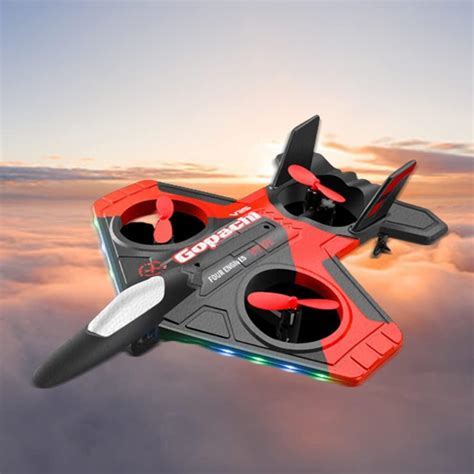
Let’s start with the small but mighty toy drones. While they might be tiny, they’re still capable of reaching some impressive heights. On average, toy drones can fly up to 100 to 150 feet, giving you a fun taste of aerial piloting without leaving your yard.
Recreational and Hobbyist Drones
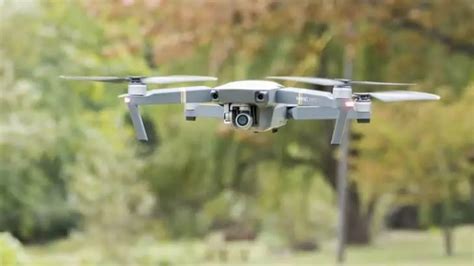
These drones are a favorite among enthusiasts who enjoy the thrill of flying. Typically designed for personal use, they come with altitude limits to ensure safety. Recreational drones can generally reach altitudes of up to 6,000 feet above ground level. This means you can capture stunning aerial shots and experience the thrill of high-flying within this range.
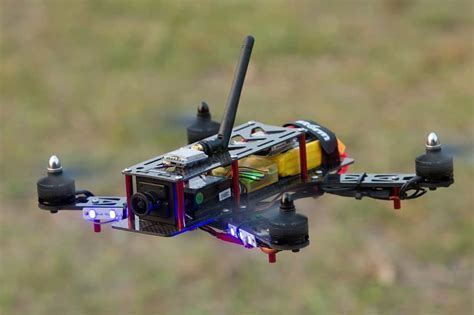
Racing Drones
For those who crave speed, racing drones offer an exciting ride. Built for agility and high speeds, racing drones usually have a lower maximum altitude than others. They tend to operate within 100 to 200 feet above ground level, helping pilots maintain control while speeding through tight race courses.
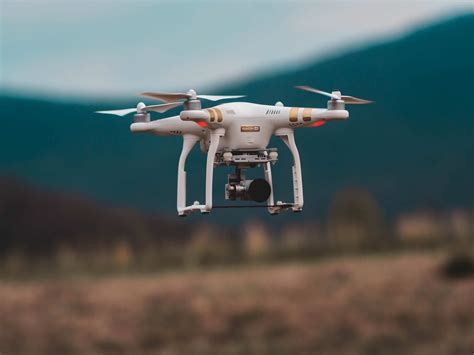
Commercial Drones
Commercial drones are designed for tough jobs like aerial photography, surveying, and mapping. They can fly at much higher altitudes than recreational drones. The highest-flying commercial drones can reach altitudes over 22,000 feet! These powerful machines are built to capture breathtaking footage and gather important data from impressive heights.
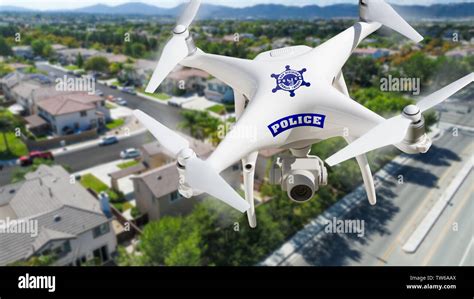
Police and Government Drones
Police and government agencies use drones for tasks like surveillance, search and rescue, and crowd control. While the altitude limits depend on local regulations, these drones generally operate at altitudes up to 11,200 feet. This allows law enforcement to do their jobs efficiently while keeping the public safe.
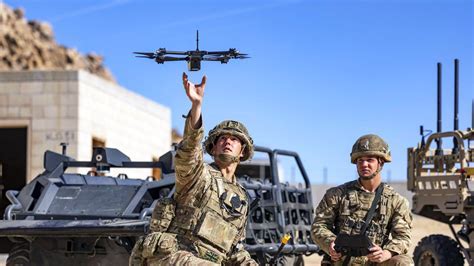
Military Drones
Military drones are built for surveillance, reconnaissance, and even combat missions. These drones are capable of reaching extreme heights, often soaring beyond 50,000 feet. With their advanced technology, military drones operate in the same altitudes as conventional aircraft, making them essential for strategic operations and intelligence gathering.
What Makes a Drone Fly Higher?
Let’s explore the factors that influence how high a drone can fly.
Drone Specifications and Technological Advancements
The design of a drone, its motor power, and the efficiency of its propellers all play a huge role in determining its maximum altitude. Aerodynamic designs, powerful motors, and advanced propellers give drones the lift they need to climb higher. Along with these, altitude control systems and GPS technology ensure stability, allowing drones to soar confidently at greater heights.
Battery Life and Flight Duration
Battery life is crucial when it comes to flying higher. A drone with a larger battery can stay in the air longer and reach higher altitudes before needing a recharge. The longer the battery lasts, the higher the drone can climb, as it won’t have to descend too soon.
Weight Limitations and Payload Capacity
Every drone has a maximum weight it can carry. Adding heavy equipment, like high-resolution cameras, can reduce the maximum altitude. Striking the right balance between payload capacity and flight performance is key to reaching that optimal altitude.
Transmission & Radio Frequency
Drones communicate with their controllers using radio signals. However, as a drone climbs, the distance between it and the controller increases, which can weaken the signal. Most consumer drones have a range of a few kilometers, so if you’re planning to fly high, keep this limitation in mind.
Environmental Factors
Weather plays a role in how high a drone can fly. Temperature, humidity, and air pressure can all affect lift. Warmer temperatures or high humidity can decrease air density, making it harder for a drone to stay afloat. Wind conditions can also make it harder to keep the drone stable at higher altitudes.
Best High Altitude Drone for Surveillance in 2024
If you’re looking for a drone that can reach impressive heights for surveillance, here’s a guide to some of the top options.
JOUAV CW-15 VTOL – Highest Altitude Drone with Real-time Camera (6500 Meters)
The JOUAV CW-15 VTOL is one of the highest-flying drones available, with a max takeoff altitude of 4,500 meters and a ceiling of 6,500 meters. This drone features an electric motor and comes with a variety of powerful features, including a video transmission range of up to 50 kilometers and a 3-kilogram payload capacity. The MG-120E dual gimbal camera delivers crystal-clear footage with zoom capabilities, and AI recognition and tracking help ensure precision. Its vertical takeoff and landing capabilities, along with obstacle avoidance systems, make it a reliable choice for any surveillance task.
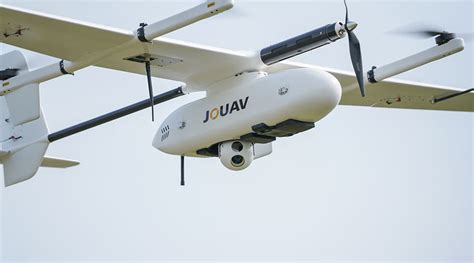
Max. Takeoff Altitude/Ceiling: 4500m/6500m
Video Transmission Range: 50km
Payload: 3kg
Endurance: 180min
Cruising Speed: 61.2km/h
JOUAV CW-25 VTOL – High-Altitude Long-Endurance Drone (6500 Meters)
The JOUAV CW-25 VTOL is designed for long-range surveillance with a max takeoff altitude of 4,500 meters and a ceiling of 6,500 meters. Powered by an EFI gasoline engine, it offers extended flight times of 330 to 360 minutes. Its video transmission range stretches up to 100 kilometers, ensuring clear connections over long distances. The dual gimbal camera and obstacle avoidance technology further enhance its reliability. With the ability to take off and land vertically on moving ships, the CW-25 is perfect for versatile, high-altitude surveillance operations.
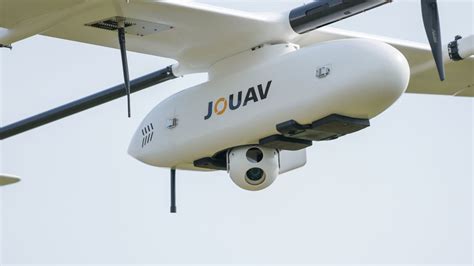
Max. Takeoff Altitude/Ceiling: 4500m/6500m
Video Transmission Range: 100km
Payload: 6kg
Endurance: 330-360min
Cruising Speed: 82.8km/h
JOUAV CW-30E VTOL – High-Altitude Long-Range Drone (6000 Meters)
For those looking for a high-altitude, long-range drone, the JOUAV CW-30E stands out. With a maximum takeoff altitude of 3500 meters and a ceiling of 6000 meters, this drone is designed for impressive heights. It has a payload capacity of 8 kilograms and can fly for up to 480 minutes, making it perfect for extended surveillance flights while carrying heavier gear. The MG-120E dual gimbal camera, with AI recognition and tracking, ensures sharp and detailed imagery. Its video transmission range of up to 200 kilometers keeps you connected, even at long distances. The drone also features obstacle avoidance and can take off and land vertically on moving ships, making it highly reliable for tough missions.
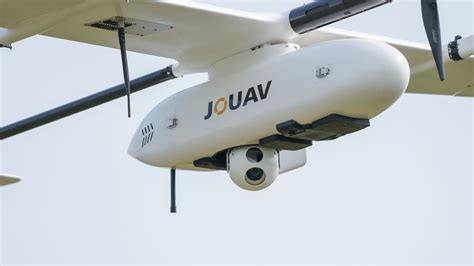
Max. Takeoff altitude/Ceiling: 3500m/6000m
Video transmission range: 200km
Payload: 8kg
Endurance: 480min
Cruising speed: 90km/h
JOUAV PH-7E – Highest Flying Quadcopter with 1K Thermal Camera (5000 Meters)
If you prefer the versatility of a quadcopter, the JOUAV PH-7E is the highest-flying option. With a maximum takeoff altitude of 5000 meters, this lightweight drone punches well above its weight. It’s equipped with a 1K thermal camera that excels in capturing heat signatures, offering valuable insights. The drone’s video transmission range extends up to 15km, ensuring you stay connected. With 21TOPS computing power, it enables features like power defect and human face recognition.
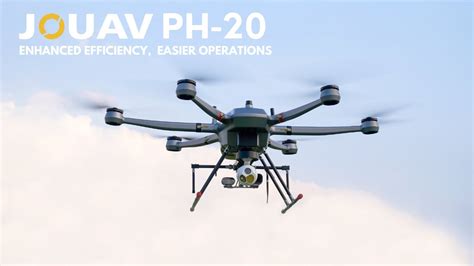
Max. Takeoff altitude: 5000m
Video transmission range: 15km
Payload: 3kg
Endurance: 63min
Cruising speed: 72km/h (sport mode, horizontal/no wind)
FAQ
Can a drone fly 20,000 feet?
Commercial drones today can reach altitudes of up to 20,000 feet. However, the exact altitude depends on the specific drone model, so it’s important to check the manufacturer’s specifications.
Can a drone fly 40,000 feet?
Most civilian and commercial drones can’t reach altitudes as high as 40,000 feet. This altitude range is typically reserved for military-grade drones, designed for specialized tasks, and can often exceed 50,000 feet. However, specific models may vary in their capabilities.
Who is responsible for making sure a drone does not fly too high?
The responsibility for keeping a drone from flying too high primarily falls on the operator and relevant aviation authorities. Here’s a breakdown of who plays a role in ensuring compliance:
- Drone Operator: The operator must adhere to local regulations on flight altitude limits, which are often enforced with geofencing software that restricts flight in certain areas.
- Civil Aviation Authority: Regulatory bodies like the FAA in the U.S. or CAA in the UK set and enforce altitude regulations for drone operations.
- Geofencing and Software: Many drones come with geofencing features to restrict their flight altitude and prevent entry into restricted airspace.
- Air Traffic Control: If a drone poses a risk to manned aircraft, air traffic control may intervene to ensure safe separation between aircraft and drones.
Ignoring these restrictions can lead to safety risks and legal consequences.
Can drones fly above 400 feet?
Under most circumstances, consumer drones cannot exceed 400 feet above ground level, as mandated by regulatory authorities like the FAA. However, exceptions exist, such as when operators receive special waivers for specific purposes or fly in controlled airspace. Operators must always comply with their jurisdiction’s regulations.
How do drones determine altitude?
Drones typically measure their altitude using sensors like altimeters and barometric pressure sensors in the flight controller. These sensors detect atmospheric pressure changes as the drone moves up or down. GPS technology can also be used to track altitude by receiving satellite signals. Radar sensors can provide additional altitude data by measuring the distance from the drone to the ground or nearby objects.
What is the best altitude for a drone?
The optimal altitude depends on the purpose of the flight. For recreational and aerial photography flights, altitudes of around 100-200 feet provide excellent results for capturing detailed images. For applications like aerial mapping, higher altitudes are better suited to cover larger areas.
How far can a drone fly up in the air?
The maximum altitude a drone can reach depends on factors like battery life, drone type, and environmental conditions. While consumer drones typically fly within a few kilometers, professional drones designed for specific tasks can reach much higher altitudes. Keep in mind that battery limitations also affect the drone’s maximum altitude, as it needs enough power to return safely.
What Does a Drone See from 400 Feet?
From 400 feet, a drone provides a stunning aerial perspective. The ground appears smaller, offering a broad view of landscapes, buildings, and events. This altitude is perfect for wide-angle shots, capturing panoramic vistas, and showcasing the scale of large areas. However, operators should always respect privacy laws and follow local regulations to ensure a safe and responsible flying experience.