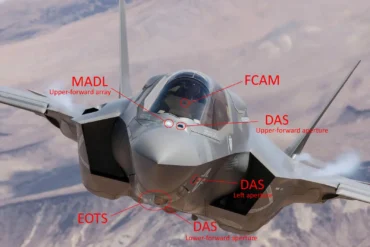
The Electro-Optical Targeting System (EOTS) on the F-35 Lightning II is a transformative leap in sensor fusion technology, enabling this fifth-generation stealth fighter to see, track, and engage with unprecedented accuracy across multiple mission types. Unlike conventional targeting pods bolted onto legacy aircraft, EOTS is seamlessly embedded beneath the fuselage of the F-35, forming a low-observable, integrated suite that enhances both survivability and lethality in hostile environments.
Developed by Lockheed Martin, EOTS is not merely a high-end camera—it is a multifunction passive sensor built for high-speed, high-risk operations, capable of both air-to-air tracking and air-to-ground strike with surgical precision. Its evolution through the Block 4 upgrade and eventual replacement by Advanced EOTS reflects the continuous refinement of the F-35 as the apex platform of modern air dominance.

Integrated Design: A Fusion of Optics and Stealth
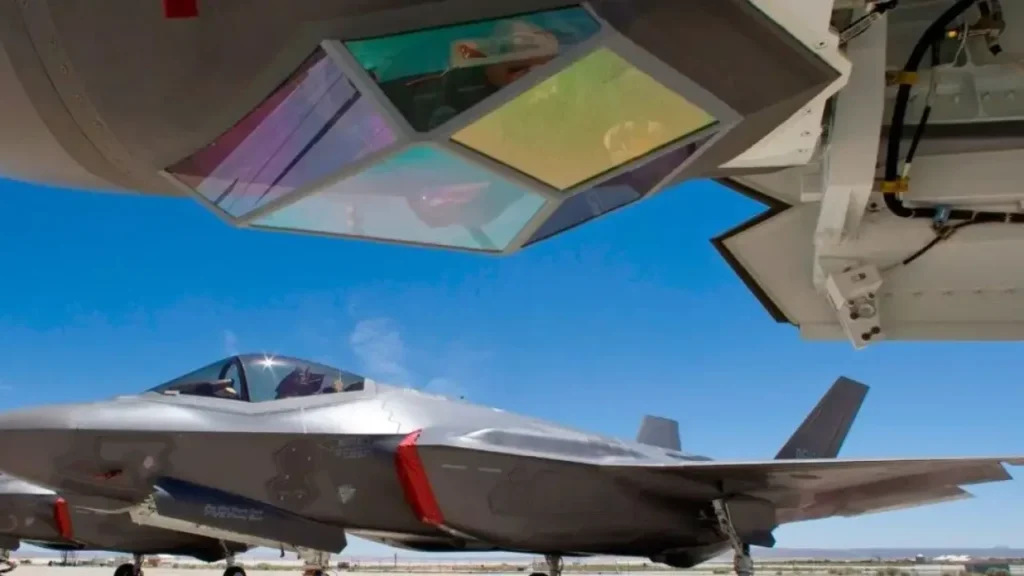
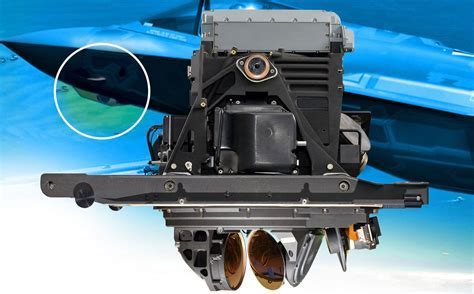
Unlike externally mounted targeting pods that protrude and compromise radar cross-section (RCS), the F-35’s EOTS is fully embedded into the aircraft’s underside, below the nose cone. It features a seven-piece sapphire window, chosen for its resistance to extreme temperatures encountered during supersonic flight, as well as its optical clarity and low radar reflectivity. The sapphire window is not merely cosmetic; it is part of a highly complex optical path, using a series of reflections and refractions to fold and direct light efficiently within a compact space—a feat necessary to preserve the F-35’s internal space constraints.
Multispectral Capabilities and Tactical Versatility
The core strength of the EOTS lies in its multispectral sensing capabilities. It combines:
- Forward-Looking Infrared (FLIR) for thermal imaging
- Infrared Search and Track (IRST) for passive airspace monitoring
- Visible-light HDTV cameras
- Laser rangefinder and target designator
By integrating both FLIR and IRST, the F-35 is the first fighter in the world to deploy such a system natively. This means it can perform long-range passive detection of enemy aircraft—particularly useful when the aircraft operates in radar-silent mode to evade detection.
The passive nature of the EOTS gives the F-35 a crucial advantage in stealth operations. Since it does not emit energy (unlike radar), it reduces the risk of detection by enemy electronic support measures (ESM), making it an ideal tool for first-day strike missions in heavily contested airspace.
Advanced EOTS and the Block 4 Leap
The next-generation Advanced EOTS, introduced under the Block 4 configuration, brings a number of significant upgrades aimed at enhancing target acquisition and situational awareness:
- Short-Wave Infrared (SWIR) support for penetrating battlefield obscurants like smoke and fog
- High-Definition TV resolution for daylight target identification
- Enhanced image detector resolution to increase detection ranges and fidelity
- 15 replaceable Line-Replaceable Components (LRCs) enabling quick maintenance and modular upgrades
This modernization is not cosmetic. By improving resolution and spectral diversity, the Advanced EOTS dramatically enhances the pilot’s ability to distinguish targets from background clutter, even under poor visibility or countermeasure conditions.
Moreover, the upgraded EOTS ensures seamless integration with other onboard systems such as the AN/APG-81 AESA radar and EODAS (Electro-Optical Distributed Aperture System). This tight sensor fusion allows for multi-layered target triangulation, providing targeting solutions not just faster, but with improved confidence in ID classification—essential in rules-of-engagement-constrained environments.
Combat Application: From Stealth Tracking to Precision Strike
In combat, the EOTS is the lynchpin of the F-35’s strike mission architecture. Whether tracking fast-moving aerial threats or designating fixed ground targets, it supports multi-domain lethality.
Air-to-Air Superiority
In beyond-visual-range (BVR) scenarios, the EOTS complements radar by passively detecting enemy aircraft without broadcasting presence. This is especially valuable when hunting stealthy adversaries or engaging in electronic warfare-contested environments.
When paired with helmet-mounted display systems (HMDS), the EOTS projects real-time targeting data into the pilot’s field of view, enabling off-boresight targeting and high-angle engagements without the need to maneuver the aircraft nose.
Air-to-Ground Precision Engagement
For ground strikes, EOTS provides high-magnification infrared imaging, crucial for positive target identification (PID) before weapons release. With laser designation, it guides munitions such as:
- GBU-12 Paveway II
- GBU-31 JDAM (Joint Direct Attack Munition)
- AGM-158 JASSM (Joint Air-to-Surface Standoff Missile)

Its ability to generate precise geolocation coordinates in real time facilitates dynamic targeting, allowing pilots to react to fast-emerging threats or target-of-opportunity scenarios. This makes the F-35 suitable not only for pre-planned sorties but also for close air support (CAS) in fluid, high-tempo operations.
Tactical Synergy and Multi-Aircraft Operations
An often-overlooked feature of the EOTS is its role in multi-platform coordination. When multiple F-35s operate in formation, EOTS units can cooperate to conduct optical triangulation using dual EODAS feeds, enhancing rangefinding accuracy and building a three-dimensional threat picture.
This “optical stereo vision” effect increases targeting confidence and allows for simultaneous multi-angle attacks—a tactic particularly useful against hardened or mobile targets. EOTS data is seamlessly fed into the Mission Systems Processor, which synthesizes inputs from all aircraft in the network.

Interoperability with F-35 Sensor Architecture
The F-35’s operational edge lies in its sensor fusion engine, which combines:
- AN/APG-81 radar for long-range active detection
- EODAS 360-degree infrared coverage
- ASQ-239 electronic warfare suite for detection, deception, and countermeasures
- EOTS for passive target identification and precision guidance
Each sensor fills a specific gap. For instance, while the AESA radar detects threats at distance, the EOTS refines the picture at closer ranges. This layered approach ensures that the F-35 never relies on a single sensor modality, making it resilient in jamming-heavy battlefields and anti-access/area-denial (A2/AD) environments.
2025 and Beyond: The Future of EOTS
The Lot 17 F-35s, scheduled for production in 2025, will debut the latest EOTS variant with improved multi-target tracking, enhanced resistance to IR countermeasures, and a more modular housing designed for future upgrades. One experimental enhancement includes testing new stealth coatings over the EOTS window to reduce maintenance needs and further minimize radar signature.
This trajectory underscores how the EOTS is not a static feature but a continuously evolving subsystem, with each iteration tuned for the complexities of next-generation combat scenarios. As adversaries advance their own stealth and electronic warfare platforms, the importance of multi-sensor passive targeting will only grow, ensuring EOTS remains a cornerstone of the F-35’s dominance.
Conclusion
The F-35’s Electro-Optical Targeting System (EOTS) exemplifies the convergence of stealth, sensors, and smart warfare. It is not merely an eye for the aircraft—it is the optical core of its multi-domain lethality, enabling silent observation, real-time coordination, and pinpoint destruction in the most contested airspaces on Earth. Through continual upgrades like the Advanced EOTS and its integration into broader sensor ecosystems, it ensures the F-35 retains its edge well into the era of peer adversary competition.
FAQ
What makes the EOTS different from traditional targeting pods?
Unlike legacy targeting pods that are externally mounted and compromise stealth, the F-35’s EOTS is fully embedded into the airframe. This preserves the aircraft’s low observable profile while offering superior multispectral imaging and passive tracking capabilities integrated directly with the fighter’s mission systems.
How does EOTS improve air-to-air combat effectiveness?
EOTS enhances air-to-air engagements through passive detection using infrared search and track (IRST), allowing it to silently identify enemy aircraft without revealing its position. Its integration with the helmet-mounted display and radar systems provides pilots with high-fidelity targeting information even during high-angle, off-boresight scenarios.
Is the EOTS being upgraded in future F-35 models?
Yes, the Advanced EOTS, part of the Block 4 upgrade, introduces short-wave IR imaging, HD video resolution, and improved modular maintenance. The Lot 17 F-35s in 2025 will feature this advanced system with improved stealth coatings and expanded target tracking capability, reinforcing the jet’s supremacy in modern air warfare.