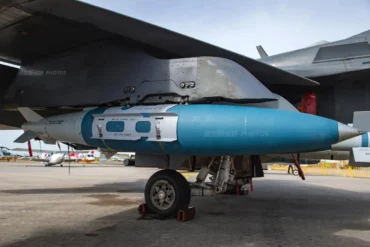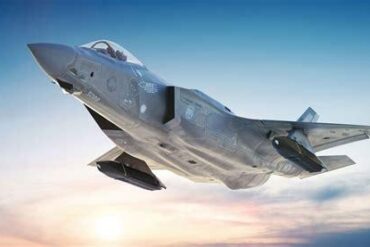
The F-35 Lightning II, developed by Lockheed Martin, represents the pinnacle of fifth-generation multi-role stealth fighter technology. Central to its air dominance and survivability is its Infrared Search and Track (IRST) capability, seamlessly integrated into its advanced sensor suite. Far from being just another sensor, the F-35’s IRST—anchored in the AN/AAQ-40 Electro-Optical Targeting System (EOTS)—marks a dramatic evolution in how aircraft detect, track, and engage targets in complex threat environments.
This article explores in detail the design, function, and battlefield advantages of the IRST capability in the F-35, its synergy with other onboard systems, and the way it sets a new benchmark in multi-spectral sensor fusion.
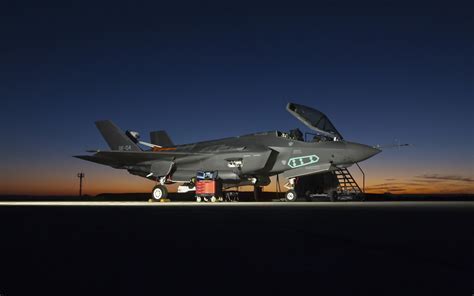
Electro-Optical Targeting System (EOTS): The Core of F-35’s IRST
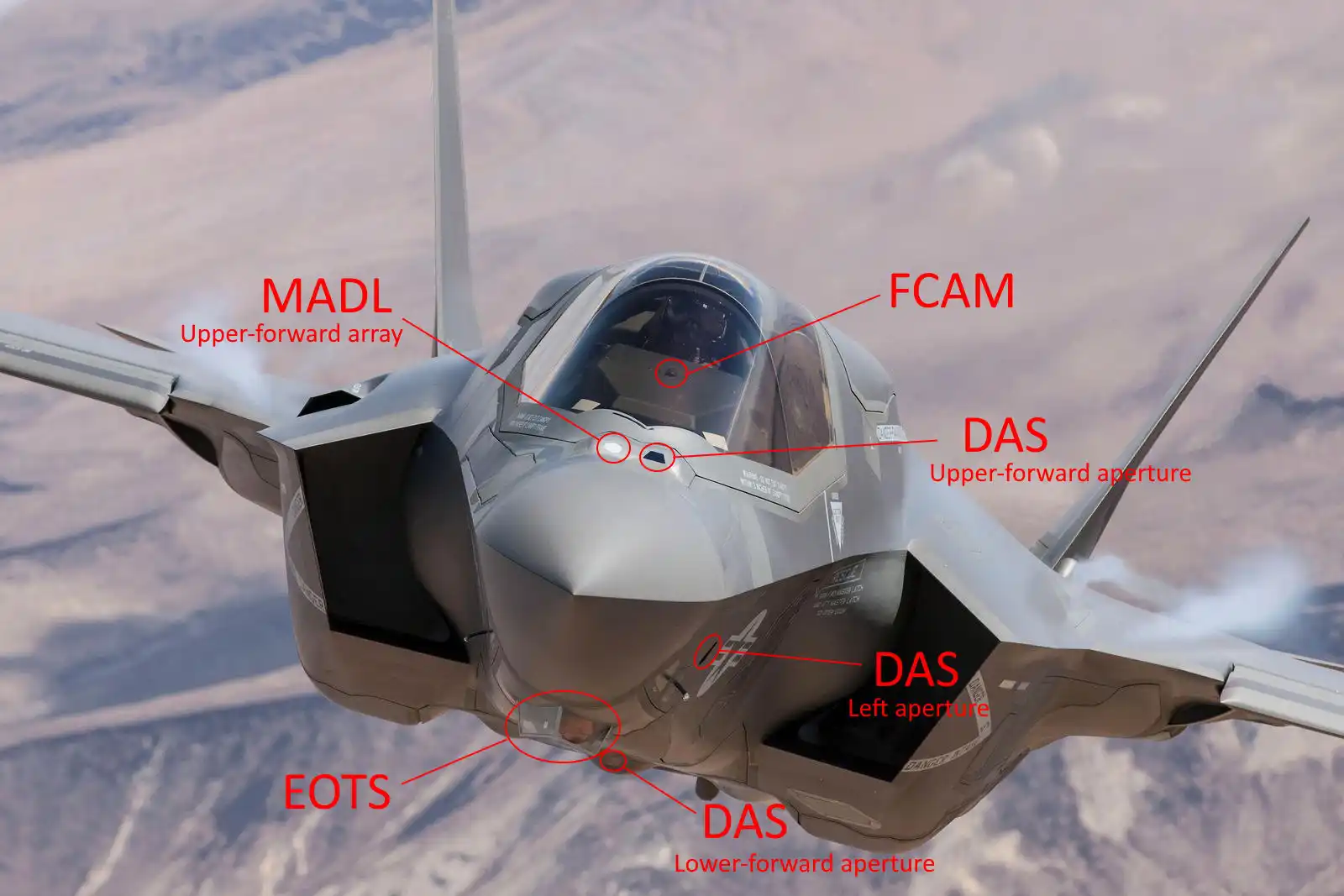
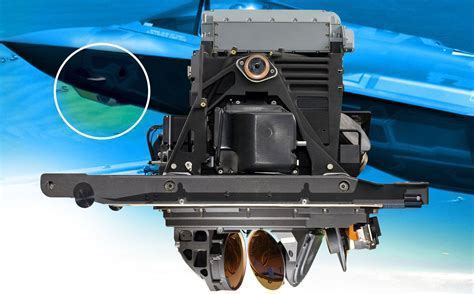
At the heart of the F-35’s IRST capability lies the AN/AAQ-40 EOTS, a sensor suite engineered to perform infrared imaging, target tracking, and laser designation within a single, low-drag housing mounted beneath the aircraft’s nose. The fusion of these capabilities allows the F-35 to operate with both precision and discretion.
EOTS operates across multiple infrared bands, enabling it to detect and track heat signatures from enemy aircraft, vehicles, or ground targets—without the need to emit radar signals. This passive detection makes it exceptionally useful in anti-access/area-denial (A2/AD) environments where radar emissions could compromise stealth.
Key features of the AN/AAQ-40 EOTS include:
- Long-Range IRST: Tracks airborne targets based solely on thermal emissions, including stealth aircraft that evade radar.
- High-Resolution Infrared Video: Provides crystal-clear imaging for visual identification at extended distances.
- Integrated Laser Designator and Range Finder: Enables precision guidance of laser-guided munitions like the GBU-12 Paveway II and AGM-154 Joint Standoff Weapon (JSOW).
- Block-4 Upgrade: Incorporates short-wave infrared (SWIR) capability, enhancing target recognition in obscured environments like fog, smoke, and dust.
Sensor Fusion: Power Beyond Individual Components
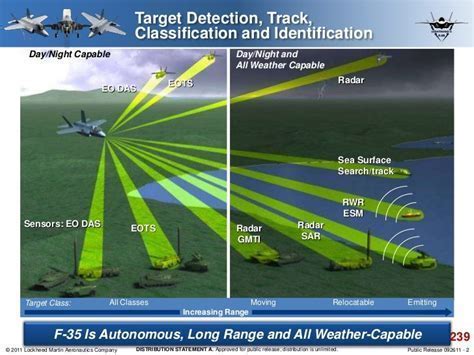
What sets the F-35 apart from legacy fighters is not merely its advanced individual sensors but their seamless integration into a single, coherent tactical picture. The F-35’s IRST benefits immensely from its multi-source data fusion, which processes inputs from radar, infrared, and electronic warfare systems in real-time.
The AN/APG-81 AESA radar, for instance, provides precise data on range and velocity, filling the inherent gaps in IRST systems that struggle to determine distance. Together, the EOTS and radar offer pilots a full three-dimensional view of both known and unknown threats.
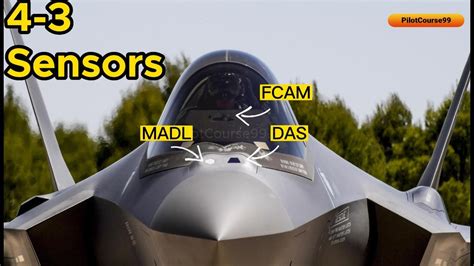
The AN/AAQ-37 Distributed Aperture System (DAS) is another critical piece of this puzzle. While not an IRST system itself, DAS provides omnidirectional infrared coverage via six sensors around the airframe. Its primary function is missile launch detection and situational awareness, but its data feeds help cue the EOTS toward specific targets, thereby accelerating threat engagement cycles.
Operational Edge: Passive Detection in Stealth Warfare
One of the most valuable attributes of IRST systems like the EOTS is their passive detection ability. In contrast to radar, which actively emits signals that adversaries can detect and jam, IRST functions silently. This gives the F-35 a covert surveillance capability in environments saturated with electronic warfare (EW).
This is especially advantageous in peer-to-peer conflicts, where adversaries such as China and Russia deploy advanced electronic countermeasures (ECM) to degrade radar performance. With EOTS, the F-35 can maintain tactical awareness and targeting capability, even when radar is denied.
Moreover, the F-35’s network-enabled operations allow data from one aircraft’s EOTS to be relayed to other F-35s via the Multifunction Advanced Data Link (MADL). This enables collaborative targeting, where one fighter can illuminate or track a target for another, vastly increasing the effectiveness of beyond-visual-range (BVR) engagements.
Global Comparisons: How the F-35 Stacks Up Against Rivals
While other fifth-generation platforms—such as China’s J-35 and Russia’s Su-57 Felon—also boast advanced IRST systems, the F-35’s edge lies in integration rather than standalone hardware. Chinese sources claim that the J-35 includes an AI-enhanced IRST array, but it lacks the combat-proven sensor fusion and real-time networking of the F-35 ecosystem.
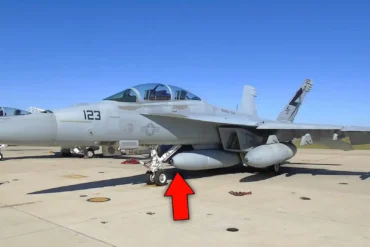
Legacy 4th-generation fighters such as the F/A-18 Super Hornet or Eurofighter Typhoon have added IRST pods (e.g., AN/ASG-34 or PIRATE), yet these are bolt-on systems without full integration into the aircraft’s core avionics. They lack the low observability, real-time fusion, and mission adaptability that define the F-35’s IRST framework.
In this context, the F-35’s EOTS is more than a sensor—it is a combat multiplier, amplifying every aspect of the aircraft’s survivability and lethality.
Upgrades and Modernization: Block-4 and TR-3 Enhancements
The initial versions of EOTS faced discrimination limitations at extreme ranges, a common challenge for infrared systems. However, Lockheed Martin’s ongoing Block-4 upgrade program directly addresses these issues with the inclusion of:
- SWIR detection to see through environmental obscurants.
- Higher-resolution focal plane arrays that enable finer target discrimination.
- AI-enhanced tracking algorithms to improve performance in cluttered airspace.
Simultaneously, the Technology Refresh 3 (TR-3) modernization program boosts the processing power of the onboard mission systems computer. This upgrade is crucial, as real-time fusion of IRST data with EW, radar, and communications requires massive computational throughput.
When fully operational, TR-3 will allow the F-35 to autonomously classify targets, prioritize threats, and distribute engagement tasks among multiple aircraft—all with minimal pilot workload.
Strategic Implications: Multi-Domain Dominance
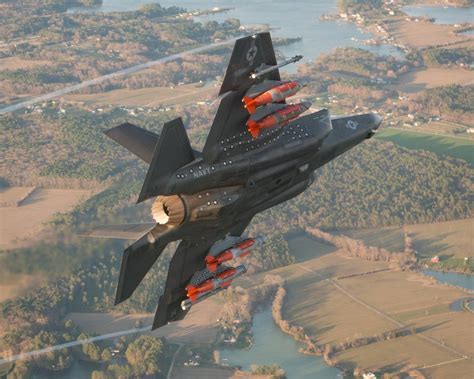
Beyond the hardware, the IRST-equipped F-35 serves a strategic role in 21st-century combat doctrine. In environments characterized by multi-domain operations (MDO), the F-35’s sensors act as forward-deployed data nodes—relaying critical intelligence to air, land, sea, and cyber forces.
Its IRST capability is essential in missions such as:
- Suppression of Enemy Air Defenses (SEAD) where radar stealth is vital.
- Anti-stealth operations against enemy fighters that are radar-evading but not thermally invisible.
- Target handoff to long-range standoff weapons launched from other platforms like the B-21 Raider or Arleigh Burke-class destroyers.
This positions the F-35 not just as a platform, but as a force multiplier in joint and coalition operations.
Conclusion
The F-35 Lightning II’s IRST capability, centered on the AN/AAQ-40 EOTS, is a defining feature of modern stealth air combat. Through multi-band infrared tracking, laser targeting, sensor fusion, and networked warfare capability, it transcends traditional limitations and establishes a new paradigm for 21st-century air superiority. Augmented by regular modernization via the Block-4 and TR-3 programs, the F-35 remains not only relevant but dominant in increasingly contested skies.
FAQ: Frequently Asked Questions About the F-35’s IRST System
What makes the F-35’s IRST system different from traditional radar?
While radar actively emits signals to detect and track targets, the IRST system operates passively, detecting the heat signatures of aircraft or vehicles. This allows the F-35 to track targets without giving away its position, a critical advantage in stealth and electronic warfare scenarios.
Can the IRST system detect stealth aircraft like the J-20 or Su-57?
Yes. While stealth designs aim to evade radar, they still emit heat—especially from engines and control surfaces. The AN/AAQ-40 EOTS detects these emissions, allowing the F-35 to track stealth aircraft under certain conditions, especially at high altitudes or afterburner use.
How often is the F-35’s IRST system updated?
The IRST system, integrated within EOTS, is regularly updated through software and hardware upgrades under Block-4 and TR-3 modernization programs. These ensure the F-35 remains at the forefront of target detection, classification, and engagement across evolving battlefield environments.