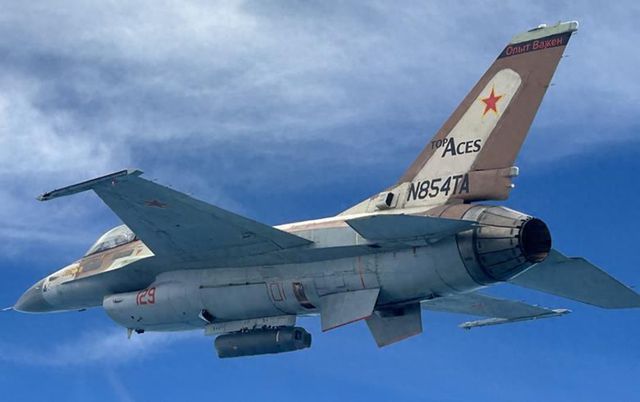
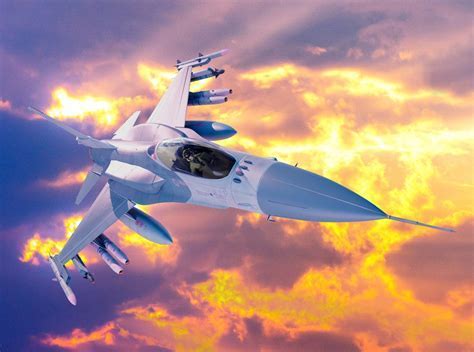
The F-16 Fighting Falcon, a versatile multirole fighter, has continuously evolved to maintain its combat effectiveness in modern warfare. One of the most significant advancements is the integration of the Infrared Search and Track (IRST) system. This technology enhances the aircraft’s ability to detect and engage aerial threats without relying on radar, making it a formidable adversary in contested airspace. The implementation of IRST on the F-16 by Top Aces represents a breakthrough in sensor capabilities, particularly in detecting stealth aircraft and improving air combat training.
IRST System Integration on the F-16
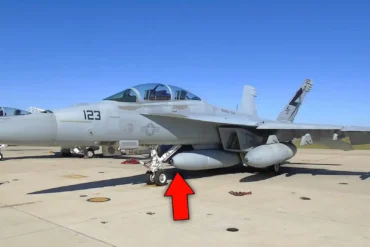
The IRST system installed on the F-16 is housed within an open-air pod mounted beneath the aircraft’s centerline. This long-wave infrared (LWIR) sensor passively scans the airspace, detecting heat signatures from aircraft and missiles. Unlike traditional radar, which actively emits signals, IRST operates covertly, providing stealthy target acquisition without triggering enemy radar warning receivers.
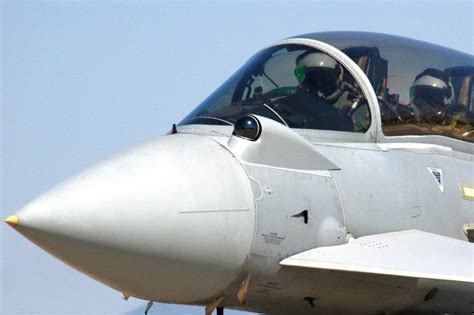
Key Features of the F-16 IRST System
- Extended Detection Range: The IRST pod enhances the F-16’s ability to detect airborne threats beyond visual range, improving situational awareness in both training and combat scenarios.
- Passive Targeting Capability: Operating without radio-frequency emissions, the system is invaluable for counter-stealth engagements, particularly against fifth-generation fighters like the F-35 and J-20.
- Open Architecture Design: The modular system allows for easy upgrades and potential integration with other sensor suites, including the AN/APG-83 AESA radar found on the F-16V (Block 70/72).
- Multi-Sensor Fusion: The IRST can work in conjunction with electronic warfare pods and electro-optical sensors, creating a more robust target identification and tracking network.
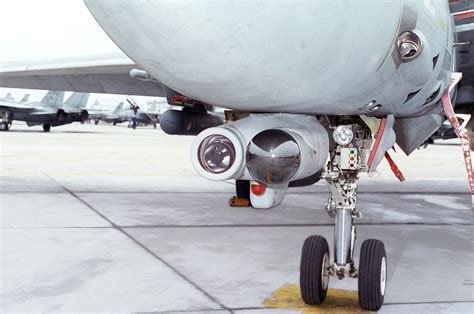
Advantages of IRST in Modern Air Combat
The addition of an IRST system significantly enhances the F-16’s combat effectiveness, particularly in air-to-air engagements. As stealth technology reduces the effectiveness of conventional radar detection, infrared-based tracking becomes a crucial countermeasure.
Enhancing Combat Capabilities
- Detecting Stealth Aircraft: The IRST system mitigates the limitations of radar by detecting the heat emissions of stealth fighters, allowing the F-16 to track otherwise low-observable targets.
- Beyond Visual Range (BVR) Engagements: By leveraging infrared tracking, the F-16 can identify, track, and engage targets at long distances, even in electronically contested environments.
- Stealth Operations: The passive nature of the IRST system means it does not emit detectable signals, allowing the F-16 to conduct covert tracking operations.
- Training and Simulation: In addition to combat roles, the IRST system greatly improves air combat training, particularly in adversary training programs where pilots must learn to counter stealth threats effectively.
Operational Applications and Real-World Impact
The U.S. Air Force has increasingly deployed IRST-equipped F-16s for adversary air (ADAIR) training missions. These aircraft simulate enemy threats, helping pilots train against stealth opponents in realistic combat scenarios.
Adversary Training and Air Superiority
- Improved Training for Fifth-Generation Fighters: With the rise of stealth combat aircraft, F-16 IRST platforms serve as highly capable adversary aircraft, challenging pilots flying the F-22 and F-35 to refine their tactics.
- Supporting Red Flag and Top Gun Exercises: The use of IRST-equipped F-16s in advanced aerial combat exercises enhances the realism of modern air warfare simulations, making pilots better prepared for real-world engagements.
- Allied Force Training: International air forces utilizing F-16 fighters benefit from integrating IRST technology, improving joint operations and coalition air combat effectiveness.
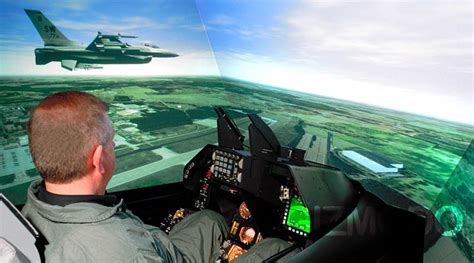
F-16V and Future Upgrades
The F-16V (Block 70/72) represents the latest and most advanced variant of the F-16 family, incorporating state-of-the-art avionics, radar, and weapons systems. While the IRST pod is currently a third-party addition, future upgrades may see this system fully integrated into the aircraft’s baseline configuration.
Key Technological Advancements in the F-16V
- AN/APG-83 AESA Radar: Provides superior target tracking and engagement capabilities, working in tandem with IRST to offer a multi-spectral targeting solution.
- Enhanced Cockpit Displays and Mission Computers: Allows pilots to efficiently process IRST data, enhancing overall situational awareness.
- Improved Electronic Warfare Suite: Increases survivability by integrating electronic countermeasures with IRST threat detection.
Global Deployment and Strategic Impact
Currently, Top Aces has integrated IRST technology into at least 10 operational F-16 aircraft, primarily used in adversary training roles. However, as global demand for counter-stealth capabilities rises, additional IRST-equipped F-16s may be deployed across various air forces worldwide.
Potential Future Deployments
- U.S. Air Force Tactical Squadrons: Expanding IRST capabilities to active combat units enhances operational readiness against near-peer threats.
- Allied Air Forces: Nations utilizing F-16 fighters, including Taiwan, Greece, and South Korea, could benefit from IRST-equipped platforms to bolster their air defense capabilities.
- NATO Operations: Integrating IRST-equipped F-16s into joint operations enhances coalition air superiority, particularly in regions facing potential stealth threats.
Conclusion
The integration of IRST technology on the F-16 marks a significant advancement in modern aerial warfare. By enabling passive infrared detection, enhancing adversary training, and providing a counter-stealth capability, the system ensures the F-16 remains a relevant and powerful fighter in an era dominated by fifth-generation aircraft. As the F-16V Block 70/72 continues to evolve, IRST may become a standard feature, further extending the operational lifespan of one of the world’s most successful multirole fighters.
FAQ
1. What are the main advantages of the IRST system on the F-16?
The IRST system provides passive infrared tracking, allowing the F-16 to detect stealth aircraft and engage targets beyond visual range without emitting radar signals. This enhances both combat effectiveness and survivability in modern aerial engagements.
2. How does the IRST system compare to radar in air combat?
Unlike radar, which actively emits radio waves, IRST operates passively, detecting heat signatures from aircraft and missiles. This makes it an ideal counter-stealth solution, as modern stealth fighters are designed to evade radar detection but still produce infrared emissions.
3. Will all F-16s receive IRST upgrades in the future?
While Top Aces has integrated IRST pods into adversary training F-16s, it is not yet a standard feature for all variants. However, with the continued evolution of the F-16V (Block 70/72), IRST integration may become a standard upgrade, particularly for air forces facing stealth-capable threats.