Definition
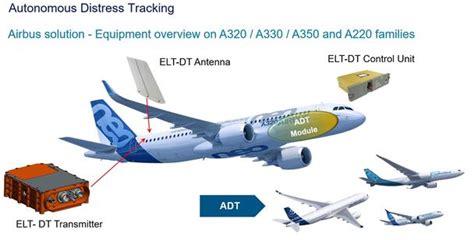
Autonomous Distress Tracking (ADT) is a capability that allows for the transmission of information to determine the position of an aircraft in distress at least once every minute. This system is designed to remain functional even if the aircraft’s electrical power, navigation, or communication systems fail. This capability is outlined in the ICAO Annex 6 Part 1 under ‘Location of an Aeroplane in Distress.’
Description
The ADT function plays a crucial role in identifying the location of an aircraft facing distress. Its goal is to accurately establish the location of an accident site within a 6 nautical mile radius. By utilizing onboard systems, the aircraft broadcasts its position. To detect distress, the aircraft’s state is continuously analyzed in real time, either by onboard systems or ground processes. Event detection and triggering criteria are used to initiate alerts that help locate the aircraft in trouble.
Distress tracking combines position reporting with notifications of distress. The event detection can identify distress conditions and begin transmitting aircraft position information. If the flight crew manually initiates distress tracking, it should also generate a notification. Triggering criteria include unusual attitudes, altitudes, speeds, potential terrain collisions, and total loss of engine thrust, among others. These criteria are defined to maximize the likelihood of detecting an imminent catastrophic event.
When an aircraft is in distress, position information is transmitted at least once every minute without requiring any action from the flight crew. It is beneficial for this position data to also include altitude information. Increasing the frequency of information transmission can enhance the identification of the accident site. The ADT function is designed to transmit as long as possible during distress conditions. Even in cases of electrical power loss, the onboard component is equipped to continue transmitting for the expected duration of the flight.
Operators will be notified directly or indirectly when one of their aircraft is in distress. The ADT function can deliver distress tracking information to Search and Rescue (SAR) Agencies. If an onboard triggered transmission system is activated, the initial transmission of position information starts immediately or within five seconds. In case of recovery, both the distress tracking and signals can be deactivated, but only through the proper activation mechanism.
A feature allowing operators to activate the ADT function could be included, especially when there is uncertainty about the aircraft’s status and attempts to communicate with the flight crew have failed. The ADT function must be approved by the State of the Operator, taking into account important performance criteria such as the quality and integrity of data being transmitted, the robustness of the communication link, cyber security measures, system reliability, global coverage, timely information delivery to RCCs and operators, and the minimization of false alerts.