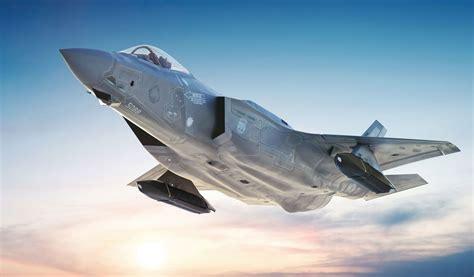
Saudi Arabia’s anticipated acquisition of the F-35 Lightning II stealth fighters has stirred strategic recalibrations across the Middle East. While this procurement symbolizes a deepening U.S.-Saudi defense relationship, critical limitations—particularly the exclusion of the AIM-260 Joint Advanced Tactical Missile (JATM)—suggest a calculated American maneuver to maintain Israel’s Qualitative Military Edge (QME) in the region.
A Strategic Breakthrough With Embedded Constraints
The announcement by then-U.S. President Donald Trump on November 18, 2025, marking Saudi Arabia’s designation as a major non-NATO ally and greenlighting an arms deal, has geopolitical implications far beyond the celebratory headlines. Although the exact number of F-35 jets remains undisclosed, estimates range between 24 to 48 aircraft—significantly fewer than the originally requested 48, indicating internal hedging by Washington.
Despite the landmark nature of the transaction, it has ignited concerns within Israeli defense circles, particularly from the Israeli Air Force (IAF), which submitted a formal objection. Israel fears the erosion of its decades-long QME—an assurance embedded in U.S. foreign military sales policy mandating that arms transfers to Middle Eastern nations must not diminish Israel’s qualitative advantage.
Downgraded Capabilities: Balancing Regional Deterrence
To honor this commitment, the F-35s intended for Saudi Arabia are expected to be a downgraded version, both in terms of hardware and software integration. Unlike Israel’s customized F-35I Adir, which enjoys autonomy in modifications and system upgrades, Saudi Arabia will likely be restricted from altering the jets.
Key limitations are expected in the following domains:
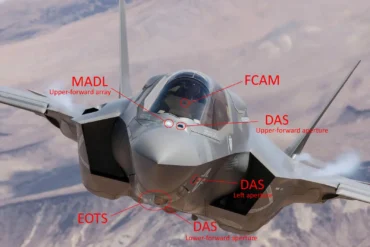
- Software architecture: The Saudi F-35s may be equipped with a basic configuration that lacks full-spectrum AI-enabled sensor fusion, targeting enhancements, and network-centric warfare capabilities.
- Electronic Warfare (EW): Exclusion of advanced EW suites limits Saudi jets’ ability to jam enemy radars and disrupt electronic systems.
- Data Sharing: Constraints on data-link architecture will reduce the effectiveness of real-time multi-platform coordination—a critical edge enjoyed by Israeli forces.
These curbs are not just technical adjustments; they represent a geostrategic compromise—giving Riyadh cutting-edge tools while ensuring they do not rival Israeli platforms.
The AIM-260 JATM: A Game-Changer Absent From Riyadh’s Arsenal
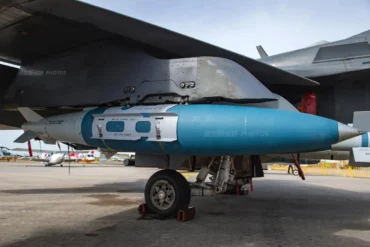
Perhaps the most defining exclusion in Saudi Arabia’s F-35 package is the AIM-260 Joint Advanced Tactical Missile (JATM). This next-generation missile, designed by Lockheed Martin in conjunction with the U.S. Air Force and Navy, is intended to replace the AIM-120 AMRAAM.
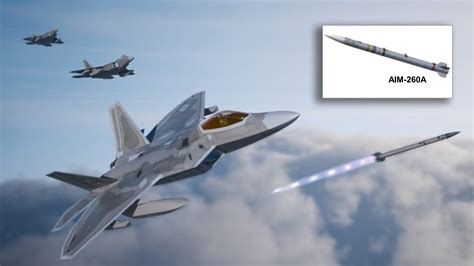
Boasting a range exceeding 120 miles (194 km), the AIM-260 is engineered to counter emerging peer threats, notably advanced stealth aircraft and heavily defended aerial assets. Its dual-pulse rocket motor, speculated dual-mode seeker (infrared and active radar), and two-way datalink distinguish it as a revolutionary addition to aerial combat arsenals.
The JATM enables:
- Mid-course target updates, drastically improving dynamic engagement potential
- Enhanced resistance to electronic jamming, essential in contested environments
- Internal carriage in stealth platforms, preserving radar invisibility
Israel stands poised to become the first and possibly only regional partner to access the AIM-260. The integration of this missile onto the F-35I Adir not only enhances Israel’s standoff engagement range but further solidifies its dominance over potential adversaries—Saudi Arabia included.
F-35 vs. the Saudi Arsenal: Strength In Diversity, Not Stealth Alone
Though the absence of AIM-260 and other high-end capabilities seems to tip the scale toward Israel, Saudi Arabia is far from defenseless. The Royal Saudi Air Force (RSAF) boasts a formidable and modernized fleet, including:
- F-15C/D: Proven air-superiority fighters with a combat record of 100 kills and zero losses
- F-15S/SA: Predecessors of the advanced F-15EX, optimized for multi-role precision
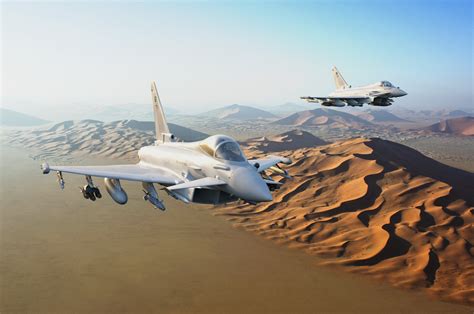
- Eurofighter Typhoon Tranche 2: A powerful 4.5-generation aircraft with modern sensors
- Panavia Tornado GR4 upgrades: Providing long-range strike depth
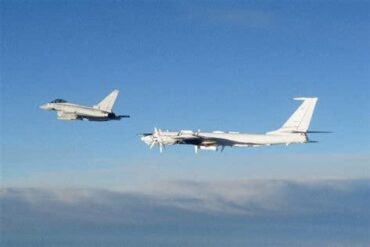
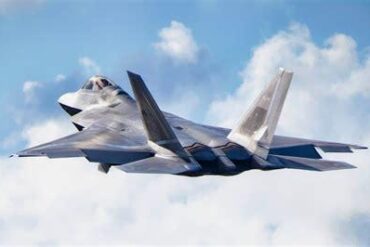
While stealth fighters like the F-35 provide immense tactical benefits, stealth is not infallible. Historical exercises, such as the Red Flag drills in Alaska, have seen Eurofighter Typhoons outperform the F-22 Raptor in close-quarters dogfighting.
Moreover, during joint exercises in Finland, a French Rafale downed a U.S. F-35 in simulated combat—proving that training, tactics, and integration often outweigh pure stealth metrics.
The Future Arsenal: Alternatives Beyond the F-35
Saudi Arabia, with its vast defense budget and evolving regional ambitions, is unlikely to stop at the F-35. Potential future acquisitions could include:
- Turkish KAAN stealth fighter, expected to debut by 2029
- Participation in the GCAP (Global Combat Air Programme), a sixth-generation stealth fighter initiative by the UK, Italy, and Japan
By the time the full batch of F-35s is delivered—projected by 2030—Israel may already be integrating sixth-generation platforms such as the F-47, further widening the capability gap.
Congressional Hurdles and Israeli Influence on Capitol Hill
Despite White House approval, the sale is not finalized. U.S. law mandates a Congressional review, particularly to assess the QME implications. With Israel’s significant diplomatic sway in Congress, including bipartisan defense backing, the deal may encounter legislative resistance or undergo further trimming.
Even if approved, the QME assessment will likely trigger additional export controls—limiting weapons packages, mission systems, and possibly even the number of aircraft delivered to Riyadh.
Saudi Arabia’s Tactical Gains Despite Strategic Downgrades
While the lack of AIM-260 JATM integration denies Saudi Arabia a revolutionary long-range engagement capability, the F-35 still brings transformative battlefield enhancements:
- Low observable profile for strike penetration
- Advanced fusion of sensor data for increased pilot situational awareness
- Interoperability with U.S. allies, enhancing coalition operational planning
Even with a diluted configuration, the F-35 will serve as a force multiplier, especially when networked with Saudi’s upgraded F-15s and Typhoons.
JATM: U.S. and Israel’s First-Strike Insurance Policy
The development of the AIM-260 JATM is not coincidental. It reflects an urgent Pentagon strategy to counteract adversaries like China and Russia—both of which are advancing stealth airframes and electronic warfare techniques.
The U.S. FY2026 defense budget request includes $670.5 million for procurement and $687 million for development of the AIM-260. This reflects the missile’s status as the number-one air-delivered weapon priority across both the U.S. Air Force and Navy.
Initially tested on the F-22 Raptor, the missile is expected to integrate with:
- F-35 Lightning II
- F/A-18E/F Super Hornet
- U.S. Navy’s Next-Generation Air Dominance fighter (NGAD)
Israel’s ability to leverage JATM within its highly integrated C4I environment (command, control, communications, computers, and intelligence) gives it an edge beyond the missile itself. The ability to fuse data across AEW&C, UAVs, satellites, and F-35 sensors offers a level of battlefield cohesion currently out of reach for Saudi Arabia.
Conclusion: Arms Sales As Instruments of Influence
The U.S. decision to restrict AIM-260 access while approving F-35 sales to Saudi Arabia illustrates a dual-track strategy: promoting regional partnerships while preserving Israel’s technological and operational superiority. While the move signals strategic trust in Saudi Arabia, it is also a reminder that true parity in the Middle East remains a carefully managed illusion.
Saudi Arabia gains prestige, stealth, and incremental combat value. Israel, however, retains the upper hand—via freedom to upgrade, priority access to future technologies, and now, the AIM-260 missile that could redefine air dominance across the skies of the Middle East and beyond.