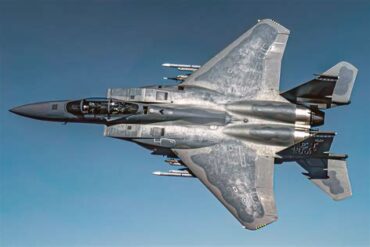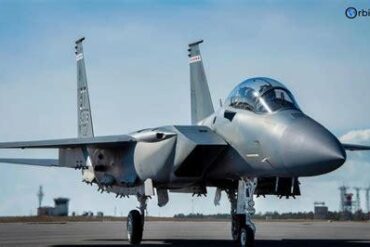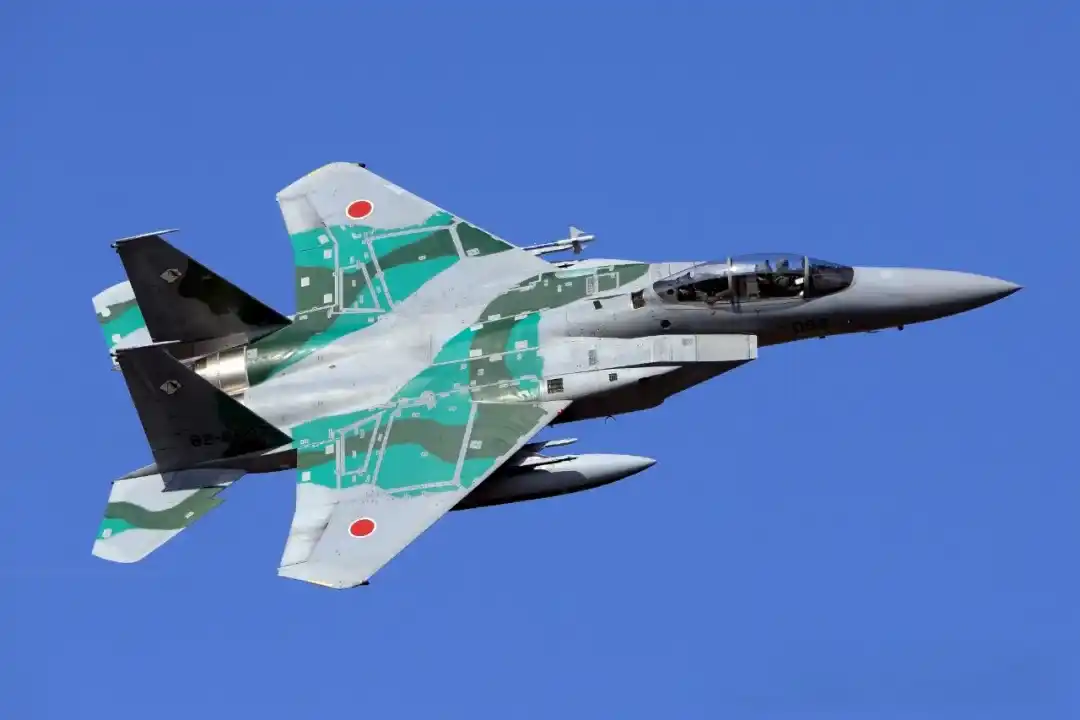
The F-15 Eagle has remained a dominant force in aerial warfare since its introduction in the 1970s. Designed primarily for air superiority, this fighter jet is equipped with an array of advanced missile systems, ensuring its combat effectiveness in both beyond-visual-range (BVR) and close-range engagements. Over the decades, the F-15 has undergone significant upgrades, incorporating next-generation weaponry to maintain its supremacy in modern aerial combat.
Primary Air-to-Air Missiles
AIM-7 Sparrow: Legacy Medium-Range Missile
The AIM-7 Sparrow was one of the earliest air-to-air missiles integrated into the F-15. This semi-active radar-guided missile was a key component of early F-15 models, providing reliable BVR capabilities. Despite its effectiveness in mid-range engagements, the AIM-7 has been largely phased out in favor of more advanced, autonomous systems.
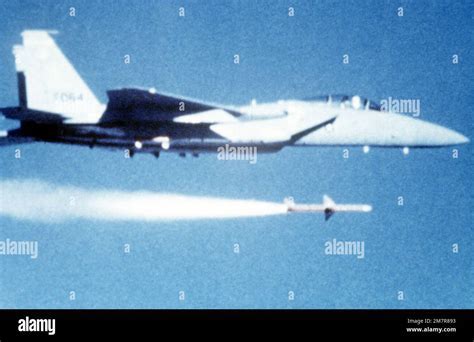
AIM-9 Sidewinder: Close-Range Dogfight Specialist
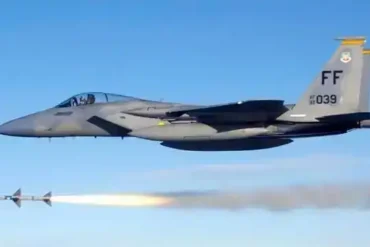
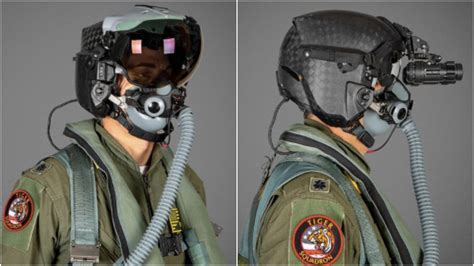
For short-range combat, the AIM-9 Sidewinder has long been the preferred choice for F-15 pilots. Mounted on the jet’s wing pylons, the infrared-guided missile excels in high-G maneuvering and lock-on-after-launch capabilities. The latest variant, the AIM-9X, features high off-boresight targeting, allowing pilots to lock onto enemy aircraft using their helmet-mounted displays (HMDs).
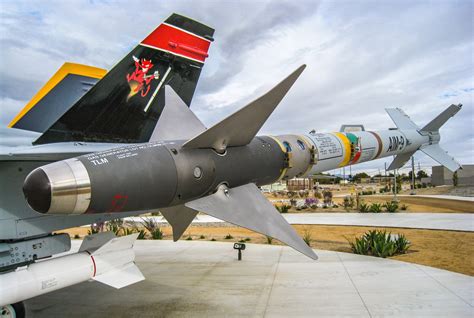
AIM-120 AMRAAM: Fire-and-Forget BVR Dominance
The AIM-120 Advanced Medium-Range Air-to-Air Missile (AMRAAM) has become the primary BVR weapon for the modern F-15 fleet. With active radar guidance, this missile provides fire-and-forget capability, enabling pilots to engage multiple targets simultaneously. The F-15C/D and F-15EX can carry up to 12 AIM-120 missiles, giving it an unmatched ability to neutralize threats beyond 100 km.
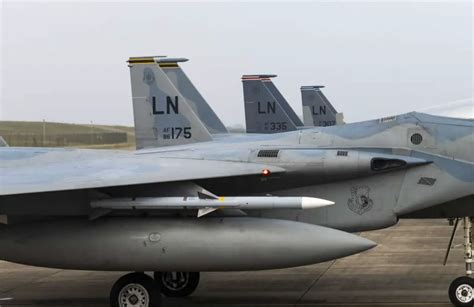
Enhanced Payload Capacity
Standard Configuration
The F-15 boasts a robust weapons loadout, featuring six wing pylons, four fuselage stations, and a centerline station, for a total of 11 hardpoints. This allows for a maximum payload of 7,300 kg (16,000 lbs), including missiles, bombs, and auxiliary fuel tanks.
F-15EX “Eagle II” – The Missile Truck
The F-15EX significantly expands the F-15’s combat potential, increasing the air-to-air missile capacity to 22—the highest of any non-stealth fighter. Additionally, it can carry 13.6 tons of mixed ordnance, making it a true missile truck designed for saturation attacks.
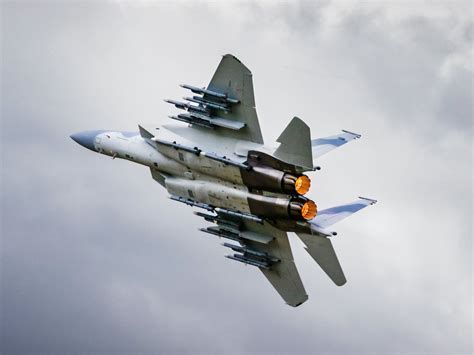
Integration with Advanced Systems
HOTAS (Hands-On Throttle and Stick)
The HOTAS system enables pilots to control weapons and sensors without taking their hands off the flight controls. This design improves combat efficiency, allowing for rapid engagement of multiple targets.
Radar and Targeting Systems
The F-15 is equipped with state-of-the-art AESA (Active Electronically Scanned Array) radar systems, such as the AN/APG-63(v)3 and AN/APG-82. These radars provide long-range detection up to 160 km and the ability to track and engage multiple enemy aircraft simultaneously.
Additionally, the integration of helmet-mounted displays (HMDs) enhances the AIM-9X targeting, enabling pilots to aim missiles simply by looking at the target.
Ground Attack Capabilities
Though primarily designed for air dominance, certain F-15 variants, such as the F-15E Strike Eagle and F-15EX, incorporate precision strike capabilities.
AGM-65 Maverick: Versatile Air-to-Surface Missile
The AGM-65 Maverick is a laser-guided air-to-surface missile used for high-value ground targets, such as armored vehicles and enemy fortifications. It provides precision targeting in both day and night operations.
GBU-28 Bunker Buster: Heavy Penetration Bomb
Designed to neutralize hardened targets, the GBU-28 Bunker Buster is a 2,000 kg bomb capable of penetrating deep into reinforced structures before detonation, making it effective against underground bunkers and command centers.
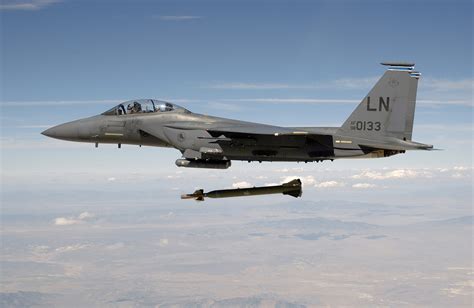
JDAMs: Precision GPS-Guided Bombs
Joint Direct Attack Munitions (JDAMs) are GPS-guided bombs that convert unguided munitions into smart bombs, allowing F-15 pilots to strike targets with pinpoint accuracy, even in adverse weather conditions.
Auxiliary Weapons
M61A1 Vulcan Cannon: Close-Range Firepower
As a last-resort weapon, the M61A1 Vulcan rotary cannon provides the F-15 with formidable close-range firepower. With 940 rounds of 20mm ammunition, this high-rate-of-fire cannon ensures effectiveness in dogfights and ground suppression scenarios.
Evolution of Missile Loadouts
- 1970s–1980s: Initial reliance on AIM-7 Sparrow and AIM-9 Sidewinder, limited BVR capabilities.
- 1990s–2000s: Adoption of AIM-120 AMRAAM and integration of smart munitions, enhancing multi-role adaptability.
- 2020s+: The F-15EX introduces networked warfare capabilities, allowing for coordinated missile launches with F-35s and other allied aircraft.
Key Advantages of the F-15’s Missile Systems
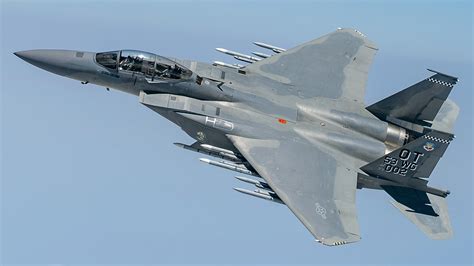
- Flexibility: The F-15 can adapt to air superiority and precision strike missions.
- Survivability: Capable of reaching Mach 2.5, with extreme maneuverability (9g turns) to evade enemy missiles.
- Endurance: Equipped with conformal fuel tanks (CFTs), the F-15 can operate over 2,500 km without refueling.
Frequently Asked Questions (FAQs)
How many missiles can the F-15EX carry?
The F-15EX can carry up to 22 air-to-air missiles, including a combination of AIM-120 AMRAAM and AIM-9X Sidewinders, giving it an unparalleled payload for aerial combat.
What makes the AIM-120 AMRAAM superior to older missiles like the AIM-7 Sparrow?
The AIM-120 AMRAAM features active radar guidance, allowing for fire-and-forget capability, whereas the AIM-7 Sparrow required constant radar illumination, limiting its operational flexibility.
Can the F-15 engage ground targets effectively?
Yes, F-15E Strike Eagle and F-15EX models are equipped with AGM-65 Mavericks, GBU-28 Bunker Busters, and JDAMs, providing precision strike capabilities against armored vehicles, bunkers, and enemy infrastructure.