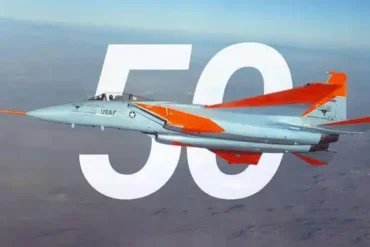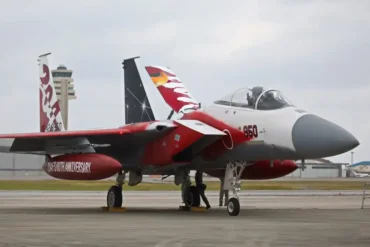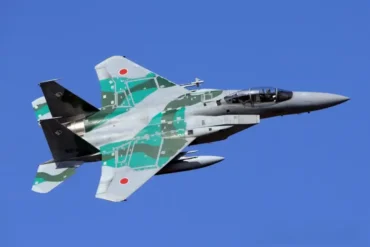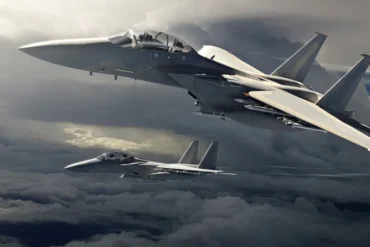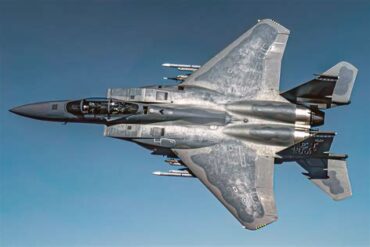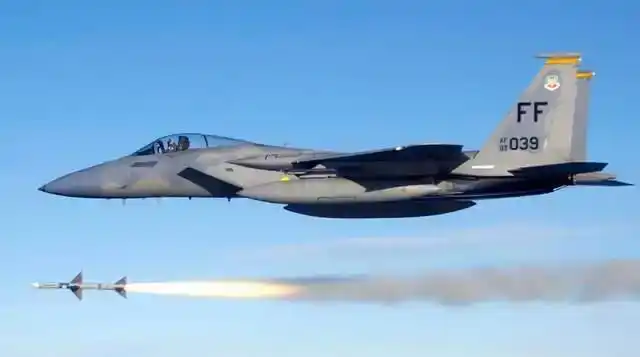
The McDonnell Douglas F-15 Eagle, now produced by Boeing, remains one of the most dominant air superiority fighters in military history. With its unmatched kill ratio, advanced avionics, and superior maneuverability, the F-15 has demonstrated absolute air dominance in both real-world conflicts and simulated engagements.
Since its introduction in the 1970s, the F-15 has maintained an unbroken record in aerial combat, achieving over 104 confirmed kills with zero losses in real-world engagements. Meanwhile, in simulated war games, the F-15 has delivered astonishing kill ratios, including a 41:1 kill ratio in a 2017 combat exercise. These numbers underscore the aircraft’s lethal effectiveness, cementing its status as one of the greatest fighter jets ever built.
Unmatched Kill Ratio in Simulated Combat
In 2017, a high-intensity mock combat exercise at Tyndall Air Force Base tested the capabilities of F-15 Eagles and F-22 Raptors in a simulated war scenario. As part of the Weapons Systems Evaluation Program (WSEP), F-15s engaged in aerial combat against a designated red air force simulating enemy aircraft. The results were staggering:
- The F-15 achieved an unbelievable 41:1 kill ratio, demonstrating its combat effectiveness even against modern threats.
- A total of 17 missiles and 14,661 rounds of ammunition were fired, with a mission success rate of 83%.
- The aircraft operated without significant failures, proving its high reliability and battle readiness.
This mock battle validated the F-15’s enduring edge in BVR (Beyond Visual Range) engagements, dogfighting capabilities, and multi-role adaptability, ensuring it remains a formidable presence in any modern conflict.
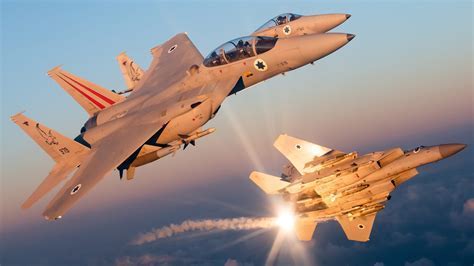
Historic Kill Ratio: 104:0 in Real-World Combat
Unlike many aircraft that struggle to match simulated results in real combat, the F-15’s performance in actual warfare has been just as impressive. Across multiple conflicts, the F-15 boasts a confirmed 104:0 kill ratio—a feat no other modern fighter has achieved.
Key Conflicts Demonstrating F-15 Superiority
The Gulf War (1991)
During Operation Desert Storm, the F-15 played a pivotal role in neutralizing the Iraqi Air Force, which fielded aircraft such as the MiG-29, MiG-25, and Su-22. The results were overwhelmingly one-sided:
- F-15s shot down over 30 enemy aircraft, primarily in BVR engagements using AIM-7 Sparrow and AIM-120 AMRAAM missiles.
- Not a single F-15 was lost in combat, proving its dominance against Soviet-era fighters.
Balkan Conflicts (1990s)
In conflicts over the former Yugoslavia, F-15s were deployed to enforce no-fly zones and engage hostile Serbian aircraft. Their advanced radar systems and electronic warfare capabilities allowed them to detect and engage targets at long range, eliminating enemy aircraft without retaliation.
Middle East Operations
Israeli Air Force (IAF) F-15s have been instrumental in maintaining air superiority in the Middle East, particularly against Syrian and Iraqi MiG fighters. Notably:
- IAF F-15s shot down over 50 enemy aircraft without a single recorded combat loss.
- The aircraft’s superior avionics and maneuverability allowed it to dominate dogfights and beyond-visual-range (BVR) engagements.
Key Design Features Ensuring Air Superiority
Advanced Avionics & Radar Systems
The F-15’s avionics suite gives it a crucial advantage in air combat:
- APG-63 Pulse-Doppler Radar: Provides BVR targeting with unparalleled accuracy, tracking multiple targets simultaneously.
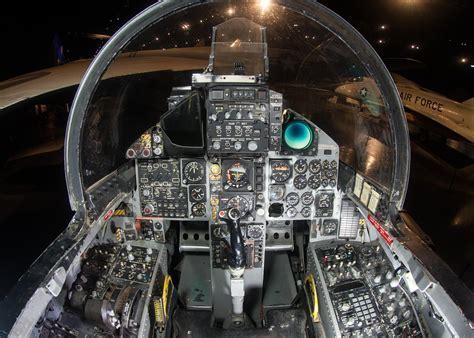
- Heads-Up Display (HUD): Enhances situational awareness by projecting real-time combat data.
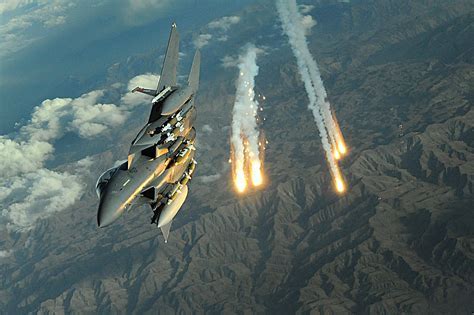
- Electronic Warfare Systems: Includes advanced radar warning receivers and fiber-optic towed decoys, significantly improving survivability.
Lethal Weaponry & Tactical Flexibility
The F-15’s multifaceted arsenal ensures it can adapt to various combat scenarios:
- AIM-120 AMRAAM: Premier BVR missile with active radar homing.
- AIM-9 Sidewinder: Heat-seeking missile optimized for dogfighting.
- 20mm M61 Vulcan Gatling Gun: Capable of rapid-fire air-to-air engagements.
Unparalleled Maneuverability & Engine Performance
- Twin Pratt & Whitney F100-PW-220 engines provide a 1.07 thrust-to-weight ratio, allowing for vertical climbs and high-G maneuvers.
- Low wing loading enhances agility, making the F-15 highly maneuverable in dogfights.
Upgrades & Modernization: The F-15EX Evolution
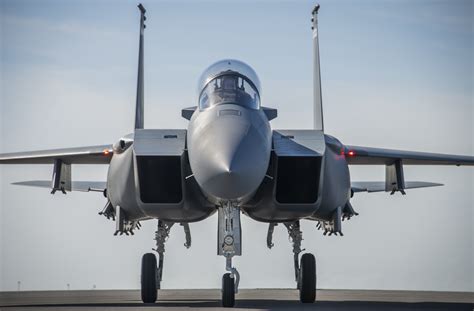
To ensure continued dominance, Boeing has introduced the F-15EX, an upgraded variant featuring:
- APG-82 AESA Radar: Superior target acquisition and tracking.
- EPAWSS Electronic Warfare Suite: Next-gen countermeasures against radar-guided threats.
- Expanded Missile Capacity: Capable of carrying up to 20 air-to-air missiles.
With these upgrades, the F-15EX extends the platform’s relevance, making it a formidable competitor against 5th-generation fighters.
Conclusion
The F-15 Eagle’s kill ratio of 104:0 in real-world combat and 41:1 in simulated engagements is an unmatched testament to its lethality, technological edge, and battle-proven reliability. Whether in historical wars or modernized for the future, the F-15 remains one of the most successful air superiority fighters ever built.
FAQ: F-15 Kill Ratio & Combat Performance
1. Why has the F-15 never been shot down in air-to-air combat?
The F-15’s combination of advanced radar, superior weaponry, and high maneuverability allows it to engage enemies before they can return fire. Its BVR capabilities and powerful electronic warfare systems further enhance its survivability.
2. How does the F-15’s kill ratio compare to other fighter jets?
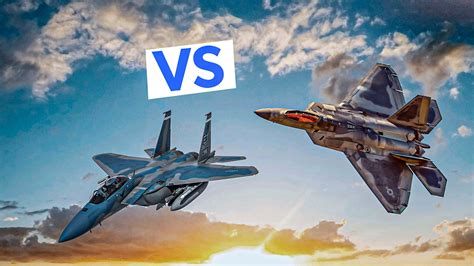
The F-15’s 104:0 kill ratio is the highest of any modern fighter jet. Even stealth aircraft like the F-22 Raptor have not matched this record in confirmed combat kills.
3. Can the F-15 still compete against 5th-generation fighters?
Yes. The F-15EX incorporates modern avionics, radar systems, and weaponry, ensuring that it remains a powerful asset alongside stealth aircraft like the F-35. It serves as a cost-effective, high-capacity missile platform in modern air combat.
With continuous upgrades and strategic deployment, the F-15 remains a cornerstone of U.S. and allied air superiority, proving that even decades after its introduction, no aircraft has successfully challenged its air-to-air dominance.