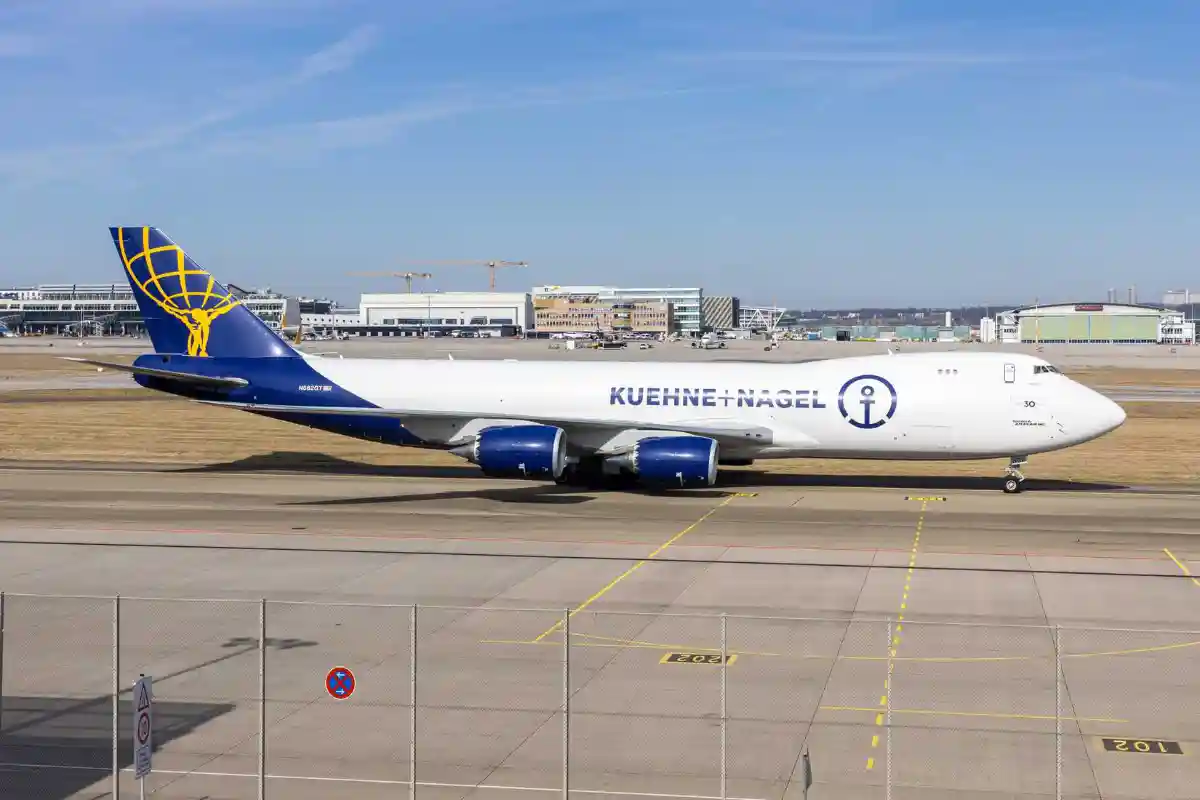
The widebody aircraft that once defined long-distance passenger travel have not disappeared simply because airlines stopped filling their cabins. Some of the most recognizable heavy jets in aviation history continue to fly years, and in some cases decades, after their passenger careers began to fade. Their survival tells us something important about aircraft design: an airliner can become economically obsolete for passengers while remaining exceptionally valuable for cargo, specialist missions, or high-density operations.
Modern aviation has become increasingly focused on fuel efficiency, twin-engine reliability, lower maintenance costs, and advanced composite structures. Aircraft such as the Boeing 787, Airbus A350, and Boeing 777X represent this shift toward larger, more efficient twin-engine widebodies. Yet efficiency is not the only measure of an aircraft’s usefulness. Payload volume, structural strength, loading flexibility, range, and the availability of existing airframes can keep an older aircraft productive long after airlines have moved on.
The five aircraft examined here illustrate five different paths beyond mainstream passenger service. The Airbus A340 remains associated with a shrinking number of passenger operations, while the McDonnell Douglas MD-11 has found a remarkably durable second life as a freighter. The Airbus A300 became one of the foundational aircraft of the express-cargo era. The Boeing 767 evolved into one of the world’s most important medium-widebody freighters, while the Boeing 747 remains an unmatched heavy-lift icon.
Airbus A340: The Quadjet That Refuses to Disappear
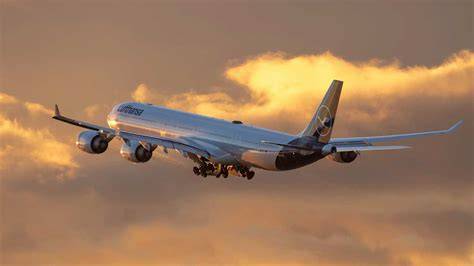
The Airbus A340 was created during an era when four engines represented an important advantage for long-range commercial aviation. When it entered service in the early 1990s, the aircraft offered airlines a combination of intercontinental range, substantial passenger capacity, and the reassurance of a four-engine configuration. Its arrival alongside the twin-engine A330 gave Airbus a powerful family of widebody aircraft capable of serving different long-haul requirements.
For airlines such as Lufthansa and Singapore Airlines, the A340 became a familiar sight on international routes. The aircraft’s long, elegant fuselage and distinctive four-engine layout made it one of the defining widebodies of its generation. Variants such as the A340-300 and A340-600 could accommodate large passenger loads while providing the range necessary for demanding intercontinental missions.
The aircraft’s weakness eventually became obvious. Four engines meant four sets of maintenance requirements and significantly greater fuel consumption than newer twin-engine designs. As fuel prices increased and increasingly capable twins entered the market, the economic argument for operating passenger A340s became harder to defend. The arrival of aircraft such as the Boeing 777 and Airbus A350 accelerated that transition.
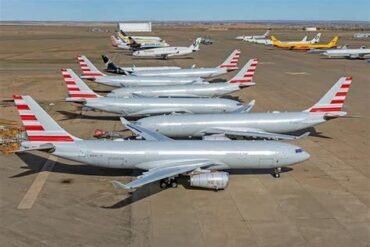
Nevertheless, some A340s continued flying because their capabilities remained useful. Lufthansa, for example, retained selected aircraft for high-density international operations, while other operators have continued using surviving examples for passenger and specialist missions. Their large cabins and established infrastructure can make them practical in circumstances where acquiring new aircraft is expensive or delayed.
The A340 therefore represents one of the clearest examples of an aircraft surviving beyond its economic prime. Its fuel burn may prevent it from competing with modern carbon-composite twins on a normal cost-per-seat basis, but an existing airframe can still make sense when an operator needs capacity, range, and availability without waiting years for a replacement aircraft.
McDonnell Douglas MD-11: From Passenger Airliner to Cargo Heavyweight
Few widebody aircraft have experienced a more dramatic transformation than the McDonnell Douglas MD-11. Introduced in the early 1990s as an evolution of the DC-10, the MD-11 combined a three-engine configuration with an advanced glass cockpit, long-range capability, and substantial cargo volume. It was intended to be a sophisticated next-generation trijet.
Passenger airlines, however, discovered that the aircraft’s economics were difficult to reconcile with the rapidly changing widebody market. Its fuel consumption and aerodynamic characteristics made it less competitive against increasingly efficient twin-engine aircraft. Airlines began withdrawing passenger MD-11s relatively early compared with some other widebody types.
Cargo operators saw the aircraft differently.
The same characteristics that created challenges in passenger service could become advantages in freight operations. The MD-11 offered a large main deck, considerable lower-deck cargo capacity, and strong long-range performance. Its fuselage could carry substantial freight loads across international routes, making it particularly attractive to express operators.
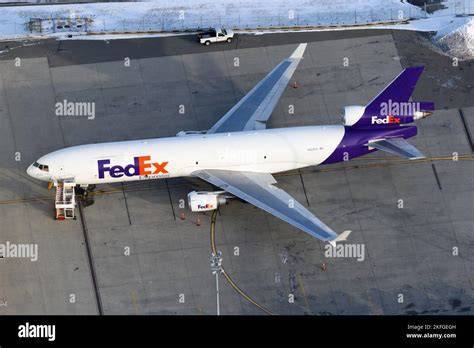
FedEx Express became one of the most important operators of the MD-11, building a major freighter fleet around the type. Cargo operations also avoid many of the passenger-service considerations that influence aircraft selection, allowing operators to extract value from an airframe whose passenger economics had become increasingly difficult.
The MD-11’s continued existence in cargo service demonstrates why aircraft retirement is rarely a simple matter of age. A jet can be outdated in one mission while remaining highly effective in another. Freight operators care deeply about payload, volume, loading efficiency, range, and structural durability. The MD-11 can still provide a combination of these characteristics that makes its continued operation worthwhile.
Its eventual retirement is inevitable, but the aircraft has already achieved something remarkable: it transformed from a relatively short-lived passenger flagship into a global cargo workhorse that outlasted much of its original airline career.
Airbus A300: The Widebody That Built a Cargo Legacy
The Airbus A300 occupies a unique position in commercial aviation history. Introduced in the 1970s, it became the world’s first twin-engine widebody airliner and challenged the assumption that a large passenger aircraft required four engines.
That design decision was revolutionary. The A300 demonstrated that two engines could provide the necessary performance for a widebody aircraft serving high-density regional and medium-haul routes. Its basic architecture also established a fuselage cross-section that would influence later Airbus widebody families.
Passenger airlines eventually moved toward newer aircraft with greater range, improved efficiency, and more advanced systems. Yet the A300 found an extraordinarily successful second career in freight.
Its A300-600F freighter became particularly important to express logistics networks. Operators including DHL-related fleets and FedEx Express have used the aircraft extensively, exploiting its wide fuselage and efficient cargo-loading configuration. For parcel networks, the A300 occupies a useful middle ground: larger than many narrowbody freighters but more economical on suitable short- and medium-haul routes than enormous long-range freighters.
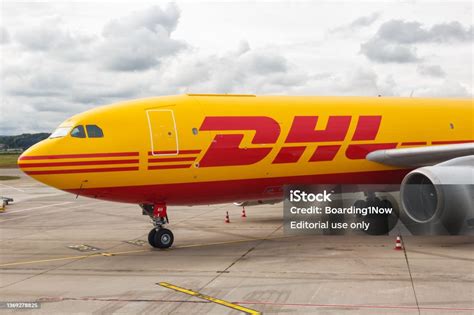
The aircraft’s structural design also suits the repetitive nature of cargo operations. Freight aircraft often experience frequent cycles, rapid turnarounds, and demanding loading schedules. The A300’s robust landing gear and substantial fuselage structure were designed for commercial service conditions that translate well into this environment.
Some passenger-configured A300-family aircraft have survived in unusual markets as well. Operators in countries where fleet replacement has been slower can continue flying aircraft that disappeared from major Western airline fleets years earlier. This gives the A300 an unusually broad afterlife.
More importantly, its cargo career proves that the original design was remarkably adaptable. An aircraft conceived during the birth of the modern widebody era became a vital component of the global express-delivery system decades later.
Boeing 767: The Medium Widebody With a Second Career
The Boeing 767 may have achieved the most commercially successful transition from passenger aircraft to freighter among the five aircraft discussed here. When it entered service in the early 1980s, the 767 transformed the economics of long-distance twin-engine flying.
Its relatively efficient two-engine design allowed airlines to operate routes that previously required larger aircraft. The 767 became particularly important on transatlantic services, connecting secondary cities directly rather than forcing passengers through the largest international hubs.
Its seven-abreast passenger cabin, strong range, and efficient operating profile made the 767 a favorite of airlines worldwide. But as newer aircraft such as the Boeing 787 Dreamliner arrived, passenger carriers increasingly moved their oldest 767s out of frontline service.
Instead of becoming obsolete, many of those aircraft entered conversion programs.
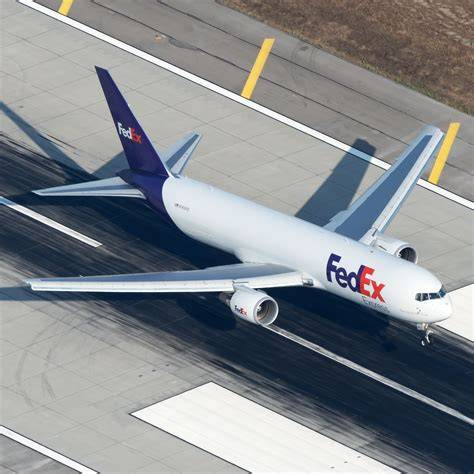
Today, the 767 is deeply embedded in the express-freight business. FedEx Express, UPS Airlines, and Amazon Air have operated extensive 767 fleets, using both factory-built and converted freighters. The aircraft’s size is particularly attractive because it provides substantial main-deck cargo capacity without the operating costs associated with larger widebody freighters.
This makes the 767 extremely well suited to overnight logistics. Parcel companies need aircraft that can depart frequently, operate from established hubs, handle standardized containers, and provide enough capacity for fluctuating freight demand. The 767 fits that formula exceptionally well.
Its continuing popularity also reflects the enormous infrastructure already surrounding the type. Pilots, maintenance organizations, parts suppliers, airports, and cargo operators understand the aircraft. Converting an existing 767 can therefore be far more practical than replacing its capabilities with an entirely new platform.
The passenger 767 may be approaching the end of its mainstream career, but the 767 freighter era remains remarkably strong. It is one of the clearest examples of an aircraft extending its useful commercial life by changing jobs rather than simply disappearing.
Boeing 747: The Queen of the Skies Still Working
No discussion of surviving widebody aircraft is complete without the Boeing 747. The aircraft changed commercial aviation more profoundly than almost any other jet. Its distinctive upper deck, enormous fuselage, and four-engine configuration made it a symbol of the age when international travel was becoming accessible to millions of people.
For decades, airlines relied on the 747 to move enormous numbers of passengers between major global hubs. The aircraft represented prestige as much as capacity. Its arrival at an airport was an event, and generations of passengers associated the unmistakable hump-backed silhouette with international travel.
Eventually, however, the economics changed. Four engines consumed more fuel than modern twins, while airlines increasingly preferred smaller aircraft capable of operating frequent point-to-point services. The Boeing 777, 787, Airbus A330, and A350 progressively displaced passenger 747s from many routes.
Yet the 747 discovered perhaps its most important role after passenger retirement: heavy cargo transportation.
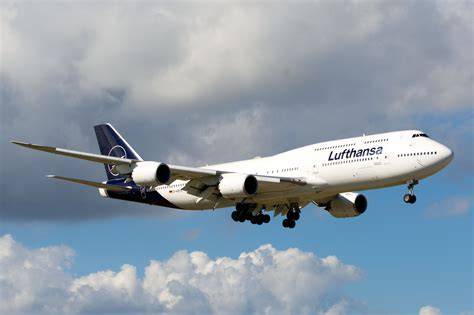
Freighter operators continue to value the aircraft because it can carry cargo that is difficult or impossible to accommodate on smaller aircraft. The 747-8F represents the final major evolution of the family, while 747-400 freighters remain active in global logistics fleets.
The aircraft’s greatest advantage is its combination of enormous internal volume and the famous nose-loading door. Freight can be loaded directly through the front of the aircraft, making the 747 exceptionally useful for oversized industrial equipment, vehicles, machinery, humanitarian supplies, and other unconventional shipments.
Operators such as Atlas Air, UPS Airlines, and Lufthansa Cargo have kept 747 freighters active in global networks. These aircraft may no longer carry hundreds of vacationers between major capitals, but they remain capable of moving extraordinary quantities of freight across continents.
The 747’s survival is therefore about more than nostalgia. Its design provides capabilities that modern aircraft do not always replicate economically. Even when newer twins are more efficient, efficiency alone cannot replace the physical dimensions of the Queen of the Skies.
Why These Widebodies Survived Passenger Retirement
The continued operation of these five aircraft reveals an important principle in aviation: retirement from passenger service does not necessarily mean the end of an aircraft’s commercial usefulness. Instead, aircraft can move into roles where their age matters less than their structural capacity and mission suitability.
Cargo is particularly effective at extending aircraft lifespans because freight does not demand the same cabin experience as passengers. Airlines can remove seats, reinforce floors, install large cargo doors, and redesign the interior around containers and pallets. An airframe that looks outdated beside a modern passenger jet can become highly productive once its mission changes.
The economics also matter. A new aircraft may deliver superior fuel efficiency, but acquiring one requires enormous capital expenditure. An existing aircraft that has already absorbed much of its acquisition cost can remain financially attractive if maintenance requirements and operating performance remain manageable.
These aircraft also possess capabilities that are difficult to replace one-for-one. The 747 offers exceptional volume and nose loading, the 767 provides an ideal medium-widebody cargo platform, the A300 excels in regional freight operations, and the MD-11 combines substantial cargo capacity with long-range performance. The A340, meanwhile, survives where passenger capacity and existing fleet availability can justify continued operation.
The Final Years of Aviation’s Classic Widebodies
The five aircraft are at different stages of their lives, but all demonstrate how slowly aviation technology truly disappears. Aircraft can leave the passenger market while remaining visible over airports, cargo hubs, and international airways for many years.
The transition is especially fascinating because each aircraft has found its own reason to survive. The A340 represents the stubborn endurance of the classic quadjet. The MD-11 became a cargo specialist. The A300 helped establish the modern express-freight model. The 767 turned passenger retirements into an enormous freighter pipeline. And the 747 became the industry’s enduring heavy-lift symbol.
Eventually, maintenance costs, structural limitations, emissions requirements, and parts availability will bring these aircraft toward their final flights. But their longevity has already exceeded what many observers might have expected when newer generations first appeared.
The story of these five widebody aircraft still flying years after passenger retirement is therefore not simply a story about old airplanes. It is a story about adaptability. Commercial aviation rewards efficiency, but the industry also rewards machines that can perform difficult jobs exceptionally well. As long as global logistics require large volumes of freight to move quickly across continents, some of these legendary widebodies will continue to earn their place in the sky.