Air travelers often assume delays are sudden events triggered minutes before departure. A gate agent makes an announcement, passengers groan collectively, and everyone imagines some last-minute operational failure unfolding behind the scenes. In reality, airlines usually know a flight is in trouble long before boarding even begins. By the time passengers are lining up at the gate, airline operations centers have often spent hours modeling delay scenarios, testing recovery strategies, monitoring aircraft movements, and recalculating schedules across an entire network.
Modern commercial aviation operates on predictive logistics rather than reactive decision-making. Every aircraft, crew member, baggage cart, fueling truck, and gate assignment exists inside a live operational ecosystem where software continuously forecasts whether flights will remain on schedule. Airlines are no longer simply responding to disruptions after they occur. They are detecting them in advance, often with remarkable accuracy.
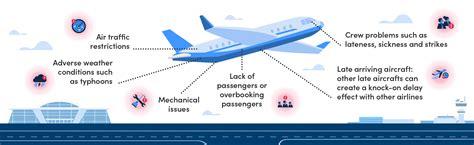
The reason airlines can predict delays so early comes down to one fundamental reality: modern airline schedules are built with almost no margin for error. A single disruption can spread through an entire network within hours, affecting aircraft rotations across multiple cities and time zones. Once an aircraft falls behind schedule, operations teams begin calculating the probability of downstream delays almost immediately.
Passengers may still see an “on-time” departure listed on airport screens, but internally, the airline may already know the odds of an on-time pushback are rapidly shrinking.
The Inbound Aircraft Determines Whether Your Flight Leaves On Time
The biggest factor influencing a flight’s punctuality is rarely the passengers waiting at the gate. It is usually the aircraft itself.
Airlines track aircraft by registration number and tail assignment rather than by the public-facing flight number passengers see on boarding passes. A single aircraft may operate five, six, or even eight separate flights in one day, moving continuously between airports with extremely short turnaround windows in between. If that aircraft encounters delays early in the schedule, those problems often continue cascading throughout the day.
This is why experienced travelers frequently check inbound aircraft tracking instead of relying solely on airport departure boards. If the airplane scheduled to operate a 6:00 PM flight is still airborne hundreds of miles away at 5:10 PM, the airline already understands the operational reality long before any announcement reaches the gate area.
Internally, airline systems are continuously updating estimated arrival times based on dozens of variables including air traffic congestion, runway sequencing, weather conditions, holding patterns, and ground traffic at the destination airport. These estimates are not static. They update minute by minute as conditions evolve.
A thunderstorm near a major hub can instantly reduce arrival capacity, forcing aircraft into holding patterns and delaying gate availability. Strong headwinds can extend flight times. Congested taxiways may add another 20 minutes after landing. Even a minor slowdown early in the aircraft’s daily rotation can become nearly impossible to recover from later.
What passengers see publicly is often a carefully managed estimate. What airline operations teams see internally is a constantly evolving probability model.
Modern Airline Schedules Leave Almost No Room For Recovery
Commercial airlines make money when aircraft are flying, not sitting parked at gates. That economic reality has transformed modern scheduling into a high-speed operational puzzle where every minute matters.
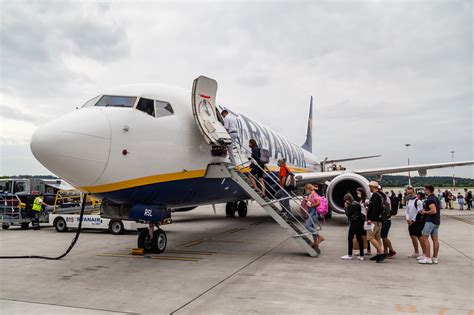
Many narrowbody aircraft now operate with turnaround windows of just 25 to 40 minutes between flights. During that short period, an enormous number of tasks must happen with near-perfect coordination.
The moment the aircraft parks at the gate, a tightly choreographed sequence begins. Baggage handlers unload cargo while cleaners enter the cabin. Catering crews replace food carts. Fuel trucks connect hoses beneath the wing. Pilots complete inspections while gate agents prepare the next boarding process. Ramp teams coordinate pushback timing with airport ground traffic control systems.
None of these activities exist independently. They overlap continuously under intense time pressure.
If fueling begins late, departure clearance may be delayed. If baggage loading falls behind schedule, the cargo hold may need reopening moments before pushback. If cleaners remain onboard too long, boarding starts late. Even something as small as a delayed catering truck can trigger downstream disruptions affecting departure timing.
Because turnaround windows are so compressed, airlines monitor every individual process in real time.
Operations control centers can instantly see whether fueling has started, whether baggage loading is complete, whether catering vehicles have arrived, or whether maintenance personnel are still onboard. Some airports now deploy AI-assisted camera systems capable of tracking dozens of separate turnaround activities simultaneously, automatically flagging operational slowdowns before they become critical.
Airline Operations Centers Function Like Network Command Hubs
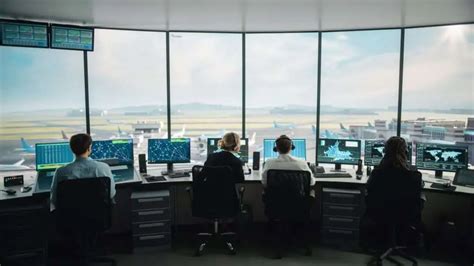
Behind every major airline sits a centralized operations control center that resembles a hybrid between a trading floor, military command center, and data analytics lab.
These facilities monitor thousands of live operational variables simultaneously across entire route networks. Teams include dispatchers, crew schedulers, maintenance coordinators, airport planners, meteorologists, and air traffic specialists working together in real time.
The systems they use continuously recalculate flight projections every few seconds.
Estimated departure time, estimated arrival time, taxi duration, runway sequencing, gate occupancy, crew legality, maintenance status, fuel requirements, weather patterns, and connecting passenger flows all feed into operational forecasting software. Airlines are not simply observing flights. They are running constant predictive simulations about what will happen next.
Weather remains one of the most powerful disruption variables. A line of thunderstorms over Atlanta, Chicago, or Dallas can reduce airport arrival capacity almost instantly. Once air traffic control imposes flow restrictions, delays begin spreading rapidly throughout the network.
Airlines know this long before passengers do because they receive operational updates directly from aviation systems and air traffic coordination channels. The moment airport capacity drops, software immediately recalculates which flights are likely to miss slots, exceed crew limits, or lose gate access.
Strong winds also matter more than many travelers realize. A persistent headwind can add significant flight time on long-haul sectors, reducing the recovery margin built into subsequent flights later in the aircraft’s schedule.
Operations centers continuously evaluate whether those delays can be absorbed or whether they will cascade into larger disruptions.
Crew Scheduling Often Determines Whether A Delay Gets Worse
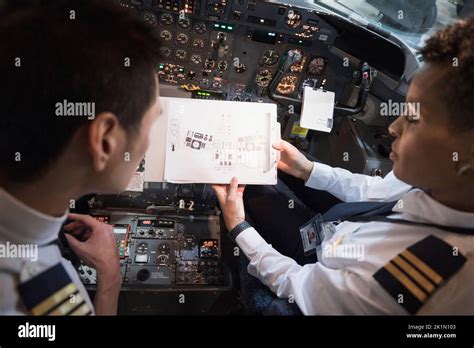
Aircraft are not the only moving parts airlines must manage. Pilots and flight attendants operate under strict legal duty-time limitations that create another major operational challenge.
Every crew has a maximum allowable working period determined by aviation safety regulations. If delays push crews beyond those limits, the airline may need replacement pilots or cabin crew before the flight can legally depart.
This creates a domino effect that passengers rarely see.
A flight delayed by weather may initially appear manageable, but if the delay risks violating crew duty rules, operations teams suddenly face a much larger problem. Finding reserve crew members on short notice is not always easy, especially at smaller airports or during widespread disruptions.
Modern crew management systems monitor these limits continuously. Airlines often know hours in advance when a delay is approaching a legal threshold. That is why some flights suddenly experience major delays after appearing recoverable earlier in the day.
The aircraft may be ready. The passengers may already be onboard. But if crew legality expires, the schedule changes immediately.
Maintenance adds another layer of complexity. Modern aircraft transmit enormous amounts of technical data during flight, allowing airlines to identify potential maintenance issues before landing. Engineers may already know a component requires inspection before the aircraft even reaches the gate.
This predictive maintenance capability helps airlines reduce unexpected failures, but it also means operations teams are constantly balancing schedule reliability against safety requirements and repair timelines.
Delays Spread Across Airline Networks Faster Than Most Passengers Realize
Most travelers think about delays as isolated events connected to a single airport or flight. Airlines do not see operations that way.
They view the entire system as a living network where disruptions ripple continuously between cities.
A morning weather delay in Chicago may affect aircraft arriving in Denver by afternoon and create evening disruptions in Los Angeles or Miami. Since aircraft move continuously through interconnected schedules, each delay reduces the recovery time available later in the day.
This explains why evening flights statistically experience more delays than early morning departures. By late afternoon, aircraft have already accumulated operational exposure across multiple airports, weather systems, air traffic constraints, and turnaround cycles.
Small disruptions that could be absorbed earlier become much harder to recover from later.
Operations centers monitor these network effects constantly. If an aircraft begins running significantly behind schedule in the morning, planners may start exploring aircraft swaps, gate reallocations, or schedule adjustments hours before passengers notice anything unusual.
Sometimes airlines reposition entirely different aircraft to protect critical routes. Other times they intentionally delay one flight to preserve operational reliability elsewhere in the network.
These decisions are rarely random. They are calculated attempts to minimize wider disruption across hundreds of flights.
Why Airlines Sometimes Delay Announcements Until The Last Minute
Passengers often become frustrated when airlines appear slow to announce delays. From the traveler’s perspective, it can feel like the airline already knew but chose not to communicate honestly.
The reality is more complicated.
Gate agents are frequently among the last employees to receive finalized operational updates because delay decisions originate inside centralized operations centers. Those teams spend significant time evaluating recovery possibilities before officially revising schedules.
An inbound aircraft arriving 30 minutes late does not automatically guarantee a 30-minute departure delay. Ground crews may accelerate turnaround procedures. Weather conditions may improve. Air traffic restrictions may ease unexpectedly. Another aircraft might become available for substitution.
Airlines therefore hesitate to announce delays too early because operational conditions can still change rapidly.
This creates tension between operational flexibility and passenger communication. Travelers understandably want certainty as early as possible. Airlines, meanwhile, are trying to preserve every realistic opportunity to maintain the schedule.
In many cases, both perspectives collide at the gate.
Passengers interpret delayed announcements as poor communication, while operations teams see them as ongoing recovery efforts still evolving behind the scenes.
AI And Predictive Analytics Have Transformed Delay Forecasting
Over the last decade, airline operational forecasting has evolved dramatically thanks to predictive analytics, machine learning, and AI-driven operational software.
Traditional scheduling systems relied heavily on historical averages and manual coordination. Modern systems process enormous streams of live operational data continuously.
Weather feeds, aircraft telemetry, airport congestion statistics, runway sequencing information, maintenance diagnostics, passenger connection flows, baggage transfer timing, and crew legality calculations all feed into predictive algorithms capable of forecasting disruptions with impressive accuracy.
Some systems analyze individual turnaround activities in real time using airport cameras and automated tracking sensors. If fueling begins late, baggage loading slows, or pushback equipment fails to arrive on schedule, alerts trigger instantly inside the operations center.
Third-party flight tracking apps available to consumers now predict many delays surprisingly well using public aircraft movement data. Airlines themselves possess far deeper operational visibility.
They are not simply watching airplanes move across maps. They are monitoring every operational dependency connected to those aircraft simultaneously.
The result is an aviation industry where very little remains invisible operationally. Airlines may not always prevent delays, but they usually identify them remarkably early.
Why The “On-Time” Departure You See May Already Be Unrealistic
One of the most misunderstood parts of airline operations is the difference between public schedules and internal operational forecasts.
Airport departure boards are designed partly for passenger communication stability. Airlines avoid constantly changing public estimates every few minutes because doing so would create confusion and panic across terminals.
Internally, however, forecasts evolve continuously.
An operations center may already estimate a high probability of delay while public systems still display the scheduled departure time. The airline may simply be waiting for confirmation before officially revising the estimate.
This is especially common during weather disruptions or heavy air traffic congestion where conditions remain fluid.
Passengers often interpret this gap as dishonesty. In reality, airlines are balancing operational uncertainty against communication management. They do not want to announce a delay prematurely if recovery remains possible, but they also cannot guarantee schedules while variables continue changing minute by minute.
That balancing act explains why flights sometimes appear “on time” until boarding suddenly slows or stops altogether.
Airlines Usually Know The Outcome Long Before Passengers Do
Modern aviation depends on predictive operational awareness at a scale most passengers never see. Airlines track aircraft rotations, crew limits, gate availability, fueling progress, maintenance diagnostics, weather systems, baggage transfers, and air traffic flow simultaneously through interconnected software ecosystems operating around the clock.
By the time a gate announcement finally reaches passengers, operations teams have often spent hours modeling potential outcomes and searching for ways to protect the schedule.
The exact delay duration may still evolve, but the broader operational picture usually becomes clear far earlier than travelers realize.
That is why seasoned travelers increasingly monitor inbound aircraft status, airport weather systems, and network congestion patterns themselves. In today’s aviation industry, delays are rarely surprises inside the airline. They are typically predictions slowly becoming unavoidable realities.