The idea that the Boeing 787 Dreamliner can predict turbulence sounds almost supernatural. A commercial jet that senses invisible air currents before they strike? It feels like something pulled from speculative fiction—a machine peering into atmospheric chaos like a meteorological oracle. Yet aviation rarely deals in magic. It deals in physics, probability, and precision engineering. The real story of the 787 is more nuanced, more technical, and far more impressive than a simple yes-or-no answer.
The Dreamliner has earned a reputation as one of the smoothest widebody aircraft in the sky. Frequent flyers often remark that flights aboard the 787 feel calmer and less jarring, even when crossing known turbulent regions. That perception has fueled the myth that the aircraft must somehow “predict” turbulence. In truth, the 787 does not foresee invisible air disturbances hours in advance. What it does instead is far more practical: it detects, absorbs, and mitigates turbulence with extraordinary efficiency.
Understanding how the 787 achieves this requires a deeper look at turbulence itself, how it is forecasted in modern aviation, and how Boeing engineered this aircraft to work with the air rather than resist it.
What Turbulence Really Is: The Physics Behind Rough Air
Turbulence is not an enemy of flight. It is a natural consequence of a dynamic atmosphere. Air is never perfectly smooth. It shifts in temperature, density, speed, and direction. When these differences interact—especially at high altitudes—they create irregular motion that pilots and passengers experience as bumps or jolts.
Clear Air Turbulence (CAT) is particularly intriguing. Unlike storm-related turbulence, CAT forms without visible clouds. It often occurs near jet streams, those fast-moving rivers of air that snake across the upper atmosphere. Because CAT offers no visual cues, it can surprise even experienced crews. That unpredictability is what fuels the notion that aircraft must “predict” turbulence to avoid it.
From an aerodynamic standpoint, turbulence disrupts smooth airflow over the wings. This creates rapid changes in lift—the upward force that keeps an aircraft aloft. Aircraft are designed with enormous safety margins to handle these load changes. Structural engineers calculate maximum expected forces and then add substantial buffers. Even when turbulence feels intense inside the cabin, the airframe itself remains well within safe operational limits.
The difference between aircraft lies not in their ability to survive turbulence, but in how they respond to it.
How Turbulence Is Actually Forecasted in Modern Aviation
Turbulence prediction begins long before an aircraft leaves the gate. Meteorological agencies around the world use satellites, Doppler radar, weather balloons, and sophisticated computer models to identify atmospheric instability. They track jet streams, wind shear zones, convective storms, and regions statistically prone to CAT.
Airline dispatchers translate that data into operational decisions. Routes are adjusted. Cruise altitudes are optimized. Known rough areas are avoided when possible. During flight, pilots contribute to a global information network by submitting Pilot Reports (PIREPs), alerting other crews to turbulence encountered along specific routes.
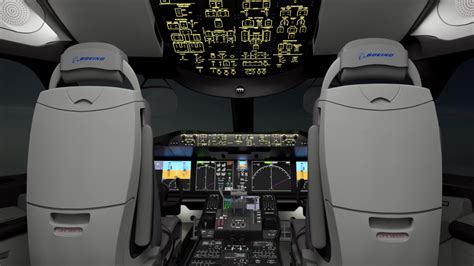
Inside the Boeing 787 cockpit, advanced weather radar scans ahead for precipitation and storm activity. The aircraft can also receive real-time weather updates and turbulence reports. However, this is detection and situational awareness—not autonomous long-range turbulence prediction. The 787 does not independently sense invisible clear-air disturbances miles ahead in empty sky.
It enhances awareness. It does not foresee the future.
The Boeing 787 Wing: Engineering Flexibility Into Comfort
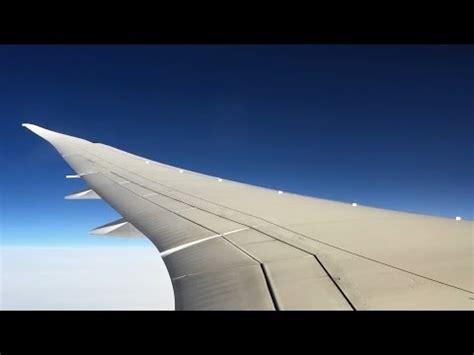
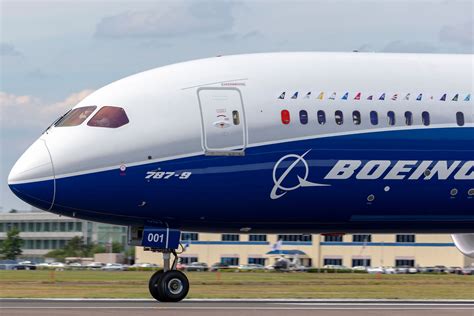
The defining physical feature of the 787 is its wing. Long, slender, and dramatically curved upward even at rest, the Dreamliner’s wings are built from advanced carbon-fiber composites. These materials are lighter and stronger than traditional aluminum, but their most important trait in turbulence is controlled flexibility.
Flexibility in aviation might sound counterintuitive. Rigid seems safer. In reality, rigidity can transmit energy directly into the fuselage, producing sharper motions in the cabin. A flexible wing behaves differently. When a gust increases lift suddenly, the wing bends upward. That bending absorbs and dissipates energy before it transfers fully to the aircraft body.
The numbers are striking. In structural testing, the Boeing 787-9’s wings demonstrated vertical displacement of up to 25 feet under extreme load conditions. This is not a flaw; it is deliberate engineering. That flexibility reduces abrupt vertical acceleration inside the cabin.
Passengers perceive fewer sharp jolts because the wings are doing subtle, constant work—like shock absorbers on a finely tuned vehicle.
Active Gust Load Alleviation: The 787’s Real-Time Response System
If the flexible wing is the Dreamliner’s skeleton, its nervous system is digital. The 787 is a fly-by-wire aircraft, meaning control inputs are transmitted electronically rather than mechanically. This allows onboard computers to intervene instantly when atmospheric conditions shift.
Central to this capability is the Gust Load Alleviation System. Sensors distributed throughout the aircraft monitor acceleration, air pressure changes, and structural loads. When a sudden gust alters lift distribution, the flight control computers automatically adjust control surfaces—such as ailerons and elevators—to counteract the disturbance.
These adjustments happen in milliseconds. No pilot input is required. The system reduces vertical acceleration spikes and keeps wing bending moments stable. The cabin may feel a gentle movement rather than a sharp bump because the aircraft has already compensated for part of the force.
This is not prediction. It is ultra-fast reaction.
The technology shares conceptual lineage with systems used on advanced military aircraft, where maintaining aerodynamic stability under changing loads is critical. In the 787, that sophistication is repurposed for passenger comfort and structural efficiency.
Flaps Up Vertical Mode Suppression: Managing Aeroelastic Complexity
The Boeing 787-10, the longest variant of the Dreamliner family, introduced another innovation: the Flaps Up Vertical Mode Suppression (F0VMS) system. The longer fuselage combined with the same flexible wing design created new aeroelastic considerations. Aeroelasticity refers to the interaction between aerodynamic forces and structural flexibility—essentially how wings and fuselages vibrate and bend under airflow.
Rather than redesigning a heavier wing, Boeing implemented active control logic. When the flaps are up, the system automatically adjusts elevator inputs to suppress flutter tendencies. Flutter is a potentially destructive oscillation that can occur when aerodynamic forces synchronize with structural vibrations.
F0VMS prevents such oscillations from developing, preserving both structural integrity and cabin smoothness. It is a sophisticated dance between physics and software, ensuring that flexibility remains an advantage rather than a vulnerability.
Why the 787 Feels Smoother Than Many Aircraft
Passengers often report that turbulence feels milder aboard the 787 compared to older widebody jets. Several design factors contribute to this perception.
First, the composite structure dampens vibrations differently than metal. Carbon-fiber composites absorb certain frequencies more effectively, reducing resonance inside the cabin.
Second, the aircraft’s higher cabin humidity and lower pressurization altitude reduce physiological stress. While unrelated to turbulence mechanics, these environmental improvements can make bumps feel less fatiguing.
Third, the integration of gust load alleviation with flexible wing geometry means that vertical accelerations are moderated before they propagate through the fuselage.
The result is not a turbulence-proof aircraft. It is an aircraft engineered to handle turbulence gracefully.
Myth vs. Reality: Does the 787 Predict Turbulence?
The short answer is no. The Boeing 787 Dreamliner does not possess an independent system capable of predicting invisible turbulence far in advance. It relies on the same global meteorological forecasting network used by all commercial aircraft. It receives weather updates. It scans for storms. It shares pilot reports.
Its distinction lies in mitigation, not prophecy.
That nuance matters. Aviation thrives on layered safety systems and incremental improvements, not dramatic leaps into clairvoyance. The Dreamliner exemplifies this philosophy. It does not attempt to eliminate atmospheric unpredictability. Instead, it reduces the impact of that unpredictability.
A Broader Perspective: The Evolution of Turbulence Handling
Compared to earlier generations of widebody aircraft, the 787 represents a significant shift in design philosophy. Traditional jets emphasized structural rigidity. The Dreamliner embraces controlled elasticity and digital augmentation.
This approach aligns with broader trends in aerospace engineering. Modern aircraft increasingly function as integrated computational systems, constantly analyzing sensor data and making micro-adjustments in real time. The goal is not merely to survive environmental forces but to harmonize with them.
The 787 operates within that paradigm. It absorbs gust energy through flexible composite wings. It counters rapid lift changes via flight control algorithms. It stabilizes aeroelastic behavior through active suppression systems.
These elements work together to create an aircraft that feels smoother, quieter, and more refined in turbulent air.
The Final Verdict on Turbulence Prediction
The belief that the Boeing 787 can predict turbulence likely stems from the noticeable comfort difference passengers experience. When a plane feels calm while others might shudder, it is tempting to assume some futuristic predictive system is at work.
In reality, the Dreamliner’s advantage lies in intelligent engineering rather than foresight. It leverages:
- Advanced composite wing structures
- Significant wing flexibility
- Real-time gust load alleviation software
- Aeroelastic suppression systems
- Integrated weather awareness
Together, these technologies allow the 787 to respond to turbulence more effectively than many predecessors. It may not foresee every invisible air pocket, but when rough air arrives, it is prepared.
The atmosphere will always remain dynamic and occasionally unruly. The Boeing 787 Dreamliner does not conquer turbulence by predicting it. It masters it by adapting to it in real time—turning atmospheric chaos into manageable motion and transforming a fundamental feature of flight into a far more comfortable experience.