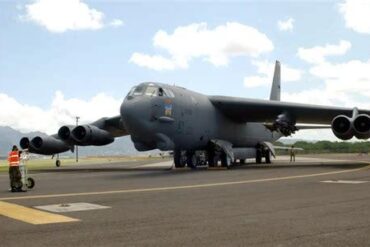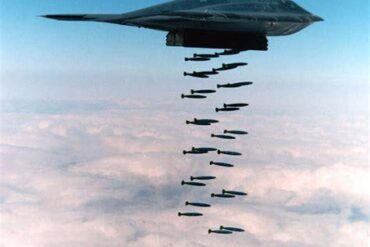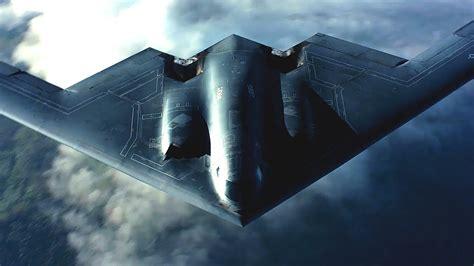
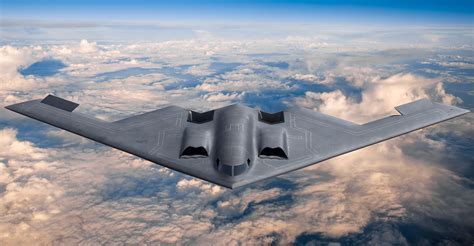
The B-2 Spirit stealth bomber, a flying wing marvel cloaked in radar-absorbing mystery, evokes awe not only for its nuclear strike capabilities but for its surreal, otherworldly silhouette. Engineered to penetrate defended airspace undetected and deliver strategic payloads across continents, its design remains one of the most ambitious feats of aviation engineering. But a captivating question occasionally stirs curiosity: Can the B-2 bomber reach space? While the concept sounds thrillingly cinematic, reality—rooted in physics and aerospace engineering—tells a far more sobering tale.
B-2 Spirit: Master of the Skies, Not of the Stars
From its inception, the Northrop Grumman B-2 Spirit was created to fly within the bounds of Earth’s atmosphere. Designed for stealth, subsonic speeds, and global reach, it can soar at altitudes around 50,000 feet (15 km) and travel over 11,000 km without refueling. These capabilities allow it to avoid detection and deliver weapons virtually anywhere in the world.
However, none of its systems were intended to function beyond the atmosphere. The aircraft relies on aerodynamic lift, air-breathing engines, and a fuselage shaped specifically for atmospheric conditions. It was never designed to confront the vacuum of space.
The Atmospheric Boundary: Where Flight Ends and Space Begins
The formal transition between Earth’s atmosphere and space is defined by the Kármán line, located at 100 kilometers (62 miles) above sea level. Beyond this line, air density becomes too low to support aerodynamic flight or conventional jet engine combustion. For the B-2, whose engines are built to operate within Earth’s atmosphere, this presents an impenetrable ceiling.
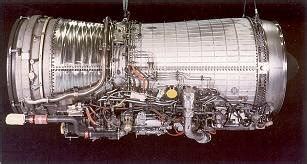
The General Electric F118-GE-100 turbofan engines powering the B-2 rely entirely on atmospheric oxygen. These engines mix air with jet fuel to produce thrust, and the absence of oxygen in space would cause them to flame out instantly. Even before approaching the Kármán line, engine performance would degrade sharply as air density decreases.
By around 20 km in altitude, the engines begin to lose significant thrust. At 25 km, they would become ineffective, and at 30 km or above, a complete engine failure would occur. Without engine power, the bomber becomes little more than a 170,000 kg glider—and not a very good one.
Aerodynamic Breakdown: Wings Without Air
The B-2’s flying wing design generates lift only when moving through sufficiently dense air. As it climbs toward the upper stratosphere, the thin atmosphere reduces lift, ultimately leading to aerodynamic stall. Once the aircraft stalls, it no longer maintains stable flight. It would begin to tumble uncontrollably, unable to regain stability without aerodynamic control surfaces having sufficient airflow.
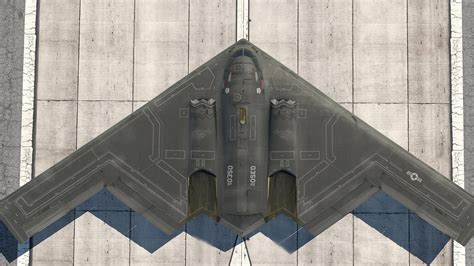
Unlike spacecraft, the B-2 lacks reaction control systems to stabilize itself in near-vacuum conditions. This makes it vulnerable to asymmetric stress on its broad wing structure. With a wingspan of over 52 meters, aerodynamic instability at extreme altitudes could cause structural failure under the slightest asymmetric force.
Life Support Limits: Crew Safety in the Stratosphere
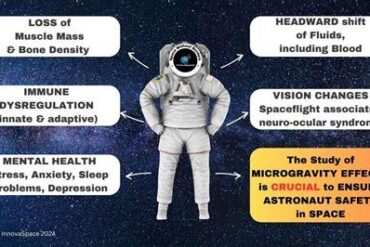
The aircraft’s interior is pressurized, and the crew wears oxygen masks for high-altitude missions. However, the protective measures aboard a B-2 are vastly inferior to the life-support systems used by astronauts. Once above 19,000 meters (62,000 feet), human physiology faces profound danger.
At extreme altitudes:
- The partial pressure of oxygen is too low to sustain life.
- Without a pressurized suit, blood can boil in a condition known as ebullism.
- Hypoxia, loss of consciousness, and death are imminent without supplemental systems.
The B-2 lacks the environmental sealing necessary to withstand vacuum exposure or radiation levels present in space. Its crew would not survive beyond the upper atmosphere.
No Rocket Engines, No Space
Spaceflight demands one absolute necessity the B-2 completely lacks: rocket propulsion. All vehicles that reach space—including suborbital rockets like Blue Origin’s New Shepard or SpaceX’s Falcon 9—use engines that carry oxidizers with them, enabling combustion in a vacuum. The B-2, by contrast, is entirely dependent on air-breathing engines.
Even if a hypothetical B-2 were somehow launched upward at high speed—perhaps piggybacked or boosted—it still wouldn’t survive:
- No heat shielding to protect it during re-entry.
- No guidance systems designed for orbital maneuvering.
- No redundant power systems to manage orbital challenges.
Structural Instability and Re-Entry Dangers
If a B-2 were to reach extreme altitude and stall, gravity would pull it back down. But re-entry physics—the very factor that demands protective tiles on spacecraft like the Space Shuttle—would spell disaster.
Without heat-resistant materials, the friction generated by slamming into thicker atmosphere at high speed would overheat and tear apart the airframe. The B-2’s radar-absorbing materials and composite skin are not designed to withstand re-entry temperatures that can exceed 1,650°C (3,000°F).
Even more problematic is the shape. Spacecraft are designed with blunt-body geometry to dissipate heat and control descent. The B-2’s sleek, thin-winged frame is ill-suited to anything but controlled subsonic descent. In re-entry, it would likely disintegrate in mid-air or spin into catastrophic failure.
Engineering Marvel Within Atmospheric Bounds
The B-2 remains one of the most advanced aircraft ever built, blending stealth, endurance, and precision weapon delivery. Its flying wing structure enables it to evade radar, and its composite skin diffuses radar signals. But these features are designed exclusively for atmospheric missions.
Northrop Grumman never engineered the B-2 for space-capable upgrades. While modern aerospace programs explore spaceplanes or dual-mode propulsion concepts, the B-2 is firmly anchored in late-20th-century technology. Its avionics, engines, and materials simply do not possess the modularity needed to support an orbital variant.
Why the Idea Captures the Imagination
So why does the idea persist? The B-2’s enigmatic presence—often seen gliding silently across airshows or through military footage—makes it feel alien, as if from a different world. Its appearance resembles depictions of spacecraft in films, and its role in strategic deterrence adds to its mythical status.
The notion of seeing it floating in space, casting a stealthy shadow over Earth, is more Hollywood than NASA. But the laws of physics don’t bend to imagination. No matter how capable it is within Earth’s skies, the B-2 is hopelessly out of its element in orbit.
Conclusion: The B-2’s Limits Are Earthbound
To summarize with clarity: no, the B-2 bomber cannot reach space. It lacks the propulsion, structure, life-support, and design features necessary for extraterrestrial operations. While the aircraft dominates within its atmospheric theater, that same dominance vanishes at the edge of space.
Its brilliance lies in invisibility, not altitude. Its weapons may threaten global stability, but its reach stops well before the stars. The B-2 reminds us that even the most advanced machines of war are bound by Earth’s physics. And that in the vacuum of space, even a ghost can’t fly.