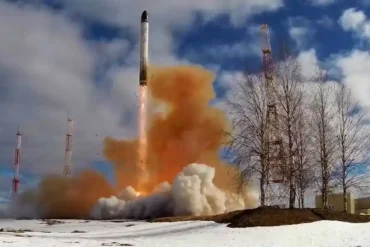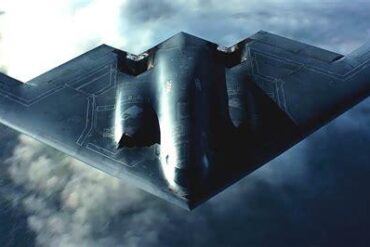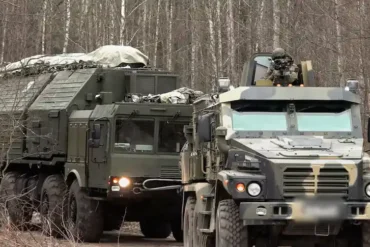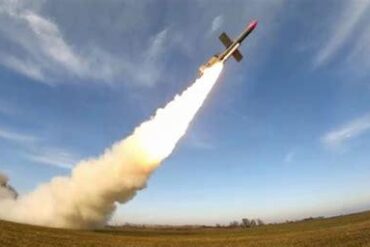
The development of intercontinental ballistic missiles (ICBMs) has long been at the core of strategic deterrence, and no missile embodies that doctrine more ominously than Russia’s RS-28 Sarmat, also known by its NATO designation ‘Satan II.’ With a claimed range of up to 10,000 miles, it currently stands as the longest-range missile in the world, a weapon specifically designed to bypass even the most advanced missile defense systems deployed by the West.
The Genesis of the RS-28 Sarmat: From Cold War Legacy to Modern Menace
The RS-28 Sarmat was not born overnight. Its lineage traces back to the Soviet-era R-36 (SS-9) missile, whose original flight tests began in 1973. Over the decades, the missile underwent multiple iterations, gaining range and payload enhancements with each new version. The first operational deployments occurred by 1975, with a total range capability already exceeding 6,000 miles. However, by the late 1980s, the SS-18 ‘Satan’ series had reached its zenith in both capability and strategic positioning.
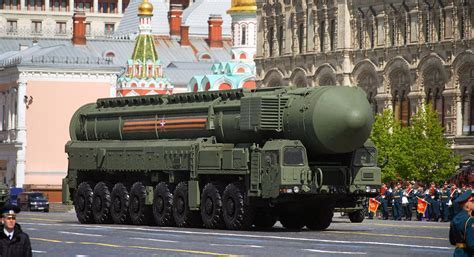
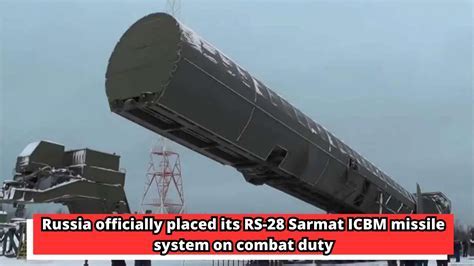
The RS-28 is the next-generation replacement for the now-aging R-36M2 Voevoda missiles, boasting a design that is both larger and more technologically sophisticated. While the earlier versions were gradually phased out, Russia officially listed 46 RS-28s as operational by 2016, positioning them in hardened underground silos across strategic points in the country.
Technical Specifications: Power and Payload
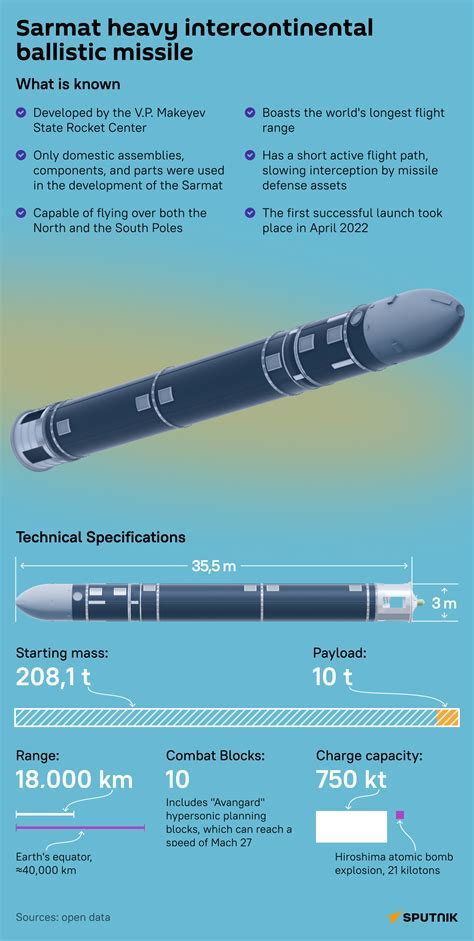
The RS-28 Sarmat isn’t just powerful — it’s a behemoth. Measuring 116 feet (35.5 meters) in length and weighing approximately 220 tons, this liquid-fueled missile represents a leap forward in strategic nuclear delivery.
It is reportedly capable of carrying:
- 10 to 16 Multiple Independently Targetable Reentry Vehicles (MIRVs)
- Each warhead programmed to strike separate, distant targets
- A payload capacity exceeding 10 tons, allowing for not only nuclear warheads but also decoys and penetration aids
According to Russian state media and official military briefings, the Satan II’s range reaches up to 10,000 miles (16,093 kilometers) — far enough to strike any point in North America, Europe, or Asia in less than 30 minutes.
A Shieldbreaker: Designed to Overcome Missile Defenses
Much of the West’s concern — or lack thereof — regarding the RS-28 Sarmat revolves not just around its range or payload, but its ability to defeat advanced anti-missile systems. Russian President Vladimir Putin has emphasized this repeatedly in state addresses, asserting that the Satan II can “overcome all modern missile defenses.”
This assertion is backed by a unique set of features:
- Advanced Decoy Dispersion: The missile deploys a “cloud” of metal-coated balloons, reflective chaff, and scrap particles, rendering radar systems nearly blind to the true warhead trajectories.
- Hypersonic Reentry: Some versions are believed to carry Avangard hypersonic glide vehicles, which maneuver unpredictably during reentry, making interception virtually impossible.
- High-altitude Polar Trajectory: Rather than flying along predictable intercontinental arcs, it can follow non-traditional flight paths over the South Pole, bypassing northern hemisphere tracking systems altogether.
According to Russian military expert Viktor Litovkin, the warheads “flew to the target in a cloud of false elements… fused into a single large spot on radar… from which it was impossible to distinguish real nuclear blocks.” This tactic confuses even the most advanced tracking and interception systems like the U.S. Ground-Based Midcourse Defense (GMD) and Aegis systems.
Western Response: Strategic Deterrence or Complacency?
Despite Russia’s aggressive marketing of the Satan II’s capabilities, Western defense officials have largely responded with measured indifference. In 2022, Pentagon Press Secretary John Kirby remarked that the missile posed “no new threat” to the United States or its allies. The U.K.’s Julian Lewis, chairman of the Intelligence and Security Committee, echoed this sentiment, saying it “makes absolutely no difference” to submarine-based deterrent strategies.
From a strategic standpoint, the Mutual Assured Destruction (MAD) doctrine remains unshaken. Whether Russia deploys 10 or 50 RS-28s, any nuclear exchange would still guarantee catastrophic retaliation from NATO’s nuclear triad. In other words, while the Satan II is frightening on paper, it doesn’t shift the global balance of deterrence — at least not yet.
Test Launches and Setbacks: The Road to Operational Readiness
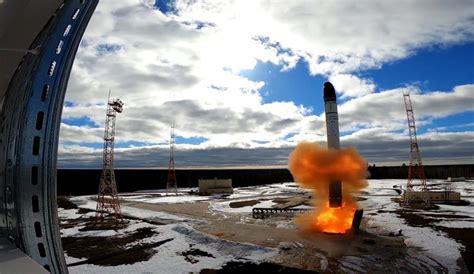
While initial test flights in 2022 were hailed as successful — prompting the Kremlin to announce the imminent deployment of 50 new RS-28 Sarmat missiles — not all trials have gone according to plan.
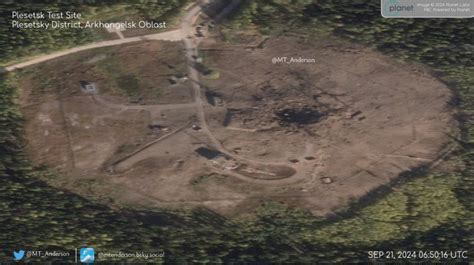
In 2023, a high-profile test from the Plesetsk Cosmodrome ended in disaster. Satellite imagery later confirmed a large crater where the missile silo once stood. According to Pavel Podvig, director of the Russian Nuclear Forces Project, “There was a serious incident with the missile and the silo. It was a failed test.”
This wasn’t an isolated incident. The 2023 failure marked the fourth known unsuccessful attempt to validate the missile’s launch capabilities. These setbacks have raised internal concerns about the missile’s reliability and the readiness of Russia’s nuclear modernization program.
Strategic Implications: Real Threat or Political Posturing?
Beyond its technical profile, the Satan II missile carries an enormous amount of political symbolism. By unveiling such a weapon, Russia seeks to reaffirm its role as a global nuclear superpower, especially amid ongoing geopolitical tensions with NATO, the United States, and Ukraine.
Putin’s repeated mention of the Satan II during public speeches often coincides with moments of international crisis, including sanctions, NATO expansions, and military escalations. In this light, the missile functions not just as a weapon, but as a geostrategic lever, designed to coerce and intimidate adversaries without necessarily being fired.
However, deterrence only works if the adversary believes in the weapon’s credibility. The string of failed tests, coupled with skeptical commentary from Western defense experts, has somewhat diluted the RS-28’s psychological impact. Still, the successful deployment of even a handful of fully functional Satan IIs would drastically reshape the nuclear strike map.
Conclusion: The Most Dangerous Missile That May Never Fly
The RS-28 Sarmat Satan II is, without question, the most ambitious intercontinental missile Russia has ever produced. Its immense range, sophisticated countermeasure systems, and devastating payload potential place it at the pinnacle of modern nuclear deterrence. But as it stands in 2025, the missile remains shrouded in a complex blend of awe, skepticism, and political theatrics.
While Russia continues to promote its long-range supremacy with chilling language, the real test lies not in the range numbers or silo depths, but in operational reliability and strategic utility. Until the RS-28 can consistently launch and deliver its payload under real-world conditions, its place in the pantheon of world-threatening weapons remains more theoretical than actual.
Still, it represents a terrifying leap in missile capability — one that forces defense analysts worldwide to prepare for a future where hypersonic, multi-warhead weapons travel halfway across the globe in less than half an hour, leaving no time for second chances.