Cruise missile technology in Europe is undergoing a quiet but powerful renaissance. As the continent navigates growing defense concerns in an increasingly unstable geopolitical landscape, long-range precision strike capability has become a priority. Among the many types of modern guided munitions, cruise missiles stand out due to their flexibility, accuracy, and stealth-like performance.
In this context, a pivotal question arises: which European cruise missile has the longest range? To answer this, we must examine the major players across air-launched and sea-launched categories, and understand how evolving propulsion, guidance, and delivery platforms are reshaping modern warfare.
The Strategic Rise of European Cruise Missiles
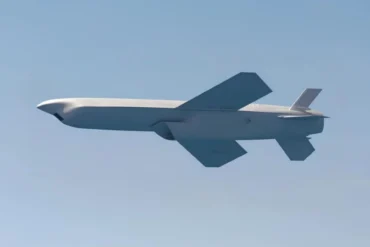
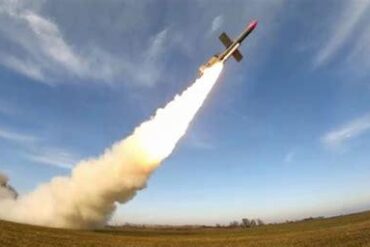
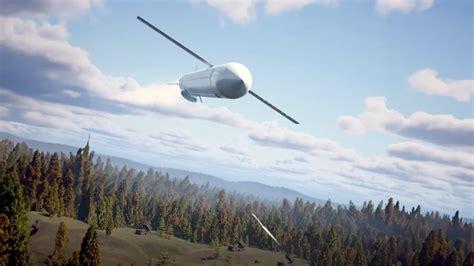
Cruise missiles are jet-powered weapons designed to fly at low altitudes, often hugging the terrain to avoid radar detection. Unlike ballistic missiles, which travel high into the atmosphere before descending rapidly, cruise missiles remain within the atmosphere in a mostly horizontal trajectory. This allows them to be more maneuverable, stealthy, and precise — perfect for surgical strikes against high-value, well-defended targets.
Europe’s cruise missile industry is dominated by a few leading firms: MBDA, Taurus Systems GmbH, and Saab Dynamics, often operating through transnational partnerships. Their products are essential not just for national defense, but also for NATO operations and allied force projection.
Taurus KEPD 350: The Current European Range Leader
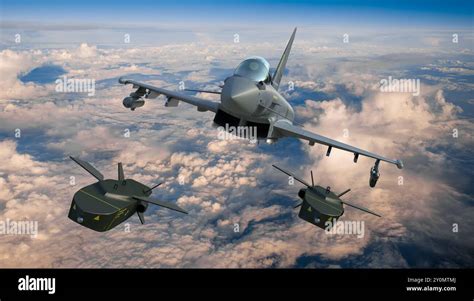
The Taurus KEPD 350 is a product of Taurus Systems GmbH, a joint venture between MBDA Deutschland GmbH and Saab Bofors Dynamics. This air-launched cruise missile (ALCM) is primarily used by the German and Spanish air forces and is considered one of the most formidable non-nuclear strike systems in Europe.
Key Features of the Taurus:
- Range: Over 300 miles (500+ km) in combat configuration
- Warhead: 481 kg (1,060 lb) dual-stage penetrating blast fragmentation warhead
- Speed: Subsonic (~Mach 0.8–0.95)
- Guidance: INS/GPS with terrain referenced navigation and image-based final targeting
The Taurus is designed for deep strike missions against heavily defended targets such as bunkers, airbases, or hardened infrastructure. Its modularity and sophisticated guidance allow it to fly complex routes, making it hard to intercept.
Storm Shadow / SCALP EG: France and the UK’s Trusted Twin
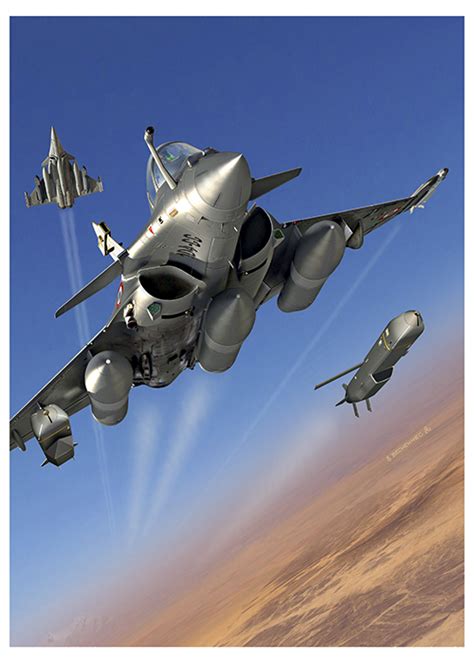
Developed by MBDA, the Storm Shadow (UK designation) and SCALP EG (French designation) are ALCMs used extensively by both countries. These missiles are also exported under restricted configurations.
Capabilities:
- Range: Up to 250 miles (400 km) in standard versions; export versions limited to around 150 miles due to MTCR regulations
- Warhead: BROACH — a multi-stage warhead designed to penetrate hardened structures
- Launch Platform: Tornado, Rafale, Eurofighter Typhoon
Although they have slightly shorter reach than the Taurus, Storm Shadow and SCALP offer battlefield versatility, ease of integration, and proven effectiveness, having been deployed in Libya, Iraq, and Syria.
MdCN: France’s Naval Cruise Missile
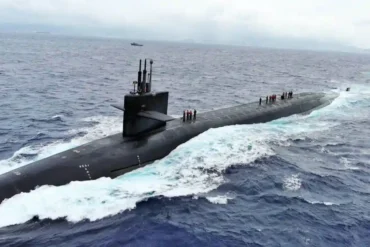
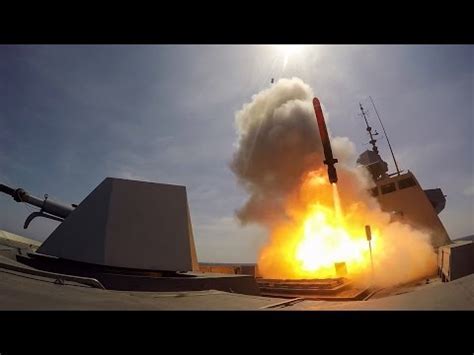
The Missile de Croisière Naval (MdCN) is France’s primary sea-launched cruise missile (SLCM). Developed by MBDA, the MdCN offers substantial range increases thanks to larger onboard fuel reserves and is used on FREMM-class frigates and Barracuda-class submarines.
Range and Performance:
- Ship-Launched Range: Approximately 870 miles (1,400 km)
- Submarine-Launched Range: Around 620 miles (1,000 km)
- Speed: Subsonic (~800 km/h)
- Warhead: 250 kg (~550 lbs)
The MdCN’s range clearly outclasses any European ALCM, primarily due to its size — over 21 feet in length, compared to the Taurus’s 16.5 feet. With greater internal space for fuel, it delivers a significantly longer strike distance.
Operational Realities: Combat Range vs. Theoretical Range
While maximum range numbers are often highlighted, real-world operational range is typically lower. Cruise missiles like the Taurus and MdCN are programmed to fly at low altitudes to avoid radar detection and use circuitous routes to dodge air defense zones or terrain obstacles. This terrain-following mode requires more fuel and reduces the maximum distance they can travel.
Additionally, payload weight, atmospheric conditions, and launch altitude all influence real-life range. For instance, launching a missile at high altitude from a fast-moving jet increases effective range, while launching from sea level against a headwind reduces it. Still, these theoretical specifications are a useful benchmark to compare capabilities.
The Next Frontier: Hypersonic Cruise Missiles
As formidable as current systems like the Taurus and MdCN are, they operate at subsonic speeds — typically just under 500 mph. That paradigm is now shifting. Europe is working on developing hypersonic cruise missiles that would offer both unmatched speed and maneuverability.
RJ-10: A Franco-British-Italian Hypersonic Ambition
One of the most promising future projects is the RJ-10, a hypersonic cruise missile jointly developed by France, Italy, and the UK. This next-generation system is reportedly ramjet-powered, allowing sustained speeds above Mach 5 (3,800+ mph). However, development is still early-stage and details on range, payload, and operational profile remain classified or speculative.
Interestingly, it is believed that the UK is pursuing a subsonic version of this missile for select applications, hinting at a modular platform design adaptable to both conventional and next-gen propulsion technologies.
UK’s Independent Hypersonic Program
Separately, the United Kingdom is investing in an indigenous hypersonic weapon program, collaborating with partners such as Australia and the United States under AUKUS Pillar II and other joint frameworks. The new system aims to deliver strategic deterrence capabilities that can rival Russian and Chinese equivalents.
Though still under wraps, experts speculate these missiles could exceed 1,000 miles in range while reaching Mach 6+. If successful, these weapons will not only outrun existing intercept systems, but also execute unpredictable flight paths, challenging even the most advanced air defense networks.
Conclusion: MdCN Reigns for Now, But the Horizon Is Shifting
As of mid-2025, the French MdCN holds the title of the longest-range European cruise missile, with its 870-mile reach from naval platforms. It represents the pinnacle of current-generation SLCM design in Europe. For air-launched systems, the Taurus KEPD 350 remains the top performer, balancing respectable range with precision strike capability.
However, the strategic landscape is changing fast. Hypersonic cruise missiles promise to transform the definition of long-range precision weapons entirely. Their extreme speed, evasiveness, and survivability will give European militaries a crucial edge in future high-threat environments. But until these next-gen platforms enter full-scale deployment, the MdCN remains the undisputed range champion in Europe’s arsenal of cruise missiles.