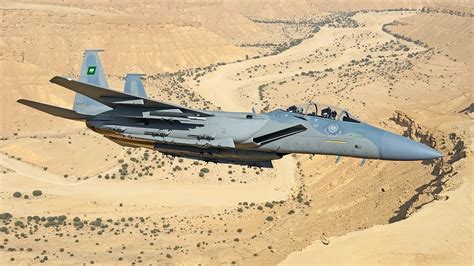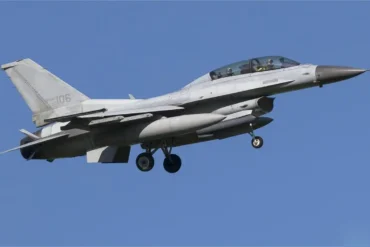
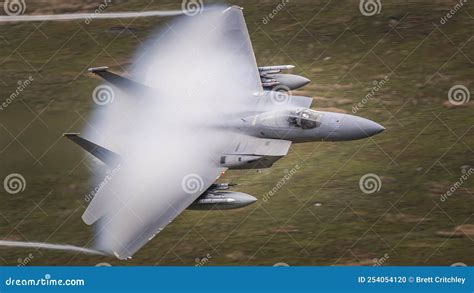
The McDonnell Douglas F-15 Eagle, now built by Boeing, remains one of the most iconic and enduring fourth-generation fighter jets in global aviation history. Designed in the 1970s and entering service in 1976, the F-15 has earned its legendary reputation by maintaining an unmatched air-to-air combat record. With more than 100 confirmed kills and zero losses in dogfights, its combat credibility is unrivaled. Despite its longevity and continuous upgrades, the export policy of the United States regarding the F-15 has always been a geopolitical tool, shaped by alliances, rivalries, and the ever-changing balance of global military power.
Origins of Export Bans: The Cold War Doctrine
In the heat of the Cold War, the U.S. government viewed military aircraft sales not just as commercial transactions but as strategic maneuvers. The Carter administration (1977–1981), in particular, employed stringent export controls to ensure American technological superiority was preserved. These controls meant that the F-15 was off-limits to all but a narrow circle of trusted allies—primarily NATO members, Japan, Israel, and later Saudi Arabia.
This decision wasn’t merely about who could afford the F-15. It was rooted in the very real fear that sophisticated radar, avionics, and weapons systems embedded within the F-15 could fall into adversarial hands, especially through espionage or reverse engineering. At the time, any transfer of high-tech capabilities was viewed through the lens of countering Soviet influence, and only the most reliable partners were granted access.
Countries Barred from F-15 Acquisitions During the Cold War
Throughout the 1980s and early 1990s, Latin America, Africa, Southeast Asia, and even some Middle Eastern nations were explicitly excluded from acquiring the F-15. While these regions were often recipients of other U.S.-made platforms, such as the F-16, the F-15 was kept under tighter lock and key. For example, countries like Egypt, which received military aid and F-16s, were never cleared for the F-15.
Notably, Thailand, Indonesia, Taiwan, and Pakistan—despite close defense ties with the U.S.—were never offered F-15s. Instead, they received older platforms or were offered downgraded variants of other aircraft. In Latin America, no country ever operated the F-15. Even nations like Chile and Venezuela, which eventually acquired F-16s, were once subject to sweeping bans that included both the F-16 and F-15.
Strategic Allies: The Few Who Received the F-15
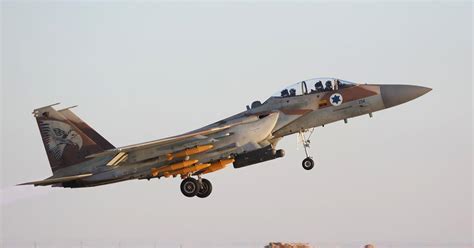
The first export recipient of the F-15 was Israel, which acquired the aircraft in 1976 and went on to prove its combat effectiveness in the Lebanon War and other regional conflicts. Japan followed in 1977 with a domestically assembled version called the F-15J, produced under license by Mitsubishi. Saudi Arabia, a key oil partner and regional counterbalance to Iran, secured its first batch in 1981.
Later, as political winds shifted and the Cold War thawed, the U.S. relaxed restrictions. Singapore, Qatar, and South Korea were gradually granted access to upgraded versions of the F-15. These aircraft, such as the F-15SG and F-15QA, were among the most advanced variants ever built.
The F-15EX: Renewed Interest, Restricted Availability
The F-15EX, also known as the “Eagle II,” represents the most modern evolution of the platform. With digital fly-by-wire controls, a new electronic warfare suite, and Open Mission Systems architecture, the F-15EX is built for 21st-century warfare. However, its export is still highly controlled.
As of now, only Israel and Indonesia have actively pursued the F-15EX, with Israel securing a new order expected to be fulfilled by the early 2030s. The United States has rejected requests from countries like Egypt and Thailand, citing either strategic risks, instability, or human rights concerns. Poland has expressed interest, but no deal has been confirmed.
Why Some Countries Are Still Banned or Refused Access
Export bans are not always rooted in technical limitations or affordability. The decision often stems from the strategic calculus of Washington, taking into account the following factors:
- Proximity to adversaries (e.g., Taiwan and China)
- Defense agreements with hostile nations (e.g., Turkey and its S-400 deal with Russia)
- Technology security risks (e.g., Huawei infrastructure in friendly countries)
- Human rights or governance concerns (e.g., Egypt and Myanmar)
For instance, the U.S. denied Egypt’s request for both the F-15 and F-35, citing concerns over Russian influence and potential misuse. Turkey was expelled from the F-35 program after purchasing Russia’s S-400 air defense system. While the F-15 was never in serious discussion for Turkey, it underscores how defense policy aligns with diplomatic priorities.
F-15 vs F-35: Different Export Rules, Different Buyers
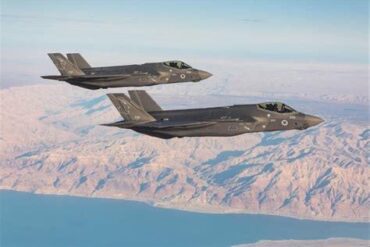
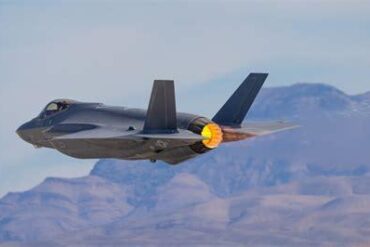
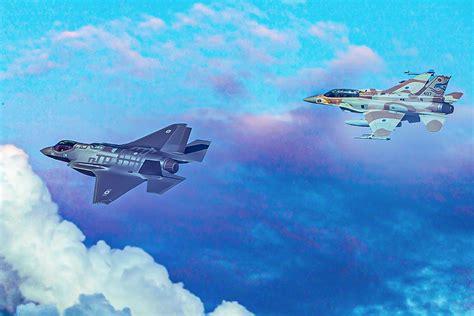
Unlike the F-15, the F-35 Lightning II is strictly regulated under U.S. defense export laws. While more widely marketed, its sales come with heavy conditions, including:
- U.S.-approved maintenance and upgrades
- Strict pilot vetting (e.g., Israeli dual-passport pilot bans)
- No independent modifications
The F-15, in contrast, offers more operational freedom. Countries can integrate indigenous weapons systems, perform deeper maintenance, and sometimes even build components domestically (as Japan does). This greater autonomy makes the F-15 attractive to nations who need high capability without excessive dependence.
Industrial Policy: Keeping Boeing Alive
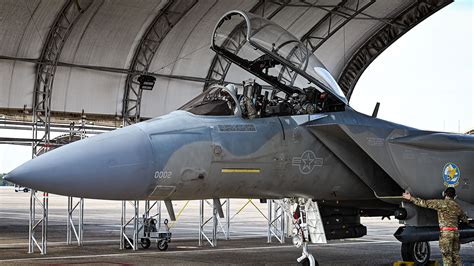
Beyond strategic calculus, economic survival plays a key role. Boeing is the sole U.S. contractor building the F-15, and maintaining its production line is crucial to U.S. defense industrial capability. The Pentagon and Congress often greenlight orders—not always for military necessity—but to prevent production gaps until next-generation jets like the F-47 arrive.
The U.S. delivered just 14 F-15EX units in 2024, but each order—foreign or domestic—helps keep skilled labor employed and ensures that the U.S. doesn’t lose the ability to build large twin-engine fighters in the future.
A Shift in Global Demand
While the F-15 remains formidable, interest is naturally declining. Many air forces are looking toward stealthier fifth- and sixth-generation jets. Countries with the budget and geopolitical leverage now prefer the F-35, while smaller nations settle for the more affordable F-16.
In Europe, the F-15 has lost ground to indigenous options like the Eurofighter Typhoon and Dassault Rafale. Meanwhile, in Asia, partners are balancing U.S. offerings against growing Chinese and Russian alternatives.
Conclusion: A Select Club With a Vanishing Future
The list of countries banned or restricted from buying the F-15 reflects more than just policy—it is a mirror of America’s global strategy. Only a select group of trusted allies ever received the aircraft, and even fewer will see its latest variant, the F-15EX.
Export restrictions on the F-15 may have relaxed in recent years, but they remain underpinned by considerations of technology security, political alignment, and economic policy. As the world transitions to newer platforms, the legacy of the F-15 will persist—not just in hangars and cockpits—but as a symbol of American military diplomacy.