Ukraine’s claim that its domestically built Flamingo FP-5 cruise missiles struck a critical Russian Su-57 production hub with a 100% hit rate landed like a seismic shockwave across defense circles. The assertion does more than challenge Moscow’s battlefield narratives. It reframes the technological balance of the war by suggesting Kyiv has quietly crossed into a domain once monopolized by the world’s largest military powers: deep-strike precision warfare using long-range cruise missiles.
At the center of the controversy is the Skif-M specialized tooling plant in Belgorod, a facility essential to machining high-tolerance components for Russia’s frontline combat aircraft, including the Su-34, Su-35, and Su-57. According to Ukrainian analysts citing satellite imagery, four Flamingo missiles struck four distinct aimpoints, contradicting Russian claims that three were intercepted. If verified, the strike represents a rare instance where a newly unveiled missile system not only performed as advertised but may have exceeded expectations.
The political resonance is immediate. Ukraine failed to secure American Tomahawk missiles, long considered the gold standard of subsonic cruise missile warfare. Instead, Kyiv responded by building its own answer. The Flamingo is not merely a substitute. It is a declaration of industrial self-reliance forged under fire, compressed into a development timeline of just three years, and now allegedly tested against one of Russia’s most sensitive aerospace bottlenecks.
The war has always been about more than territory. It is about production lines, repair cycles, and the fragile mathematics of industrial warfare, where a single damaged factory can echo across an entire air force for years.
From Denied Tomahawks to a Homegrown Long-Range Strike Weapon
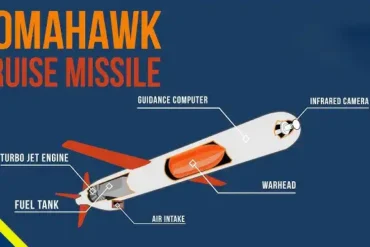
Ukraine’s pursuit of long-range strike capability began with a strategic dead end. Western partners, wary of escalation, declined to supply Tomahawk cruise missiles, whose combat record spans decades and continents. The Tomahawk’s reputation rests on its terrain-hugging flight profile, advanced guidance, and proven ability to penetrate dense air defense networks.
Rather than wait, Ukraine accelerated development of the Flamingo FP-5, a missile that on paper mirrors—and in some metrics surpasses—the Tomahawk. While the Tomahawk’s range is widely cited at around 1,600 miles, Ukrainian sources claim the Flamingo can reach 1,900 miles, instantly placing it among the longest-range cruise missiles in existence. Both weapons fly at roughly 550 miles per hour, hugging terrain to evade radar, but the similarities end there.
The Flamingo carries a massive 1,150-kilogram warhead, more than double the Tomahawk’s conventional payload. Cost estimates suggest it is produced at nearly one-quarter of the Tomahawk’s price, making it theoretically viable for saturation strikes rather than symbolic launches. In industrial warfare, quantity is a quality of its own, and Ukraine appears to be betting heavily on that principle.
The Skif-M Strike and the Anatomy of a Strategic Bottleneck
The September 23, 2025 strike on the Skif-M plant was not random. Skif-M produces specialized drills, cutters, and inserts required to machine titanium, aluminum, and composite materials used in advanced aircraft. Roughly 70% of its output supports aerospace manufacturing, with Russia’s United Aircraft Corporation as its largest client. Disrupting Skif-M does not merely delay one aircraft. It ripples across multiple production lines simultaneously.
Russian officials initially claimed that three of the four incoming missiles were intercepted, with only limited damage reported. Ukrainian OSINT groups, including Cyberboroshno and Exilenova+, later released satellite imagery suggesting a very different outcome. Analysts identified four distinct impact zones within an 80-meter deviation radius, inconsistent with a single successful hit. The 25-meter primary destruction zones further indicated multiple warhead detonations.
More telling was what followed. Roof sections were removed, repairs dragged on, and Copernicus satellite imagery from January 2026 showed reconstruction still incomplete more than three months after the strike. In industrial terms, that timeline implies severe structural and equipment damage, not cosmetic repair.
Precision Claims Versus Performance Doubts
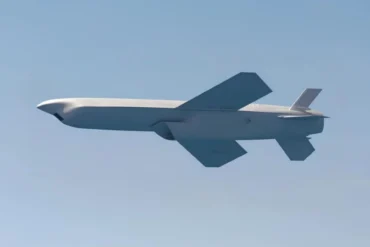
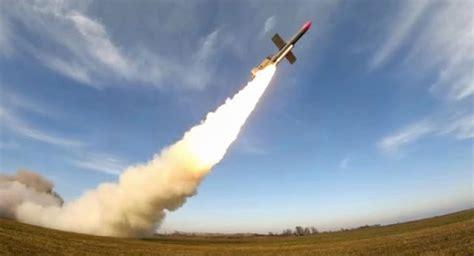
Ukraine’s assertion of a 4-for-4 hit rate immediately reignited debate around the Flamingo’s real-world reliability. Critics have long argued that the missile’s sheer size—over 40 feet long with a wingspan exceeding 20 feet—makes it more detectable than slimmer Western counterparts. Unlike the Tomahawk’s folding wings, the Flamingo uses fixed wings, increasing its radar cross section and theoretically easing interception.
Earlier combat data fueled skepticism. In August 2025, three Flamingos were launched against an FSB outpost near Armyansk in Crimea. According to the Centre for European Policy Analysis, only two reached the target, with one missing by as much as 200 meters. That result highlighted the difficulty of transitioning from long-range drones to heavy, complex cruise missile systems, where guidance accuracy and quality control become exponentially harder.
Against that backdrop, the Belgorod strike represents either a dramatic leap in performance or a carefully curated narrative. The four-month delay before releasing satellite analysis raised eyebrows. In wartime information battles, timing is rarely accidental. Yet the physical evidence—ongoing repairs, multiple damage zones, and the factory’s prolonged downtime—suggests the strike was far more effective than Russia initially admitted.
Air Defenses, Penetration, and the Meaning of “Undetected”
Skif-M is not an unguarded warehouse. As a critical node in Russia’s military-industrial complex, it is presumed to be protected by layered air defense systems. If Flamingo missiles penetrated that shield undetected, the implications extend well beyond a single factory.
Subsonic cruise missiles rely on low-altitude flight paths, terrain masking, and precise navigation to exploit gaps in radar coverage. The Tomahawk perfected this art through decades of incremental upgrades. If Flamingo achieved comparable penetration on its first high-stakes test, it suggests Ukraine has mastered not only missile construction but also mission planning, electronic warfare coordination, and target intelligence.
That combination matters. A missile is only as effective as the ecosystem supporting it. Successful deep strikes require synchronized intelligence, real-time updates, and an understanding of enemy sensor geometry. The Belgorod strike, if accurately described, indicates Ukraine can now orchestrate such operations deep inside Russian territory.
Production Promises and the Mystery of Limited Use
One unresolved contradiction lies in production claims. Ukrainian manufacturer Fire Point stated in mid-2025 that it could produce one Flamingo per day, scaling to seven per day by October. That output would translate to over 200 missiles per month. Yet open-source reporting suggests fewer than ten Flamingos have been launched over five months.
There are only two plausible explanations. Either production has fallen far short of promises, constrained by supply chains, funding, or quality control, or the missiles are being strategically conserved for targets of exceptional value. Given the cost advantage and large warhead, the Flamingo is ill-suited for routine strikes but ideal for high-impact industrial targets whose loss cannot be easily mitigated.
In that light, the Skif-M attack looks less like a test and more like a proof-of-concept strike, designed to validate the missile’s role as a scalpel against Russia’s defense economy rather than a hammer swung indiscriminately.
Europe’s Longest Reach and a Quiet Technological Leap
Measured purely by range, the Flamingo stands apart in Europe. Germany’s Taurus and the Anglo-French Storm Shadow/SCALP both top out around 550 kilometers. France’s naval MdCN, derived from SCALP, extends beyond 1,000 kilometers with a 300-kilogram warhead. The Flamingo’s claimed range, more than double Europe’s longest-range land-attack cruise missiles, is unprecedented on the continent.
Achieving that capability in three years, under constant attack, with constrained resources, is a remarkable industrial feat. It suggests Ukraine has not only absorbed Western technological lessons but adapted them rapidly, prioritizing range and payload over stealth finesse. The result is a missile optimized for strategic disruption rather than surgical elegance.
What the Flamingo Strike Really Changes
The true significance of the Flamingo strike is not whether it perfectly matches the Tomahawk. It does not need to. What matters is that Ukraine now possesses a credible, indigenous deep-strike capability capable of threatening Russia’s production infrastructure far from the front lines.
Every damaged factory forces Moscow into a choice: divert air defenses away from the battlefield, accept reduced aircraft output, or invest heavily in hardening and redundancy. None of those options are cheap, fast, or politically painless. In industrial warfare, pressure accumulates invisibly until it suddenly becomes decisive.
The Flamingo remains imperfect. Its size, detectability, and uneven early accuracy leave room for improvement. Yet as a first generation system, it already alters strategic calculations. With refinements in stealth shaping, guidance precision, and electronic countermeasures, it could evolve into one of the most consequential weapons Ukraine has fielded.
The Belgorod strike, flamingos and all, signals a war no longer confined to trenches and drones. It is a contest of factories, supply chains, and the long reach of engineering ingenuity—where a single missile, flying low and unseen, can reshape the balance of power long after the explosion fades.