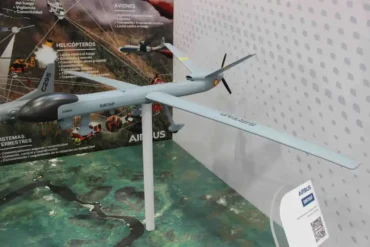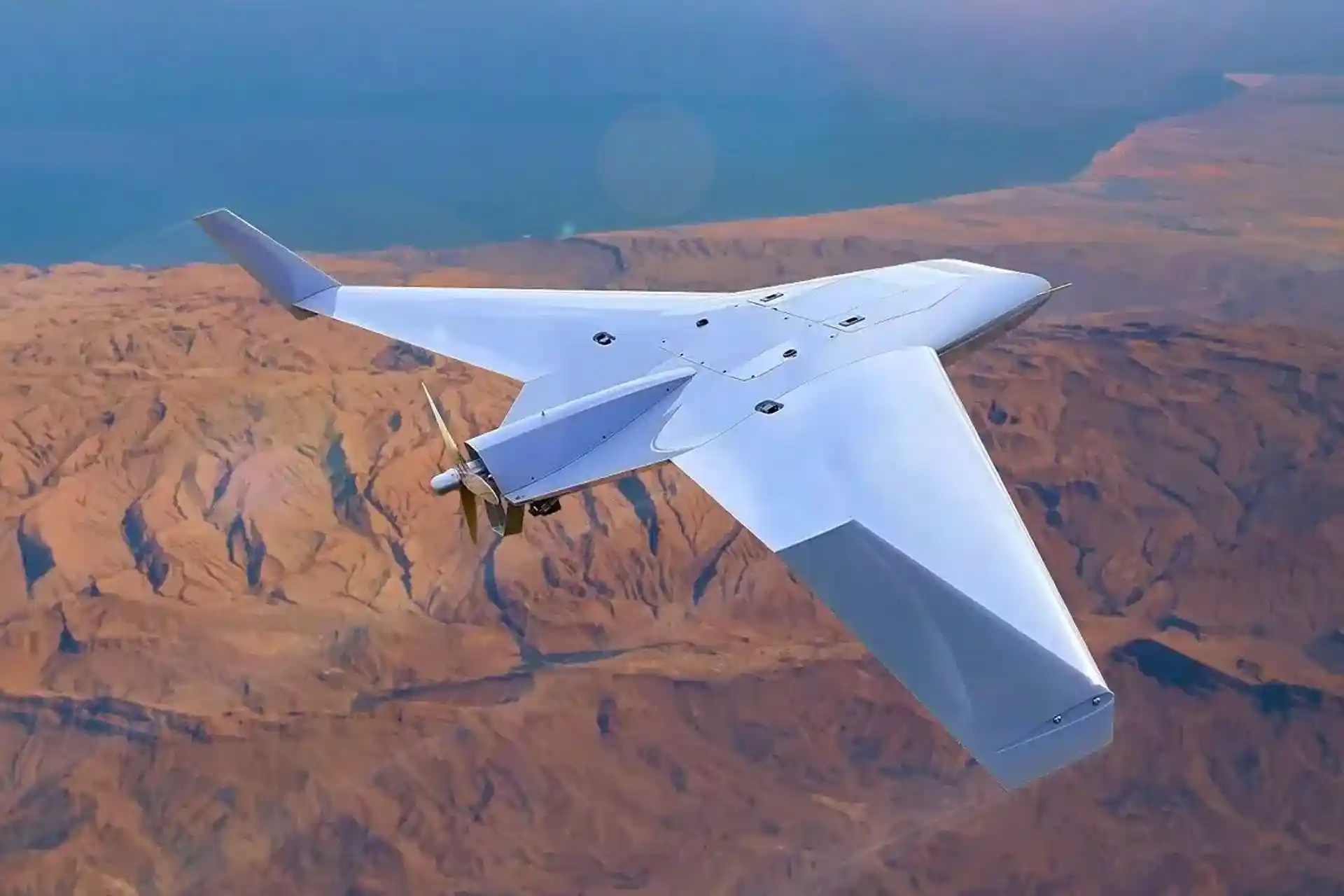
France’s defense industry has crossed a meaningful threshold in its support for Ukraine’s drone-centric war effort. In late January 2026, French manufacturer EOS Technologie confirmed the delivery of the first Rodeur 330 long-range loitering munition drones to Ukrainian forces for frontline operational evaluation. The transfer places a French-designed deep-strike drone directly into one of the world’s most electronically contested battlefields, transforming Ukraine once again into a real-time laboratory for modern warfare and accelerating Europe’s shift toward endurance-focused, attritable strike systems.
The delivery comes at a moment when Ukraine’s demand for precision strike capabilities continues to outpace available missile inventories. Cruise missiles and ballistic systems remain scarce, expensive, and politically sensitive, while drones offer a scalable alternative capable of persistent surveillance and selective destruction. Against this backdrop, the Rodeur 330 represents a distinctly European response to the realities of high-intensity conflict, emphasizing range, endurance, and operational flexibility over brute explosive power.
French media, including reporting carried by France 24, first highlighted the transfer on 24 January 2026, with multiple confirmations following a day later. While the number of systems delivered has not been publicly disclosed, EOS Technologie indicated that several units were provided specifically to gather combat feedback under real operational conditions. For both Ukraine and France, the significance lies less in quantity and more in validation: how a Western-designed loitering munition performs against dense electronic warfare, layered air defenses, and constant counter-drone adaptation.
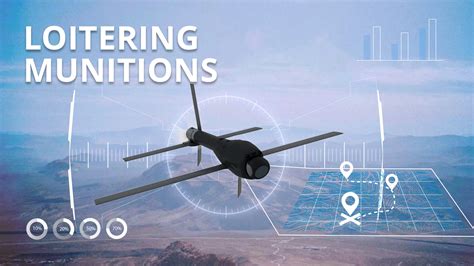
The Rodeur 330 is positioned as a long-endurance loitering munition, combining reconnaissance and strike functions into a single mission cycle. EOS Technologie advertises a loiter time of up to five hours, a maximum range of approximately 500 kilometers, and a 4-kilogram payload, placing it firmly in the category of deep-reach but precision-focused strike assets. Unlike heavy one-way attack drones intended for infrastructure destruction, the Rodeur 330 is optimized for target hunting, patience, and timing, attributes increasingly decisive on Ukraine’s fluid battlefield.
By enabling extended loitering, the system dramatically widens the decision window between launch and engagement. This matters in an environment where targets rarely remain static. Air-defense radars, electronic warfare vehicles, logistics convoys, ammunition transfer points, and mobile command posts often appear briefly before dispersing or hiding. A drone that can wait for hours, adjusting its pattern while operators refine targeting data, reduces the need for perfect timing and lowers the risk of wasted launches.
From a logistical perspective, EOS has emphasized mobility and low footprint. The Rodeur 330 is launched via catapult and is designed to be transported in a single flight case, allowing small teams to deploy, operate, and relocate rapidly. This design philosophy mirrors lessons learned directly from Ukraine’s experience, where static launch sites quickly attract counter-battery fire or drone-hunting patrols. Rapid setup and teardown are no longer conveniences; they are survival requirements.
Ukraine’s armed forces have already developed a layered drone ecosystem that integrates multiple classes of unmanned systems. Short-range FPV drones dominate trench warfare and vehicle ambushes. Medium-range loitering munitions fill the tactical depth between frontline and rear areas. Long-range one-way drones extend the battlefield hundreds of kilometers, striking air bases, fuel depots, and logistics hubs. The Rodeur 330 slots neatly into the upper end of this structure, offering reach beyond most tactical systems while remaining more economical and flexible than missile strikes.
Its 4-kilogram warhead reflects this role. Rather than leveling hardened structures, the Rodeur 330 is best suited for mission kills and system disruption. Exposed radar arrays, sensor masts, lightly protected vehicles, parked helicopters, ammunition stacks, and key components of air-defense or electronic warfare systems are all high-value targets where precision outweighs raw explosive mass. In modern warfare, disabling a node often matters more than destroying an entire facility.
Equally important is the reconnaissance-strike loop enabled by such systems. A loitering munition that can search, identify, and then attack a target without handing off data to another platform reduces vulnerability to jamming and communications disruption. In Ukraine’s electromagnetic environment, where GPS interference, datalink jamming, and spoofing are constant threats, reducing complexity can directly translate into higher mission success rates.
For EOS Technologie, Ukraine offers something no test range can replicate. Real combat exposes weaknesses in navigation resilience, guidance algorithms, operator workflows, and component durability. Harsh weather, rough handling, frequent relocation, and sustained electronic attack quickly reveal which design assumptions hold up and which fail. Feedback from Ukrainian operators is likely to shape future iterations of the Rodeur family, accelerating development cycles in a way peacetime procurement rarely allows.
The delivery also signals a broader shift in French and European defense thinking. For decades, European militaries emphasized exquisite platforms produced in limited numbers. Ukraine has brutally exposed the limits of that approach. Attrition, not elegance, defines modern high-intensity conflict. Systems must be produced quickly, fielded in quantity, and updated constantly. Loitering munitions like the Rodeur 330 embody this philosophy, occupying the space between artillery rockets and expensive cruise missiles.
France, in particular, has begun to reassess its drone posture in light of Ukraine’s experience. Sending new-build systems into active combat zones is no longer viewed solely as risk, but as opportunity. Each deployment compresses the learning curve for both industry and armed forces, ensuring that future European capabilities are informed by real-world performance rather than theoretical requirements.
From Ukraine’s perspective, diversification of suppliers carries strategic value. Relying on a single drone family makes countermeasures easier to optimize. Introducing systems with different flight profiles, guidance logic, and electronic signatures complicates adversary adaptation. Even small batches can force disproportionate investment in detection and defense, stretching already strained resources.
The geopolitical implications extend beyond the battlefield. European industry is no longer confined to replenishing ammunition stocks or donating legacy equipment. It is actively shaping Ukraine’s future force structure by inserting modern strike systems directly into operational use. This trend increases pressure on Russian rear-area security, drives further investment in air defense and electronic warfare, and accelerates the broader drone-versus-drone arms race now defining the conflict.
If the Rodeur 330 demonstrates reliability and effectiveness, its influence may reach well beyond Ukraine. European militaries observing the conflict are increasingly interested in long-endurance loitering munitions as a cost-effective way to regain deep-strike capacity without relying exclusively on missiles. Such systems offer persistence, flexibility, and affordability, attributes that align with budget realities and the expectation of prolonged, high-tempo operations.
The delivery of the Rodeur 330 thus marks more than a single equipment transfer. It reflects a deeper transformation in how Europe understands warfare, procurement, and industrial responsiveness. Endurance, dispersion, and rapid iteration are becoming as decisive as platform size or prestige programs. For Ukraine, the system adds another layer to an already sophisticated drone arsenal. For France and Europe, it represents a step toward a future force designed not for parades or theory, but for the unforgiving logic of modern combat.