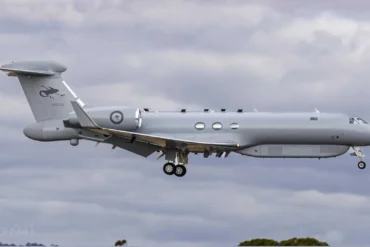
The delivery of the first MC-55A Peregrine marks a quiet but strategically potent shift in how the United States and Australia are structuring their future intelligence and electronic warfare architecture. On January 24, 2026, L3Harris Technologies handed over the first missionized Gulfstream G550-based MC-55A to the U.S. Air Force, even though the aircraft is ultimately destined for Royal Australian Air Force service. This unusual custody arrangement is not bureaucratic trivia; it is a deliberate signal of deepening coalition integration in the Indo-Pacific, where sensing, data fusion, and electromagnetic dominance increasingly define military advantage.
At its core, the Peregrine program reflects a modern doctrine: intelligence platforms are no longer national assets operating in parallel silos but nodes in a coalition-wide sensing web. The early embedding of Australia’s most sensitive ISR platform within U.S. training, certification, and operational frameworks illustrates how allies are moving toward shared architectures, common tactics, and interoperable data pipelines long before aircraft carry national markings into operational theaters.
The MC-55A Peregrine is a highly modified Gulfstream G550 business jet transformed into a high-end multi-intelligence aircraft capable of collecting signals intelligence (SIGINT), electronic intelligence (ELINT), and communications intelligence (COMINT) across vast geographic areas. Unlike legacy ISR aircraft that rely on large airframes with heavy crew footprints, the Peregrine belongs to a new generation of compact, high-altitude, long-range intelligence platforms optimized for distributed operations in contested environments.

Strategic Meaning of U.S. Custody for an Australian Aircraft
The decision to place the first MC-55A under U.S. Air Force custody before transfer to Australia is a strategic maneuver with multiple layers of significance. By embedding the aircraft into USAF systems from day one, both nations ensure that cryptographic systems, data links, mission planning software, and classified sensor architectures are aligned with U.S. operational standards. This dramatically reduces friction when the aircraft begins coalition operations, particularly in scenarios where U.S. forces provide command-and-control and targeting frameworks.
This approach also accelerates training and tactics development. Australian crews and engineers can work alongside U.S. counterparts within existing U.S. test and evaluation structures, allowing operational concepts to mature in a coalition environment rather than being retrofitted later. In a region where response times and information sharing are decisive, this front-loaded integration strategy is a powerful force multiplier.
Gulfstream G550 as a High-End Intelligence Platform
The choice of the Gulfstream G550 as the Peregrine’s airframe reflects a broader trend toward business-jet-based ISR and electronic warfare platforms. The G550 offers a rare combination of range, altitude, and speed. With an operational ceiling exceeding 50,000 feet and the ability to traverse intercontinental distances rapidly, it can reposition across the Indo-Pacific theater in hours rather than days.
High-altitude operation enhances sensor coverage and communications relay capabilities, allowing the aircraft to act as both a collector and a data node. In a dispersed battlespace dominated by maritime approaches and island chains, the ability to operate from limited basing options while still reaching deep into contested areas is a strategic necessity.
Transforming a civilian business jet into a military-grade intelligence platform requires extensive modification. The Peregrine integrates multiple classified sensor suites, antenna arrays, mission computers, and secure communication systems. Power generation and cooling systems are upgraded to support energy-intensive electronics, while structural modifications accommodate external fairings and antenna installations that alter the aircraft’s outer mold line. Maintaining airworthiness under both civil and military certification regimes adds another layer of engineering complexity.
Multi-Intelligence Fusion as the Peregrine’s Core Advantage
The MC-55A’s true value lies in its ability to fuse multiple intelligence streams into a coherent operational picture. Modern warfare is increasingly defined by the electromagnetic spectrum, where detecting, classifying, and geolocating emissions can be as decisive as tracking physical platforms. Peregrine’s mission systems are designed to map the electromagnetic order of battle, identify adversary radar and communications systems, and provide real-time data to joint command networks.
This capability feeds directly into kill chains and non-kinetic operations. By identifying and characterizing threats, the Peregrine enables targeting for long-range strike assets, cues electronic attack platforms, and enhances defensive countermeasures for allied aircraft and naval forces. In essence, it functions as an upstream sensor and intelligence hub that turns raw electromagnetic noise into actionable knowledge.

Complementing Australia’s Surveillance Architecture
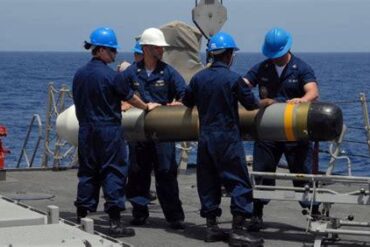
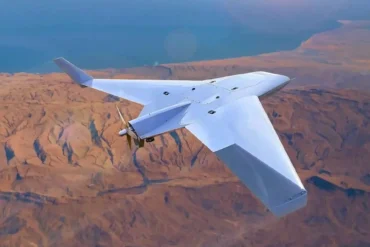
Australia’s AIR555 program positions the MC-55A as a key pillar in a layered surveillance and intelligence architecture. Operated by No. 10 Squadron from RAAF Base Edinburgh, the Peregrine is designed to complement existing platforms such as the P-8A Poseidon maritime patrol aircraft and the MQ-4C Triton unmanned aerial system. Together, these assets form a multi-domain sensing network that covers maritime, air, and electromagnetic domains.
The P-8A provides anti-submarine warfare and maritime patrol capabilities, the Triton offers persistent high-altitude maritime surveillance, and the MC-55A fills the critical role of multi-intelligence collection and electronic warfare cueing. This triad reflects a doctrinal shift toward distributed sensing, where manned and unmanned platforms share data in near real time to build a comprehensive operational picture.
Positioning Within the U.S. Electronic Warfare Ecosystem
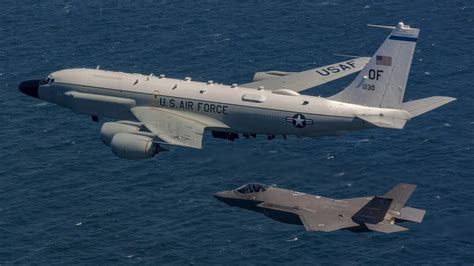
Comparisons with U.S. platforms reveal where the MC-55A fits within the broader coalition ecosystem. The RC-135V/W Rivet Joint remains the backbone of U.S. signals intelligence, providing extensive theater-wide collection capabilities but relying on aging airframes with significant sustainment burdens. Meanwhile, the EA-37B Compass Call, also based on the G550, is dedicated to electromagnetic attack, designed to disrupt and deny adversary communications and radar systems.
The Peregrine occupies a complementary niche. Rather than focusing on active jamming, it emphasizes persistent collection, analysis, and dissemination of intelligence. In practical terms, it finds and characterizes targets in the electromagnetic spectrum, while platforms like Compass Call and kinetic assets execute effects. This division of labor reflects a modern kill chain architecture where sensing, targeting, and effects are distributed across specialized platforms.
Coalition Interoperability as a Strategic Objective
The early integration of the MC-55A into U.S. systems underscores a broader strategic objective: coalition interoperability at the deepest technical and doctrinal levels. Interoperability is no longer about basic radio compatibility or shared procedures; it now encompasses encrypted data links, mission system architectures, and shared intelligence frameworks.
By embedding the Peregrine within U.S. custody during its initial phase, both nations ensure that it becomes a native node within U.S.-led networks such as Joint All-Domain Command and Control (JADC2) concepts. This alignment is critical in scenarios where U.S. forces may act as the primary command element while allied platforms provide sensing and effects.
The Indo-Pacific Context: Distance, Dispersion, and Deterrence
Geography amplifies the Peregrine’s importance. The Indo-Pacific theater is defined by vast distances, dispersed basing, and contested maritime corridors. Traditional large ISR aircraft can be vulnerable, expensive to operate, and difficult to deploy rapidly across such a theater. Business-jet-based platforms like the MC-55A offer a more agile, survivable, and deployable alternative.
High altitude and long range allow the Peregrine to operate from secure bases while still covering contested areas. Its sensor suite enables it to detect and classify threats across wide swaths of ocean and land, providing early warning and targeting data that underpin deterrence strategies. In an environment where peer competitors invest heavily in electronic warfare and anti-access/area-denial systems, having a distributed network of intelligence platforms is a strategic imperative.
Industrial and Technological Implications
The Peregrine program also reflects the maturation of missionized business jets as a defense industry segment. Companies like L3Harris have demonstrated that civilian platforms can be transformed into sophisticated military assets with relatively rapid development cycles compared to traditional large military aircraft programs. This approach reduces acquisition timelines, lowers sustainment costs, and increases flexibility.
For allies, adopting similar platforms enables interoperability with U.S. systems while maintaining sovereign capabilities. It also opens opportunities for shared upgrades, joint training, and common sustainment frameworks, further reinforcing coalition cohesion.
Toward a Shared Sensing and Decision Architecture
The delivery of the first MC-55A under U.S. custody is best understood as an architectural move rather than a single procurement milestone. It represents a step toward a shared sensing and decision-making framework in which national platforms are integrated into coalition networks from inception. In future conflicts, the side that can see first, understand faster, and act in coordinated fashion will hold a decisive advantage.
The Peregrine is a sensor node, a data fusion platform, and a symbol of alliance integration. Its deployment within U.S. systems before entering Australian service is a tangible expression of a new model of alliance warfare, where capabilities are designed for coalition use from the ground up.
A Signal Beyond Hardware
Beyond the technical specifications and operational roles, the MC-55A’s delivery carries political and strategic symbolism. It signals a level of trust and integration that goes beyond traditional alliance structures. By allowing an Australian national capability to be developed and certified within U.S. custody, Canberra and Washington are effectively co-designing their future operational ecosystem.
In an era defined by contested domains, rapid technological change, and strategic competition in the Indo-Pacific, such integration is not optional. It is the foundation of credible deterrence and effective coalition warfare. The MC-55A Peregrine is not just another ISR aircraft entering service; it is a blueprint for how allied airpower, intelligence, and electronic warfare capabilities will be conceived, built, and operated in the decades ahead.
The aircraft’s journey—from L3Harris’ integration facilities to U.S. custody and eventually to RAAF operational service—mirrors the evolving journey of allied military integration itself. Peregrine flies not just with sensors and antennas, but with doctrine, alliances, and a shared vision of how modern warfare is sensed, understood, and shaped.