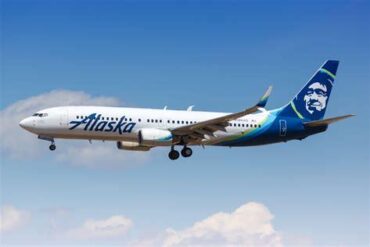
Alaska Airlines has officially stepped onto the transatlantic stage with the launch of its first-ever nonstop service to London Heathrow, a strategic move that signals a decisive evolution from a primarily domestic and regional carrier into a global competitor. Departing from its Seattle-Tacoma International Airport hub, the inaugural flight represents more than just a new route—it is a calculated entry into one of the world’s most competitive and capacity-constrained aviation corridors.
The timing is anything but accidental. Launching at the height of the summer travel surge, when premium fares and long-haul demand peak, Alaska Airlines positions itself to immediately tap into a lucrative market. The Seattle–London corridor, already well-served but consistently strong in passenger demand, offers a fertile proving ground for the airline’s expanding long-haul ambitions.
This route also marks Alaska’s formal debut in both the United Kingdom and Northern Europe, elevating its international profile. Coming just weeks after the airline inaugurated its Seattle–Rome service, the London launch underscores a rapid and deliberate expansion strategy aimed at capturing transatlantic traffic while leveraging Seattle’s geographic advantages as a gateway.

Breaking Into Heathrow’s Elite Slot Market
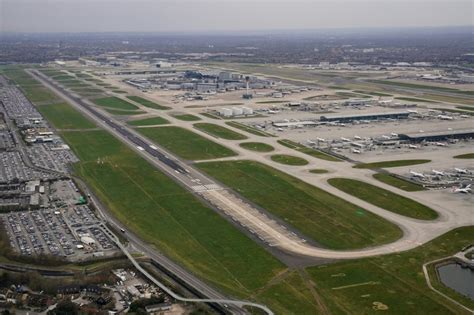
Securing access to London Heathrow is a challenge that has thwarted even well-established carriers. The airport’s severe slot constraints mean that new entrants rarely gain access without significant strategic maneuvering. Alaska Airlines overcame this barrier by leasing coveted slots from American Airlines, a fellow member of the oneworld alliance.
This behind-the-scenes arrangement is critical to understanding the route’s feasibility. Alaska’s own attempt to secure slots through Heathrow’s allocation system was unsuccessful, largely due to its insistence on maintaining a daily service frequency—a non-negotiable factor in competing effectively on such a high-demand route.
The leased slots not only enabled entry but also ensured operational consistency, allowing Alaska to offer a reliable schedule that aligns with business and leisure traveler expectations. The airline’s daily service departs Seattle in the late evening, arriving in London the following afternoon, with a convenient return schedule that maximizes aircraft utilization and passenger appeal.
A Modern Long-Haul Experience with Boeing 787-9
At the heart of this new route is the Boeing 787-9 Dreamliner, a widebody aircraft designed for efficiency, range, and passenger comfort. Alaska Airlines operates a fleet of these aircraft configured with 300 seats, including 34 fully flat business class seats arranged in a 1-2-1 layout and 266 economy seats in a 3-3-3 configuration.
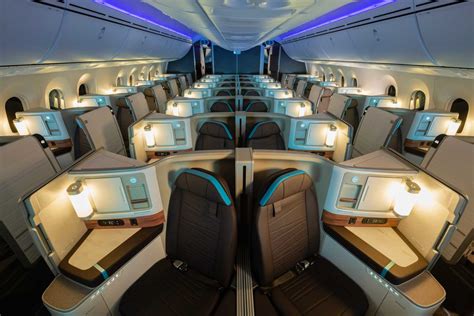
The Dreamliner’s advanced cabin pressurization, larger windows, and quieter engines enhance the long-haul experience, making it a competitive offering against established transatlantic operators. For Alaska, which historically built its brand on short-haul excellence, this aircraft represents a technological leap into intercontinental service.
The choice of the 787-9 also reflects operational pragmatism. Its fuel efficiency and range make it ideally suited for the 4,171-nautical-mile journey, balancing cost control with passenger comfort—an essential combination for sustaining profitability on long-haul routes.
Seattle–London: A Market Defined by Strong Demand
The Seattle–London market is far from untested territory. Over a 12-month period ending February 2026, approximately 285,000 round-trip passengers traveled directly between the two cities, averaging around 781 daily travelers. This places the route among the top transatlantic city pairs from the United States, though not at the very top tier.
What makes this market particularly compelling is its high proportion of nonstop travelers. Around 82% of passengers opted for direct flights, underscoring the premium placed on convenience and time savings. Prior to Alaska’s entry, up to four daily nonstop services were already available, operated by major carriers including British Airways, Delta Air Lines, and Virgin Atlantic.
With Alaska joining the fray, the number of daily flights rises to five, intensifying competition while also expanding capacity. This increased frequency is expected to stimulate demand further, particularly among travelers who value schedule flexibility.
At the same time, a significant portion of the market—over 248,000 passengers annually—relies on connecting itineraries. This segment represents a crucial opportunity for Alaska Airlines, especially given its extensive domestic network feeding into Seattle.
Leveraging Seattle as a Strategic Connection Hub
Seattle’s geographic position offers both advantages and limitations. While it is ideally situated for connections to the U.S. West Coast, Alaska, and Hawaii, it is less optimal for passengers traveling from the eastern United States, where backtracking may be required.
Nevertheless, Alaska Airlines is betting on its strong regional network to feed traffic into the London route. Cities such as Sacramento, San Jose, Boise, and Spokane—markets without direct London service—are expected to generate valuable connecting passengers.
Connectivity analysis suggests that travelers can link to dozens of destinations via Seattle within a reasonable connection window, enhancing the route’s viability. This network-driven approach mirrors strategies employed by larger global carriers, albeit on a more focused scale.
Looking ahead, Alaska’s potential expansion into ultra-long-haul markets—such as a rumored Seattle–Sydney route—could further amplify Seattle’s role as a transpacific and transatlantic interchange point. Such developments would transform the airport into a more versatile global hub, albeit one competing against entrenched giants.
A Calculated Gamble with Long-Term Implications
Launching a transatlantic route is never a low-risk endeavor, particularly for an airline still establishing its long-haul credentials. The Seattle–London service represents a carefully calculated gamble, balancing strong local demand against intense competition and operational complexities.
Yet the strategic logic is compelling. By entering a high-profile market like London Heathrow, Alaska Airlines elevates its brand, strengthens its alliance partnerships, and diversifies its revenue streams beyond domestic operations.
The coming months will reveal whether the airline can sustain load factors, maintain pricing power, and carve out a distinct identity in a crowded marketplace. But one thing is already clear: Alaska Airlines is no longer content to remain a regional powerhouse. With its London debut, it has firmly signaled its intention to become a serious player on the global aviation stage.