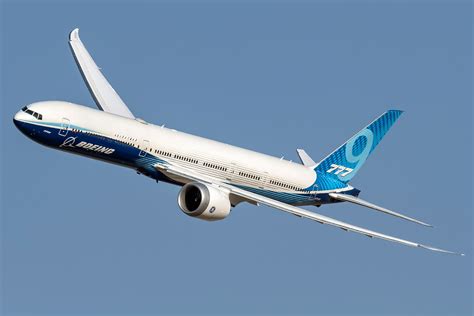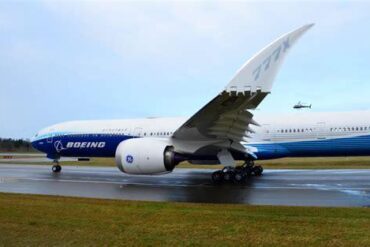
The Boeing 777X, with its distinctive folding wingtips, has ignited widespread speculation across aviation forums, enthusiast communities, and social media. Seeing the aircraft taxi with wingtips angled skyward has prompted many to ask: Can the Boeing 777X take off without its wingtips extended?
The answer is an unequivocal no. Yet understanding why this is the case reveals a deeper story—one rooted in certification, safety systems, aerodynamic principles, and airport compatibility challenges.
The Purpose Behind Folding Wingtips
At the heart of the 777X’s design lies a core challenge: how to marry the unprecedented aerodynamic efficiency of a 236-foot wingspan with the real-world constraints of airport infrastructure. Most global airports are built to accommodate aircraft within ICAO Code E limits, which cap wingspans at around 213 feet (65 meters).
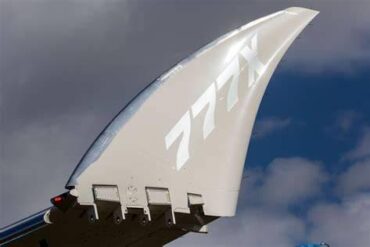
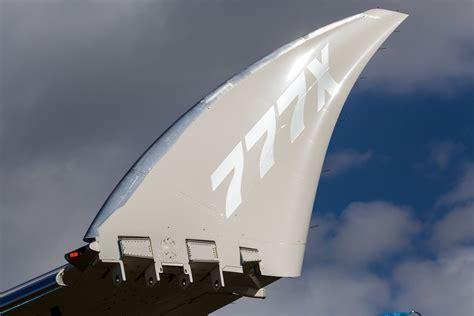
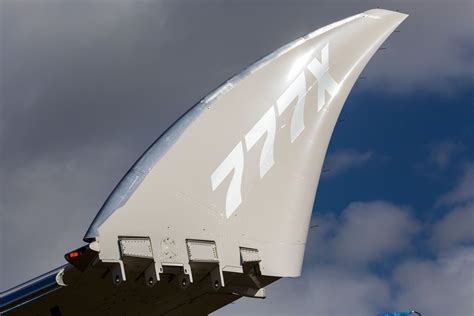
To operate within this infrastructure, Boeing engineers developed a folding wingtip mechanism that retracts approximately 11 feet (3.5 meters) from each wing. This allows the aircraft to taxi, park, and fit at Code E gates, while achieving Code F performance in flight.
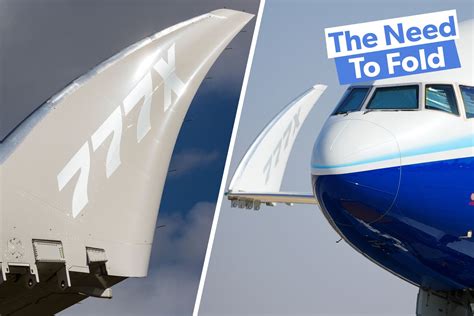
But this solution is not just a clever bit of mechanical engineering—it’s a highly integrated, safety-critical system that defines the 777X’s operational envelope.
Why Takeoff With Folded Wingtips Is Impossible
The Boeing 777X is physically and electronically prohibited from taking off unless its wingtips are fully extended and securely locked. The design includes:
- Mechanical locks that physically secure the wingtips in flight position
- Redundant sensors that confirm extension status
- Flight control logic that inhibits thrust and takeoff roll if the tips aren’t deployed
This multilayered architecture ensures that no pilot error, procedural oversight, or malfunction can result in a misconfigured takeoff. Boeing deliberately removed any reliance on pilot checklist procedures alone. The system is designed to prevent the aircraft from even beginning a takeoff roll in an unsafe state.
From a certification perspective, flying with retracted wingtips would place the aircraft far outside its approved aerodynamic configuration. The lift profile, wing loading, and roll authority are all calculated based on the full 236-foot span. A folded configuration would:
- Severely reduce lift
- Alter stability and control, especially at high angles of attack
- Compromise safety margins during takeoff and climb
In short, it’s not only unsafe—it’s structurally and regulatorily forbidden.
A Conservative Design Philosophy, Rooted in Safety
Boeing has historically followed a conservative approach when introducing novel flight technologies. With the 777X, this philosophy continues. The folding wingtip system is not treated as an optional feature or pilot-controlled convenience. It is a non-negotiable configuration requirement that must be validated by the aircraft’s onboard systems.
Flight deck instrumentation, warning systems, and automatic control logic are all deeply intertwined with the wingtip system. The aircraft’s autothrottle and takeoff configuration checklists are disabled if the wingtips are not verified as extended and locked. Pilots do not have override authority to bypass these interlocks.
This robust system design reflects lessons learned from past aviation incidents involving improper takeoff configurations, where reliance on checklists and pilot memory proved insufficient safeguards. Boeing’s 777X system takes human error largely out of the equation.
Configuration Overview and Certified Status
To understand the rigidity of the system, consider how the 777X configurations are categorized:
- Wingtips Folded: Allowed only for ground operations like taxiing and gate movement.
- Wingtips Extended and Locked: Required for all flight phases. This is the only certified aerodynamic configuration.
- Partial Extension or Unlock Status: Not certified for any operation. Triggers system-wide inhibition of takeoff.
The system uses hard-coded logic to block transitions between these states unless conditions are verified. In the event of a mechanical failure preventing extension or lock verification, the aircraft is grounded until resolved.
The Engineering Behind the Folding Mechanism
Boeing’s implementation of folding wingtips on a commercial jetliner is a world-first. Unlike military jets, which fold wings for storage on aircraft carriers, the 777X system is intended purely to solve the commercial problem of gate width limitations.
Each wingtip folds upward during taxiing and lowers into position before takeoff. The mechanism involves:
- Hydraulic actuators to move the wingtips
- Locking pins and latches to secure them in place
- Redundant position sensors to confirm configuration
- Integration with flight control computers to validate status before enabling flight functions
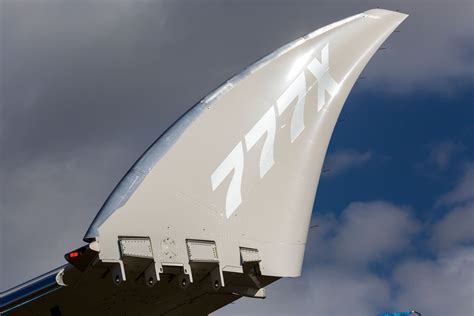
The system operates only during specific, low-speed ground phases. It is not active during flight, takeoff, or landing. This limited operation window minimizes wear, reducing maintenance complexity compared to continuously active flight surfaces.
Aerodynamic and Operational Implications
Aerodynamically, the extended wingspan gives the 777X a higher aspect ratio, improving fuel efficiency, climb performance, and cruise range. But that performance is tightly coupled to the full wing structure.
Flying with folded tips would drastically impair:
- Lift generation, reducing takeoff performance
- Roll control, compromising maneuverability
- Structural load distribution, increasing stress on inner wing sections
Flight simulations and wind tunnel tests have confirmed that the aircraft would be uncontrollable and unsafe with tips retracted during takeoff or flight. This is why Boeing and aviation regulators treat the extended configuration as an absolute requirement.
Industry Reception and Airline Perspective
Far from being seen as a gimmick, the folding wingtips are widely regarded by airlines as a pragmatic engineering compromise. They allow the 777X to deliver long-range performance on par with much larger aircraft like the Airbus A380—without requiring expensive airport infrastructure upgrades.
The A380, despite its capacity and efficiency, suffered from limited airport compatibility, forcing airports to invest heavily in upgrades. The 777X avoids this fate by preserving compatibility with existing Code E gates, taxiways, and hangars, while still delivering Code F in-flight performance.
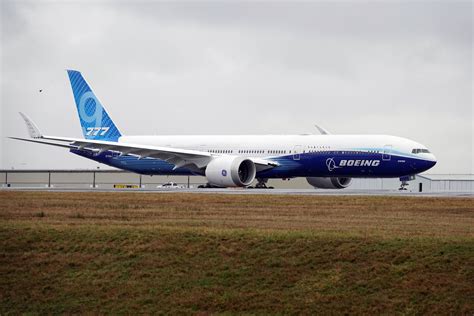
Major carriers, including Lufthansa and Emirates, have praised the folding tip feature as enabling them to deploy the aircraft flexibly without operational restrictions. This makes the 777X more commercially viable than larger aircraft that demand costly ground adjustments.
A Singular Case in Commercial Aviation
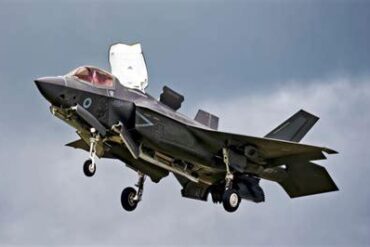
While folding wings are common in military aviation, their purpose is strictly spatial—allowing jets to be stored below deck or in tight hangars. In contrast, the Boeing 777X is the only commercial airliner to incorporate folding wingtips for aerodynamic and logistical optimization.
Whereas fighters prioritize compactness, the 777X’s design seeks to push the limits of aerodynamic performance while still fitting into the global airport system. The goals, certification standards, and operational restrictions are entirely different.
Aircraft like the Airbus A350 and Boeing 787 rely on more conservative wingspan choices to maintain Code E compliance. The 777X dares to stretch further—and uses cutting-edge mechanical design to make that leap feasible.
A Complex System, But Not a Liability
It’s reasonable to assume that such a system introduces added mechanical complexity. Boeing has addressed this by designing the folding tips for infrequent, low-stress use. Because they only move during taxi phases, they are not subjected to constant dynamic loading like ailerons or flaps.
Still, the system must be inspected, maintained, and monitored with the same rigor as all flight-critical systems. Any anomaly—mechanical or electrical—results in the aircraft being grounded. There is no allowance for partial functionality.
This strict framework ensures that the benefits of the system do not come at the cost of safety or reliability.
Conclusion: Safety by Design, Not By Chance
The Boeing 777X is a masterclass in aviation engineering, embodying a philosophy that prioritizes integrated safety systems, certification compliance, and operational efficiency. The folding wingtips are not a novelty—they are a calculated solution to a real-world limitation.
And no, the aircraft cannot, and will not, take off without its wingtips extended. That’s not an oversight. That’s a design feature.
As aviation continues to push the boundaries of range, efficiency, and infrastructure compatibility, the 777X stands as a pioneering example of how modern aircraft solve complex challenges not through compromise, but through innovation.