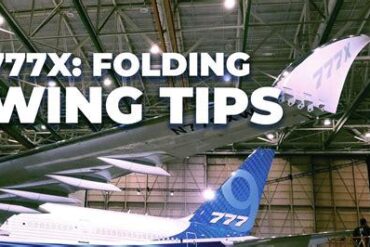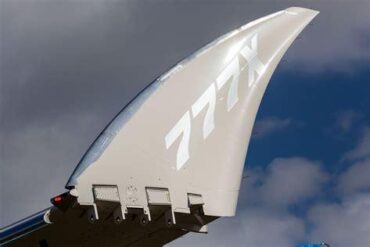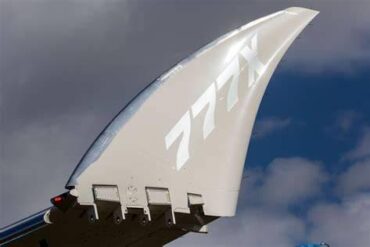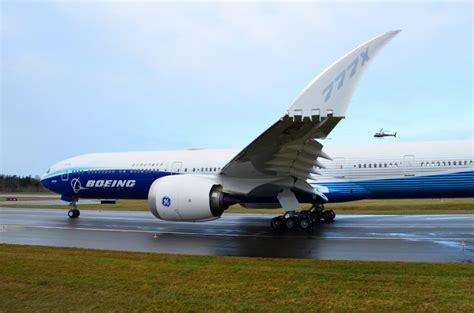
The Boeing 777X represents one of the most ambitious leaps in commercial aviation design in recent memory, with its unprecedented 235-foot 5-inch wingspan—a dimension that, at first glance, appears incompatible with the infrastructure of most global airports. What sets this aircraft apart is not only its immense size, but the revolutionary folding wingtip mechanism, the first of its kind in commercial aviation. This technological marvel enables the 777X to achieve enhanced aerodynamic performance in the skies, while remaining compatible with existing gate and taxiway infrastructure on the ground.
The massive wingspan is not a mere stylistic flourish or branding gimmick. It is a critical design decision aimed at improving fuel efficiency, lift generation, range, and ultimately, operational cost-effectiveness. But with wider wings comes the challenge of airport gate compatibility. The solution? Boeing’s folding wingtips—a clever engineering adaptation that grants the aircraft dual compatibility: performance in the air, practicality on the tarmac.
The Engineering Case for a Larger Wingspan
The fundamental reason behind the Boeing 777X’s extended wingspan lies in the laws of aerodynamics. A longer wing generates more lift and improves fuel efficiency by reducing induced drag, particularly at cruising altitudes. The result is an aircraft that can fly farther, carry more weight, and do so with less fuel burn—a prime consideration in an era of heightened environmental and economic pressures.
By stretching the wingspan from the original 777’s 199-foot 11-inch (60.9 meters) design to a whopping 235 feet 5 inches (71.75 meters), Boeing ensured that the 777X would offer 10% better fuel efficiency than any competing twin-aisle aircraft. This was accomplished not only by increasing the span, but also by switching the wing construction material to carbon-fiber-reinforced composites, much like those found on the 787 Dreamliner.
This move reduced weight and enabled the wings to remain both strong and flexible, adapting under load and enhancing performance without compromising structural integrity.
Folding Wingtips: The Design That Makes It All Work
Of course, wings that long pose a significant problem on the ground. Most major airports are configured to accommodate aircraft in ICAO Code E size categories, which cap wingspans at around 213 feet (65 meters). The original Boeing 777 fit neatly within this constraint at 212 feet 7 inches. The 777X, on the other hand, surpasses that limitation when its wings are fully extended.
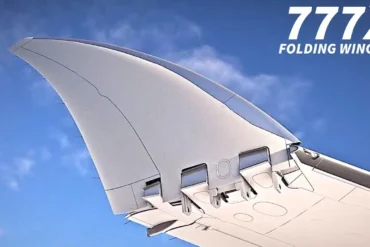
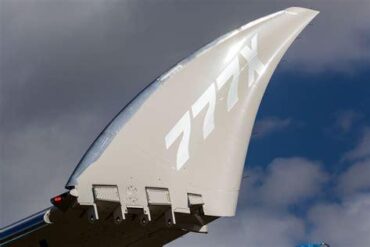
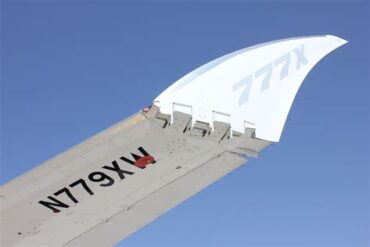
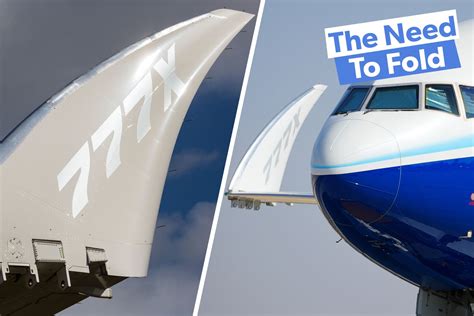
To resolve this, Boeing incorporated 11-foot folding wingtips on each side. When parked or taxiing, the tips are folded vertically, reducing the wingspan to 212 feet 9 inches (64.85 meters)—just within ICAO Code E limits. Once ready for takeoff, the crew uses a cockpit overhead switch to deploy the wingtips—a process that takes approximately 20 seconds.
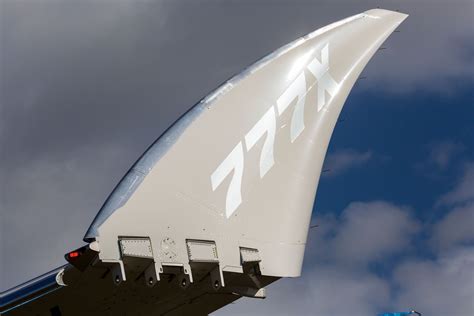
The mechanism is both mechanically robust and redundant, incorporating multiple locking rods and hinges that keep the wingtips rigid in flight. Although the aircraft is technically capable of flying with the wingtips still folded, it is neither intended nor efficient to do so. The design was reviewed and certified by the FAA, ensuring full operational safety.
New Wings, New Possibilities
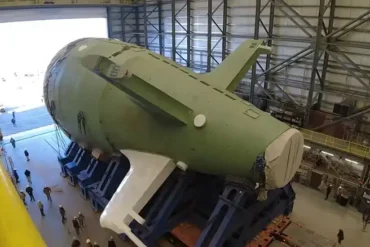
Unlike the traditional metallic wings of the previous 777 models, the 777X wings are made predominantly from carbon fiber composites, drawing inspiration from the 787’s highly successful wing structure. This switch in material allows the wings to be longer, lighter, and more aerodynamically refined, improving lift and reducing drag without adding structural penalties.
The benefits of this new wing are compounded by the General Electric GE9X engines, which are purpose-built for the 777X. Despite being the largest jet engines in the world, they are remarkably quiet and fuel-efficient, thanks to a 10:1 bypass ratio and advanced components like ceramic matrix composites (CMCs) that withstand higher temperatures. This lets the engines operate more efficiently while producing 110,000 pounds of thrust, though they’re capable of delivering over 134,000 pounds, as proven in ground tests.
Together, the wings and engines work in tandem to give the aircraft a range of 8,745 nautical miles (16,190 kilometers) for the 777-8 and 7,285 nautical miles (13,500 kilometers) for the 777-9. These numbers allow airlines to plan ultra-long-haul routes without sacrificing payload or fuel economy.
Real-World Operational Benefits
From a purely logistical standpoint, the folding wingtips are game-changing. Airports need not retrofit gates to accommodate the larger wingspan because, when folded, the 777X fits neatly into the same gates used by older widebody aircraft. This means the aircraft is deployable across existing global infrastructure, giving it a considerable commercial edge.
An industry veteran on Reddit, who previously worked in airport operations, emphasized that gate real estate is a premium asset:
“The more gates you can park an aircraft on, the easier it is to accommodate. Many airports don’t have A380 flights, or 787, 777 flights because they all require facility revisions or new construction to make them fit.”
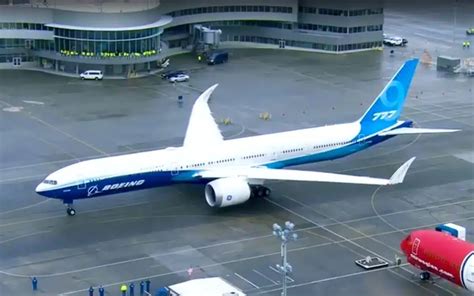
The folding mechanism might reduce the wingspan by just 22 feet in total, but in gate design terms, this can spell the difference between full compatibility and costly renovations.
Inside the Cockpit: How the Wingtips Are Operated
The pilot’s interface with the folding wingtip system is both intuitive and seamless. A dedicated switch on the overhead panel allows for manual extension or retraction of the tips while on the ground. The system is supported by EICAS (Engine-Indicating and Crew-Alerting System) feedback, which clearly displays the current state of the wingtips.
Before takeoff, the crew taxis with the wings folded to avoid collisions or spacing issues on the ground. Once at the designated extension point, the wingtips are deployed and locked in place before lining up for departure. During landing, automation takes over. Once the aircraft slows below 50 knots, the system autonomously folds the wingtips back into the vertical position, preparing the aircraft for standard taxi operations.
This blend of manual and automated control ensures operational safety while minimizing pilot workload.
Passenger Experience and Interior Enhancements
Beyond its aerodynamic features, the 777X also focuses on passenger comfort and cabin innovation. Unlike previous 777 models with tight 10-abreast seating, the new interior is wider by four inches, offering more room for passengers. Cabin altitude is also reduced, thanks to humidification options and pressure control improvements, drawing inspiration from the 787 and A350.
Noise levels are lower too, owing to the quieter GE9X engines, which significantly reduce cabin noise during takeoff and cruise. These changes make the 777X a more attractive choice for long-haul travel, enhancing comfort without sacrificing range or payload.
A Glimpse Into the Future of Aviation
While the 777X is not the first aircraft to experiment with folding wings—military jets and some private aircraft have done so for years—it is the first commercial airliner to bring the feature into large-scale passenger service. The implications are enormous.
Folding wings can dramatically reshape how airlines maximize gate availability and how aircraft manufacturers balance performance with logistical practicality. The 777X shows that it’s not necessary to choose between airport compatibility and high-efficiency aerodynamic design.
Despite some delays in certification and delivery—only four units had been produced by mid-2025—full production is slated to ramp up by 2026, with hundreds of orders already placed by major carriers including Emirates, Lufthansa, and Qatar Airways.
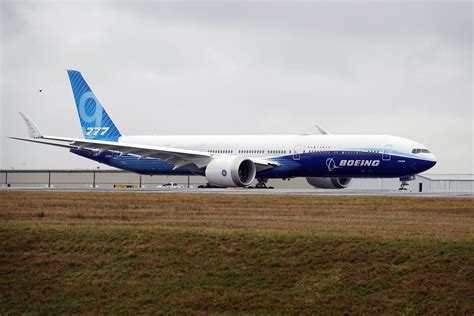
The market reception and operational data from early operators will likely influence whether Boeing and other manufacturers further pursue folding wing technology. If successful, the 777X’s wingtips may be remembered not just as an engineering solution, but as a turning point in widebody aircraft design.
Final Thoughts
The Boeing 777X’s large wingspan is more than an aesthetic or symbolic gesture. It is a calculated response to the evolving needs of global long-haul aviation—a marriage of efficiency, reach, comfort, and airport compatibility. With its carbon-fiber wings, GE9X engines, and folding wingtip innovation, the aircraft is pushing the boundaries of what’s possible for commercial aviation without abandoning the practical realities of today’s airport infrastructure.
As the 777X moves closer to widespread delivery, its performance and operational adaptability will define its legacy. And if it lives up to its promises, the future of long-haul flying may very well belong to those willing to fold, fly, and innovate.