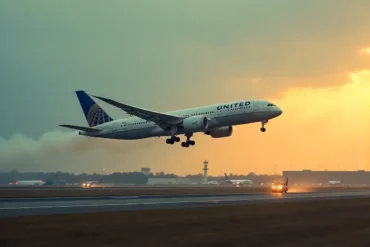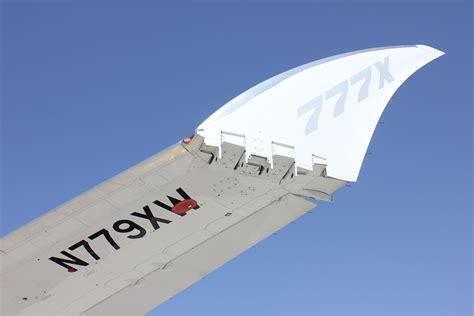
The Boeing 777X was designed to solve a problem that had quietly haunted aircraft manufacturers for decades: how to build a larger, more efficient airliner without forcing airports around the world to rebuild their infrastructure. Boeing’s answer became one of the boldest engineering decisions ever introduced on a commercial passenger aircraft — folding wingtips. Yet the real breakthrough is not simply that the wings fold. It is that the aircraft is engineered to physically refuse takeoff if those wings are not fully extended and locked into place.
That single capability transforms the 777X from a conventional widebody into one of the most automation-driven commercial aircraft ever produced. Unlike older jets that primarily warn crews about dangerous configurations, the 777X actively intervenes before disaster can occur. In aviation terms, that distinction is enormous.
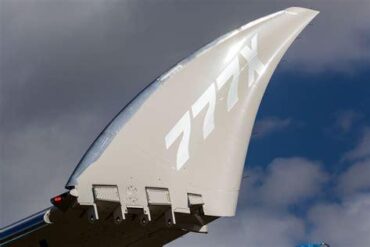
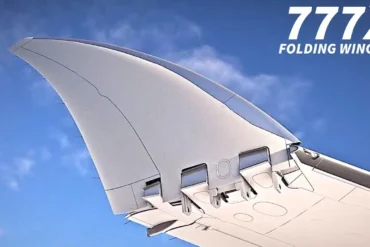
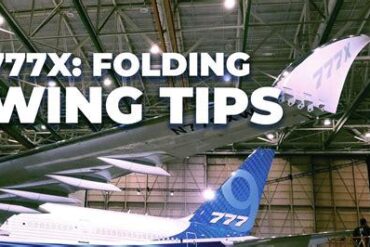
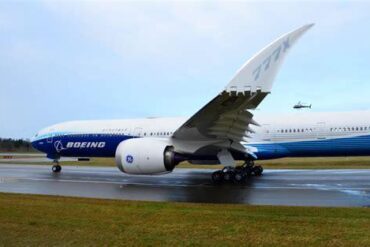
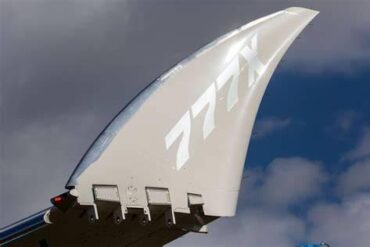
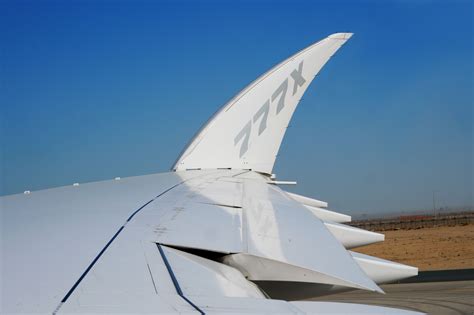
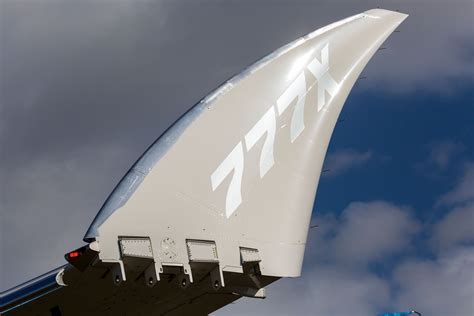
The aircraft’s folding wing design instantly became the defining visual feature of the 777X program. During taxi operations, the outer 11-foot sections of each wing rise upward almost like the wings of a giant mechanical bird. The transformation allows the massive jet to occupy the same airport gates already used by current Boeing 777 aircraft. Once airborne, however, the aircraft benefits from the full aerodynamic advantage of a 235-foot wingspan — the widest ever created for a twin-engine commercial airliner.
Boeing did not pursue this concept for aesthetics or novelty. The folding wings exist because airlines are demanding ever-greater fuel efficiency while airports are running out of physical space. The 777X sits directly at the intersection of those competing pressures.
Why The Boeing 777X Needed Folding Wings In The First Place
Modern commercial aviation is obsessed with efficiency. Fuel remains one of the largest operating expenses for airlines, especially on ultra-long-haul routes where aircraft spend more than a dozen hours cruising at high altitude. Engineers have long understood that larger wings improve aerodynamic performance by reducing induced drag and generating lift more efficiently. In simple terms, longer wings help aircraft fly farther while burning less fuel.
The Boeing 777X pushes this principle to an extreme level.
At full extension, the aircraft’s wingspan stretches to approximately 235 feet, or 71.75 meters. That makes it wider than nearly every commercial aircraft currently flying, including many four-engine giants. The massive composite wing is central to Boeing’s strategy for improving efficiency over previous generations of widebody aircraft such as the 777-300ER.
The challenge was never aerodynamic. The challenge was logistical.
Airports around the world are built according to strict international size categories established by the International Civil Aviation Organization. Aircraft with extremely large wingspans fall into what is known as ICAO Code F classification. Jets in this category require wider taxiways, larger parking stands, and specially designed boarding gates.
The Airbus A380 famously suffered from this limitation. Although passengers admired its enormous size and spacious cabin, many airports struggled to accommodate it without expensive upgrades. Airlines were often forced to operate the aircraft only on carefully selected routes where compatible infrastructure already existed.
Boeing wanted to avoid repeating that problem.
Rather than limiting the 777X to a small number of airports, Boeing engineers developed a way for the aircraft to effectively change shape depending on whether it was in the air or on the ground. The folding wingtip system reduces the aircraft’s ground wingspan to around 212 feet, allowing it to fit into existing Code E gates already used by current 777 models.
That decision dramatically increases operational flexibility for airlines. A carrier can deploy the 777X across a much broader global network without waiting for airports to reconstruct terminals or taxiways.
The concept sounds simple in theory. In practice, it created one of the most complex certification challenges in commercial aviation history.
The Engineering Behind The Boeing 777X Folding Wing Mechanism
The folding wing system on the 777X is not a lightweight cosmetic attachment. The folding sections are fully integrated components of the aircraft’s primary lifting structure. That distinction changes everything from engineering requirements to safety standards.
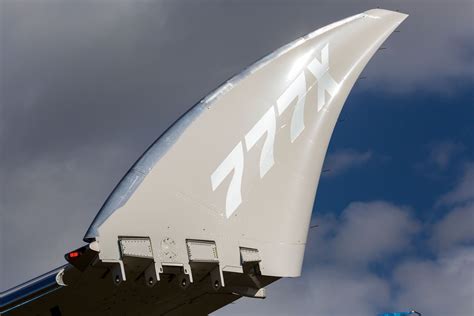
Each folding wingtip measures approximately 11 feet in length and rotates upward using sophisticated hydraulic rotary actuators developed with assistance from aerospace supplier Liebherr. The entire folding or extension sequence takes roughly 20 seconds.
Pilots control the process through dedicated cockpit controls located on the overhead panel. During taxi before departure, the crew commands the wingtips into the flight position. Once extended, the sections mechanically lock into place, forming a rigid aerodynamic surface capable of enduring enormous structural loads during takeoff, turbulence, and cruise flight.
This is where the engineering becomes especially demanding.
Aircraft wings experience tremendous stress during flight. They bend, flex, vibrate, and absorb constantly changing aerodynamic forces. During turbulence, those loads become even more severe. The folding portions of the 777X wing therefore had to demonstrate the same strength, reliability, and durability as a traditional fixed wing.
Boeing subjected the wing structure to years of structural testing, including repeated load cycles designed to simulate decades of airline operations. Engineers evaluated vibration behavior, environmental exposure, hydraulic reliability, and lock integrity under extreme conditions.
The visible movement of the wings attracts headlines, but the real technological achievement lies in the hidden monitoring systems embedded throughout the structure.
Multiple independent sensors constantly verify:
- Wingtip position
- Mechanical lock status
- Hydraulic actuator alignment
- Sensor agreement integrity
- Structural synchronization
These systems feed data directly into the aircraft’s flight control computers, warning systems, and takeoff protection logic.
That layered redundancy became essential because regulators immediately recognized the catastrophic risk posed by an attempted takeoff with folded wings.
Why Regulators Treated The Folding Wingtips As Safety-Critical
Commercial aviation regulators rarely encounter entirely new categories of risk. The 777X forced them to do exactly that.
Traditional takeoff configuration errors usually involve systems such as flaps, spoilers, or stabilizer trim. Pilots configure these systems incorrectly, warning alerts activate, and crews respond accordingly. Aviation history, however, has repeatedly shown that warning systems alone are not always enough.
Human beings can become distracted, overloaded, fatigued, or confused — especially during high-workload phases of flight such as taxi and takeoff preparation.
The 777X introduced an unprecedented scenario in commercial aviation: the aircraft’s wing geometry itself can physically change.
If the aircraft attempted takeoff with folded wingtips, the aerodynamic consequences could be devastating. The aircraft would lack the necessary lift characteristics expected by its flight control systems and performance calculations. Stability during rotation could become unpredictable. Recovery margins would shrink dramatically.
Regulators therefore classified the wingtip position as a safety-critical system from the beginning of certification.
That classification forced Boeing to move beyond the traditional philosophy of merely warning pilots about dangerous conditions. Instead, the aircraft had to actively prevent an unsafe takeoff attempt from progressing.
This represented a major philosophical shift in commercial aviation safety design.
Earlier generations of aircraft relied heavily on procedural discipline. Pilots used checklists. Warning horns activated when configurations were incorrect. Crews were expected to identify and correct errors before departure.
Modern aircraft increasingly go further. They intervene.
Fly-by-wire systems already prevent stalls and overspeed conditions. Terrain awareness systems issue automated escape warnings. Automatic braking systems help prevent runway overruns. The 777X extends this philosophy into wing configuration management.
If the aircraft determines the wings are not fully extended and mechanically locked, it refuses to allow continuation into a high-speed takeoff roll.
That capability fundamentally changes the chain of events leading to a potential accident.
What Happens If Pilots Forget To Extend The Wings?
The question sounds almost absurd considering the level of automation on modern airliners, yet aviation safety is built around preparing for exactly these kinds of human mistakes.
If pilots taxi toward the runway without unfolding the wings, the aircraft begins escalating warnings as thrust settings increase.
Initial cockpit alerts notify the crew that takeoff configuration requirements have not been satisfied. Additional warnings activate if thrust continues increasing. But the most important protection occurs deeper within the aircraft’s integrated safety architecture.
The takeoff inhibition system physically intervenes before the aircraft can enter a dangerous high-speed takeoff roll.
This is not simply a caution light or audible alarm. The system actively prevents progression toward rotation speed if the wing configuration remains unsafe.
That distinction matters enormously because aircraft accidents become dramatically harder to recover from once speed builds during takeoff. Boeing designed the system specifically to interrupt the error chain before the aircraft reaches the point where aerodynamic recovery becomes questionable.
The logic behind the system reflects decades of accident investigation lessons learned across the aviation industry.
Investigators repeatedly discovered that catastrophic accidents rarely stem from a single mistake. Instead, accidents occur when multiple smaller failures align simultaneously. Boeing’s takeoff inhibition system is designed to break that chain before it escalates.
The aircraft also disables the folding mechanism once airborne. After takeoff, the wingtips remain locked throughout flight and cannot accidentally retract in the air. Only after landing, once the aircraft slows to taxi speed, can the system command the tips upward again.
That operational sequencing creates another protective barrier against accidental deployment during flight.
The Composite Wing That Makes The Entire System Possible
The folding wing design receives most of the public attention, but the underlying composite wing structure may be even more important to the aircraft’s long-term success.
Unlike older aluminum wing designs, the 777X uses advanced carbon-fiber-reinforced composite materials. These materials are lighter, stronger, and more fatigue-resistant than traditional metal structures. They also allow engineers to create wings with greater flexibility and more aerodynamically efficient shapes.
The wing itself spans farther than previous 777 variants while remaining relatively weight efficient. That larger span directly contributes to improved cruise performance and reduced fuel burn.
The enormous GE9X engines mounted beneath the wings complement that strategy. Together, the engines and composite wing form the foundation of Boeing’s efficiency targets for the aircraft.
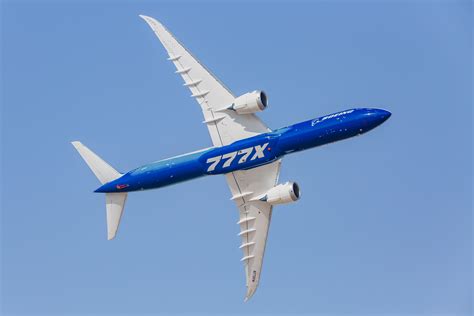
The wing’s curved tips and advanced aerodynamic shaping also improve airflow behavior during cruise conditions. Every aspect of the design was optimized for long-range efficiency.
For airlines, these improvements translate into practical financial benefits:
- Lower fuel consumption per seat
- Increased long-haul range capability
- Reduced emissions
- Greater payload flexibility
- Improved economics on ultra-long routes
The folding tips simply make that larger wing operationally practical within existing airport environments.
Without the folding system, many airlines would face severe deployment restrictions. With it, the aircraft retains compatibility with airport infrastructure already supporting earlier 777 models.
That compatibility may ultimately determine whether the aircraft succeeds commercially.
How The 777X Reflects A New Era Of Automated Aviation Safety
The Boeing 777X arrives during a period of profound transition in aviation philosophy. The industry is steadily moving away from systems that merely inform pilots and toward systems capable of direct intervention.
This does not mean pilots are becoming irrelevant. Far from it.
Modern aviation increasingly recognizes that the safest systems combine human judgment with automated protection layers. Pilots remain responsible for operating the aircraft, managing abnormal situations, and making strategic decisions. Automation exists to reduce the likelihood that rare human mistakes escalate into catastrophic outcomes.
The 777X embodies this philosophy perfectly.
Rather than assuming crews will always correctly configure the aircraft, Boeing designed a system that continuously verifies wing status independently. If anything appears unsafe, the aircraft intervenes automatically.
This layered approach reflects broader trends across aviation technology:
- Flight envelope protection systems preventing stalls
- Automated descent monitoring
- Predictive windshear detection
- Runway overrun prevention systems
- Enhanced terrain awareness automation
The folding wing protection system becomes another layer within that evolving ecosystem.
Importantly, the 777X certification process also established new regulatory frameworks that may shape future aircraft development for decades.
Aviation authorities had to create special certification standards specifically addressing folding primary wing structures. Future aircraft manufacturers pursuing similar designs will likely build upon the groundwork established during the 777X program.
That may become increasingly relevant as airports struggle with congestion and infrastructure limitations.
Could Folding Wings Become Common On Future Airliners?
For decades, folding wings were associated almost exclusively with military aircraft operating aboard aircraft carriers. Naval aviation prioritizes compact storage because carrier deck space is extremely limited. Commercial aviation, by contrast, traditionally avoided such complexity.
The 777X changes that equation.
Airlines continue demanding larger and more efficient aircraft, while airports remain constrained by physical space, environmental restrictions, and construction costs. Folding wing technology offers manufacturers a way to bypass some of those limitations without sacrificing aerodynamic performance.
If the 777X proves reliable in long-term airline service, folding wing systems could eventually appear on future generations of widebody aircraft.
Several factors make the concept increasingly attractive:
First, airports are extraordinarily expensive to expand. Constructing new taxiways, widening gates, and redesigning terminals often costs billions of dollars and requires years of disruption.
Second, environmental pressure continues pushing airlines toward lower emissions and greater efficiency. Larger wings remain one of the best tools for reducing fuel burn.
Third, composite materials and digital monitoring systems are becoming more advanced and reliable. Technologies that once seemed excessively complex are now increasingly practical.
The 777X therefore represents more than a single aircraft program. It may signal the beginning of a broader design shift across commercial aviation.
Manufacturers are already studying new wing concepts, including adaptive wings, flexible wing structures, and advanced folding geometries. The certification path established by Boeing could make future experimentation easier.
Whether passengers realize it or not, the 777X may eventually become remembered as the aircraft that normalized shape-changing commercial airliners.
The Real Innovation Is Not The Folding Wing — It Is The Refusal To Compromise Safety
The visual spectacle of the folding wingtips naturally captures public attention. Watching the enormous sections rise vertically during taxi operations feels futuristic in a way few commercial aircraft features ever have.
But the true innovation lies elsewhere.
The most important achievement of the Boeing 777X is that it integrates this unprecedented wing architecture into an automated safety system capable of preventing catastrophe before it begins.
The aircraft does not merely warn crews about danger. It actively blocks progression toward an unsafe takeoff.
That philosophy represents one of the clearest examples yet of aviation’s transition from passive monitoring toward active accident prevention.
The 777X combines enormous composite wings, advanced automation, sophisticated sensor redundancy, and airport compatibility into a single integrated platform. Every element of the aircraft reflects Boeing’s attempt to balance aerodynamic ambition with operational practicality.
Its folding wings solve a logistical problem. Its takeoff inhibition system solves a safety problem. Together, they create one of the most technologically fascinating commercial aircraft ever developed.
For passengers, the folded wingtips may simply appear unusual while waiting at the gate. For engineers and regulators, however, they represent something much larger: a glimpse into the future of intelligent aviation design, where aircraft increasingly monitor, verify, and protect themselves before human error can turn fatal.