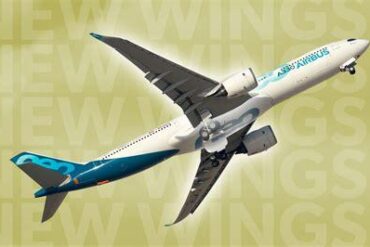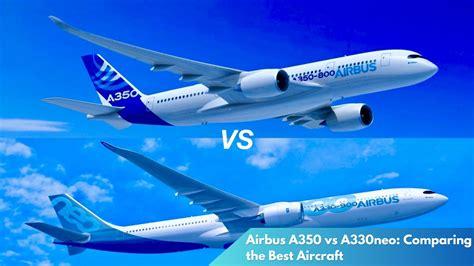
Modern long-haul aircraft are shaped by an invisible opponent: aerodynamic drag. Every curve on an airliner exists to wrestle with airflow, turbulence, and efficiency. Among the most recognizable solutions to this problem are winglets—those sculpted extensions rising from the tips of modern aircraft wings. At first glance, the Airbus A350 and Airbus A330neo appear to share a similar philosophy in their wingtip design. Both feature elegant, curved structures integrated into their wings rather than the sharp vertical fins seen on earlier aircraft.
Yet the similarities end at a distance. When examined closely, the A350’s winglets are significantly larger, more aggressively curved, and structurally integrated into a next-generation composite wing, while the A330neo’s winglets reflect an evolutionary improvement built upon an older aircraft platform. These differences reveal a deeper story about aircraft engineering, aerodynamic efficiency, and the design priorities behind Airbus’ newest widebody aircraft.
Understanding how and why these winglets differ provides a fascinating window into the science of modern aviation.
Understanding Winglets and Why They Matter
Aircraft wings generate lift by creating a pressure difference between the air flowing above and below the wing. The air beneath the wing has higher pressure, while the air above it has lower pressure. This imbalance allows the aircraft to rise into the sky, but it also creates a troublesome side effect at the wingtip.
When these two pressure zones meet at the tip, they form swirling air currents known as wingtip vortices. These vortices act like tiny tornadoes trailing behind the aircraft, pulling backward on the wing and creating induced drag. In simple terms, vortices steal energy that could otherwise propel the aircraft forward.
Winglets were invented to disrupt this process.
Instead of allowing the airflow to roll into a vortex, a winglet redirects the airflow upward, weakening the vortex and reducing drag. The benefits are substantial: lower fuel consumption, improved range, and reduced emissions.
Early winglet designs were relatively simple. Aircraft like the Boeing 747-400, Airbus A330, and Airbus A340 used canted winglets, which were short vertical fins angled slightly outward.
Later designs became more sophisticated. Blended winglets, first popularized in the 1990s, smoothly merged into the wing structure rather than attaching abruptly. This approach reduced aerodynamic interference and improved efficiency further.
Both the A350 and A330neo employ blended winglet designs, but the similarities largely end there.
The Airbus A350’s Dramatically Curved Winglets
The Airbus A350 represents a clean-sheet aircraft program, meaning Airbus designed the aircraft entirely from scratch rather than modifying an older model. This freedom allowed engineers to rethink the entire wing architecture, including its winglets.
The result is one of the most striking wingtip designs in commercial aviation.
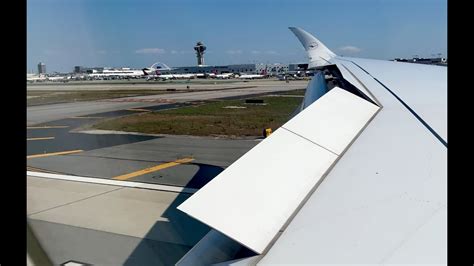
The A350’s winglets measure roughly 14.4 feet (4.4 meters) tall, towering above the wing in a graceful upward arc. Instead of appearing like an attachment, the winglet flows naturally from the wing itself. The entire wing structure—including the winglet—is built primarily from carbon-fiber reinforced polymer composites, which provide exceptional strength while remaining lightweight.
This integration enables another important aerodynamic feature: wing flexibility.
During flight, the A350’s wings can flex upward dramatically under aerodynamic load. The winglet’s curved shape supports this movement while maintaining aerodynamic efficiency. In turbulence or high lift conditions, the wing behaves almost like a flexible spring, adjusting its shape to maintain optimal airflow.
The concept mirrors the design philosophy used on the Boeing 787 Dreamliner, where highly flexible wings improve efficiency and ride quality.
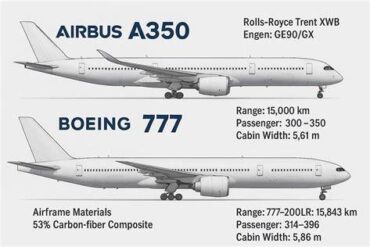
The broader specifications of the A350 highlight why such a large winglet is necessary:
- Wingspan: 212 ft 5 in (64.75 m)
- Wing area: 4,760 sq ft (442 m²)
- Length: 219 ft 2 in (66.8 m)
- Typical seating: 300–350 passengers
- Maximum takeoff weight: 624,000 lbs (283,000 kg)
- Range: 8,500 nautical miles
These numbers tell a simple story: the A350 is a large, heavy, long-range aircraft, and every aerodynamic advantage matters. The large winglets play a crucial role in delivering the aircraft’s impressive fuel efficiency.
Airbus claims the A350 achieves around 25% lower fuel burn compared with earlier generation widebody aircraft, thanks to its advanced aerodynamics, materials, and engines.
Why Not All A350 Winglets Look the Same
Aviation enthusiasts with a sharp eye sometimes notice something curious: not every Airbus A350 has identical winglets.
The explanation lies in the incremental evolution of aircraft design. Even after entering service, manufacturers continuously refine their aircraft to squeeze out additional efficiency improvements.
In 2017, Airbus introduced a revised winglet design for the A350. The updated version features a slightly taller and squarer tip, subtly altering the aerodynamic load distribution across the wing.
This modification allowed engineers to increase the span load, meaning the wing distributes lift more evenly across its length. The result is reduced drag and improved efficiency during cruise flight.
The first aircraft equipped with this new winglet design appeared in 2018, beginning with the A350-900ULR delivered to Singapore Airlines. From that point forward, aircraft with a manufacturer serial number (MSN) of 216 or higher incorporated the improved winglet.
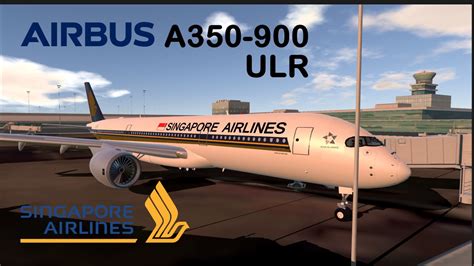
Older aircraft—operated by airlines such as Finnair, Delta Air Lines, Qatar Airways, and early Singapore Airlines deliveries—still retain the earlier design. The differences are subtle but noticeable to experienced observers.
This quiet evolution reflects a broader pattern in aerospace engineering. Aircraft rarely remain frozen in their original form; they gradually improve as manufacturers gather real-world performance data from airline operations.
The A330neo’s Winglets: Evolution Rather Than Revolution
While the A350 represents a new aircraft family, the Airbus A330neo is an upgraded version of the older A330 platform. Its development strategy focused on modernizing an existing aircraft rather than designing a completely new one.
The A330neo introduced several major improvements:
- New Rolls-Royce Trent 7000 engines
- Updated avionics and cabin features
- Redesigned wings with improved aerodynamics
- Newly integrated blended winglets
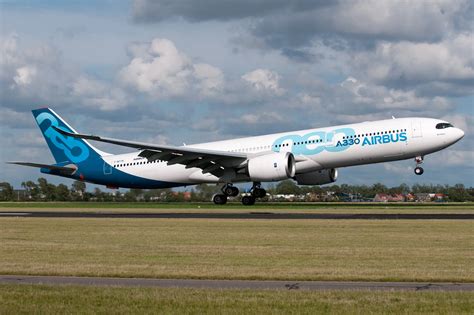
The new wing design increased the aircraft’s wingspan to 210 feet (64 meters), roughly 12 feet wider than the earlier A330ceo.
The A330neo’s winglets extend the wingspan further while maintaining airport compatibility. Their shape resembles the sharklets used on Airbus narrowbody aircraft, though they are larger and smoothly blended into the wing.
Unlike the towering winglets on the A350, the A330neo’s wingtips are more modest in height and curvature. They still provide meaningful aerodynamic improvements but are constrained by the original wing architecture of the A330 platform.
The aircraft’s key specifications illustrate its slightly smaller role in Airbus’ widebody lineup:
- Wingspan: 210 ft (64 m)
- Length: 208 ft 10 in (63.7 m)
- Typical seating: 260–300 passengers
- Maximum takeoff weight: 553,400 lbs (251,000 kg)
- Range: 7,200 nautical miles
- Cruise speed: Mach 0.86
Although smaller than the A350, the A330neo still benefits greatly from its aerodynamic improvements. Airbus used 3D Computational Fluid Dynamics (CFD) modeling during development to optimize airflow across the wing and winglets.
Another enhancement involved the addition of a carbon-fiber reinforced outer wing span, which improves structural strength while reducing weight.
These modifications helped deliver approximately 4% better aerodynamic performance and fuel efficiency compared with the earlier A330 design.
Why the A350 Needs Larger Winglets
The size difference between the winglets of the A350 and A330neo ultimately comes down to physics.
The A350 is simply a larger and heavier aircraft.
At 219 feet long, it is roughly ten feet longer than the A330neo. Its fuselage diameter is also wider—19.5 feet compared with 18.5 feet—allowing for a more spacious cabin and greater passenger capacity.
Most importantly, the A350’s maximum takeoff weight exceeds the A330neo’s by roughly 70,000 pounds.
That additional mass requires more lift to keep the aircraft airborne. Lift depends on several factors: airspeed, wing area, and aerodynamic efficiency. Larger winglets help improve that efficiency by minimizing induced drag, particularly during long cruise segments.
The extra 2.5 feet of wingspan on the A350 also contributes to improved aerodynamic performance. Longer wings reduce induced drag by spreading lift over a larger surface area.
In practical terms, these aerodynamic improvements allow the A350 to achieve ultra-long-haul ranges exceeding 8,500 nautical miles, connecting city pairs that were previously difficult or impossible with older aircraft.
Cabin Design and Aircraft Size Influence Wing Design
Aircraft wings are not designed in isolation. Their shape, size, and aerodynamic features must match the aircraft’s fuselage dimensions, payload capacity, and operational mission.
The A350’s wider fuselage allows airlines to install a 3-3-3 economy seating layout with 18-inch seats, which are considered relatively comfortable for long-haul travel. The cabin also features sculpted sidewalls and vertical panels that maximize passenger space.
This wider cabin creates additional payload capacity, meaning the aircraft often carries more passengers and cargo simultaneously. The wings—and their winglets—must therefore generate sufficient lift for heavier loads.
The A330neo, by contrast, typically uses an eight-abreast 2-4-2 seating configuration. While comfortable, the narrower fuselage limits how much capacity airlines can install compared with the larger A350.
These cabin and payload differences ultimately influence the aerodynamic requirements of the aircraft, shaping everything from wing span to winglet height.
Wingtip Innovation Across the Aviation Industry
Airbus is not the only manufacturer experimenting with wingtip technology. Across the aviation industry, engineers continue to search for new ways to reduce drag and improve efficiency.
One of the most unusual solutions appears on the Boeing 777X.
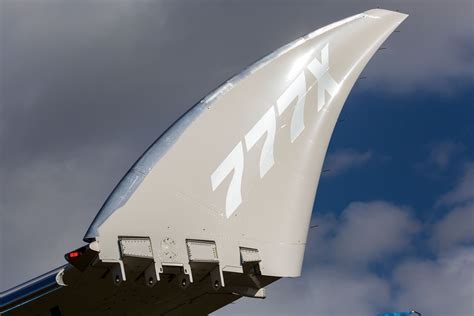
Instead of fixed winglets, the 777X features folding wingtips. During flight, the wings extend to an enormous span of 235 feet, maximizing aerodynamic efficiency. When the aircraft lands, the outer sections of the wings fold upward, reducing the effective span so the aircraft can fit existing airport gates.
The folding process occurs automatically once the aircraft reaches around 50 knots during takeoff, and cockpit indicators confirm the wingtip position.
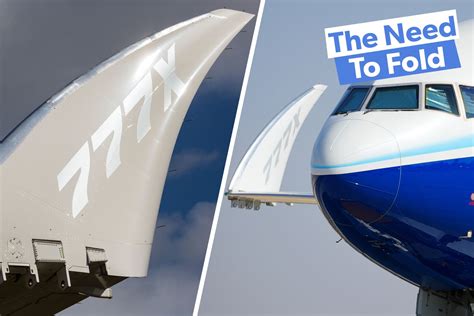
This ingenious design allows the aircraft to achieve the aerodynamic benefits of extremely long wings without forcing airports to rebuild their infrastructure.
The concept highlights an ongoing trend in aviation: wingtip design remains one of the most powerful tools engineers have to improve efficiency.
The Subtle Art of Wingtip Engineering
Winglets may appear like simple add-ons, but they represent a deeply sophisticated piece of aerodynamic engineering. Their height, curvature, sweep angle, and integration with the wing must be carefully tuned to balance drag reduction, structural strength, and airport compatibility.
In the case of the Airbus A350, engineers had the freedom to design an entirely new wing optimized around composite materials and advanced aerodynamics. The result is a large, sweeping winglet that maximizes efficiency for a heavy long-range aircraft.
The A330neo, meanwhile, demonstrates how thoughtful engineering upgrades can breathe new life into an existing aircraft design. Its smaller winglets still deliver meaningful improvements in range and fuel consumption, helping airlines operate the aircraft more economically.
Both designs ultimately pursue the same goal: making long-distance flight more efficient, more sustainable, and more economically viable.
And in aviation, even a few feet of extra wingtip can make a remarkable difference when thousands of miles of sky lie ahead.