In the modern enterprise environment, Customer Relationship Management (CRM) systems serve as the backbone of client engagement, sales acceleration, and strategic growth. However, a comprehensive grasp of CRM requires more than just understanding its general function. The core divergence lies in how organizations deploy CRM systems — either as Operational CRM or Analytical CRM. Each variant offers distinct utilities, architectures, and outcomes. Choosing between them can significantly affect your company’s trajectory.
At the heart of CRM evolution is the need to optimize business functions while building lasting customer relationships. While both operational and analytical CRMs aim to strengthen this foundation, they do so by approaching the problem from entirely different vantage points.
What Is Operational CRM?
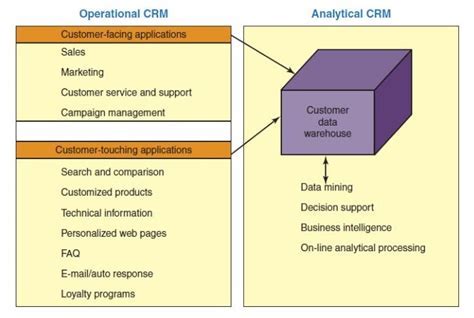
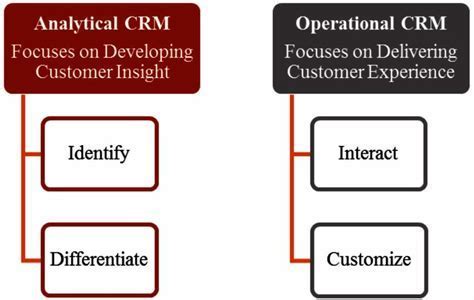
Operational CRM focuses on the automation and enhancement of customer-facing processes. It deals primarily with how the organization interacts with its customers and prospects on a daily basis. These systems are designed to support front-office activities such as sales, marketing, and customer service — all key areas where direct customer interaction occurs.
Key Functionalities of Operational CRM
The primary aim of an operational CRM is efficiency. By minimizing manual workload and centralizing customer data, businesses gain the agility to offer personalized and timely support across all touchpoints.
Sales Automation: This functionality allows teams to automate tasks like lead management, opportunity tracking, and sales forecasting. It helps reduce human error and accelerates the sales cycle by:
-
Auto-populating customer profiles from internal and third-party sources
-
Integrating multiple applications for seamless data transfer
-
Building intuitive lead-nurturing workflows
Marketing Automation: With sophisticated automation triggers, organizations can execute multichannel campaigns that are tailored to user behavior and purchase intent. Marketing automation enhances scalability by enabling the business to:
-
Launch targeted email campaigns automatically
-
Deliver personalized content based on funnel stage
-
Track customer responses and refine content accordingly
Service Automation: This ensures that the post-sales experience is as refined as the pre-sale interaction. Organizations can increase customer retention rates by:
-
Proactively addressing customer complaints or queries
-
Sending context-specific resources
-
Logging support history to speed up case resolution
What Is Analytical CRM?
In contrast, Analytical CRM is built for data-driven decision-making. It is primarily concerned with the collection, storage, interpretation, and usage of customer data. Rather than enabling direct interactions, it empowers the backend systems — executive leadership, data analysts, and marketing strategists — with insights necessary to enhance future interactions and offerings.
Core Capabilities of Analytical CRM
Analytical CRM transforms raw customer data into actionable insights. These insights allow businesses to understand customer behavior, preferences, and predict future trends with a high degree of accuracy.
Customer Retention Insights: Analytical tools identify when and why customers might churn. By tracking usage patterns, purchase frequency, and engagement, companies can implement timely retention strategies such as:
-
Custom promotions
-
Loyalty incentives
-
Automated check-ins or renewal reminders
Customer Acquisition Intelligence: Analytical CRM enables businesses to understand which channels deliver the highest-value leads. With predictive modeling, organizations can forecast which segments are most likely to convert and tailor communications accordingly.
Data Management and Segmentation: The system organizes customer data across multiple touchpoints — web, mobile, email, and offline interactions — to create holistic customer profiles. It helps businesses identify:
-
Communication preferences
-
Most engaging content types
-
Customer journeys across platforms
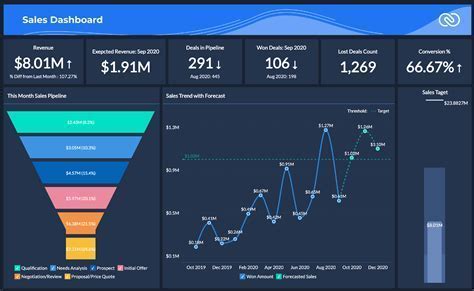
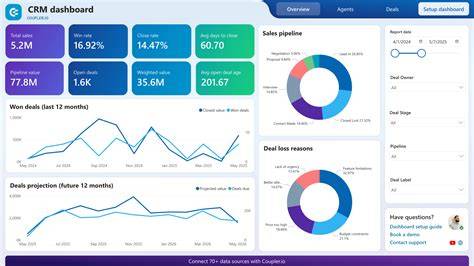
Automated Reporting: Analytical CRM systems produce reports that visualize complex data trends across sales, service, and marketing performance. These reports facilitate informed decision-making without requiring deep data science expertise.
Key Differences Between Operational and Analytical CRM
Despite sharing the overarching goal of enhancing customer relationships, operational and analytical CRMs diverge significantly in scope, execution, and user engagement.
| Feature | Operational CRM | Analytical CRM |
|---|---|---|
| Focus Area | Day-to-day customer interaction | Strategic insights and performance analysis |
| Primary Users | Sales reps, service agents, marketing teams | Executives, analysts, marketing strategists |
| Functionality | Workflow automation and task execution | Data mining, trend analysis, and customer modeling |
| Interaction Type | Direct (email, chat, sales calls) | Indirect (through data interpretation) |
| Examples | Contact management, lead routing | Churn analysis, purchase prediction |
| Technology Base | Process automation | Big data, AI, machine learning |
Which CRM Type Is Right for Your Business?
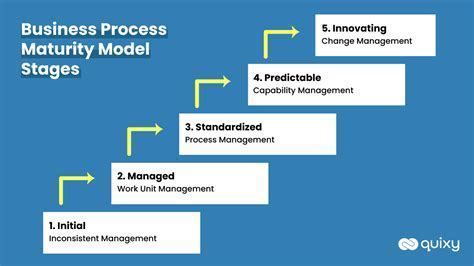
The answer lies in your business maturity, goals, and customer engagement model. Both CRM types offer unique advantages, and in many cases, a hybrid approach delivers the highest ROI. However, understanding the core priority of your enterprise is essential.
Opt for Operational CRM If:
-
You are a small to medium-sized business seeking basic automation
-
Your organization is heavily involved in direct customer interaction
-
You want to streamline front-line tasks such as lead handling and support tickets
Operational CRM suits organizations that are building foundational customer engagement structures and need tools to improve response time, manage large lead volumes, and create consistent service protocols.
Choose Analytical CRM If:
-
You are a data-centric business with mature workflows
-
You aim to scale operations using customer intelligence
-
You need advanced reporting and segmentation to target high-value accounts
Analytical CRM is better for enterprises that rely on forecasting, personalized campaigns, and performance optimization. By uncovering trends in customer behavior, it empowers long-term strategy.
The Competitive Edge of Choosing the Right CRM
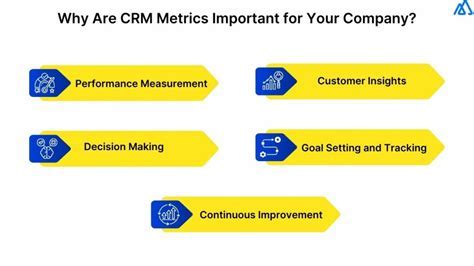
CRM implementation is more than just a software investment; it’s a strategic transformation tool. Selecting the right CRM architecture can lead to measurable improvements in several areas:
Faster, Data-Backed Decisions: Operational CRM delivers real-time data to help front-line employees act swiftly, while analytical CRM equips leaders with insights to make high-level strategic choices.
Workforce Optimization: CRMs distribute tasks logically across departments, ensuring marketing, sales, and service teams are aligned and not duplicating efforts. Analytical CRMs in particular optimize budget allocation and campaign focus.
Streamlined Internal Processes: With intelligent automation in place, manual errors decrease and workflows become predictable. Time is saved, and productivity soars across departments.
Increased Customer Satisfaction: The synergy of efficient service delivery (operational) and personalized experiences (analytical) leads to improved customer satisfaction scores, retention, and lifetime value.
Final Thoughts: Integration Over Isolation
In reality, the difference between operational CRM and analytical CRM does not mandate a binary choice. Modern enterprises often benefit most from integrating both systems — using operational CRM to manage live interactions and analytical CRM to refine the approach with evidence-backed decisions.
Platforms such as Commence CRM exemplify this integration by offering a full suite of automation and analytics features in a cloud-native environment. With capabilities spanning from marketing campaigns to churn risk analysis, such platforms redefine how businesses understand and serve their customer base.
Organizations that understand and apply the complementary power of both CRM types position themselves for sustained growth, agility, and competitive advantage in an era defined by personalization and precision.
Frequently Asked Questions (FAQ)
What is the main difference between operational and analytical CRM?
Operational CRM is designed to manage real-time customer interactions through automation tools in sales, marketing, and service. Analytical CRM, on the other hand, focuses on data interpretation, allowing businesses to gain strategic insights into customer behavior and improve future interactions.
Can a business use both operational and analytical CRM?
Yes, and many do. In fact, combining both systems provides a holistic view of the customer lifecycle — capturing interaction data via operational CRM and analyzing that data through analytical CRM to improve performance and personalization.
Which CRM should I choose for a startup?
A startup should start with operational CRM to build strong customer engagement workflows and improve efficiency in handling leads and service requests. As the business scales, integrating analytical CRM will become valuable for making data-driven decisions.