Modern aerial combat demands flexibility, speed, and unpredictability. Runways — long, flat, vulnerable stretches of concrete — are liabilities in the age of precision warfare. That’s why fighter jets that can take off and land without runways have become game-changers. These are not helicopters, which sacrifice speed and range for vertical lift. These are fully-armed, high-speed VTOL (Vertical Take-Off and Landing) or STOVL (Short Take-Off and Vertical Landing) jets — engineered to operate where no traditional aircraft can.
Since the Cold War, air forces have pursued aircraft capable of operating from beaches, highway sections, carrier decks, and even forest clearings. Let’s explore four iconic fighter jets that do just that — each a masterpiece of engineering, combat evolution, and sometimes, daring compromise.
The F-35B Lightning II: The Pinnacle of VTOL Technology
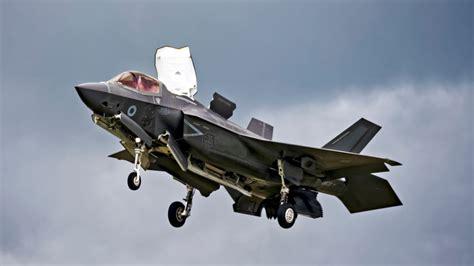
Among all vertical-capable fighter jets, the Lockheed Martin F-35B Lightning II stands at the top. As the STOVL variant of the world-renowned F-35 family, it combines stealth, speed, and futuristic avionics with the ability to launch from short or improvised runways.
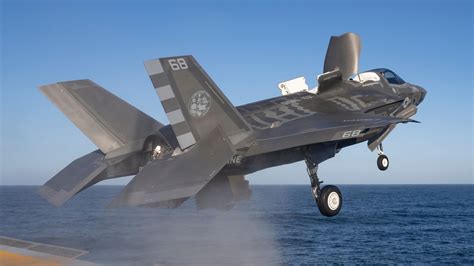
What separates the F-35B from its A and C siblings is its Rolls-Royce LiftSystem. This innovative propulsion setup includes:
- A vertical lift fan just behind the cockpit
- A three-bearing swivel nozzle at the rear
- Roll posts beneath the wings for added balance
Together, these deliver up to 40,000 pounds of lift, enabling the F-35B to perform vertical takeoffs, landings, and transitions to forward flight — all controlled by a single button. The lift fan pushes massive volumes of cool air downward, while the rear nozzle swivels 95 degrees in just 2.5 seconds, directing hot exhaust toward the ground.
What makes the F-35B revolutionary isn’t just its mechanics but its systems integration. It offers pilots a 360-degree view of the battlefield using sensor fusion, secure data sharing across units, and a radar-evading shape that helps it disappear on enemy screens.
Used primarily by the U.S. Marine Corps, Royal Navy, and Japan Maritime Self-Defense Force, the F-35B is ideal for carrier-based and expeditionary operations. It thrives in places where long runways don’t exist.
The AV-8B Harrier II: The Trailblazer of U.S. VTOL Aviation
Before the F-35B took center stage, there was the iconic McDonnell Douglas AV-8B Harrier II — America’s only VTOL fighter jet for decades. As a second-generation derivative of the British Harrier, this aircraft proved vertical jets could be more than experimental.
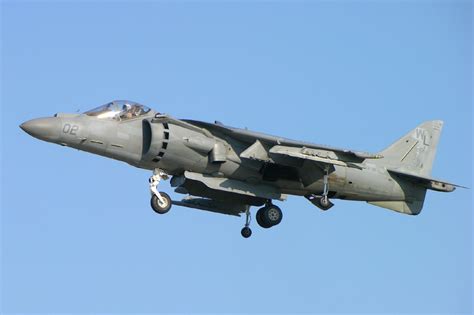
Introduced in the 1980s, the AV-8B was engineered with:
- Four swiveling vector nozzles around the Pegasus turbofan engine
- Digital cockpit systems for improved avionics
- Composite wing structure for weight savings and strength
These nozzles — two on each side — could pivot to direct thrust downward for lift or rearward for flight. This system provided the Harrier with the flexibility to take off from short carrier decks, roads, and even grass fields.
But the Harrier was no easy aircraft to master. Pilots had to manually control the nozzles using a specialized lever. Mistakes in thrust vectoring during takeoff or landing often proved fatal. The Harrier earned the grim nickname “Widowmaker”, particularly after the U.S. Marine Corps lost over a third of its fleet to accidents by 2002.
Despite this, the Harrier saw extensive combat action in Operation Desert Storm, Afghanistan, and Iraq, thanks to its unmatched versatility. As of now, around 39 Harriers remain in U.S. service, scheduled to be retired by 2027 as the F-35B takes over.
Yakovlev Yak-38 Forger: The Soviet Union’s Short-Lived Experiment
The Cold War’s aerospace race wasn’t just about speed or altitude — it was also about operational flexibility. The Soviet Union, eager to match the Harrier’s capabilities, developed the Yakovlev Yak-38 Forger, its first operational VTOL jet.
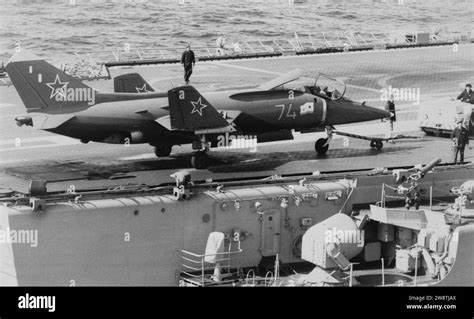
Introduced in 1976, the Yak-38 had a three-engine configuration:
- One main R27-300 turbojet with rear vectoring nozzles
- Two vertically mounted lift jets behind the cockpit
This made the aircraft complex and heavy. Unlike the Harrier’s single-engine system with vectoring thrust, the Yak-38’s lift jets were dead weight in forward flight, leading to terrible fuel efficiency, short range, and low payload.
It could carry only 1,325 pounds of weapons and had an effective combat radius of about 60 miles. In practice, Yak-38 pilots often avoided vertical takeoffs entirely, opting for short runway launches to save fuel. Operationally, the jet proved disappointing, and it was retired by the early 1990s.
While the Yak-38 never achieved the global status of the Harrier, it remains historically significant. It was deployed aboard Kiev-class aircraft carriers and represented a unique, if flawed, attempt to close the VTOL gap.
Hawker Siddeley Harrier GR.1: The Original Jump Jet
The fighter jet that started it all — the Hawker Siddeley Harrier GR.1 — was the world’s first operational S/VTOL jet, capable of taking off from anywhere and bringing respectable firepower with it.
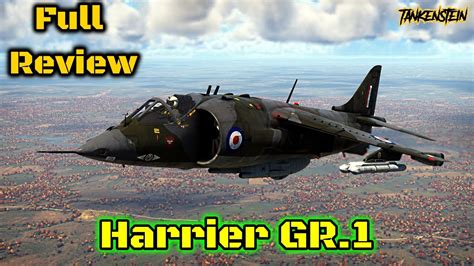
Born out of a private venture by Hawker Aircraft in the 1950s, the Harrier was powered by the groundbreaking Pegasus engine from Bristol Siddeley. This engine used four rotating nozzles to vector thrust for lift and forward motion. The aircraft’s evolution went as follows:
- P.1127 prototype hovered in 1960
- Kestrel FGA.1 tested under U.K.-U.S.-West Germany tri-nation trials
- GR.1 entered Royal Air Force service in 1969
Flying the GR.1 was a challenge. Pilots had to manually control the nozzles using a “nozzle lever,” balancing engine thrust and vector angle in real time. Despite being subsonic and lacking radar, it could still deliver 5,000 pounds of ordnance, making it formidable in close support roles.
The GR.1 laid the groundwork for all modern VTOL fighters. It changed battlefield dynamics by offering tactical air support from forward bases and small ships, helping NATO forces maintain air superiority in unconventional environments.
Why VTOL Fighters Matter More Than Ever
VTOL fighter jets are more than technological marvels — they’re tactical enablers. In a modern battlefield where airbases can be taken out by long-range missiles, being able to deploy from unprepared locations provides a critical edge.
The future will likely see VTOL capabilities incorporated into next-gen drone fighters, manned-unmanned teaming aircraft, and possibly sixth-generation air superiority platforms. But for now, the F-35B, AV-8B Harrier, and their legendary predecessors continue to redefine where and how air power can be projected.
As threats evolve, runway independence is no longer a luxury — it’s a necessity. And these four fighter jets proved that air dominance can take off from almost anywhere.
FAQs
What does VTOL mean in fighter jets?
VTOL stands for Vertical Take-Off and Landing. It refers to aircraft that can lift off and land vertically, without the need for traditional runways.
Are VTOL jets harder to fly?
Yes. Early VTOL jets like the Harrier required significant pilot skill due to manual nozzle control. Modern VTOL aircraft like the F-35B simplify the process through advanced automation.
What replaced the AV-8B Harrier?
The F-35B Lightning II is replacing the AV-8B Harrier in U.S. Marine Corps service due to its superior technology, stealth, and versatility.
Did the Yak-38 see combat?
No major combat roles are documented for the Yak-38. It was primarily used for training and naval demonstration aboard Soviet carriers.
Will Russia build a new VTOL jet?
Russia has expressed interest in reviving VTOL concepts through designs like the Yak-141, but no new VTOL fighters have entered service to date.