China’s rise as a fighter jet exporter has been slow, uneven, and deeply political, shaped by decades of technological catch-up, shifting alliances, sanctions regimes, and the quiet arithmetic of defense budgets. For much of the Cold War and its long afterglow, Chinese combat aircraft were treated as utilitarian stand-ins for Soviet designs—flyable, affordable, but rarely aspirational. That reputation is now being challenged by a new generation of Chinese fighters that aim to compete not just on price, but on sensors, weapons integration, and the strategic flexibility they offer to states caught between Western export controls and Russia’s export paralysis.
The market for fighter jets is not a simple shopping mall of steel and thrust. It is a map of constraints. Countries buy fighters when they can, from whom they are allowed to, and in ways that signal alignment without surrendering autonomy. In that narrow corridor, Chinese aircraft have found oxygen. The collapse of Russian export capacity over the past decade, compounded by sanctions and production bottlenecks, has opened space that Beijing is methodically trying to occupy. The result is a growing roster of countries that either operate Chinese fighters today, or are negotiating to do so, not because Chinese jets are universally superior, but because they are available, politically tolerable, and increasingly capable.
Three historical currents converge here. First, the legacy of China exporting license-built copies of Soviet fighters to cash-strapped air forces. Second, the deepening defense-industrial partnership with Pakistan, which transformed Chinese exports from one-off sales into co-developed platforms with shared logistics ecosystems. Third, the present moment of strategic hedging, in which countries facing Western restrictions or Russian delays look to China as the least constrained supplier of modern combat aircraft.
From Copies to Credibility: How China Built an Export Footprint
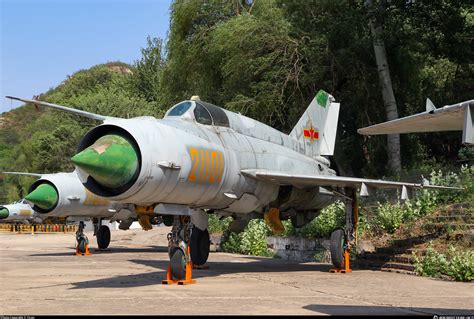
The early story of Chinese fighter exports is blunt. Aircraft like the Shenyang F-5, the Shenyang J-6, and the Chengdu J-7 were derivatives of Soviet MiG designs. They were rugged, simple, and cheap to operate, which made them attractive to air forces with thin budgets and limited maintenance ecosystems. They also locked buyers into Chinese supply chains for spares and upgrades, a quiet form of influence that outlived the jets themselves.
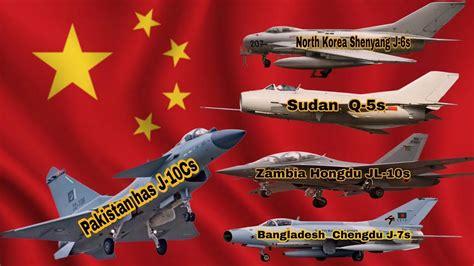
Countries across Africa and parts of Asia built their combat aviation around these platforms. North Korea flew the full spectrum of older Chinese types. Pakistan, Sudan, Tanzania, Zambia, Zimbabwe, Namibia, Bangladesh, Sri Lanka, and Nigeria all operated variants of the J-7 family at different times. These fleets were not about air dominance. They were about sovereignty patrols, deterrence against low-intensity threats, and the basic political theater of having jets on parade days.
The long export run of the J-7, which continued into the 2010s, left behind maintenance depots, pilot training pipelines, and doctrinal habits that matter today. When China pitches newer fighters to the same regions, it is not starting from zero. It is selling into ecosystems that already speak Chinese maintenance manuals, already rely on Chinese spares, and already budget for Chinese support contracts. The leap from a legacy J-7 to a modern Chinese multirole fighter is less culturally disruptive than switching to Western platforms with their export controls, end-use monitoring, and politically sensitive upgrade paths.
Pakistan: The Anchor Customer That Changed the Game
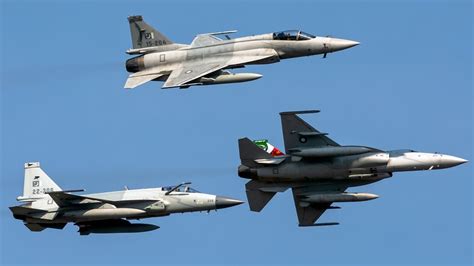
Pakistan is the keystone in China’s fighter export story, not because of volume alone, but because of the depth of integration. The co-development of the JF-17 Thunder created something new in the global arms market: a low-cost multirole fighter that is jointly produced, locally assembled, and tailored to the operational realities of a mid-income air force facing a high-end rival. The jet’s success is not measured only in airshows or spec sheets. It is measured in sorties flown, spare parts stocked domestically, and pilots trained within a stable pipeline.
Pakistan also stands as the sole confirmed export operator of the Chengdu J-10, a fourth-generation multirole fighter positioned as an analogue to the F-16. The symbolism here is heavy. A country long reliant on American fighters has diversified toward Chinese platforms not as a token gesture, but as a structural shift. The J-10’s adoption ties Pakistan more deeply into Chinese avionics, weapons, and sustainment ecosystems, creating a durable industrial and operational bond.
This partnership has spillover effects. Azerbaijan, Myanmar, and Nigeria have purchased the JF-17, not just for its sticker price, but because it comes bundled with training, financing flexibility, and fewer political strings than Western offers. The aircraft is not sold as a miracle jet. It is sold as a practical machine that can be kept flying without begging multiple capitals for export waivers.
The Map of Buyers: Who Operates Chinese Fighters Today
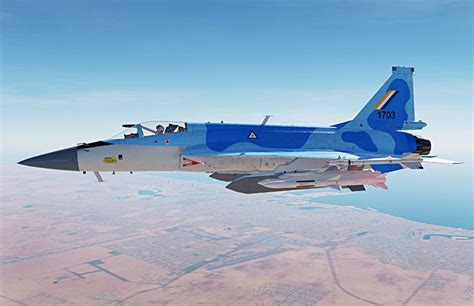
The current landscape of Chinese fighter operators is a mosaic of legacy users and newer buyers. North Korea continues to field older Chinese designs, embedding them into a heavily constrained maintenance environment. Pakistan operates both the JF-17 and the J-10, representing the most advanced export footprint of Chinese fighters. Nigeria and Myanmar operate the JF-17, using it as a frontline platform in air forces that previously relied on older Soviet or Chinese jets.
In Africa, the story is uneven. Several countries continue to fly older Chinese fighters, often upgraded with incremental avionics packages to stretch their service lives. The appeal is not cutting-edge capability but continuity. When budgets fluctuate and sanctions loom unpredictably, continuity becomes a strategic asset.
Advanced trainers and light fighters also shape this map. The Hongdu JL-8 and JL-10 occupy a niche that blurs training and combat roles, serving countries that do not require high-end air superiority fighters to meet their security needs. Angola, Bangladesh, Bolivia, Egypt, Ghana, Laos, Myanmar, Namibia, Sri Lanka, Sudan, Venezuela, Zambia, and Zimbabwe operate these platforms in various configurations. These aircraft keep pilots current, patrol borders, and conduct limited strike missions against low-level threats. They also function as on-ramps into Chinese aerospace ecosystems, familiarizing air forces with Chinese maintenance standards and procurement rhythms.
Negotiators and Near-Buyers: Where Deals Are Being Weighed
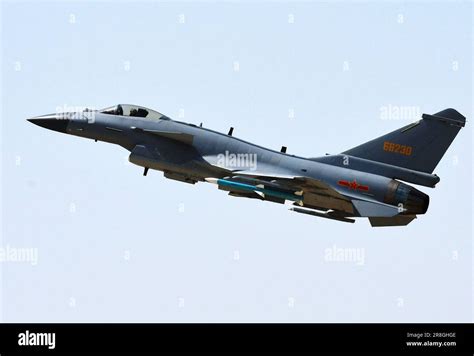
Beyond confirmed operators, a second ring of countries is actively negotiating or publicly weighing Chinese fighters. Egypt’s interest in the J-10 is entangled with the geopolitics of sanctions and canceled Western sales. After restrictions disrupted Egypt’s procurement of Russian aircraft and advanced American fighters, Chinese jets emerged as a politically feasible alternative. The calculus here is not only performance. It is the ability to secure airframes, munitions, and upgrades without triggering diplomatic retaliation.
Indonesia has publicly entertained Chinese offers while balancing them against alternatives from other suppliers. The negotiation theater is part procurement, part leverage. Even when Chinese jets are not ultimately selected, their presence in the bidding process reshapes pricing and delivery terms offered by competitors.
Iran represents the most geopolitically charged potential buyer. With Russian deliveries constrained and Western options politically impossible, Chinese fighters offer a rare pathway to modernize Iran’s aging combat fleet. Reports of negotiations underscore how fighter sales are often the visible tip of deeper strategic coordination, including training exchanges, maintenance support, and munitions integration.
The High-End Question: Can China Export Fifth-Generation Fighters?
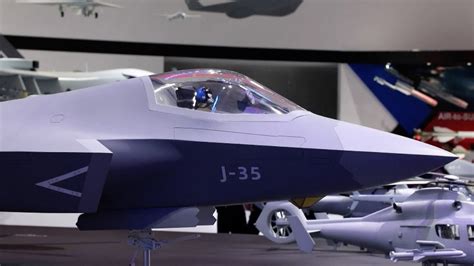
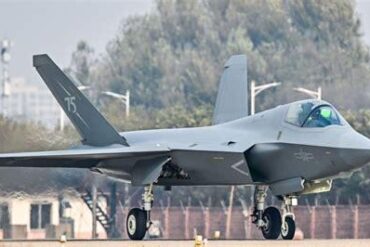
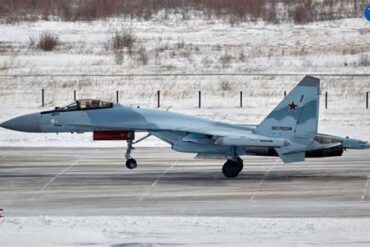
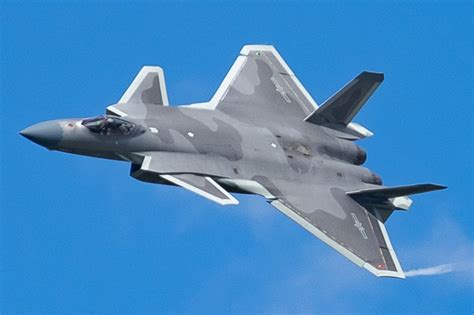
The emergence of the Shenyang J-35 marks China’s ambition to export stealth-class fighters, a domain historically dominated by the United States and, in theory, Russia. The jet’s development with export markets in mind signals a strategic bet: that a cohort of countries will want stealth features without Western political conditions. The J-35’s future buyers are likely to be states already embedded in Chinese defense ecosystems or those facing acute restrictions elsewhere.
Export bans on China’s top-tier J-20 mirror the logic behind the United States’ refusal to export the F-22. This creates a tiered export portfolio: fourth-generation jets like the J-10 for immediate sales, fifth-generation options like the J-35 for future strategic partners, and trainers and light fighters as the broad market glue.
Whether the J-35 becomes a true export success depends less on stealth coatings and radar cross-section figures than on the unglamorous plumbing of sustainment. Fifth-generation fighters are maintenance-hungry beasts. Countries will buy them only if they believe China can supply spare parts, software updates, and engine support at scale over decades. The export story will be written not at airshows, but in hangars.
Why Some Countries Will Not Buy Chinese Fighters
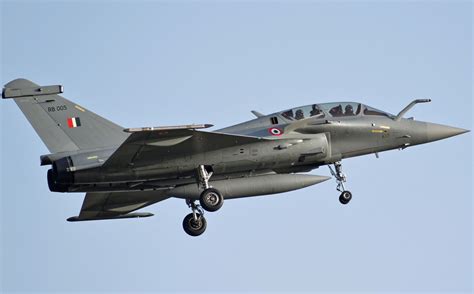
The absence of certain countries from China’s export roster is as revealing as the presence of others. India’s strategic rivalry with China makes Chinese fighters politically unthinkable, regardless of performance. Vietnam’s historical mistrust of China and its evolving ties with the United States point toward Western or alternative suppliers. NATO members and U.S. treaty allies in the Asia-Pacific align their procurement with alliance interoperability, not with Chinese platforms that would complicate data sharing and joint operations.
These exclusions narrow China’s addressable market, but they also clarify it. Chinese fighter exports are aimed at states seeking autonomy from Western supply chains, states facing sanctions risk, and states whose security needs do not require seamless integration with U.S.-led coalitions. This is a sizable market, even if it is not glamorous.
The Strategic Logic Behind Choosing Chinese Fighters
Choosing a fighter jet is choosing a long relationship. Aircraft outlive ministers and sometimes regimes. Buyers who turn to China are often making a calculated trade: less political scrutiny in exchange for deeper dependence on Chinese logistics and training pipelines. For some governments, that trade is attractive. It offers operational sovereignty in the short term and bargaining leverage in the long term.
China’s export strategy also bundles financing, training, and industrial cooperation. Co-production arrangements, technology transfers of limited scope, and localized maintenance hubs sweeten deals for countries seeking industrial spillovers. The aircraft becomes a catalyst for broader defense-industrial ties, locking in relationships that persist even when geopolitical winds shift.
The Numbers Game and the Future Curve
Global export figures still place China behind the United States, France, South Korea, and even a diminished Russia in total combat aircraft orders. Yet numbers lag momentum. The strategic opening created by Russia’s export collapse and Western export controls is structural, not temporary. As China’s aerospace industry matures its engines, avionics, and supply chains, the friction that once limited exports is easing.
The next decade will test whether Chinese fighters can become default options for countries priced out of Western jets and stranded by Russian delays. The story is not one of inevitable dominance. It is a working theory about convergence: as technology gaps narrow and geopolitical constraints harden, availability becomes power. In that strange marketplace where thrust meets diplomacy, Chinese fighter jets are no longer curiosities. They are becoming plausible answers to questions that many governments did not expect to ask.