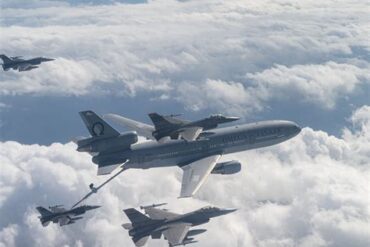
American aerospace giants like Lockheed Martin, Boeing, and Northrop Grumman supply the backbone of these fleets, delivering everything from fourth-generation multirole jets to stealth platforms capable of penetrating the world’s most complex air defense networks. These purchases are driven not only by performance but by decades of joint operations, intelligence sharing, and logistical compatibility that make U.S. jets the world’s preferred choice.
This landscape creates a striking hierarchy of global buyers—nations that consistently invest in U.S. combat aircraft, shaping airpower balance across key regions.
Taiwan’s Reliance On American Air Superiority
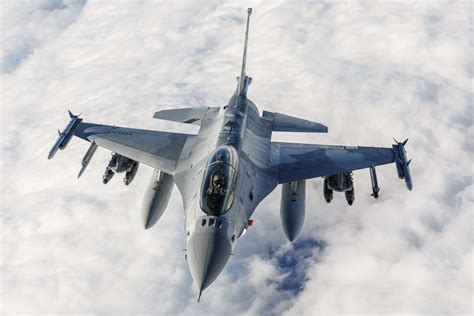
Taiwan’s airpower strategy depends heavily on a robust fleet of F-16 Fighting Falcons, the island’s primary multirole fighters. With 137 American-made jets, Taiwan continues to invest in U.S. technology as it counters unrelenting pressure from the People’s Liberation Army Air Force. The upgrade of legacy F-16A/B models into the cutting-edge F-16V Viper standard revitalized the fleet in 2023, bringing advanced AESA radar, mission computers, and EW upgrades that align Taiwan’s capabilities with modern U.S. and NATO forces.
A fresh order of 66 F-16V Block 70 aircraft—scheduled for delivery through 2026—marks one of the most advanced export packages ever approved by Washington. Taiwan still operates aging F-5 Tiger II fighters, introduced via the U.S. Military Assistance Program in 1965, but these aircraft now serve training and secondary roles.
Greece’s Expanding Arsenal Of American Fighters
Greece fields 148 U.S. fighter jets, with the F-16 forming the core of its airpower as tensions simmer over the Aegean Sea. The Hellenic Air Force operates multiple F-16 variants, including Block 30, 50, 52+, and 52+ Advanced, many of which are undergoing modernization to the elite F-16V configuration. This transformation is redefining Greece’s combat readiness and ensuring compatibility with U.S. and NATO operations.
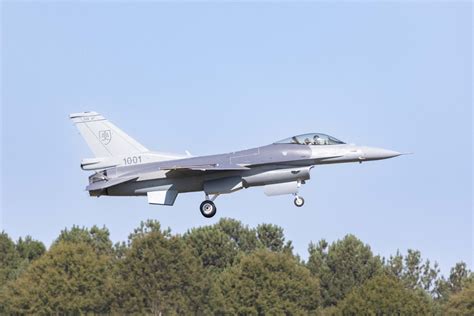
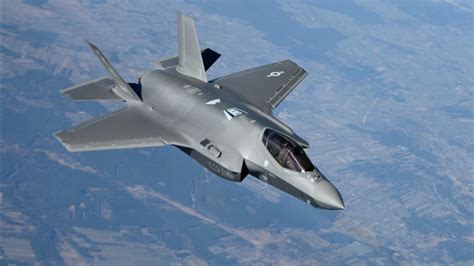
Athens has also moved decisively toward fifth-generation air combat, signing a 2024 agreement to acquire 20 F-35A Lightning II jets with an option for 20 more. The F-35 will ultimately replace Greece’s storied F-4E Phantom II fleet, ending one of Europe’s longest Phantom legacies and securing Greece’s position as a top-tier NATO airpower.
The United Kingdom’s Future Built Around The F-35
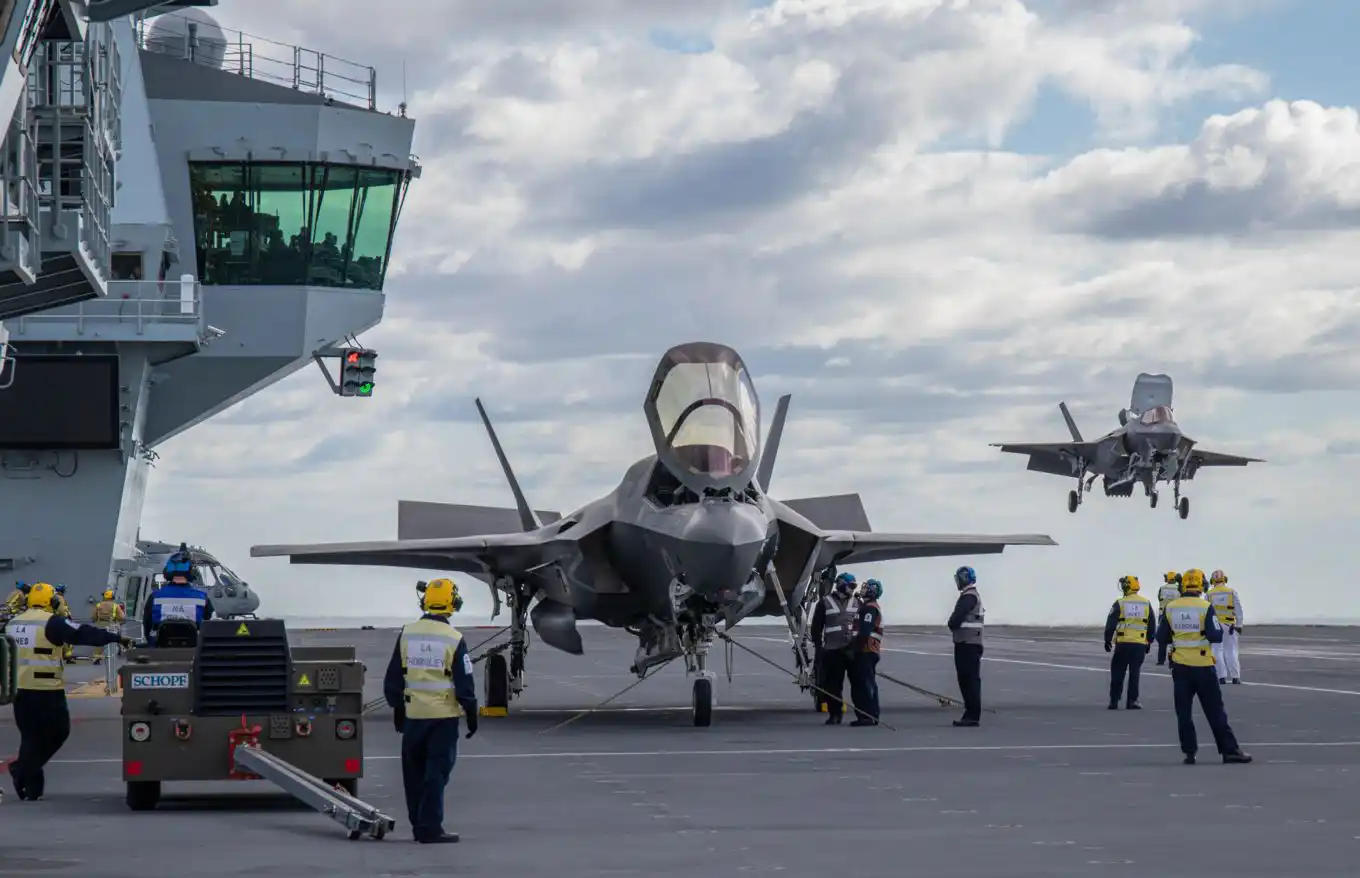
The United Kingdom maintains 150 U.S. fighter jets, centered on a growing fleet of F-35B aircraft designed for both carrier and land-based operations. Once the full Royal Air Force and Royal Navy orders are fulfilled—spanning 12 F-35As and 138 F-35Bs—Britain will command one of the largest fifth-generation fleets outside the United States.
The STOVL-capable F-35B equips the Royal Navy’s Queen Elizabeth-class carriers, enabling potent maritime strike capabilities. Meanwhile, the F-35A variants are intended to support dual-capable missions, including delivery of B61 tactical nuclear weapons under NATO nuclear-sharing arrangements. The UK’s investment in the American T-7A Red Hawk trainer for future fast-jet instruction further anchors London’s commitment to U.S. defense technology.
South Korea’s Dependence On U.S. Strike And Stealth Power
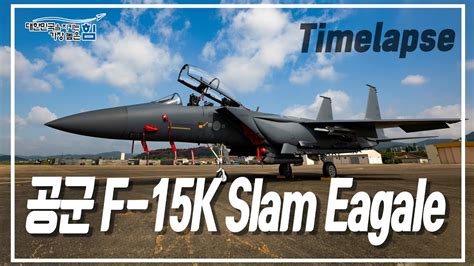
South Korea’s aerospace landscape is deeply intertwined with American engineering, with 204 U.S.-built fighter jets forming a central pillar of its regional deterrence posture. While Korea’s indigenous defense industry has grown rapidly, producing licensed variants of American jets, the majority of its combat airframes—including F-16s, F-35As, and F-15K Slam Eagles—originate in the United States.
The F-15K Slam Eagle, a uniquely tailored strike platform, provides long-range precision strike capability. Simultaneously, the arrival of stealthy F-35A fighters has greatly enhanced South Korea’s ability to penetrate North Korean air defenses and neutralize strategic threats. The remaining F-4 Phantom II jets, though aging, continue serving until sufficient F-35 numbers arrive.
Egypt’s Massive Inventory Of American Fighters
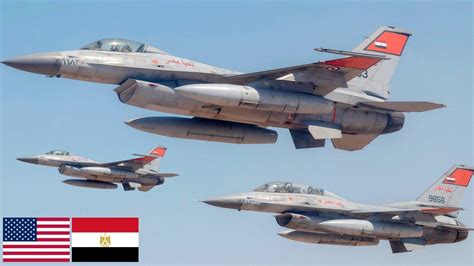
Egypt operates 218 U.S.-made fighter jets, overwhelmingly dominated by its vast F-16 Fighting Falcon fleet. Acquired through multiple “Peace Vector” programs, these aircraft perform nearly all primary air-to-air and air-to-ground missions for the Egyptian Air Force. Egypt’s shift from Soviet to American alignment after the 1970s remains visible in its mixed inventory, which includes retired or reserve F-4 Phantoms and older Russian platforms.
Although Egypt has shown interest in acquiring the F-35 or new F-15EX Eagle II, U.S. policy—specifically the protection of Israel’s Qualitative Military Edge (QME)—continues to block advanced sales. This geopolitical restriction leaves Egypt dependent on upgraded F-16s as its mainstay for the foreseeable future.
Saudi Arabia’s Heavy Investment In The F-15 Eagle Family
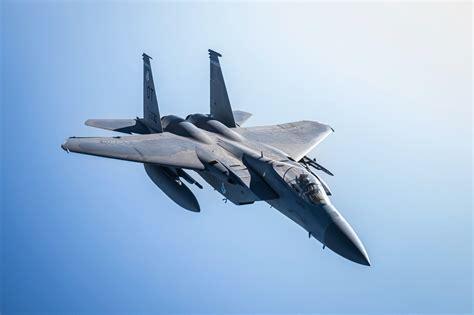
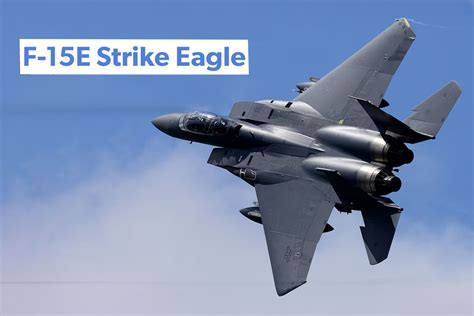
Saudi Arabia stands as one of Washington’s biggest and most controversial defense customers, fielding 269 American fighter jets across multiple F-15 variants. At the center of its fleet is the F-15SA, a highly optimized version of the F-15E Strike Eagle with advanced radar, digital warfare suites, and fly-by-wire controls. The Kingdom also seeks to acquire 48 F-35A stealth fighters, though approval remains politically sensitive due to concerns over Chinese influence.
The RSAF’s potential future acquisition of up to 60 F-15EX Eagle II jets underscores Riyadh’s intention to maintain overwhelming air superiority in the region. However, lingering concerns about technology leakage—given Saudi cooperation with China and Pakistan—continue to complicate advanced fighter sales.
Israel: The Largest Operator Of U.S. Fighters Outside America
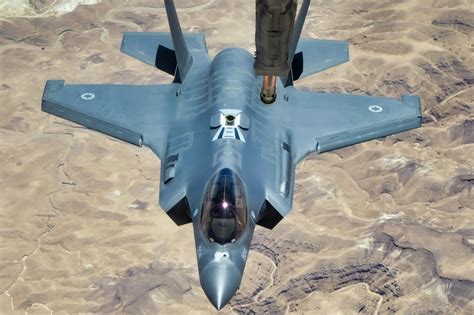
Israel leads the world in U.S. fighter acquisitions, operating 323 American fighter jets that form one of the most lethal air forces on the planet. The crown jewel of the fleet is the F-35I Adir, a custom Israeli variant of the F-35A equipped with indigenous avionics, EW suites, and weapons. The Adir has already proven operationally decisive, spearheading deep-strike missions into Iran in 2024 and 2025, dismantling sophisticated air defenses including Russian-made S-300 systems.
Israel’s longstanding F-16 Sufa and F-15 Ra’am/Baz variants remain vital components of its strike and air superiority architecture. The combination of stealth, heavy strike capability, and combat-proven doctrine allows the Israeli Air Force to conduct daring missions—including long-range penetration raids exceeding 4,000 kilometers—with extraordinary precision.
The Global Future Of U.S. Fighter Jet Exports
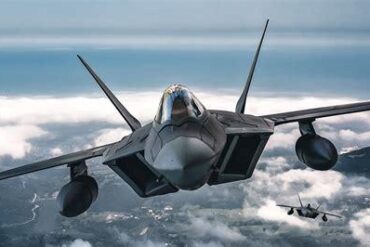
As geopolitical tensions continue to reshape alliances, demand for American fighters is accelerating. Nations purchasing U.S. jets are not simply buying aircraft; they are buying access to global logistics networks, shared intelligence architectures, and the world’s most advanced defense ecosystem. From stealth penetration operations to multirole day-to-day air policing, U.S. jets remain the gold standard.
The seven nations profiled—Taiwan, Greece, the United Kingdom, South Korea, Egypt, Saudi Arabia, and Israel—represent the backbone of U.S. global airpower partnerships. Their continued investment ensures that American combat aviation will dominate skies across three continents for decades to come.