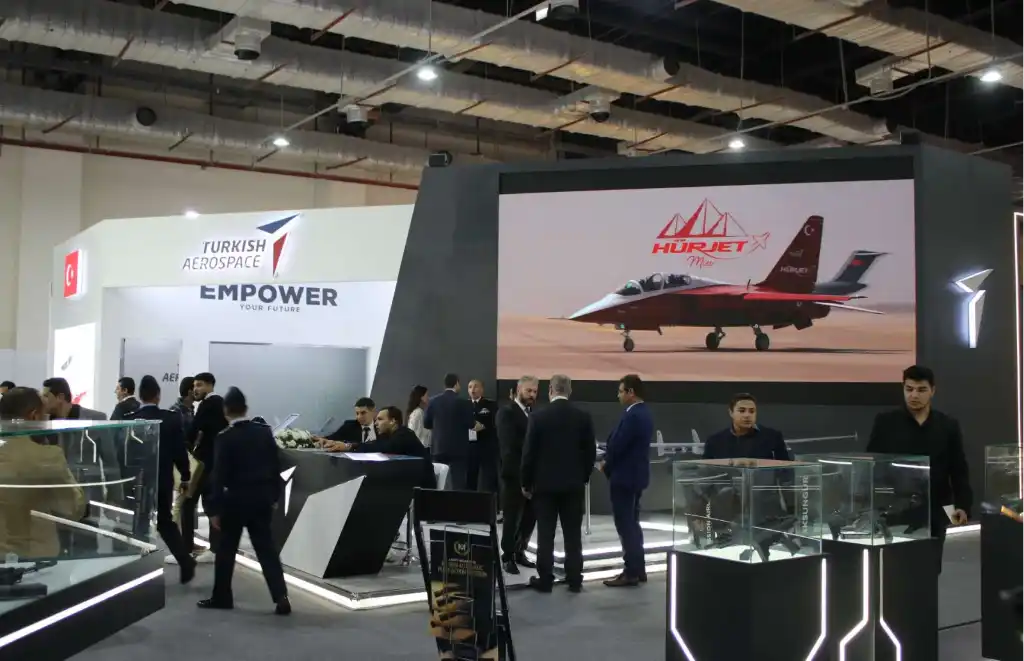
Turkish Aerospace arrived at EDEX 2025 with a sweeping, strategically curated showcase designed to signal its ambition: Türkiye intends to become a long-term, full-spectrum airpower supplier for Middle Eastern and African air forces. The company led the largest national pavilion at the Cairo exhibition, underscoring Ankara’s determination to expand its defense export footprint and deepen bilateral cooperation with regional partners. Its presence comes amid warming industrial ties with Egypt, active technology-transfer discussions, and a rapidly growing export ledger that has surpassed three billion dollars across five years.
The company’s arrival in Cairo carries symbolic and practical weight. Turkish Aerospace executives emphasized that regional modernization cycles are accelerating, procurement timelines are shrinking, and nations are increasingly seeking adaptable suppliers able to deliver advanced systems without political friction. Renewed engagement with Egyptian aerospace entities hints at deeper cooperation, while recent deliveries and multi-country orders across Africa and the Gulf add momentum to Ankara’s strategy.
Turkey’s decision to display its full airpower ecosystem—fighters, trainers, helicopters, and UAVs—was calibrated to showcase not just platforms but an integrated architecture. The approach positions Türkiye as a rising competitor to Western, Russian, and Chinese suppliers, particularly for nations seeking modern capabilities at cost-effective terms and with joint-production potential.
KAAN dominated the Turkish Aerospace stand, appearing as the clearest symbol of Ankara’s technological leap. Designed as Türkiye’s indigenous fifth-generation fighter, KAAN features a twin-engine, low-observable airframe, a maximum takeoff weight of 34,750 kg, and thrust from two 13,150 kgf-class powerplants enabling Mach 1.8 performance at altitude. Internal weapon bays, high-agility maneuvering up to +9G, and a fused avionics suite combining radar, electro-optical, and electronic-support sensors place the aircraft in direct competition with top-tier global designs.
A milestone agreement in 2025 with Indonesia, covering 48 KAAN fighters valued at approximately ten billion dollars, has raised the aircraft’s export credibility. Final assembly and industrial-cooperation clauses embedded in the contract have drawn attention from Middle Eastern and African air forces evaluating future fighter roadmaps.
HÜRJET Emerges as a Regional Contender for Advanced Training and Light Combat Roles
HÜRJET anchors Turkish Aerospace’s mid-segment portfolio. The single-engine, tandem-seat jet trainer reaches Mach 1.4, carries 7,500 pounds of payload, and operates up to 45,000 feet while sustaining +8G. It has been engineered for lead-in fighter training, aggressor missions, border patrol, and close-air-support roles.
Its recent selection by Spain for a program involving up to 45 aircraft has elevated HÜRJET’s visibility among NATO and Middle Eastern air forces seeking to replace aging fleets. At EDEX 2025, HÜRJET was spotlighted as a ready-for-export solution capable of operating alongside both legacy platforms and next-generation fighters.
ANKA and ANKA III Reinforce Türkiye’s Ambitions in Unmanned Combat Aviation
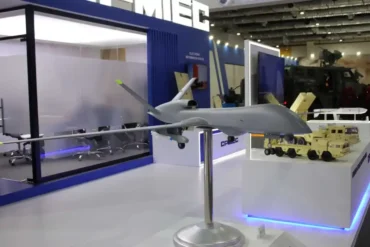
Turkish Aerospace’s unmanned segment remains one of its most internationally successful. The baseline ANKA MALE UAV offers 30 hours of endurance, a 30,000-foot ceiling, and a payload capacity exceeding 350 kg. It integrates EO/IR sensors, SAR and GMTI radar, electronic-warfare modules, and precision munitions including guided bombs, anti-tank missiles, and rockets. Encrypted datalinks and SATCOM connectivity extend operational reach to more than 2,500 kilometers, while fully autonomous takeoff and landing systems simplify deployment.
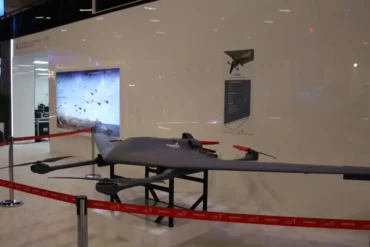
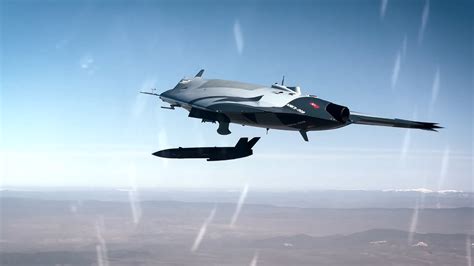
The newer ANKA III represents a major evolution: a stealth-oriented flying-wing UAV with a 7,250-kilogram MTOW, 1,600-kilogram payload capacity, and high subsonic dash speed. Designed for AI-enhanced teaming concepts, ANKA III can accompany KAAN or third-generation fighters in suppression-of-enemy-air-defense (SEAD), strike, or surveillance missions. Its architecture positions it squarely within emerging doctrines for manned-unmanned team operations.
T129 ATAK Strengthens Its Reputation Through African and Asian Deployments
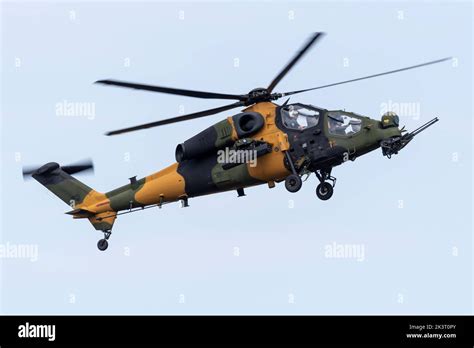
The T129 ATAK attack helicopter continues to draw interest among nations prioritizing counterinsurgency, border security, and high-altitude operations. Powered by twin CTS800-4A engines, the platform mounts a 20 mm turreted cannon with 500 rounds, carries up to 16 anti-tank missiles, laser-guided rockets, and short-range air-to-air missiles. Its high-hot performance, 281-km/h cruise speed, and roughly three hours of endurance suit operations common across African terrain.
Recent exports to the Philippines and active contracts with Nigeria have expanded the helicopter’s operational footprint. At EDEX 2025, it was highlighted as a dependable solution for both state militaries and internal-security forces.
Şimşek Target Drone Delivers Advanced Air-Defense Training Capabilities
Rounding out the portfolio, the Şimşek high-speed target drone offers realistic training for air-defense units. With a compact airframe featuring a 1.6-meter wingspan, 2.3-meter length, and 70-kilogram maximum weight, the drone reaches 0.63 Mach, climbs to 25,000 feet, and sustains 50 minutes of endurance. Its payload options—radar reflectors, infrared enhancers, chaff, flares, scoring systems, and electronic-warfare modules—enable simulation of modern threat profiles.
Autonomous mission modes and in-flight reprogramming allow operators to replicate swarm behavior, evasive maneuvers, and complex flight envelopes, making Şimşek a valuable asset for nations upgrading their integrated air-defense ecosystems.
A Full-Spectrum Strategy for a Rapidly Changing Defense Market
Turkish Aerospace’s comprehensive presence at EDEX 2025 communicates a calculated shift: the company no longer presents itself as a single-platform manufacturer but as a provider of integrated airpower ecosystems. The combination of a fifth-generation fighter, advanced trainers, unmanned strike aircraft, attack helicopters, and electronic-warfare training systems positions Türkiye as a competitive alternative for Middle Eastern and African militaries facing tightening timelines and expanding missions.
As Cairo strengthens its defense ties with Ankara and regional modernization accelerates, Turkish Aerospace’s sweeping portfolio offers air forces a modular, scalable pathway into next-generation capabilities—an approach likely to shape procurement decisions well beyond EDEX 2025.