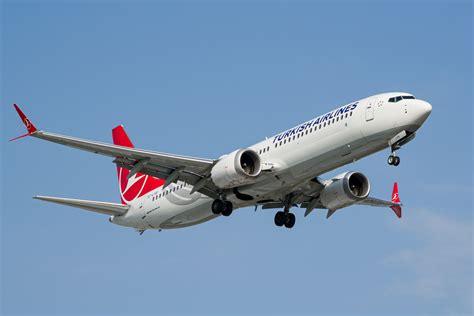
Between Europe, Asia, and Africa, Turkish Airlines has built one of the world’s most extensive international networks. While the carrier is widely associated with long-haul widebody aircraft such as the Boeing 777 and Airbus A350, some of its most remarkable missions are actually performed by the much smaller Boeing 737 MAX. These narrowbody aircraft routinely undertake journeys lasting nearly half a day, connecting Istanbul with underserved destinations across Africa through strategically designed one-stop services.
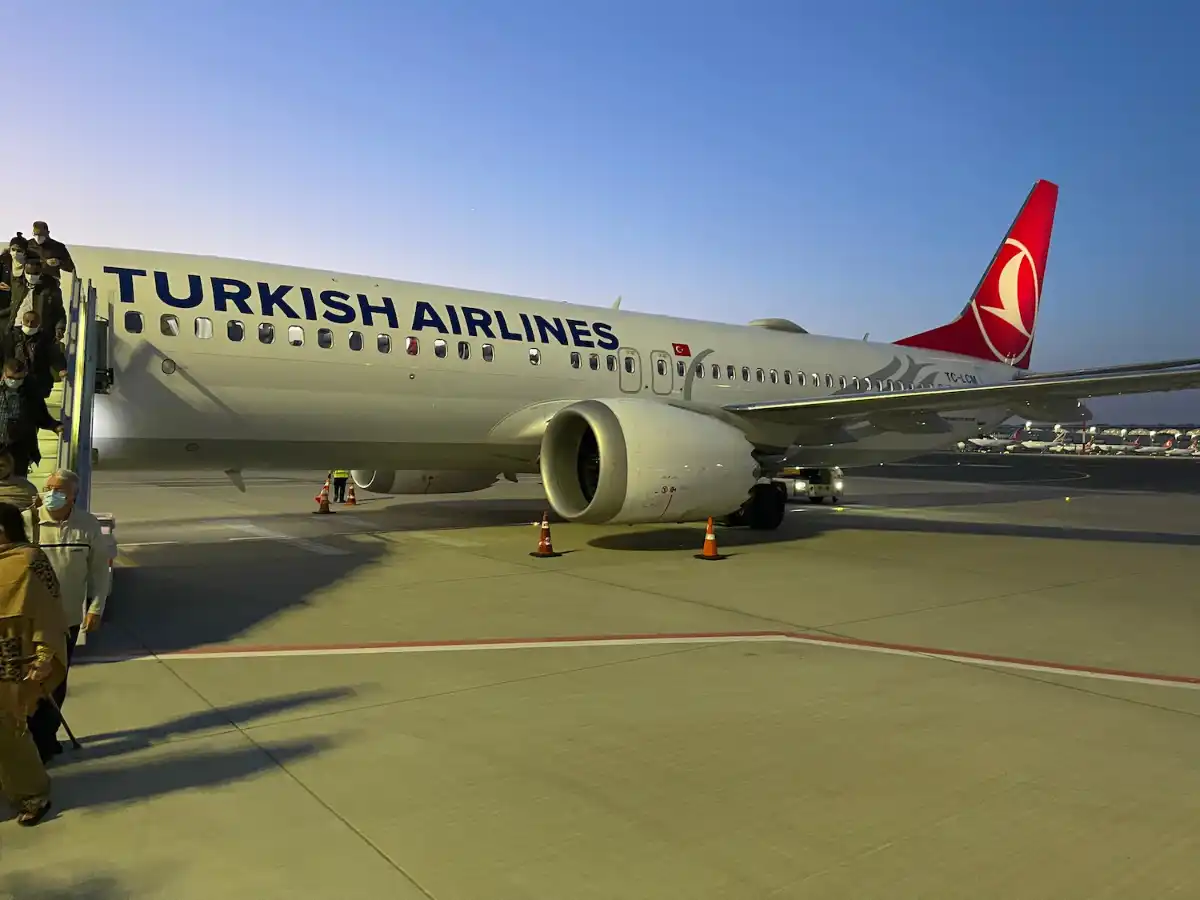
Although Turkish Airlines operates only a modest fleet of 25 Boeing 737 MAX aircraft—comprising 20 Boeing 737 MAX 8s and five Boeing 737 MAX 9s—the type performs an outsized role in expanding the airline’s footprint across emerging markets. From July through December 2026, the aircraft will appear in operations to 83 countries from the carrier’s Istanbul hub, underscoring the strategic importance of the MAX within Turkish Airlines’ global ambitions.
Rather than deploying larger aircraft with significant capacity risks, Turkish Airlines relies heavily on the 151-seat Boeing 737 MAX 8 to serve long, thin markets where passenger demand is insufficient to justify widebody operations. This strategy has proven especially valuable throughout Africa, where the carrier now maintains one of the continent’s most comprehensive foreign airline networks.
Turkish Airlines’ Boeing 737 MAX Fleet Plays A Critical African Role
Despite representing only around 6% of the airline’s 409-aircraft fleet, the Boeing 737 MAX family has become indispensable to Turkish Airlines’ African expansion strategy. The aircraft’s combination of extended range, fuel efficiency, and relatively low seating capacity enables the airline to profitably connect destinations that would otherwise remain inaccessible.
Many African cities lack sufficient demand for daily widebody service. Yet these markets still generate valuable connecting traffic to Europe, North America, and Asia via Istanbul. By operating narrowbody aircraft on lengthy sectors, Turkish Airlines minimizes operating costs while maintaining frequency and network breadth.
The MAX 8, in particular, offers enough range to operate multi-sector itineraries deep into Sub-Saharan Africa while maintaining favorable economics. The aircraft allows Turkish Airlines to preserve market presence, stimulate demand, and capture transit passengers connecting beyond Istanbul.
A defining characteristic of these operations is the widespread use of one-stop routings. Instead of flying nonstop, aircraft often operate triangular or tag-on sectors, enabling the airline to combine demand from multiple cities on a single rotation.
Understanding How Turkish Airlines Measures Its Longest Flights
When discussing route length, scheduled block time provides the most accurate measurement. Block time represents the total duration from gate departure to gate arrival, including taxiing, airborne time, and built-in allowances for minor operational delays.
This measurement—often referred to as chocks-off to chocks-on time—reflects how airlines schedule aircraft utilization while balancing punctuality and operational efficiency.
Interestingly, Turkish Airlines’ ten longest Boeing 737 MAX services are all one-stop operations rather than nonstop flights. Without these intermediate stops, the airline would serve considerably fewer destinations across Africa or would need to reduce frequencies significantly.
The carrier’s longest nonstop Boeing 737 MAX route is the service between Istanbul and Dakar, scheduled at up to eight hours and five minutes. However, several one-stop itineraries extend well beyond the ten-hour mark.
Turkish Airlines’ Ten Longest Boeing 737 MAX Routes
The airline’s longest scheduled Boeing 737 MAX operations during the July-December 2026 period reveal the remarkable endurance expected from modern narrowbody aircraft.
- Lusaka–Dar es Salaam–Istanbul: up to 11 hours 20 minutes
- Istanbul–Ouagadougou–Conakry: up to 10 hours 30 minutes
- Istanbul–Ouagadougou–Freetown: up to 10 hours 15 minutes
- Istanbul–Libreville–Point-Noire: up to 10 hours 15 minutes
- Istanbul–Nouakchott–Banjul: up to 10 hours
- Kilimanjaro–Zanzibar–Istanbul: up to 9 hours 55 minutes
- Istanbul–Cotonou–Abidjan: up to 9 hours 40 minutes
- Istanbul–N’Djamena–Niamey: up to 9 hours 35 minutes
- Istanbul–Niamey–Bamako: up to 9 hours 30 minutes
- Istanbul–Yaoundé–Douala: up to 9 hours 25 minutes
These services collectively span 19 airports and cover more than 34,000 network miles, highlighting the extraordinary flexibility of the Boeing 737 MAX platform.
Lusaka To Istanbul Via Dar Es Salaam Becomes The Longest MAX Mission
The most impressive Boeing 737 MAX operation in Turkish Airlines’ network is the return journey from Lusaka’s Kenneth Kaunda International Airport in Zambia to Istanbul via Dar es Salaam in Tanzania.
Scheduled at up to 11 hours and 20 minutes, the route demonstrates how modern narrowbody aircraft can rival traditional long-haul missions.
According to current schedules, the service will return on October 25, 2026, coinciding with the start of the Northern Hemisphere winter timetable. Turkish Airlines plans to operate the route three times weekly using the Boeing 737 MAX 8.
The longest itinerary begins when flight TK526 departs Lusaka at 1:50 AM local time. After arriving in Dar es Salaam at 5:15 AM, the aircraft departs again at 6:15 AM before reaching Istanbul at 2:10 PM local time.
Market data reveals that passengers traveling from Lusaka predominantly continue beyond Istanbul. Germany represents Lusaka’s largest country market, followed by the United Kingdom, the United States, Turkey itself, and Italy. Historical ties between Zambia and Britain also ensure that London remains the largest city market.
Despite this demand, Turkish Airlines currently ranks only as the seventh-largest indirect operator between Lusaka and London, suggesting further growth potential.
Kilimanjaro Services Showcase Turkish Airlines’ Network Strategy
Among the most fascinating MAX operations are those linking Istanbul with Kilimanjaro International Airport in Tanzania.
Turkish Airlines first launched Kilimanjaro flights in 2012, initially combining the destination with Mombasa in Kenya using the Boeing 737-900ER. Since then, the market has matured considerably.
Between July and December 2026, Turkish Airlines plans to operate two to three daily flights involving Kilimanjaro, using a mix of routings through Zanzibar.
Some services operate as Istanbul–Kilimanjaro–Zanzibar–Istanbul, while others follow the reverse pattern of Istanbul–Zanzibar–Kilimanjaro–Istanbul. During the Northern winter season, the longest scheduled itinerary reaches nine hours and 55 minutes, although block times of approximately nine hours and 50 minutes are more typical.
On November 10, for example, flight TK566 departs Kilimanjaro at 1:15 AM, stops in Zanzibar, and lands in Istanbul at 11:05 AM local time. Later the same day, TK565 leaves Kilimanjaro at 3:35 AM and arrives in Istanbul at 1:30 PM after another stop in Zanzibar.
Notably, local traffic between Istanbul and Kilimanjaro remains relatively small, totaling fewer than 5,000 annual round-trip passengers. Consequently, the overwhelming majority of travelers connect through Istanbul to destinations elsewhere.
The strongest onward markets include Paris, Barcelona, Frankfurt, London, Zurich, Munich, Madrid, Copenhagen, Milan, and New York, illustrating Istanbul’s growing importance as a global transfer hub.
Why Turkish Airlines Relies On Long Narrowbody Flights
Turkish Airlines’ extensive use of the Boeing 737 MAX on lengthy African routes highlights a broader industry trend: airlines increasingly deploy efficient narrowbody aircraft on missions once reserved exclusively for widebodies.
For Turkish Airlines, the formula is straightforward. Lower operating costs, reduced financial risk, improved frequency, and access to underserved markets collectively strengthen the carrier’s competitive position.
As the airline continues expanding throughout Africa, the Boeing 737 MAX is likely to remain one of the most important tools in sustaining its ambitious global network strategy.