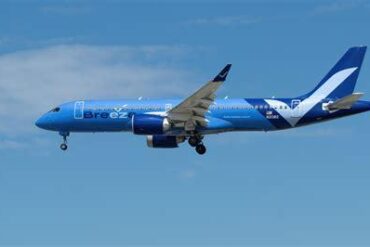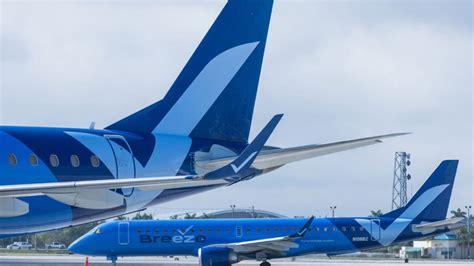
As the young American carrier Breeze Airways approaches its fifth anniversary, the airline’s route map reveals an increasingly ambitious reach across the United States. What began in 2021 as a startup focused on underserved city pairs has quickly evolved into a growing network capable of stretching coast to coast. Powered largely by a modern fleet of Airbus A220-300 jets, Breeze is now operating several routes that rival the longest domestic flights in the country.
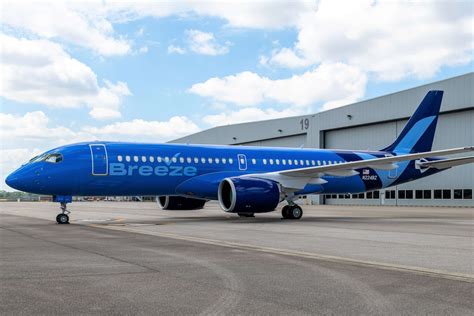
The airline’s expansion has been fueled by steady fleet growth and a strategic focus on secondary airports. Breeze currently operates dozens of aircraft, including the newer A220 jets alongside a small group of Embraer E190 aircraft that were part of its original launch fleet. With efficient operating economics and passenger-friendly cabins, the A220 has become the backbone of Breeze’s longer routes, enabling the airline to stretch nonstop flights to more than six hours.
Data from aviation analytics firm Cirium shows that several Breeze flights scheduled during the second quarter of 2026 rank among the carrier’s longest yet. These routes connect smaller East Coast cities with major destinations across the American West, highlighting Breeze’s mission to bypass congested hubs and provide direct links where none previously existed.
By maximum scheduled block time, ten Breeze routes stand out as the airline’s longest nonstop journeys.
Rhode Island to Los Angeles: Breeze’s Longest Flight
The single longest Breeze Airways route currently connects Rhode Island T. F. Green International Airport with Los Angeles International Airport, forming a true transcontinental corridor from New England to Southern California.
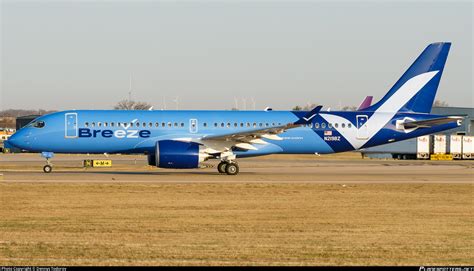
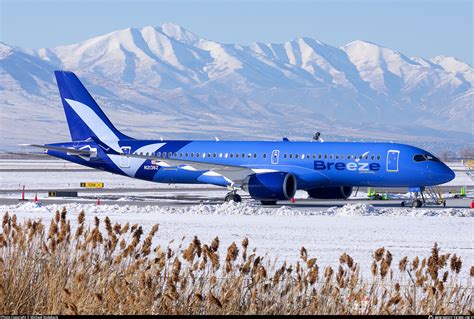
This seasonal route reaches a maximum scheduled block time of six hours and twenty-two minutes when flying westbound. The flight is typically operated by a 137-seat Airbus A220-300, whose efficiency allows Breeze to profitably serve long routes that might otherwise be difficult for low-cost carriers.
Passengers traveling this route experience a journey that spans the breadth of the continental United States—from the forests and coastline of New England to the sprawling metropolitan region surrounding Los Angeles. For travelers in Rhode Island and neighboring states, the route eliminates the need to connect through larger East Coast hubs.
Breeze operates the Providence–Los Angeles service seasonally, with flights resuming in early May. The schedule is intentionally limited, with two weekly departures designed to balance demand with operational efficiency. Even with this modest frequency, the route represents one of the airline’s most strategic long-haul domestic links.
Bradley International Airport’s Westbound Marathon Routes
While Providence hosts Breeze’s single longest flight, another New England gateway plays an equally important role in the airline’s long-distance network. Bradley International Airport serves as the departure point for two additional Breeze routes exceeding six hours.
The longest of these connects Bradley with Harry Reid International Airport. With a scheduled block time of six hours and eleven minutes, the route ranks as Breeze’s second-longest nonstop service. The flight bridges the historic towns of Connecticut with the entertainment capital of Nevada, creating a direct leisure corridor between two regions with strong tourism demand.
Not far behind is Breeze’s service from Bradley to Phoenix Sky Harbor International Airport. This route clocks in at six hours and five minutes, making it the third-longest flight in the airline’s network. The Phoenix service has proven particularly attractive for travelers seeking warm desert climates during the spring months.
Both routes are operated exclusively by the Airbus A220 fleet. The aircraft’s range and fuel efficiency allow Breeze to maintain relatively low operating costs while offering a nonstop alternative to itineraries that previously required connecting flights through major hubs like Chicago or Atlanta.
Richmond to San Francisco: Crossing the Continent
Another standout route originates in Virginia at Richmond International Airport and stretches all the way to San Francisco International Airport.
This flight reaches a scheduled block time of six hours and one minute, narrowly surpassing the six-hour threshold. Though only marginally shorter than the other routes, it represents one of the most geographically dramatic journeys in Breeze’s network.
The Richmond–San Francisco service links the historic capital of Virginia with one of America’s most influential technology hubs. For business travelers and tourists alike, the route offers a direct bridge between two vastly different regions—one steeped in early American history, the other at the forefront of global innovation.
Breeze schedules this route selectively during the year, operating multiple round trips during late spring. The service reflects the airline’s broader strategy of connecting mid-sized cities directly to major West Coast destinations.
Norfolk’s Cluster of Long West Coast Routes
Few cities illustrate Breeze Airways’ strategy better than Norfolk International Airport. From this coastal Virginia gateway, the airline operates several of its longest flights, particularly to destinations across the American Southwest and West Coast.
The longest Norfolk route connects to Las Vegas, again using Harry Reid International Airport as the western endpoint. With a maximum flight time of five hours and forty-nine minutes, it ranks fifth overall in Breeze’s longest route list.
Just behind it is Norfolk’s service to Los Angeles, reaching five hours and forty-seven minutes. These routes cater primarily to leisure travelers heading west for vacations, entertainment, and warm weather destinations.
Additional Norfolk services extend to Phoenix and San Diego International Airport, both approaching the five-hour-and-forty-minute mark. Though slightly shorter than the airline’s six-hour flights, they still represent significant transcontinental journeys for a low-cost carrier.
Other Long Breeze Flights Across the Network
Beyond the six-hour club, several additional routes round out Breeze Airways’ longest flights. One notable example links Syracuse Hancock International Airport with Las Vegas, with a scheduled duration of five hours and forty-four minutes.
Another route from Richmond to Las Vegas reaches roughly five hours and forty-three minutes, tying closely with Norfolk’s Phoenix service. Together, these routes demonstrate the scale of Breeze’s growing transcontinental ambitions.
What makes these flights particularly significant is not just their length but their origin points. Instead of relying on mega-hubs, Breeze focuses on smaller regional airports where travelers often face limited nonstop options. By linking these cities directly with major western destinations, the airline creates entirely new travel possibilities.
A Growing Network Powered by the Airbus A220
The expansion of Breeze’s longest routes is closely tied to the capabilities of the Airbus A220-300. The aircraft offers the range needed for coast-to-coast flights while maintaining the efficiency required for low-cost operations.
With dozens of additional A220 aircraft on order, Breeze Airways appears poised to expand its long-distance network even further. As new aircraft enter service, more mid-sized cities across the United States may soon gain direct links to destinations thousands of miles away.
For passengers, the result is a new generation of nonstop travel options—routes that once required complicated connections but can now be completed in a single six-hour flight across the continent.