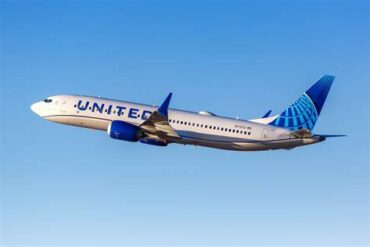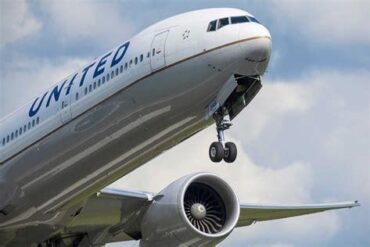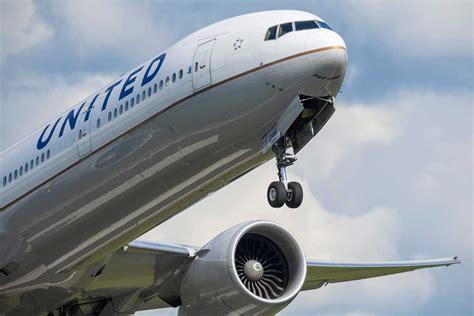
United Airlines enters 2026 with a widebody strategy that is quietly audacious. While the spotlight often drifts toward next-generation aircraft and futuristic cabin concepts, the real engine of United’s longest nonstop flying remains the Boeing 777-300ER. This aircraft is not a transitional footnote but a central pillar, anchoring routes where distance, demand, cargo, and premium revenue converge. Across the Pacific, the Atlantic, and into the Middle East, the 777-300ER carries United’s most strategically important missions, often flying at the outer edge of practical airline economics. What follows is a detailed exploration of United Airlines’ longest nonstop routes operated by the Boeing 777-300ER in 2026, and why these flights define the carrier’s global ambitions.
The 777-300ER thrives in environments where compromises are not acceptable. On sectors pushing 7,000 miles and beyond, the aircraft’s massive fuel capacity, powerful GE90-115B engines, and high maximum takeoff weight allow United to carry full passenger loads while preserving valuable belly cargo space. In an era of supply-chain sensitivity and premium travel recovery, this combination is rare and lucrative. United’s network planners understand that some routes are too big, too important, and too competitive to entrust to smaller widebodies, no matter how efficient they may be on paper.
The airline’s San Francisco hub stands at the center of this philosophy. SFO functions as United’s Pacific gateway, a launchpad for flights that blur the line between long-haul and ultra-long-haul. From here, the 777-300ER connects North America directly with Asia’s most populous and economically significant regions, often in markets where United faces little or no nonstop competition from other US carriers.
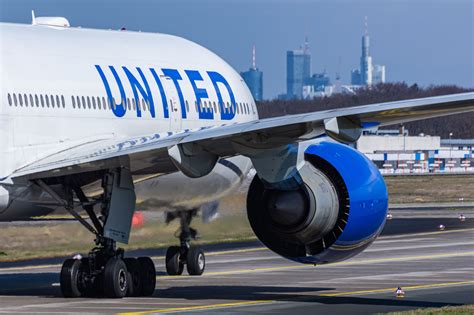
San Francisco to Manila: The Ultimate Test of Capacity and Endurance
The longest regular Boeing 777-300ER route in United’s 2026 network is the formidable nonstop service between San Francisco and Manila. Stretching approximately 6,987 miles, this flight represents far more than a geographic challenge. It is a study in volume, resilience, and operational discipline. Manila is one of the largest unserved Asian capitals by US airlines outside of United, making this route uniquely valuable and strategically protected.
Demand on SFO–MNL is both deep and consistent, driven primarily by visiting-friends-and-relatives traffic, supplemented by business travel and cargo. The market is remarkably resistant to economic downturns, and United has responded by doubling daily frequencies in peak periods. The decision to deploy the 777-300ER here is deliberate. With a configuration exceeding 350 seats, United can absorb demand spikes without distorting pricing, while achieving lower unit costs than competitors operating smaller aircraft.
Operationally, the route pushes the 777-300ER close to its payload-range envelope. Westbound flights regularly exceed 15 hours, particularly during winter months when headwinds across the North Pacific intensify. Dispatch planning becomes a careful balancing act, weighing fuel uplift against cargo commitments and passenger loads. The GE90 engines play a decisive role, delivering the thrust necessary for heavy departures from San Francisco while maintaining efficient cruise performance over vast oceanic segments.
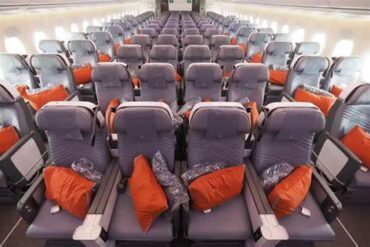
Cabin economics further justify the aircraft choice. United’s Polaris business class, with its modernized suites and strong corporate following, contributes a disproportionate share of route profitability. Cirium data consistently shows load factors above 80 percent, a remarkable figure for a nearly 7,000-mile sector. On this route, the 777-300ER is not merely adequate; it is essential.
Hong Kong as a High-Frequency Long-Haul Shuttle
If Manila showcases the 777-300ER’s brute capacity, Hong Kong highlights its precision. United’s San Francisco–Hong Kong operation in 2026 resembles a long-haul shuttle more than a traditional international route. Operating twice daily exclusively with the 777-300ER, the 6,922-mile sector is engineered for frequency, consistency, and premium density.
Hong Kong remains one of the world’s most important financial and logistics hubs, and United treats it accordingly. By standardizing the aircraft type on every SFO departure, the airline eliminates product inconsistency, a subtle but significant advantage for corporate travelers. Passengers booking last-minute Polaris seats know exactly what to expect, every time.

The East Coast adds another layer of complexity. United’s Newark–Hong Kong flight extends nearly as far, often flirting with the limits of scheduled block times as jet streams shift. The 777-300ER’s ability to depart with maximum fuel while maintaining a full premium cabin is critical here. On eastbound legs toward Newark, block times can approach 16 hours, a duration that exposes weaknesses in less capable aircraft.
United’s decision to concentrate 777-300ER assets on Hong Kong routes is also a defensive maneuver. Competing carriers from Asia and the Middle East bring high-density, premium-heavy aircraft into the market. United’s response is not to match them aircraft for aircraft across the entire fleet, but to dominate key trunk routes with its largest, most capable widebody.
Newark to Dubai: Long-Range Competition With the Gulf Giants
Among United’s longest non-Pacific 777-300ER routes, the nonstop flight from Newark to Dubai stands out as a statement of intent. Covering roughly 6,850 miles, this daily service places United head-to-head with some of the world’s most formidable long-haul operators. The route is anchored by premium demand from finance, energy, and government sectors, alongside significant high-value cargo flows.
Operating into Dubai requires more than range. It demands reliability under variable conditions, from congested European airspace to seasonal headwinds over the Atlantic. The 777-300ER excels here, offering dispatchers flexibility that smaller widebodies struggle to match. Even when fuel reserves must be increased, the aircraft rarely sacrifices passenger capacity, preserving revenue integrity.
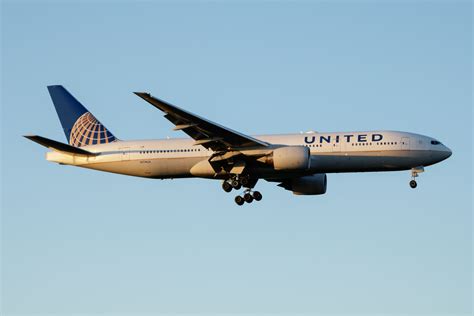
United’s Polaris cabin plays a central role on this route. With approximately 60 business class seats, the aircraft competes credibly against Gulf carriers renowned for premium service. Corporate contracts often fill the cabin, and the consistency of the product helps United retain loyalty in a fiercely competitive environment. In many ways, EWR–DXB exemplifies why the 777-300ER remains indispensable: it allows United to compete on equal footing without diluting frequency or comfort.
Frankfurt and the Transatlantic Heavyweight Role
While shorter than Pacific and Middle Eastern missions, United’s Newark–Frankfurt service underscores another dimension of the 777-300ER’s value. The aircraft operates into the heart of the Star Alliance network, delivering a dense flow of passengers into one of Europe’s most connected hubs. Here, the priority is not extreme range but sheer seat volume paired with premium capacity.
Frankfurt’s slot constraints make frequency expansion costly and inefficient. By maintaining the 777-300ER on this route, United maximizes available seat miles per movement, reducing per-seat operating costs while feeding alliance partners efficiently. The aircraft’s cargo hold further enhances route economics, carrying automotive components, pharmaceuticals, and express freight that benefit from Frankfurt’s logistics ecosystem.
Australia: Where Distance Meets Seasonal Demand
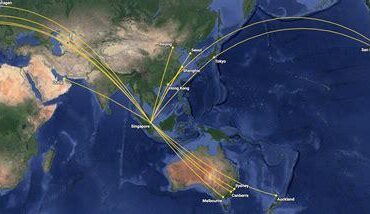
Australia represents the outer frontier of United’s long-haul ambitions, and while not all routes rely on the 777-300ER, its influence shapes the network. San Francisco to Sydney, spanning approximately 7,417 miles, is among the longest regularly operated flights by a US carrier. Although United often alternates aircraft types here, the strategic logic behind deploying large widebodies during peak seasons mirrors the 777-300ER philosophy.
Westbound flights to Australia push block times beyond 15 hours, demanding careful fuel and payload planning. The 777 family’s high maximum takeoff weight enables United to maintain premium density during peak Southern Hemisphere summer months, when demand surges and yields strengthen. Even when the 777-300ER is not the primary aircraft on a given day, its performance envelope sets the benchmark against which other types are measured.
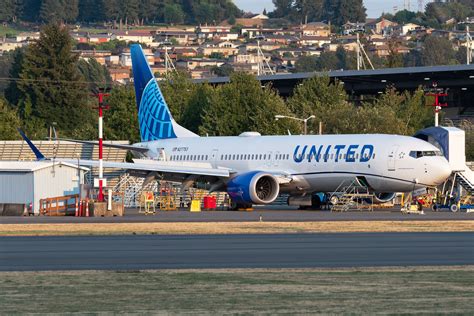
Melbourne, even longer than Sydney, illustrates the limits of the 777-300ER’s practicality. At nearly 7,857 miles, the route favors the fuel efficiency of the 787-9. This contrast highlights an important truth: United does not deploy the 777-300ER everywhere it can, but where it should. The aircraft is reserved for routes where demand justifies its size and where its strengths outweigh its fuel burn.
North Asia and the Question of Scale
Routes to Tokyo, Beijing, and Seoul reveal another layer of network strategy. While these markets are among the most lucrative in Asia, United often opts for the slightly smaller 777-200ER rather than the 300ER. The reasoning is straightforward. Demand has recovered unevenly, and deploying too much capacity risks eroding yields.
Yet the presence of the 777 family remains crucial. Uniform Polaris cabins, substantial cargo space, and alliance compatibility with partners like All Nippon Airways and Air China ensure that United maintains a competitive foothold. The absence of the 777-300ER here does not diminish its importance elsewhere; instead, it underscores the airline’s disciplined approach to capacity deployment.
The Enduring Logic of the Boeing 777-300ER
By 2026, the Boeing 777-300ER is no longer young, yet it remains uniquely capable. United operates a focused subfleet, concentrating these aircraft on routes where failure is not an option. Delivery delays affecting next-generation widebodies have only reinforced this reliance, turning the 777-300ER into a stabilizing force within the United Next framework.
What defines the aircraft’s legacy is balance. It blends range with volume, premium density with cargo flexibility, and raw power with proven reliability. On 15-hour sectors across the Pacific or into the Middle East, there is little margin for error. The 777-300ER provides that margin, quietly and consistently.
Looking toward the latter half of the decade, newer aircraft will eventually assume many of these missions. Yet for now, United’s longest nonstop routes tell a clear story. When distance is extreme, demand is massive, and the stakes are high, United Airlines still turns to the Boeing 777-300ER, trusting it to connect continents without compromise.