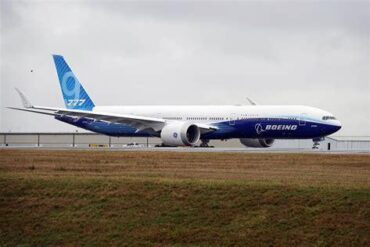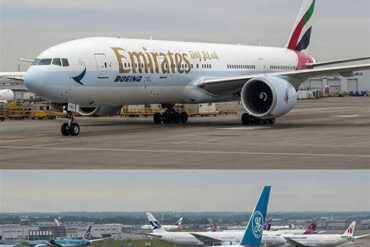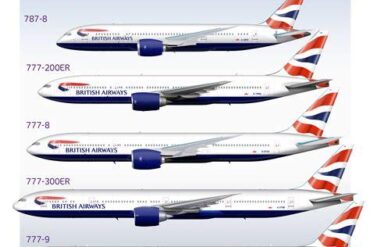
The Boeing 777-300ER does not need fanfare to dominate. It rarely headlines flashy announcements anymore, nor does it rely on futuristic marketing promises. Yet in 2026, it continues to anchor global aviation networks with a quiet confidence that newer aircraft have yet to fully replicate. Airlines across continents still deploy it on their most critical long-haul routes, not out of nostalgia, but because few aircraft have matched its finely tuned balance of capacity, efficiency, reliability, and adaptability.
This enduring dominance is not accidental. The 777-300ER represents a rare convergence of engineering maturity and operational pragmatism. While the aviation industry often celebrates innovation, airlines ultimately reward consistency—and this aircraft delivers it at scale, day after day, across thousands of flights.
Its story is less about disruption and more about refinement perfected over time, making it one of the most strategically valuable widebody aircraft ever produced.
A Legacy Engineered for Endurance and Global Reach
The origins of the Boeing 777 family trace back to an era when airlines demanded longer routes without the inefficiencies of four-engine aircraft. Boeing responded with a twin-engine widebody that pushed the boundaries of range and capacity while maintaining economic viability. When the 777-300ER entered service in 2004, it didn’t just extend the platform—it redefined what airlines could expect from a long-haul workhorse.

Unlike its predecessors, the 777-300ER was purpose-built to bridge the gap between ultra-long-range capability and high passenger volume. It wasn’t chasing extremes; it was optimizing the middle ground where most airline profits actually live. That strategic positioning explains why, even today, it operates in a sweet spot that many newer aircraft struggle to dominate.
By 2026, the broader 777 family supports roughly 1,800 daily flights worldwide, forming a backbone that connects major global hubs. Within that ecosystem, the -300ER stands out as the most commercially versatile variant—capable of handling dense international corridors as well as high-demand domestic trunk routes.
Efficiency That Still Shapes Airline Economics
Fuel efficiency remains one of the most decisive factors in fleet planning, and this is where the 777-300ER continues to quietly outperform expectations. While newer aircraft boast marginal gains, the -300ER delivers a proven, predictable cost structure that airlines trust—especially in volatile fuel markets.
Its design integrates aerodynamic refinements such as raked wingtips and an optimized high-aspect-ratio wing, reducing drag and improving lift-to-drag efficiency. Combined with its powerful yet efficient GE90 engines, the aircraft achieves an impressive balance between thrust and fuel burn.
What makes it particularly compelling is its seat-mile economics. With a typical capacity approaching 396 passengers, the aircraft spreads operating costs across a large number of seats, significantly lowering per-passenger expenses. This advantage becomes critical on high-demand routes where load factors remain consistently strong.
Rather than chasing maximum range like the 777-200LR, the -300ER focuses on practical range—approximately 7,370 nautical miles—which aligns with the majority of profitable long-haul routes. That alignment is precisely why it continues to outperform more specialized aircraft in real-world airline operations.
The Perfect Balance of Capacity and Range
Airlines don’t just need aircraft that can fly far—they need aircraft that can fill seats profitably while doing so. The 777-300ER thrives in this balance, offering significantly more capacity than its siblings without sacrificing operational flexibility.
Its ability to operate both transpacific and high-density regional routes gives airlines a powerful scheduling tool. Routes that might be too thin for a larger aircraft but too dense for smaller widebodies find an ideal match in the -300ER.
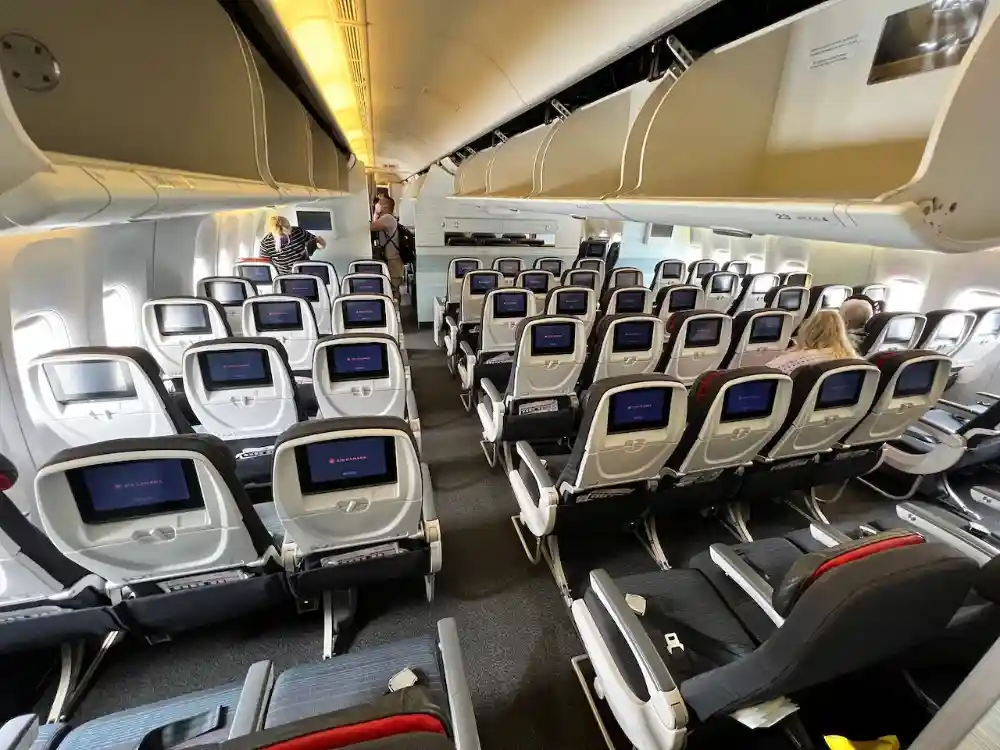
This balance becomes even more valuable in markets recovering from fluctuating travel demand. Airlines can rely on the aircraft to maintain profitability without overcommitting capacity or compromising service frequency. In many cases, it has replaced less efficient aircraft like the Boeing 747 and Airbus A340, offering comparable capacity with dramatically improved fuel economics.
The result is an aircraft that doesn’t just perform well on paper—it fits seamlessly into real airline network strategies, where adaptability often matters more than raw specifications.
Built to Last: Materials, Durability, and Reliability
Commercial aviation is unforgiving. Aircraft endure constant pressurization cycles, extreme temperature variations, and relentless operational schedules. The 777-300ER was engineered with this reality at its core, using advanced materials that prioritize both durability and efficiency.
The fuselage incorporates high-strength aluminum alloys designed to resist corrosion and fatigue cracking, while critical stress components utilize titanium reinforcements to enhance structural integrity. These choices reduce long-term maintenance demands while also lowering overall airframe weight.
What truly sets the aircraft apart, however, is its operational reliability. With a schedule reliability rate of approximately 99.5%, the 777-300ER minimizes disruptions that can cascade into costly delays across airline networks.
Even after more than two decades in service, the vast majority of these aircraft remain active. Many complete around 700 flights annually, a testament to both their structural resilience and the effectiveness of modern maintenance programs.
For airlines, this translates into something invaluable: predictability. And in an industry where margins are thin and schedules are tight, predictability is often more valuable than innovation.
Cabin Versatility That Drives Revenue Strategy
Inside the cabin, the 777-300ER reveals another layer of its dominance—unmatched configurational flexibility. Airlines can tailor the interior to suit vastly different market demands without altering the underlying airframe.
In high-density configurations, the aircraft can accommodate ten-abreast seating, maximizing revenue on leisure-heavy routes. On premium-focused routes, it transforms into a luxury platform with spacious first-class suites and advanced business-class products.
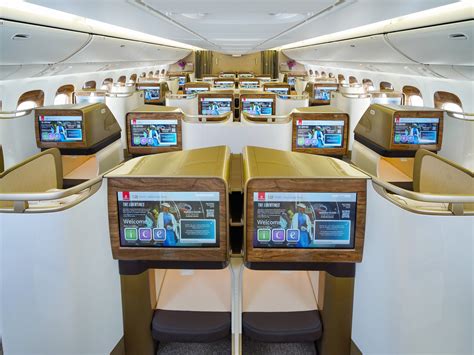
Its wide fuselage allows for features that smaller aircraft struggle to integrate effectively. Wider aisles improve passenger flow, larger overhead bins enhance convenience, and expanded galley space supports more efficient onboard service.
This adaptability enables airlines to deploy the same aircraft type across multiple route profiles—from budget-conscious tourism markets to premium transcontinental corridors—without compromising passenger experience or operational efficiency.
In a competitive landscape where onboard product differentiation matters, the 777-300ER provides a flexible canvas for brand identity and revenue optimization.
Pilot-Centric Design and Advanced Flight Systems
Pilots tend to favor aircraft that combine intuitive handling with advanced automation, and the 777-300ER excels in both areas. From its inception, the aircraft introduced fly-by-wire controls that replaced traditional mechanical systems with digital precision.
This shift enabled smoother handling characteristics while reducing pilot workload. The cockpit design further enhances usability through large multifunction displays, consolidating critical flight data into clear, accessible formats.
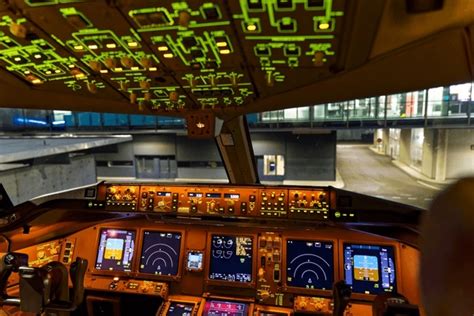
Beyond basic control systems, the aircraft integrates real-time diagnostics, electronic checklists, and advanced flight management systems. These technologies streamline operations and improve situational awareness, allowing pilots to focus on decision-making rather than system monitoring.
Automated safeguards embedded within the flight control architecture provide an additional layer of safety, preventing unsafe inputs while preserving pilot authority. The result is a cockpit environment that balances human expertise with intelligent automation—a combination that has aged remarkably well in an era of increasingly digital aviation.
Why Airlines Still Choose the 777-300ER in 2026
Despite the arrival of newer aircraft like the 777X and Airbus A350, the 777-300ER continues to hold its ground for one simple reason: it works exceptionally well in the real world.
Airlines are not just evaluating performance metrics; they are assessing total lifecycle value. The -300ER offers:
- Proven reliability with minimal operational surprises
- Strong resale and leasing market stability
- Established maintenance infrastructure worldwide
- Crew familiarity and training efficiency
- Flexible deployment across diverse route networks
These factors collectively reduce risk—an often underestimated but critical element in fleet planning. While newer aircraft promise incremental improvements, they also introduce uncertainties that airlines must carefully manage.
In contrast, the 777-300ER represents a known quantity, one that has consistently delivered strong returns over decades of service.
The Transition Era: Coexisting with the 777X
The production of the 777-300ER concluded in 2024, marking the end of an era—but not the end of its relevance. As the 777X gradually enters service, it is not replacing the -300ER outright. Instead, the two aircraft are expected to operate side by side for years.
The 777X introduces new technologies, including composite wings and folding wingtips, but its higher acquisition costs and evolving operational profile mean it will initially complement rather than displace existing fleets.
Meanwhile, many airlines are investing in cabin refurbishments and system upgrades for their 777-300ERs, extending their service life well into the 2030s and beyond. This approach allows carriers to maintain competitive passenger experiences without the financial burden of immediate fleet replacement.
Over time, the -300ER may transition toward secondary long-haul routes or high-density operations, but its role will remain significant. Its adaptability ensures that it continues to generate value even as newer aircraft enter the market.
A Quiet Titan in a Rapidly Changing Industry
The aviation industry thrives on innovation, but it survives on reliability. The Boeing 777-300ER embodies that principle, delivering consistent performance across decades of service without demanding constant reinvention.
Its dominance is not loud or flashy. It doesn’t rely on cutting-edge headlines or experimental features. Instead, it offers something far more powerful: a proven formula that continues to meet the evolving needs of airlines and passengers alike.
In 2026, as fleets modernize and new technologies emerge, the 777-300ER remains a familiar sight in the skies—not because it has resisted change, but because it was designed with enough foresight to remain relevant long after its introduction.
And in an industry where relevance is fleeting, that kind of longevity is nothing short of extraordinary.