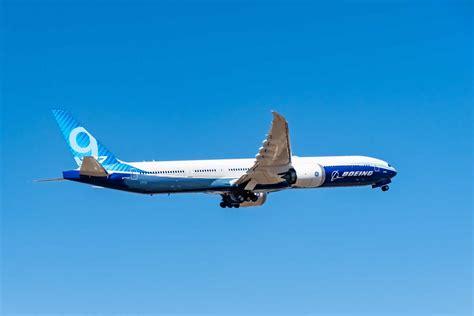
The long-haul sky has a memory. It remembers silhouettes that once ruled intercontinental routes, aircraft whose proportions seemed to bend geography into something manageable. For two decades, the Boeing 777-300ER has been one of those silhouettes, a twin-engine colossus that quietly rewrote what airlines expected from capacity, range, and reliability. It replaced four engines with two without asking passengers to give up comfort or airlines to surrender profit. That kind of leap leaves a long shadow.
Time, however, is an unsentimental editor. Airframes age, fuel economics sharpen their teeth, and passenger expectations evolve. The 777-300ER remains deeply embedded in global fleets, yet its role as the default high-capacity long-haul workhorse is being inherited by newer designs that reflect a different era of materials science, aerodynamics, and digital flight systems. Replacement here does not mean erasure. It means a gradual handover of the hardest routes to aircraft that squeeze more kilometers from each kilogram of fuel, while giving airlines fresh canvas for premium cabins and quieter operations.
The question is not whether the 777-300ER is being replaced, but how the torch is being passed. Two aircraft stand at the center of that relay: Boeing’s own 777-9, the flagship of the 777X family, and Airbus’s long, elegant counterpunch, the A350-1000. They are not clones. They reflect different philosophies about what the future of ultra-long-haul flying should feel like for airlines and passengers alike.
The Boeing 777-300ER Legacy That Set the Bar
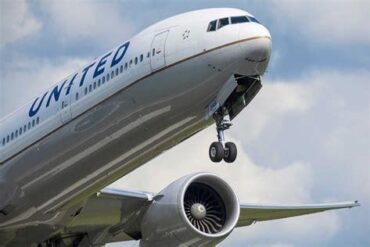
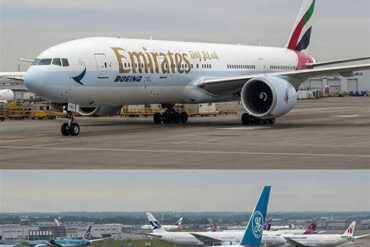
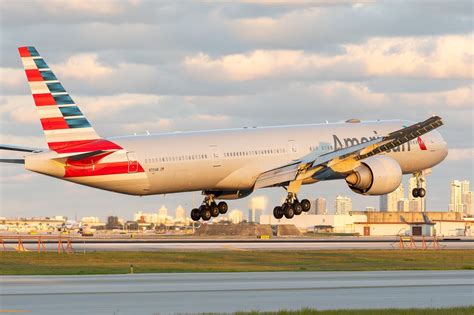
The 777-300ER arrived in 2004 with a quietly radical promise: do the work of a jumbo without the operational burden of four engines. Its massive GE90-115B engines were technological beasts, turning kerosene into thrust with a confidence that made ultra-long-haul routes routine. Airlines used it to thin out the case for older quadjets, not by undercutting capacity, but by delivering similar seat counts with lower fuel burn per seat and fewer maintenance headaches.
What made the aircraft stick was not just raw performance. It was flexibility. Operators could pack more than 400 seats in dense two-class layouts for trunk routes between megacities, or tune the cabin toward premium-heavy configurations that monetized long-haul comfort. The fuselage width gave designers room to play with galleys, lounges, and increasingly elaborate business-class suites. The airplane became a canvas for airline branding as much as a machine for moving people across oceans.
That success also locked airlines into a certain scale of operations. When a route demanded volume and range, the 777-300ER became the reflex choice. This is precisely why replacing it is not trivial. Any successor must match the economic gravity of that reflex while offering enough improvement to justify billion-dollar fleet decisions.
Boeing 777X: A Familiar Shape, Rewritten for Efficiency
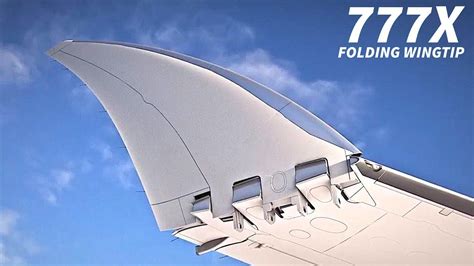
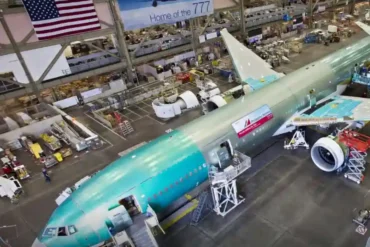
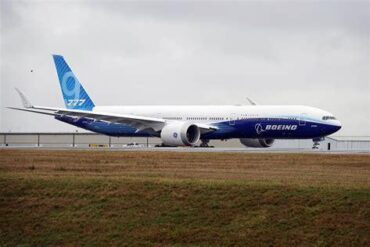
The Boeing 777-9 looks like the logical continuation of a story airlines already know how to read. Its proportions echo the 777-300ER, but nearly every line hides a redesign. The composite wing is longer and more slender, capped with folding wingtips that allow the aircraft to fit into existing airport gates while enjoying the aerodynamic benefits of a higher aspect ratio in flight. The engines, GE9X, are the most powerful turbofans ever certified for a commercial aircraft, yet they sip fuel more politely than their predecessors.
Capacity is the quiet power move here. The 777-9 sits in the same seating bracket as the 777-300ER, with the ability to carry well over 400 passengers in high-density layouts. This preserves the economics of slot-constrained hubs, where airlines want to move more people per departure rather than chase frequency. The fuselage width keeps ten-abreast economy viable, which matters for carriers that live on volume as much as yield.
Boeing frames the 777X as an evolution rather than a gamble. Airlines that have built operational muscle memory around the 777 lineage can migrate crews, maintenance practices, and route structures with fewer cultural shocks. The cabin improvements, including lower cabin altitude and larger windows, speak to passenger comfort without forcing airlines to reinvent their service models. The pitch is simple: everything you liked about the 777-300ER, only sharper, quieter, and more efficient.
Airbus A350-1000: The Lighter, Longer-Reach Alternative
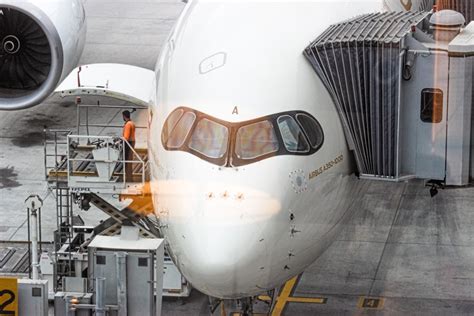
The A350-1000 approaches the same problem from a different angle. Where Boeing leans into continuity, Airbus leans into materials science. The A350 family is built around a high percentage of carbon-fiber composites, which reduces weight and allows designers to sculpt aerodynamics with more freedom. The result is an aircraft that trades a bit of maximum capacity for longer legs and gentler fuel curves on ultra-long sectors.
Range is the A350-1000’s rhetorical flourish. Its ability to stretch farther than the 777-9 opens up nonstop city pairs that flirt with the edge of commercial feasibility. For airlines chasing prestige routes or niche premium demand across continents, that extra reach is not academic. It is a route-planning weapon. The cabin, designed around nine-abreast economy, reflects a philosophy that prioritizes passenger comfort over squeezing in one more seat per row, a choice that some carriers use as a brand differentiator.
Operationally, the Rolls-Royce Trent XWB-97 engines and lighter airframe tilt the aircraft toward lower trip costs on long missions. Airlines that prize fuel efficiency over raw seat count find the A350-1000 compelling, especially when premium-heavy configurations dominate the revenue model. The airplane feels less like a stretched version of an older concept and more like a ground-up rewrite of what a long-haul flagship can be.
Capacity, Range, and the Economics of Scale
The tension between these two aircraft is not a simple spec-sheet duel. It is a philosophical debate about how airlines intend to grow. The 777-9 preserves the high-capacity tradition of the 777-300ER, making it a natural heir for routes where demand is thick and slots are scarce. Its wider fuselage invites dense economy layouts without alienating premium cabins, allowing carriers to stack revenue streams vertically within a single flight.
The A350-1000, by contrast, bets on flexibility of distance and efficiency. Its longer range invites experimentation with thinner long-haul routes that would have been marginal with older designs. The lighter airframe reduces fuel burn on ultra-long sectors, which compounds into meaningful savings across a fleet. Airlines choosing between the two are not merely comparing airplanes. They are choosing between network strategies: concentration versus reach, volume versus precision.
Cost per seat becomes the tiebreaker that hides inside these philosophies. The 777-9 can dilute its higher operating cost across more seats, which flatters dense markets. The A350-1000 keeps per-seat economics competitive by burning less fuel overall, especially when configured for premium-heavy cabins where yield matters more than raw seat count. The replacement of the 777-300ER is therefore less about a single “better” aircraft and more about how each carrier defines better for itself.
Orders, Alliances, and the Politics of Fleet Decisions
Fleet choices are rarely neutral. They are shaped by delivery timelines, geopolitical relationships, financing structures, and the inertia of existing fleets. Airlines that have lived inside the Boeing ecosystem often gravitate toward the 777X because it minimizes retraining friction and preserves cockpit commonality across fleets. Those already invested in Airbus widebodies find the A350-1000 slots neatly into a broader family strategy that spans from the A320neo to the A350.
The concentration of orders among a few mega-carriers adds another layer of intrigue. When large airlines place triple-digit commitments, they do not merely buy airplanes. They shape the economic gravity of the program itself. This dynamic can accelerate development and influence configuration options, but it also concentrates risk. A program’s health becomes entangled with the strategic moods of a handful of customers. The history of aviation is littered with technically brilliant aircraft that struggled because their market base was too narrow.
Cabin Experience: Where Metal Meets Emotion
Passengers rarely care about wingspan or maximum takeoff weight. They care about how the journey feels. Both the 777-9 and the A350-1000 reflect a shift toward treating the cabin as a competitive arena rather than an afterthought. Lower cabin altitude reduces fatigue on ultra-long flights. Larger windows and redesigned lighting systems play with circadian rhythms, nudging the body toward rest or alertness as the journey unfolds.
The wider fuselage of the 777-9 gives airlines more latitude in premium cabin design, enabling wider aisles and more ambitious business-class suites. The A350-1000, with its composite fuselage, offers quieter cabins and smoother pressure curves that subtly change how passengers perceive long-haul endurance. These differences are not merely marketing gloss. They influence loyalty in a market where passengers increasingly choose airlines based on the memory of how a twelve-hour flight felt, not just where it landed.
The Slow Fade of a Giant, Not a Sudden Exit
The 777-300ER is not vanishing. Its reliability and the sheer number of airframes in service ensure a long twilight. Many airlines are investing in cabin retrofits rather than rushing to retire a machine that still earns its keep. The replacement process is a slow choreography, with new aircraft taking the most demanding routes while older frames shift to secondary missions or seasonal peaks.
This gradualism is healthy for the industry. It allows operators to amortize existing investments while learning the operational quirks of new platforms. It also means the sky will be a mixed museum for years to come, where the muscular profile of the 777-300ER shares airspace with the sleeker lines of the 777-9 and the carbon-fiber sheen of the A350-1000. The transition is evolutionary, not revolutionary.
Which Aircraft Truly Replaces the Boeing 777-300ER?
There is no single heir. The 777-9 replaces the 777-300ER in spirit, scale, and network philosophy. It is the direct descendant for airlines that want to preserve the logic of high-capacity long-haul operations while shaving fuel burn and noise. The A350-1000 replaces the 777-300ER in opportunity, opening longer routes with a lighter footprint and a different balance between comfort and density.
The deeper truth is that the 777-300ER was never just an airplane. It was a set of assumptions about how global air travel should work: big routes, big airplanes, fewer engines, and ruthless efficiency. The aircraft replacing it are not only machines but arguments about what the next chapter of long-haul flying should prioritize. One leans into continuity with sharper tools. The other leans into reinvention with lighter bones.
The sky will decide, not in headlines but in schedules, load factors, and the quiet arithmetic of fuel receipts. The 777-300ER earned its legend by making airlines money while moving the world closer together. Its successors will have to do the same in a world that demands more efficiency, more comfort, and more imagination from every ton of aluminum and composite that dares to cross an ocean.