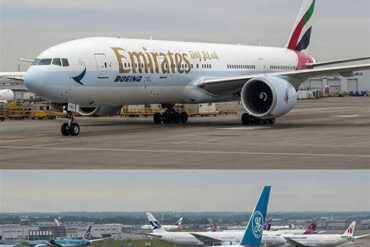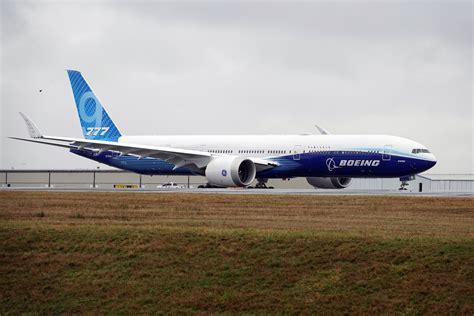
The evolution of long-haul aviation is rarely defined by a single metric, yet range remains one of the most decisive benchmarks for airlines shaping global networks. The arrival of the Boeing 777X marks a pivotal shift in how far, how efficiently, and how profitably widebody aircraft can fly. While its predecessor, the Boeing 777-300ER, dominated long-haul travel for nearly two decades, the 777X introduces a new level of performance that redefines expectations—not just incrementally, but strategically.
At first glance, comparing these two aircraft might seem straightforward. But beneath the headline numbers lies a deeper story of engineering trade-offs, aerodynamic breakthroughs, and operational philosophy. The 777X is not simply about flying farther—it is about flying smarter, cleaner, and more efficiently across ultra-long-haul routes that were once considered commercially marginal.
Understanding exactly how much more range the 777X offers—and why—reveals how the next generation of air travel is being engineered today.
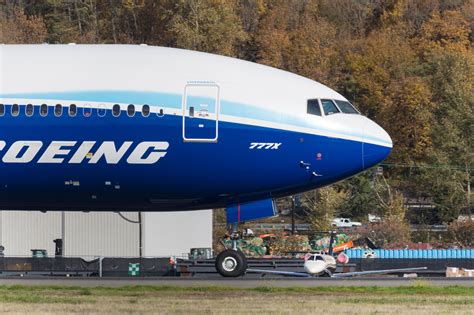
Breaking Down the Range Numbers: 777X vs 777-300ER
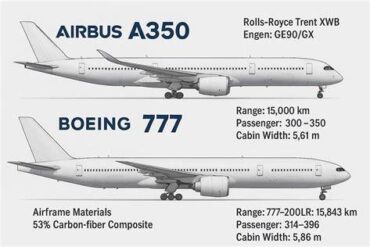
The most direct way to assess the leap forward is through raw range figures. The Boeing 777-300ER, long considered the backbone of global fleets, offers a maximum range of approximately 7,370 nautical miles (13,649 km). This capability enabled airlines to connect major global city pairs with reliability and efficiency, making it one of the most commercially successful widebody aircraft ever built.
The 777X family, however, introduces two distinct passenger variants:
- Boeing 777-8: 8,745 nautical miles (16,190 km)
- Boeing 777-9: 7,285 nautical miles (13,500 km)
What immediately stands out is the significant range advantage of the 777-8, which exceeds the 777-300ER by 1,375 nautical miles (2,546 km). This is not a marginal improvement—it represents a step change in ultra-long-haul capability, opening routes that were previously either impossible or economically inefficient.
Interestingly, the larger 777-9 actually falls slightly short of the 777-300ER’s range by around 85 nautical miles (157 km). This apparent contradiction highlights a fundamental truth in aircraft design: size and range are often in tension.
Why the Larger 777-9 Has Less Range
It might seem counterintuitive that a newer, larger aircraft would not surpass its predecessor in every metric. The explanation lies in physics and design priorities.
Both the 777-8 and 777-9 share the same wing structure and therefore carry similar fuel volumes. However, the 777-9 is longer, heavier, and designed to carry more passengers—up to 426 in a typical two-class configuration. This additional weight increases fuel consumption and reduces maximum range.
In contrast, the 777-8 is optimized for ultra-long-haul missions, balancing capacity with endurance. Its slightly smaller size allows it to maximize fuel efficiency over extreme distances, making it the true range champion of the family.
This design philosophy reflects a broader industry trend: airlines are increasingly segmenting fleets into high-capacity regional workhorses and ultra-long-haul specialists, rather than relying on a single “do-it-all” aircraft.
How Much More Range Does the 777X Really Deliver?
When isolating the comparison:
- 777-8 vs 777-300ER: +1,375 NM (+2,546 km)
- 777-9 vs 777-300ER: -85 NM (-157 km)
This means the true generational leap in range comes from the 777-8, not the flagship 777-9. In practical terms, that extra range allows airlines to:
- Operate nonstop flights between city pairs like Sydney–London or Los Angeles–Singapore with greater payload flexibility
- Maintain higher passenger loads on ultra-long-haul routes without sacrificing profitability
- Reduce reliance on intermediate stopovers, improving passenger convenience and operational efficiency
The 777-300ER, while still capable, often requires payload restrictions on the longest routes. The 777-8 is designed specifically to eliminate those compromises.
The Wing Revolution: Where Range Gains Truly Begin
One of the most transformative upgrades in the 777X is its composite wing design. Unlike the aluminum wings of the 777-300ER, the 777X features advanced carbon-fiber-reinforced polymer wings, delivering a superior strength-to-weight ratio.
This innovation directly impacts range in several ways. A lighter wing reduces overall aircraft weight, while a longer wingspan enhances aerodynamic efficiency and lift generation. The result is lower fuel burn per mile, which translates directly into extended range.
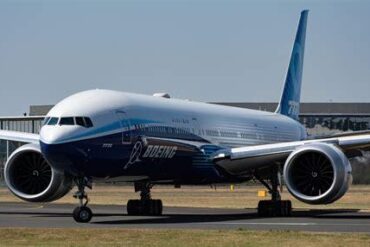
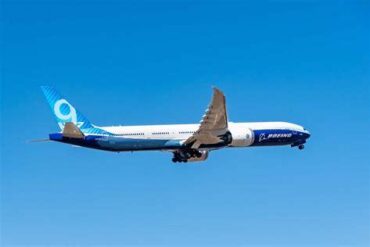
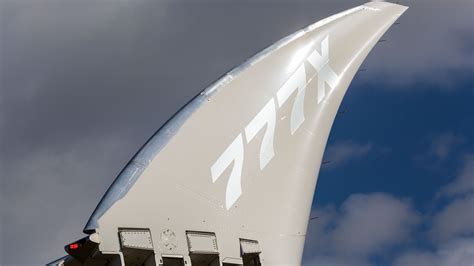
Perhaps the most visually striking feature is the folding wingtip. On the ground, the wings fold upward, allowing the aircraft to maintain compatibility with existing airport gates. In flight, the wings extend to a span of over 235 feet, significantly larger than the 777-300ER.
This expanded wingspan improves:
- Lift-to-drag ratio
- Cruise efficiency
- Fuel economy over long distances
The folding wingtip is more than a clever engineering trick—it is a practical solution to infrastructure limitations, enabling airlines to deploy a larger, more efficient aircraft without costly airport modifications.
GE9X Engines: Powering the Range Advantage
Complementing the new wings is the GE9X engine, the largest and most powerful commercial jet engine ever built. Designed specifically for the 777X, it delivers unprecedented thrust and efficiency.
Compared to the GE90 engines used on the 777-300ER, the GE9X offers:
- 10% better fuel efficiency
- Higher thrust output, enabling greater maximum takeoff weight
- Reduced emissions and noise footprint
The engine’s massive diameter—larger than the fuselage of a narrowbody jet—allows for a higher bypass ratio, which is key to improving fuel efficiency. More air is moved around the engine core rather than through it, reducing fuel consumption while maintaining thrust.
This efficiency gain plays a crucial role in extending the aircraft’s range. When combined with the advanced wing design, the GE9X enables the 777X to extract more distance from every kilogram of fuel.
Operational Range vs Real-World Range
While manufacturer specifications provide a clear comparison, real-world range is influenced by a variety of operational factors. Airlines often configure aircraft differently depending on their route networks, which can significantly affect performance.
For example, ultra-long-haul configurations typically include:
- Fewer seats to reduce weight
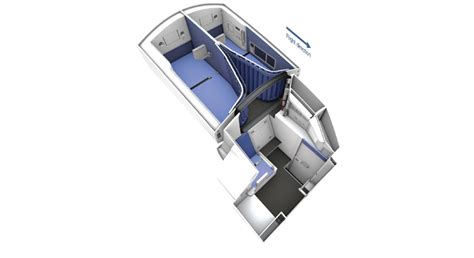
- Dedicated crew rest areas
- Increased fuel reserves
These adjustments can extend practical range beyond standard configurations, allowing aircraft like the 777-8 to push the boundaries of nonstop travel.
Conversely, high-density configurations may reduce range but maximize revenue on shorter long-haul routes. This flexibility is a defining feature of the 777X, allowing airlines to tailor performance to specific market needs.
Freighter Variants: Range Trade-Offs in Cargo Operations
The 777X family also includes the 777-8F freighter, which introduces a different set of priorities. In cargo aviation, payload often takes precedence over range, and the design reflects this balance.
The 777-8F offers:
- Range: 4,410 nautical miles
- Payload capacity: 112 tonnes
In comparison, the older 777F can fly farther—around 4,970 nautical miles—but carries less cargo. This mirrors the same trade-off seen in passenger variants: greater capacity typically reduces range.
For cargo operators, the increased payload of the 777-8F can translate into higher revenue per flight, even if it requires slightly shorter routes. This makes it a compelling successor in the long term, especially as global air freight demand continues to grow.
Why Airlines Are Betting on the 777-9 Despite Range Differences
Despite the 777-8’s superior range, the majority of orders have been placed for the 777-9. This reflects a key reality of modern aviation: capacity often outweighs maximum range in commercial decision-making.
Airlines prioritize:
- Lower cost per seat
- High-capacity routes between major hubs
- Strong demand corridors where range is already sufficient
The 777-9 excels in these areas, offering significantly more seats with improved efficiency, making it ideal for high-traffic international routes.
In contrast, the 777-8 serves a more specialized role. While its range is unmatched within the family, fewer routes require such extreme capability, limiting its appeal to a narrower segment of the market.
Future Possibilities: The 777-10 and Beyond
Looking ahead, the potential development of a 777-10 introduces another layer to the discussion. A stretched variant would likely push capacity even further, potentially surpassing all existing twin-engine aircraft.
However, increasing size typically results in reduced range, reinforcing the trade-off between capacity and endurance. Airlines interested in such an aircraft are primarily focused on high-density hub operations, where range beyond current capabilities offers diminishing returns.
The ongoing interest in larger aircraft highlights a persistent demand for efficient mass transport between global megahubs, even as ultra-long-haul routes continue to expand.

The Strategic Impact of Increased Range
The extended range of the 777X—particularly the 777-8—has implications far beyond individual routes. It enables airlines to rethink network strategies, shifting away from traditional hub-and-spoke models toward more direct connections.
This evolution benefits both airlines and passengers:
- Airlines can optimize fleet utilization and reduce operating costs
- Passengers gain access to faster, more convenient nonstop journeys
- Airports see less congestion from connecting traffic
In essence, increased range is not just about distance—it is about reshaping the global aviation map.
Conclusion: A New Benchmark in Long-Haul Aviation
The comparison between the Boeing 777X and the 777-300ER reveals a nuanced but decisive shift in capability. While the 777-9 prioritizes capacity and efficiency, the 777-8 delivers a remarkable leap in range, extending the boundaries of nonstop flight by over 1,300 nautical miles.
This advancement is powered by a combination of next-generation wings, revolutionary engines, and refined aerodynamics, all working together to redefine what is possible in commercial aviation.
The 777-300ER set the standard for long-haul travel in its era. The 777X, however, does not merely continue that legacy—it redefines it, offering airlines the tools to operate farther, more efficiently, and more strategically than ever before.