The Boeing 777 family has been a cornerstone of long-haul aviation for decades, but when it comes to pushing the boundaries of range, the 777-200LR stands apart. Though it sacrifices passenger capacity, this ultra-long-haul aircraft reshaped how airlines approached thin, far-flung routes. In this article, we examine just how much more range the 777-200LR offers compared to its more widely adopted counterpart, the 777-300ER—and why that difference matters.
The Genesis Of The 777-200LR: Engineering For Distance
The Boeing 777-200LR, or “Longer Range,” was conceived with one objective: to dominate the ultra-long-haul market. Introduced as part of Boeing’s second-generation 777 lineup, it broke records from the outset. On November 10, 2005, it set the world record for the longest nonstop commercial flight, covering 11,664 nautical miles from Hong Kong to London in 22 hours and 42 minutes. This unprecedented achievement showcased not just engineering prowess, but a strategic vision to connect cities never before linked by direct service.
This was more than a feat of endurance—it was a statement. Until then, routes of such distance were the domain of four-engine giants like the Boeing 747-400. But with twin-engine efficiency and General Electric’s robust GE90-115BL powerplant, the 777-200LR redefined the limits of twin-engine ETOPS operations, eventually gaining ETOPS-330 certification, allowing it to venture into previously inaccessible corridors.
Specifications And Structural Differences
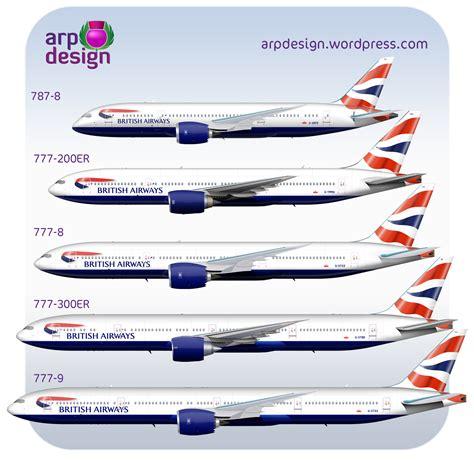
Though visually similar, the 777-200LR and 777-300ER differ significantly under the skin. The -200LR features a shorter fuselage—measuring 209 feet and 1 inch—compared to the -300ER’s 242 feet and 4 inches. This reduction in fuselage length translates directly to lower passenger capacity but contributes to weight savings and aerodynamic advantages that improve range.
- 777-200LR Range: 8,555 nautical miles
- 777-300ER Range: 7,370 nautical miles
- Range Advantage: 1,185 nautical miles (approx. 1,364 miles / 2,195 km)
In a typical two-class configuration, the 777-200LR seats 317 passengers, while the 777-300ER can carry up to 392, a difference of 75 passengers. The tradeoff is clear: payload versus range. Airlines must decide whether a route’s demand justifies fewer seats in exchange for reaching distant destinations without refueling.
Operational Reach: What That Extra Range Buys
That extra 1,185 nautical miles might not seem dramatic on paper, but in real-world operations, it’s transformative. It opens up entire regions unreachable by the -300ER. For example:
- From New York, the -300ER cannot reliably reach Southeast Asia or southern India, while the -200LR can.
- From London, the -300ER covers much of Asia, Africa, and the Americas—but northern and western Australia remain elusive. The -200LR makes those routes viable.
- The -200LR can service ultra-long-haul missions such as Auckland–Doha (7,848 nm) and potentially even Sydney–London, a route Qantas aims to cover with Airbus A350-1000ULRs.

Such missions not only test endurance but also encounter challenging headwinds, limited diversion options, and significant ETOPS considerations. The -200LR was tailor-made to address these.
Market Adoption: Niche Versus Mass Appeal
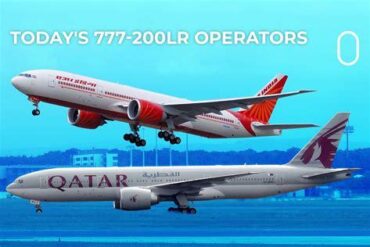
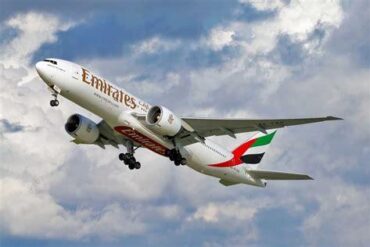
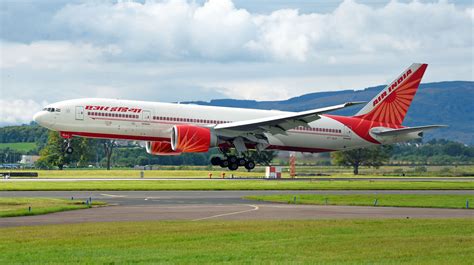
Despite its engineering excellence, the 777-200LR remained a niche product. Boeing delivered just 61 units, primarily to carriers such as Delta Air Lines, Emirates, Qatar Airways, and Air India. This contrasts starkly with the 837 deliveries of the 777-300ER, making it one of Boeing’s most successful widebody aircraft.
The 777-300ER’s versatility and high capacity suited it to a broader range of routes. Its range, while slightly shorter, was more than sufficient for the vast majority of long-haul missions, especially those connecting high-demand city pairs where filling 392 seats wasn’t a challenge.
United and American Airlines were among the few U.S. carriers to adopt second-gen 777s. Others, like Delta and Hawaiian, opted instead for mid-sized widebodies like the 767 and, later, the 787.
The Powerplant Behind The Performance
Both aircraft share the General Electric GE90-115BL engine, one of the most powerful turbofans ever built. This engine not only underpins the performance of the second-gen 777s but also laid the foundation for the GE9X, developed for the upcoming Boeing 777X series.
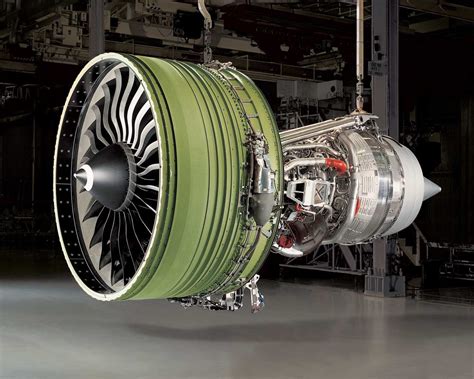
The move toward engine exclusivity began with the 777-200LR and 777-300ER, as GE won the bid to become the sole provider. This decision had far-reaching implications, eventually pushing Pratt & Whitney out of the widebody engine market and relegating Rolls-Royce to Airbus-exclusive platforms. For Boeing, GE became the near-default engine supplier across its widebody programs.
Why The 777-200LR Didn’t Dominate The Skies
The answer lies in its ultra-specialized nature. Only a limited number of routes truly require more than 7,370 nautical miles of range. Most airlines found the 300ER’s balance of range and capacity far more commercially viable. That said, the 200LR carved a critical niche:
- It enabled direct flights between city pairs previously unreachable.
- It allowed smaller carriers or national airlines to avoid intermediate hubs, giving them competitive parity with larger carriers.
- It allowed service on low-demand, high-distance routes with twin-engine efficiency.
But ultimately, the economics of seat-mile costs favored the 777-300ER in most use cases.
The Rise Of New Contenders And The Sunset Of The 200LR
As the aircraft market evolved, so did the competition. The Airbus A350 and Boeing 787 Dreamliner now service many of the routes once dominated by the 777-200LR. These newer jets offer even better fuel efficiency, lower maintenance costs, and a more modern passenger experience.
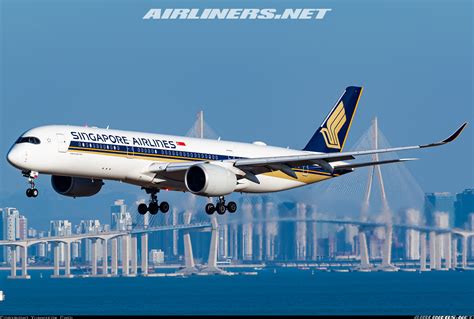
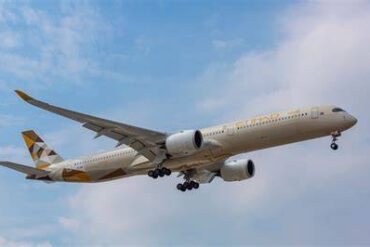
In fact, the Singapore–New York route, once the domain of the 200LR, is now served by A350-900ULRs, which feature an ultra-dense fuel configuration and lower empty weight. Similarly, Qantas’ “Project Sunrise” will employ A350-1000ULRs to serve routes like Sydney–London, effectively surpassing the longest distances ever flown by the 777-200LR.
The 777X Era: Evolution, Not Revolution
Boeing’s answer to these challenges is the third-generation 777X, with two variants:
- 777-8: Successor to the 200LR with a 395-passenger capacity and 8,745 nm range.
- 777-9: Successor to the 300ER with a 426-passenger capacity and 7,285 nm range.
While promising, the 777X program has been plagued by delays, and to date, only 43 firm orders exist for the 777-8, compared with 520 for the 777-9. This again underscores the commercial preference for higher capacity over maximum range.
Legacy And Final Deliveries
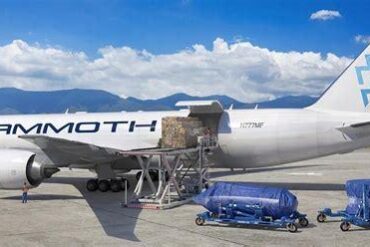
Though the 777-200LR is no longer in production for passenger service, its DNA lives on in the Boeing 777 Freighter (777F), which shares the same airframe and powerplant. Boeing is racing to deliver the final 777Fs before ICAO emissions standards tighten in 2027.
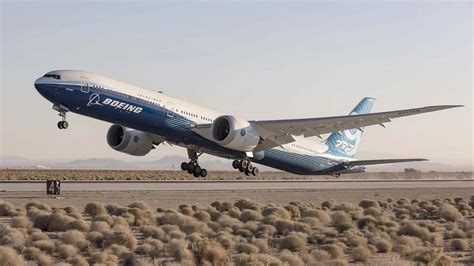
As for the -300ER, its production too has nearly ceased, with only five units undelivered as of 2026—likely never to be received. The 777-300ER remains the dominant member of the family, but it was the 200LR that extended the reach of the twin-engine widebody into new frontiers.
Conclusion: A Tale Of Two Titans
The Boeing 777-200LR and 777-300ER were both milestones in long-haul aviation, but they served very different missions. The 200LR pushed boundaries and opened new possibilities, while the 300ER became the dependable backbone of international fleets worldwide. The range difference of 1,185 nautical miles between them is more than a statistic—it represents the edge of what was possible in long-haul air travel before the rise of next-gen aircraft.
While one was a technical marvel, the other was a commercial juggernaut. Together, they shaped the last two decades of global connectivity.