The Airbus A380, often dubbed the “Superjumbo,” is not only the world’s largest passenger airliner but also one of the most fuel-laden aircraft ever built. With fuel capacity figures surpassing even military tanker jets, it is natural to question whether it actually consumes more fuel than a dedicated aerial tanker. The answer lies in understanding the purpose, engineering, and operational doctrine behind both aircraft types.
Fuel Capacity: A Giant Among Giants
The Airbus A380-800 is capable of carrying a staggering 254,000 to 261,000 kilograms (560,000–575,000 pounds) of fuel. This dwarfs the capacity of most aerial refueling aircraft, including the KC-10 Extender (161,500 kg), Airbus A330 MRTT (111,000 kg), and KC-46 Pegasus (96,297 kg).
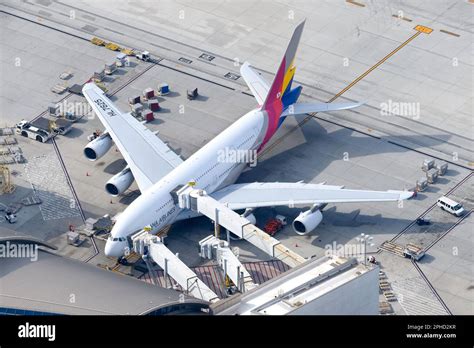
It’s important to emphasize that the A380 was engineered with intercontinental ultra-long-haul commercial service in mind. Its fuel load is not just a storage advantage—it is a necessity to power four Rolls-Royce Trent 900 or Engine Alliance GP7200 engines across transoceanic distances while hauling over 500 passengers.
Military tankers, by contrast, are designed with mission-specific fuel transfer needs, not maximal fuel volume. Their operational paradigm prioritizes versatility, range extension for fighters and bombers, and survivability over sheer quantity.
Strategic Differences: Why Bigger Isn’t Always Better
A military aerial tanker like the KC-46 Pegasus is designed with multi-theater deployments, distributed operations, and rapid redeployment in mind. The USAF’s doctrine of “more booms are better” supports redundancy and survivability: a fleet of smaller tankers can scatter across many bases, refuel multiple aircraft, and remain resilient to attack.
The A380, due to its immense size, is not viable for military utility in contested zones. Its dependence on long, reinforced runways and expanded taxiways makes it unsuitable for most forward-deployed or remote airstrips.
Moreover, strategic threats—like China’s J-20 Mighty Dragon interceptor—are developed to hunt high-value airborne assets. A tanker the size of the A380 would present an irresistibly large, slow-moving target.
Where Is The Fuel Stored? Structural Strategy And Efficiency
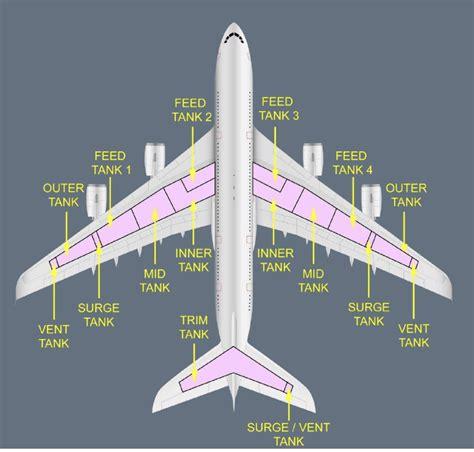
Unlike military tankers, which often store significant amounts of fuel in fuselage-mounted bladders or tanks, the A380’s wing design integrates much of its fuel storage directly into its vast surface area. Fuel in the wings provides a counterbalance to upward lift forces, reducing wing stress and improving lifespan.
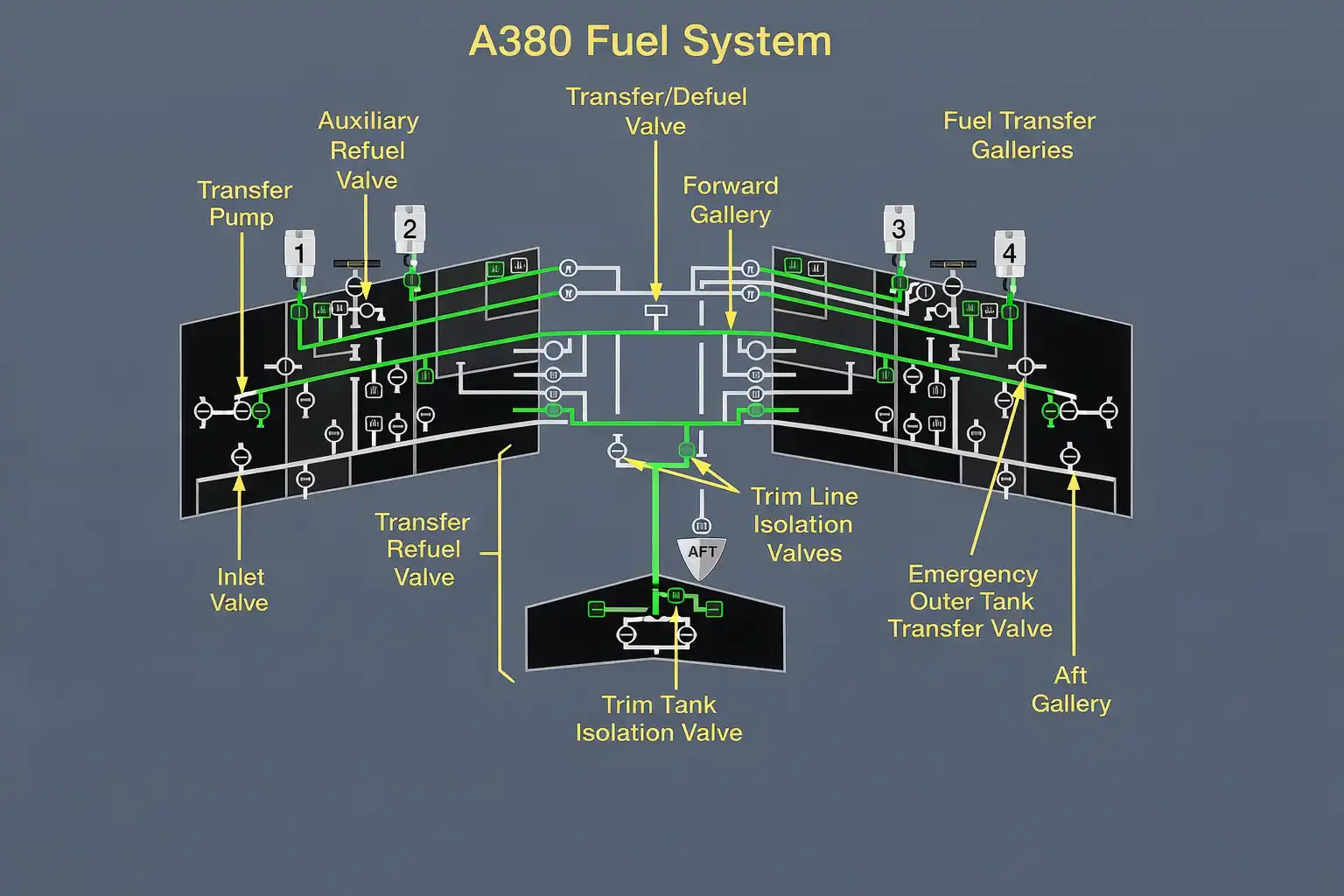
Additionally, the horizontal stabilizer features a trim tank that enables the aircraft’s Fuel Control and Monitoring System (FCMS) to actively manage center of gravity during flight. Fuel is shifted between the trim and wing tanks to optimize stability and drag.
This system not only increases the plane’s range but improves fuel efficiency over time, a key consideration in high-cost aviation fuel economics.
Landing With A Full Load: An Engineering Feat
Most aircraft are not designed to land with full fuel tanks due to the structural load exerted on the landing gear. The Airbus A380, however, can land at or near its Maximum Takeoff Weight (MTOW).
This feature is crucial during emergencies, when jettisoning millions of dollars in fuel may be unavoidable. While fuel dumping systems exist, they carry safety and environmental risks. The A380’s robust airframe and landing gear give airlines a critical safety and economic advantage in crisis scenarios.
Military tankers typically don’t prioritize this capability, as their missions are more flexible and can be modified mid-flight or rerouted as needed. However, the option to land with a full tank adds a layer of resilience to the A380’s design.
The FCMS: Mastering Fuel Management at Altitude
The A380’s automated FCMS oversees 11 fuel tanks, 21 pumps, and 43 valves. The system dynamically shifts fuel based on real-time requirements to maintain an optimal CG and reduce aerodynamic drag.
During takeoff and ascent, the center tank is depleted first to consolidate weight. In cruise, fuel is moved rearward to the stabilizer to shift CG aft, reducing tail downforce and boosting fuel economy. Before descent, fuel is redistributed forward for enhanced landing stability.
This system ensures all four engines are supplied consistently and can reroute fuel in the event of pump failure, adding redundancy and safety. No aerial refueling tanker employs such an advanced passenger-centric fuel optimization system.
Short-Haul Missions: Not Always Topped Up
Though capable of extreme range, A380s on short routes—particularly those operated by Emirates, which owns nearly half the global fleet—are filled to only 40%–50% of capacity. The FCMS decides which tanks to fill to maintain a safe and efficient CG for shorter legs.
Military tankers, by contrast, typically fill to a level determined by mission scope. They may only carry enough to fuel strike groups and then return to base. Their loadouts are often more mission-adaptive than commercial aircraft, which are bound to strict scheduling and efficiency considerations.
Military Tankers: More Than Just Fuel Trucks
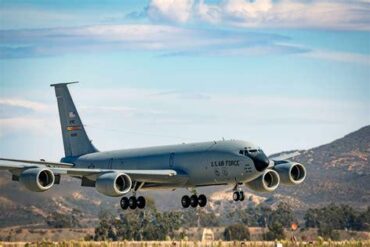
The true value of military tankers is not in raw fuel volume, but in strategic flexibility and operational range extension. Aircraft like the KC-135 Stratotanker, KC-10, and KC-46 are designed to keep strike aircraft flying longer without returning to base.
They act as airborne pit stops, often loitering near air combat zones or over secure airspace. They can deliver mid-air refueling through both booms and drogues, and often support multiple aircraft at once.
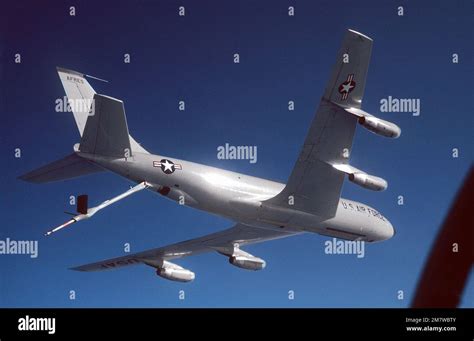
A single A380 turned into a tanker would provide a huge one-time capacity, but at the cost of flexibility and survivability. Its limited base access and slow refueling turnaround would hinder dynamic operations. Losing one A380-tanker in a hostile environment would be far more operationally damaging than losing a KC-135.
Moreover, the upcoming Next-Generation Air-Refueling System (NGAS) by the USAF may prioritize smaller, stealthier, or even unmanned platforms. Instead of supersizing, the trend is toward modular, survivable, networked tankers to support distributed air operations.
So, Does the A380 Use More Fuel Than a Tanker?
In absolute terms, yes—the Airbus A380 carries and can consume more fuel than any military tanker in the world. On an intercontinental flight, fully loaded, it will burn significantly more fuel per hour and per mission than even the KC-10 Extender.
However, that is a consequence of its mission. The A380’s consumption reflects a balance of passenger load, cruise speed, range, and airframe mass. It is not designed to be fuel-efficient in the same way that a military tanker is; rather, it is optimized for massive, long-haul people and cargo transport.
Military tankers, while carrying less fuel, are more efficient in delivering it mid-air to multiple receivers and do not need to carry it across oceans unless the mission demands it. Their operational footprint, deployment flexibility, and combat survivability make them strategic force multipliers.
Conclusion: Comparing Apples to Aircraft Carriers
The Airbus A380 is a fuel behemoth, by necessity and design. It carries more fuel than any military aerial tanker in service today because it must support enormous passenger loads over intercontinental distances.
Military tankers, on the other hand, carry enough fuel for mission-specific delivery while preserving flexibility, mobility, and survivability. Their value lies not in total fuel capacity, but in how, where, and when they can deliver that fuel.
To ask whether the A380 uses more fuel than a tanker is to ask the wrong question. Instead, we must ask: What does each aircraft do with the fuel it carries? In that light, both aircraft are masterpieces—optimized for wildly different missions in the skies.