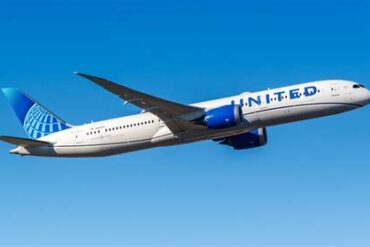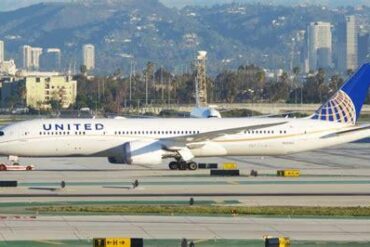
A United Airlines flight from Shanghai Pudong International Airport (PVG) to San Francisco International Airport (SFO) was forced to divert to Tokyo Narita Airport (NRT) after an onboard passenger dispute escalated, resulting in the aircraft dumping more than $30,000 worth of fuel before landing safely. The incident unfolded aboard United Airlines Flight 858 on June 24, disrupting the journey for hundreds of passengers and highlighting the operational and financial consequences of serious inflight disturbances.
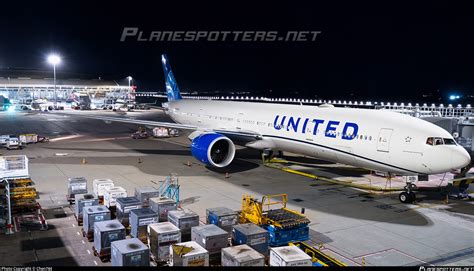
Flight tracking data showed that the Boeing 777-300ER departed Shanghai at approximately 12:43 p.m. carrying 285 passengers and 16 crew members. The long-haul flight had been airborne for roughly two hours when the captain decided that continuing across the Pacific was no longer appropriate due to the deteriorating situation inside the cabin.
Passenger Behavior Escalated Shortly After Departure
According to witness accounts shared online, the passenger initially appeared calm before her behavior changed dramatically following takeoff. She reportedly scattered documents from the seat pocket, shouted repeatedly, and at times struck herself while making accusations that she was being “oppressed.” Cabin crew attempted to communicate with her, but the interaction quickly became increasingly difficult.
When a senior flight attendant reportedly tapped the passenger on the shoulder after she ignored repeated attempts to gain her attention, the traveler allegedly responded by elbowing the crew member. During the subsequent meal service, she was also accused of throwing food packaging onto the cabin floor while continuing to shout, creating an unsettling atmosphere for nearby passengers.
The escalating confrontation prompted onboard security measures. Reports indicate that air marshals issued warnings, but the disturbance continued, ultimately leaving the flight crew with little choice but to divert to Japan. For airline crews, any physical contact with cabin staff significantly increases the seriousness of an incident because it raises concerns about the safety of everyone onboard.
Emergency Diversion Came With a Significant Financial Cost
Diverting a fully fueled long-haul aircraft is never a simple decision. Because the Boeing 777-300ER had departed with enough fuel for a trans-Pacific crossing, the aircraft exceeded its maximum certified landing weight after only a short time in the air. To land safely, pilots reportedly dumped a substantial quantity of fuel before descending into Tokyo Narita Airport.
Industry estimates placed the value of the discarded fuel at more than $30,000, illustrating how a single disruptive passenger can generate extraordinary operational costs. Beyond the fuel itself, diversions create additional expenses through airport handling fees, crew scheduling adjustments, maintenance inspections, passenger reaccommodation, and delays that can ripple throughout an airline’s network.
Upon arrival in Japan at approximately 4:37 p.m., officers from the Chiba Prefectural Police boarded the aircraft and escorted the passenger from the cabin. Witnesses stated that communication improved once a Chinese-speaking officer became involved, allowing authorities to explain the situation before removing the traveler.
Maintenance Delay Extended the Disruption
The diversion did not mark the end of Flight 858’s problems. After the passenger had been removed, the aircraft reportedly underwent an additional maintenance inspection that further delayed its departure from Tokyo.
The aircraft eventually departed Narita at around 6:15 p.m., continuing its journey across the Pacific before arriving safely in San Francisco approximately 100 minutes behind schedule. Although passengers ultimately reached their destination without further incident, the disruption added hours of uncertainty and inconvenience to an already lengthy international flight.
Eyewitness Accounts Paint a More Complex Picture
Several passengers later shared videos and firsthand observations on Chinese social media platforms and Reddit, offering different perspectives on how events unfolded. One traveler who claimed to have been seated nearby described the woman as appearing perfectly normal before takeoff, only for her behavior to change abruptly once the aircraft became airborne.
The same witness said the passenger repeatedly attempted to show nearby travelers images on her mobile phone that she believed demonstrated how she was being mistreated. According to the account, most passengers declined to engage, while cabin crew eventually stepped back temporarily in an effort to reduce tensions after the physical confrontation.
Some observers felt the incident involved elements of misunderstanding, overreaction, and miscommunication, while others believed the crew acted appropriately under challenging circumstances. Since only partial information is publicly available, the precise sequence of events and any underlying factors remain unclear.
Safety Takes Priority During Inflight Disturbances
Airlines worldwide train flight attendants to identify and de-escalate disruptive behavior whenever possible. However, once a passenger becomes physically aggressive or poses a potential threat to crew members, captains have broad authority under international aviation regulations to divert the aircraft if necessary.
For long-haul international flights, such decisions are based not only on the immediate disturbance but also on the inability to guarantee cabin safety for many additional hours over remote oceanic routes. While diversions are expensive and inconvenient, they are widely regarded as an essential safety measure whenever onboard conditions become unpredictable.
The incident aboard United Airlines Flight 858 serves as another reminder that disruptive passenger behavior can have consequences extending far beyond a single confrontation. Hundreds of travelers experienced delays, airline resources were consumed, significant fuel was discarded, and airport authorities became involved—all stemming from an event that rapidly escalated inside the aircraft cabin.