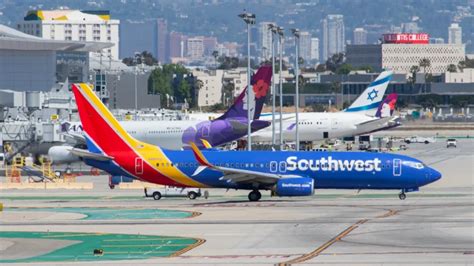
In the face of mounting economic pressures, US air travel has displayed remarkable resilience during the first half of 2025. According to fresh data from the Airlines Reporting Corporation (ARC), ticket sales dipped a marginal 1% year-on-year, settling at $52.3 billion from January through June. Yet, paradoxically, more Americans are taking to the skies, both domestically and internationally, underscoring a robust underlying demand.
Tourism Demand Outpaces Revenue Metrics in Early 2025
Contrary to concerns about a contracting market, the actual number of booked passenger trips surged by 2%, with domestic travel rising equivalently and international journeys expanding by 3%. This growth reveals a deep-seated consumer appetite for travel, as Americans prioritize experiences over savings, possibly influenced by lingering post-pandemic lifestyle shifts. Notably, destinations across Europe and Asia have seen upticks in US travelers, aided by eased visa regulations and targeted tourism campaigns.
As Steve Solomon, Chief Commercial Officer of ARC, highlighted: “The data reflects the resilience of air travel demand and the vital role of commercial aviation in reconnecting people and economies.” Even with airfare adjustments and inflationary shadows, consumers appear unwilling to shelve their travel aspirations.
June 2025: A Microcosm of Stabilization, Not Contraction
The June figures particularly underscore this stability. While total ticket revenue remained flat year-over-year at $7.6 billion, actual passenger volumes rose by 3% across both domestic and international routes. The average ticket price nudged upwards by 2%, but this modest price increase failed to deter travelers.
One standout development: Online Travel Agencies (OTAs). OTA ticket sales spiked by 7% compared to June 2024, a surge reflecting the broader digital consumption trend among modern travelers. As more consumers embrace mobile-first, self-service booking solutions, traditional leisure and corporate travel agencies saw a 3% decline in their respective sales, highlighting the strategic pivot required by conventional industry players.
NDC Technology Reshapes Distribution Channels
Another critical evolution shaping the US aviation market is the gradual integration of New Distribution Capability (NDC). As of June 2025, 21.9% of all ARC-settled airline transactions involved NDC protocols, a slight but telling rise from 21.5% the previous year. Nearly 1,000 US travel agencies processed at least one NDC-based booking during the same period, signaling broader industry adoption.
This technology, designed to enable richer, more customizable fare options, is simultaneously a boon and a logistical challenge. While it empowers airlines to directly market tailored offers, travel agencies—particularly smaller operators—are grappling with system upgrades and workflow overhauls necessary for full NDC integration.
For industry stakeholders, mastering NDC could be the key differentiator in capitalizing on evolving traveler expectations in the years ahead.
Economic Headwinds and the Corporate Travel Slowdown
Despite the promising demand narrative, revenue figures reflect undeniable economic turbulence. Softer airfares, inflation-driven consumer cautiousness, and adaptive spending behaviors led to the modest 1% total revenue dip. Most notably, corporate travel bookings dropped by 3%, underscoring a significant structural shift.
Businesses, still acclimating to hybrid work models and digital meeting norms, are scrutinizing travel budgets with unprecedented precision. Return on investment, rather than traditional scheduling cycles, increasingly governs corporate travel decisions. As a result, airlines have begun adjusting capacity away from weekday business routes toward more profitable weekend leisure hubs.
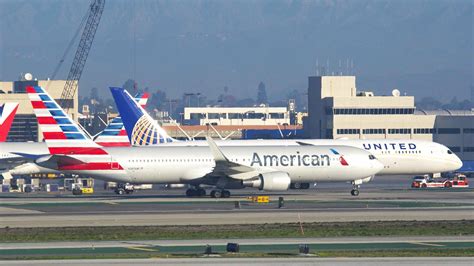
Interestingly, this pivot has created fertile ground for “bleisure” travelers—individuals blending business trips with leisure escapes. Airlines recalibrating routes to service these hybrid travelers could find new profitability pathways amid the corporate sector’s recalibration.
Consumer Behavior Shifts Signal Strategic Redirection
The dynamics shaping current air travel patterns are far from transient. Generational behavior shifts are pushing the industry toward digitally native service models. Younger travelers, raised on seamless e-commerce ecosystems, expect similar fluidity when booking flights. Airlines and agencies slow to adapt risk obsolescence.
Further amplifying this need for agility are evolving booking patterns. The rising reliance on OTAs is not merely a tech trend but reflects deeper consumer demand for dynamic pricing, transparency, and personalized options—all facets where legacy platforms underperform.
The growth of direct airline bookings, powered by proprietary apps and web platforms, also underscores the value of brand control and loyalty ecosystems in a digitized market. Direct channels enable airlines to bypass intermediaries, enhance margins, and forge tighter consumer relationships.
2025 Outlook: Agility Will Define Winners in US Aviation
Looking ahead, the central question facing US airlines and travel service providers isn’t whether demand will persist—it will. Rather, success in late 2025 and beyond will depend on how nimbly these players adapt to shifting booking channels, distribution technologies, and traveler expectations.
Investment in NDC solutions, optimizing digital sales channels, rethinking corporate travel strategies, and strengthening OTA partnerships are no longer optional—they’re strategic imperatives. The capacity to anticipate traveler preferences, rather than merely react to them, will distinguish leaders from laggards.
Encouragingly, as Americans continue to prioritize meaningful travel experiences and as international markets open further, the underlying demand pipeline remains strong. Even amid economic softening, the collective desire for exploration and reconnection promises to keep the US aviation sector aloft.
Conclusion: US Airlines Stay the Course Amid Economic Headwinds
The first half of 2025 demonstrates that while revenues dipped slightly, the volume-driven strength of US air travel is unmistakable. Passenger numbers are rising, digital adoption is accelerating, and NDC technology is reshaping how airlines sell to consumers. What lies ahead will be a test of adaptability, innovation, and operational resilience.
For now, however, Americans remain undeterred in their travel ambitions, propelling the aviation industry forward—even as its financial wings momentarily falter.