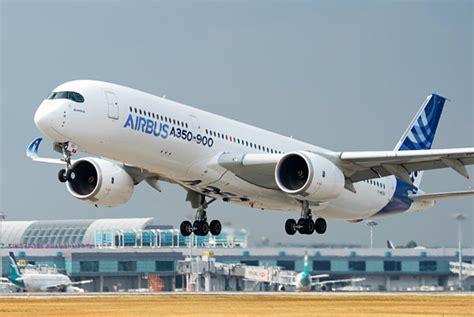
The Airbus A350 is widely regarded as one of the most advanced commercial aircraft ever developed. Despite its large frame and high maximum takeoff weight (MTOW), the A350 exhibits one surprising characteristic that sets it apart from most other widebody jets: an exceptionally short takeoff roll. This performance advantage has operational and economic implications for airlines and airport infrastructure around the world, and it’s a result of intricate engineering choices across the aircraft’s propulsion, aerodynamics, and weight-saving design.
The Foundation: A Clean-Sheet Design Built for Efficiency
When Airbus launched the A350 program, it was in response to Boeing’s revolutionary 787 Dreamliner. Rather than modifying existing platforms, Airbus pursued a clean-sheet widebody design that would deliver optimal fuel efficiency, long range, and global flexibility. The A350 entered service in 2015, built with cutting-edge materials and systems, designed to replace older models like the A340 and to complement Airbus’s other long-haul aircraft.
The A350’s short takeoff roll is not a coincidence but a product of deliberate aerodynamic and propulsion design choices. It is primarily driven by three major factors: the powerful Rolls-Royce Trent XWB turbofan engines, the efficient wing design, and the aircraft’s advanced composite construction that significantly reduces weight.
Rolls-Royce Trent XWB: Power Meets Precision
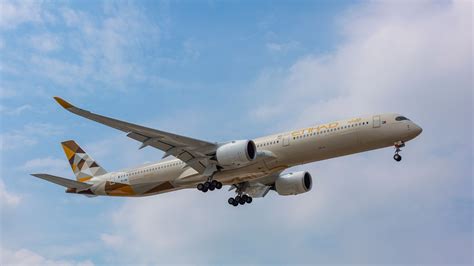
The Rolls-Royce Trent XWB turbofan engines are the A350’s muscular backbone. Developed exclusively for the A350, they offer a high thrust-to-weight ratio. The A350-900 uses the Trent XWB-84, which provides 84,000 pounds of thrust, while the larger A350-1000 is equipped with the Trent XWB-97, offering 97,000 pounds. These engines give the A350 a combined thrust of 168,000 lbf (A350-900) and 194,000 lbf (A350-1000)—figures that are among the highest in the widebody category.
Each engine has a 118-inch fan diameter and a bypass ratio of 9.6:1, making them both powerful and quiet. The engines’ responsiveness contributes significantly to the A350’s short runway performance, helping the aircraft reach rotation speed (Vr) quickly, even at full load.
Wing Engineering: Lift with Minimal Drag
Another crucial component of the A350’s takeoff capabilities is its wings. Spanning 212.4 feet, the wings of both the A350-900 and A350-1000 are crafted primarily from carbon-fiber reinforced polymer, making them not only strong but also lightweight. Their design includes a 31.9-degree leading-edge sweep and a large surface area of 4,768 ft² for the A350-900 and 4,994 ft² for the A350-1000.
These wings generate greater lift at lower speeds, allowing the aircraft to take off more quickly than peers with similar or even lower MTOWs. The longer wingspan and optimized aerodynamics create a high lift-to-drag ratio, which plays a pivotal role in reducing the takeoff field length (TOFL).
Understanding Takeoff Roll vs. Takeoff Field Length (TOFL)
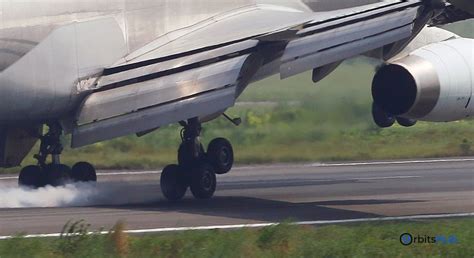
To understand why the A350 has a short takeoff roll, one must distinguish between takeoff roll and takeoff field length (TOFL). The takeoff roll is the actual ground distance an aircraft travels before lifting off, ending at rotation speed (Vr). In contrast, TOFL includes a safety margin, simulating the aircraft’s ability to clear a 35-foot obstacle beyond Vr.
Manufacturers typically provide TOFL rather than takeoff roll data in public documentation. For analytical purposes, we use TOFL as the benchmark. The A350-900 requires a TOFL of 8,530 feet (2,600 meters) at its MTOW of 283 tonnes, while the A350-1000 needs 9,186 feet (2,800 meters) at a certified MTOW of 322 tonnes. These figures are impressively short for widebody aircraft of their size.
A Comparative View: A350 vs. Boeing 787 Dreamliner
Despite being larger and heavier, the Airbus A350 matches or outperforms the Boeing 787 Dreamliner in terms of takeoff performance. The Boeing 787-8, with a lower MTOW of 227.9 tonnes, has a TOFL of 8,500 feet (2,590 meters)—only slightly shorter than the A350-900’s, despite the weight disparity. The A350-1000 and Boeing 787-9 both list 9,186 feet (2,800 meters) for TOFL, yet the A350-1000 is 64.5 tonnes heavier.
The even longer 787-10 requires 10,300 feet (3,100 meters) for takeoff at MTOW, showcasing the A350’s engineering edge. This capability means the A350 can operate more flexibly at constrained or high-altitude airports, potentially opening more long-haul routes where runway length is limited.

Structural Efficiency: The Advantage of Composite Materials
The A350’s airframe is composed of 70% advanced materials, with 53% being carbon composites. These materials reduce overall structural weight without compromising strength. Lighter weight translates directly into lower takeoff speeds and shorter acceleration times, contributing again to reduced runway requirements.
This composite construction also improves fuel efficiency and increases structural flexibility, especially in the wings, which adjust dynamically to changing aerodynamic conditions. Such adaptability further boosts the lift generated during takeoff.
High-Altitude Airports and the A350’s Operational Flexibility
Aircraft performance diminishes at higher elevations due to lower air density. Despite this, the A350’s powerful engines and large lifting surfaces allow it to perform exceptionally well even from hot-and-high airports like Mexico City, Addis Ababa, and Johannesburg.
This flexibility enables airlines to run direct, long-haul flights from challenging airports that might otherwise necessitate payload or range limitations. In a global aviation landscape where hub-busting and point-to-point operations are becoming more critical, this gives the A350 a distinct commercial advantage.
The A350ULR: Ultimate Range, Minimal Runway
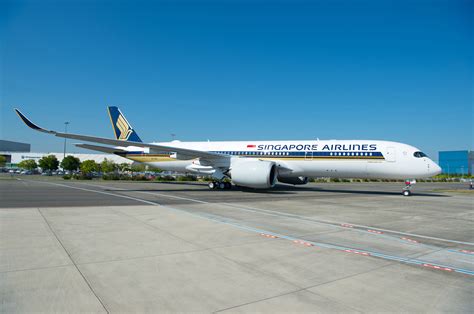
The A350-900ULR, developed specifically for Singapore Airlines, extends the standard model’s range from 8,500 to 9,700 nautical miles. Despite additional fuel capacity and long-range configuration, the ULR still maintains runway requirements close to its base variant. This is an engineering triumph, showcasing Airbus’s ability to extend performance without sacrificing operational versatility.
Singapore Airlines uses this variant for the world’s longest flight—Singapore to New York (JFK)—proving the aircraft’s capacity to perform full-range missions from a range of major global airports.
Closing Thoughts: A Short Runway to Success
The Airbus A350’s surprisingly short takeoff roll is the product of synergistic engineering across multiple domains—engine thrust, wing architecture, and material innovation. Compared to its rivals, it consistently offers shorter or equivalent runway requirements, even when operating at higher takeoff weights.
This capability does not just benefit pilots or engineers—it impacts route planning, airport compatibility, and economic efficiency for airlines. In an era of environmental scrutiny and cost pressures, the A350’s ability to get airborne fast with minimal runway translates to real-world operational gains.
The A350’s takeoff performance is a microcosm of its overall philosophy: do more with less, and do it more efficiently than ever before. It’s a machine that redefines expectations—not just in the skies, but on the runway too.