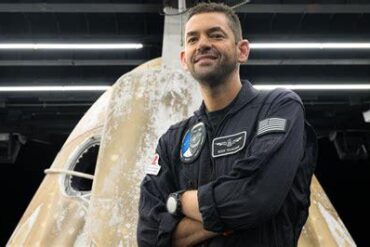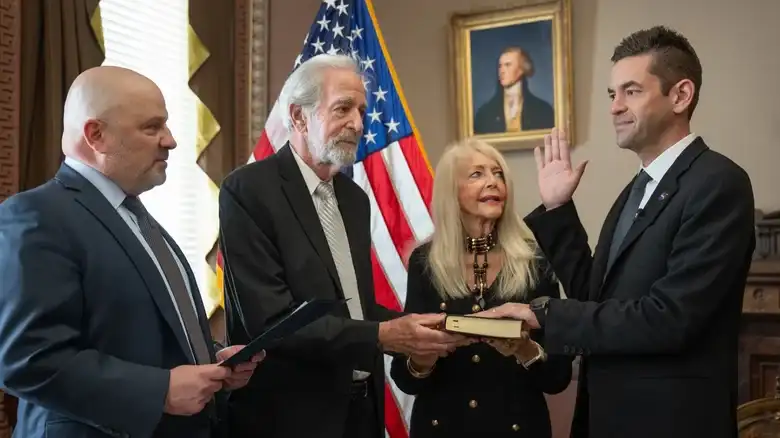
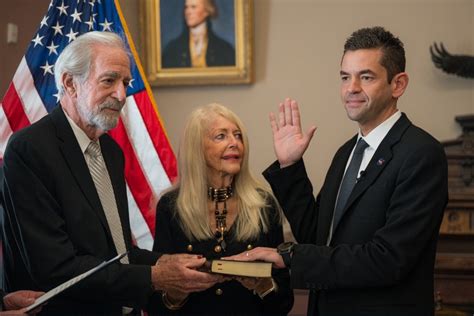
Jared “Rook” Isaacman, a billionaire entrepreneur and private astronaut, has just been appointed the 15th Administrator of NASA, marking a historic shift for the agency. Not only is he the youngest person to ever hold the role, but his close connections to private spaceflight, particularly with SpaceX and Elon Musk, are stirring both excitement and concern among space policy experts and government watchdogs.
Isaacman takes the helm at a critical time, with NASA pushing hard on multiple fronts: expanding lunar exploration, preparing for manned Mars missions, and ramping up efforts to commercialize low-Earth orbit. While his vision aligns with these ambitions, the implications of his appointment stretch far beyond the next launch window.
The Rise of a Private Pioneer
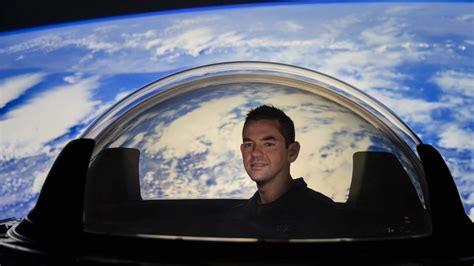
Isaacman is no stranger to the skies. With over 8,000 hours of flight time in high-performance jets, he carved his reputation through aviation and tech entrepreneurship. He founded Shift4 Payments, a publicly traded payment processing company, and later captured public imagination as the commander of Inspiration4, the first all-civilian orbital spaceflight aboard SpaceX’s Crew Dragon. He followed that up with the Polaris Dawn mission in 2024, another privately-funded venture that broke records in orbital altitude and spacewalking.
Despite his non-traditional background compared to previous NASA chiefs — often seasoned engineers or space agency veterans — Isaacman has deep operational knowledge of spaceflight. Still, some question whether his corporate affiliations and private interests might compromise NASA’s public mission.
SpaceX Connections: Strategic Synergy or Conflict of Interest?
The most pressing concern comes from Isaacman’s strong relationship with Elon Musk’s SpaceX, a company already entangled with NASA through multi-billion-dollar contracts. Isaacman has flown on SpaceX rockets, partnered in high-profile missions, and aligned with Musk’s broader vision for Mars colonization.
This raises serious questions:
- Will SpaceX receive preferential treatment under Isaacman’s leadership?
- Could other aerospace firms face unfair disadvantages in NASA bidding processes?
- What safeguards exist to separate Isaacman’s decision-making from his private partnerships?
Critics point to SpaceX’s recent $714 million Pentagon contract, part of the National Security Space Launch (NSSL) program, as an example of how powerful the company has become in the U.S. space ecosystem. While NASA insists all contracts are awarded through strict criteria, the optics of Isaacman leading an agency so intertwined with his own business ventures are difficult to ignore.
Senate Scrutiny and Political Divides
Before taking office, Isaacman was questioned by the Senate Commerce, Science, and Transportation Committee. While the 19-9 vote ultimately confirmed his nomination, the division was clear. Notably, four Democrats broke ranks to vote in his favor, suggesting that bipartisan support exists for his strategic vision — even if some are watching closely for ethical lapses.
The committee’s focus on SpaceX ties, potential procurement bias, and Isaacman’s commercial ambitions underscores the tension: is he a breath of fresh innovation, or a risky consolidation of corporate power within a public agency?
A New Chapter for Artemis and Lunar Missions
NASA is entering its most critical phase since the Apollo era. The Artemis II mission, scheduled for the near future, will carry humans back to the Moon — with ambitions to establish a permanent lunar base. Isaacman is now at the center of this mission, not just as a bureaucrat, but as a visionary who has personally been to space and understands the physical, technical, and psychological demands.
His goals, according to his first press statement, include:
- Returning American astronauts to the Moon
- Building a lasting lunar presence
- Preparing the pathway for Mars colonization, in line with former President Trump’s vision
These are bold objectives. But they also signal a possible shift from pure science to a more nationalistic and commercially-driven space agenda.
The Blurring Line Between Public and Private Space
NASA has steadily been transitioning from a fully government-operated agency to a public-private hybrid, outsourcing cargo resupply, crew transportation, and satellite deployment to companies like SpaceX, Blue Origin, and Northrop Grumman. Isaacman’s appointment seems to solidify this trajectory.
While some see it as inevitable — and even desirable — for cost-efficiency and innovation, others warn of an erosion of NASA’s foundational goals: open scientific inquiry, international cooperation, and the pursuit of knowledge over profit.
The question is not whether private partnerships should exist — they already do — but whether a former private mission commander can draw clear lines between public service and private opportunity. So far, Isaacman insists, “The relationship is all business, no different than that of NASA.” That’s easy to say now. But the litmus test will come when contract negotiations and mission directives start to blur with Isaacman’s prior affiliations.
Isaacman’s Philanthropic Edge: A Counterweight?
In fairness, Isaacman is more than just a corporate operator. He’s a philanthropist with a track record of charitable fundraising, notably raising over $200 million for St. Jude Children’s Research Hospital through the Inspiration4 mission. His rhetoric often emphasizes making space accessible, not just for billionaires but for everyday citizens and scientists.
That could bode well for NASA’s educational and public outreach goals. If Isaacman can leverage his profile to inspire a new generation of engineers, physicists, and astronauts, he may very well revive NASA’s cultural relevance — especially among younger demographics.
But the fear remains: will that inspiration be packaged as corporate spectacle, or as genuine public service?
The Road Ahead: Promise vs. Precedent
NASA’s journey forward under Isaacman is, undeniably, entering uncharted territory. Never before has someone with such deep private-sector roots and recent astronaut credentials taken control of the agency. His blend of ambition, vision, and proven capability makes him uniquely suited to drive NASA into a new space age — one dominated by orbital commerce, space tourism, and interplanetary ventures.
Yet, with that uniqueness comes vulnerability. If Isaacman fails to uphold strict standards of government transparency, if procurement processes become tainted by favoritism, or if missions start serving investor interests over national or scientific goals, his tenure could mark a dangerous precedent.
Still, it’s too early to draw firm conclusions. For now, all eyes are on Isaacman — not just as an astronaut or executive, but as a public servant navigating the most consequential decade in human spaceflight since the 1960s.