
The debate over Pluto’s status has never truly faded—it has merely simmered beneath the surface of scientific discourse and public imagination. Now, NASA Administrator Jared Isaacman has reignited the controversy with renewed force, pushing for Pluto to be reinstated as a full-fledged planet. His remarks before the U.S. Senate have done more than revive an old argument; they have exposed a deep divide between scientific classification, political symbolism, and the evolving identity of space exploration itself.
At the center of this debate lies a deceptively simple question: what defines a planet? The answer, however, is anything but simple. Since 2006, when the International Astronomical Union (IAU) formally reclassified Pluto as a “dwarf planet,” scientists, educators, and the public have wrestled with the implications of that decision. Isaacman’s intervention has now thrust the issue back into the spotlight, framing it not just as a scientific dispute but as a matter of legacy, national pride, and institutional authority.
His position is clear and unapologetic. He aligns himself with those who argue that Pluto deserves to reclaim its planetary status, citing both its intrinsic characteristics and the historical significance of its discovery. Yet, beneath this seemingly nostalgic stance lies a broader ambition: to challenge the frameworks that govern how humanity categorizes the cosmos.

Why Pluto Lost Its Planet Status in 2006
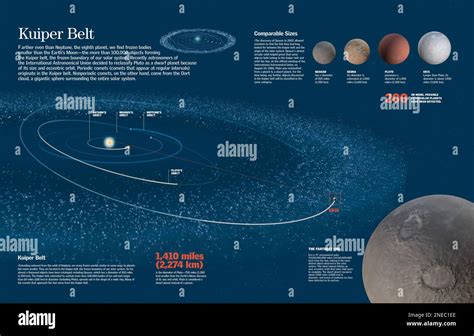
To understand the current controversy, it is essential to revisit the decision that sparked it. In 2006, the IAU introduced a formal definition of a planet based on three criteria: orbiting the Sun, achieving hydrostatic equilibrium (a nearly round shape), and clearing its orbital neighborhood of debris. Pluto satisfies the first two conditions but fails the third, as it resides within the Kuiper Belt—a region teeming with icy bodies of similar size.
This seemingly technical distinction had profound consequences. By emphasizing orbital dominance, the IAU effectively excluded Pluto from the planetary club, reducing the solar system’s count from nine to eight. The decision was intended to bring clarity to an increasingly complex field, as astronomers continued to discover numerous Pluto-like objects beyond Neptune.
Yet critics argue that this definition is inherently flawed. By tying planetary status to environmental context rather than intrinsic properties, the IAU created a classification system that many see as arbitrary and restrictive. After all, Earth itself shares its orbit with countless smaller objects, raising questions about the consistency of the criteria.
Isaacman’s Argument: Science or Symbolism?
Jared Isaacman’s push to restore Pluto’s status is not occurring in a vacuum. His comments during a Senate Appropriations Committee hearing carried both scientific implications and political undertones. By invoking the legacy of Clyde Tombaugh—the American astronomer who discovered Pluto in 1930—Isaacman tapped into a powerful narrative of national achievement and historical recognition.
His argument extends beyond nostalgia. Isaacman has suggested that NASA is actively developing research papers aimed at reopening the debate within the scientific community. This approach signals an intention to influence not just public opinion but also the institutional processes that govern astronomical classification.
However, this strategy faces a fundamental limitation: NASA does not determine planetary definitions. That authority rests with the IAU, an international body whose decisions are shaped by global consensus rather than national agendas. As a result, Isaacman’s campaign may be more symbolic than practical, raising questions about its ultimate impact.

The Scientific Divide: Competing Definitions of a Planet
Within the scientific community, the Pluto debate reflects a deeper disagreement over how to define celestial bodies. Some researchers advocate for a geophysical definition, which would classify planets based on their internal structure and geological activity rather than their orbital dynamics. Under this framework, Pluto—with its complex surface features, atmosphere, and evidence of geological processes—would easily qualify as a planet.
Proponents of this approach argue that it aligns more closely with how scientists study planetary bodies in practice. As planetary scientist David Grinspoon has noted, a planet should be defined by what it is, not where it is. This perspective emphasizes intrinsic characteristics such as composition, shape, and geological complexity.
Opponents, however, warn that expanding the definition could lead to an unwieldy number of planets—potentially dozens or even hundreds within our solar system alone. Such a shift would complicate both scientific communication and public understanding, blurring the distinctions that classifications are meant to clarify.
Politics, Budgets, and the Timing of the Debate
The timing of Isaacman’s remarks has drawn as much scrutiny as their content. His statements came during a hearing focused on significant proposed budget cuts to NASA, including reductions that could cancel dozens of missions and dramatically scale back scientific research.
This juxtaposition has not gone unnoticed. Critics argue that advocating for Pluto’s reinstatement while supporting cuts to planetary science funding creates a contradiction that undermines the credibility of the campaign. The debate, in this context, risks becoming a distraction from more pressing challenges facing the space agency.
At the same time, the controversy highlights a broader tension within modern space policy: the push to expand ambitions while constraining resources. Isaacman’s leadership has emphasized innovation, private partnerships, and transformative technologies such as nuclear propulsion. Yet these goals require sustained investment, raising questions about how priorities are being balanced.
Pluto’s Enduring Cultural and Scientific Significance
Despite its reclassification, Pluto has never lost its grip on the public imagination. For generations, it represented the edge of the known solar system—a distant, mysterious world that captured the curiosity of scientists and laypeople alike. Its “demotion” in 2006 was met with widespread backlash, reflecting a deep emotional connection that transcends scientific terminology.
From a scientific perspective, Pluto remains a remarkably complex and fascinating object. Data from NASA’s New Horizons mission revealed a world with towering ice mountains, vast nitrogen glaciers, and a surprisingly dynamic atmosphere. These discoveries have reinforced the argument that Pluto is far more than a simple “dwarf” body.
Yet many scientists caution against overemphasizing its classification. As astrophysicist Adam Frank has argued, Pluto’s redefinition should be seen not as a loss but as a sign of scientific progress—evidence that our understanding of the solar system is becoming richer and more nuanced.
A Debate That Reflects Humanity’s Place in the Cosmos
Ultimately, the fight over Pluto’s status is about more than labels. It reflects the ongoing effort to make sense of an ever-expanding universe, where new discoveries continually challenge existing frameworks. Isaacman’s campaign, whether successful or not, underscores the dynamic nature of science—a field where even long-settled questions can be reopened in light of new perspectives.
The outcome of this debate remains uncertain. The IAU shows little indication of revisiting its definition in the near future, and the practical implications of redefining planets remain complex. Yet the conversation itself carries value, prompting scientists and the public alike to reconsider how we categorize and understand the universe around us.
In the end, Pluto’s story is not just about a distant icy world. It is about the evolving relationship between knowledge, identity, and exploration. Whether called a planet or a dwarf planet, Pluto continues to challenge assumptions, inspire curiosity, and remind us that the boundaries of understanding are never fixed.