Nuclear power was not born in a single lab, under a lone genius’s eureka moment, or from a flash of inspiration. It is the result of cumulative discoveries, made across decades, continents, wars, and disciplines. While many technologies can be traced back to one or two pivotal inventors, the development of nuclear energy belongs to a global ensemble of minds, piecing together the enigmatic structure of the atom and learning, bit by bit, how to unlock its immense energy.
The Slow-Burning Genesis of Atomic Theory
The concept of the atom originated with ancient Greek philosophers, like Democritus, who theorized the existence of indivisible units of matter. However, this remained a philosophical musing until the 19th and early 20th centuries, when experimental science revealed atoms not only existed but also behaved in complex and fascinating ways.
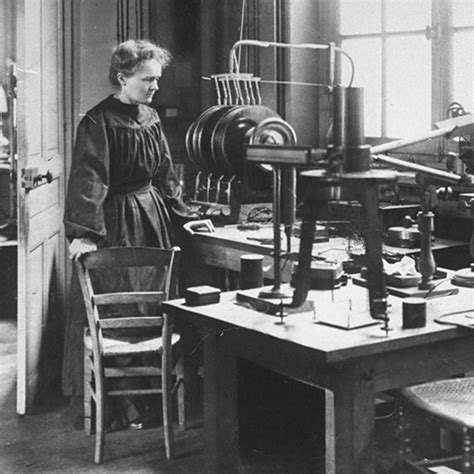
Scientists such as Henri Becquerel, Marie Curie, and Ernest Rutherford began uncovering the mysteries of radioactivity, laying the groundwork for what would become nuclear physics. These pioneers discovered that some atoms were inherently unstable—releasing energy in the form of radiation as they broke down. This revelation opened a new realm of possibilities: what if this energy could be harnessed?
Fission: The Milestone That Changed Everything
The true turning point came in the late 1930s, when German physicists Otto Hahn and Fritz Strassmann, along with the theoretical insight of Lise Meitner and Otto Frisch, discovered nuclear fission. They realized that the nucleus of a uranium atom could split into smaller parts, releasing a massive amount of energy.
This wasn’t merely a scientific curiosity. Fission was an unlocking of atomic energy, with both profound scientific implications and terrifying military potential. But splitting an atom was just the beginning. The question was: could this energy be controlled, and not just released explosively?
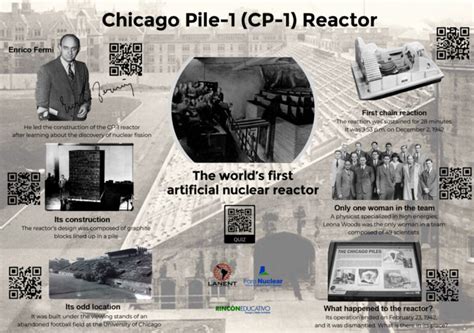
The solution came from Enrico Fermi, the Italian-American physicist who successfully conducted the first controlled nuclear chain reaction in 1942. His experimental reactor, known as Chicago Pile-1, was a rudimentary assembly of uranium and graphite. It operated in a squash court at the University of Chicago and produced almost no power. But it proved that a sustained chain reaction was possible—a scientific threshold that redefined humanity’s relationship with energy.
War as an Accelerator of Innovation
Despite its peaceful potential, the initial application of nuclear fission was anything but benign. With World War II raging, governments quickly understood the military implications of atomic energy. The Manhattan Project, a top-secret U.S. initiative, mobilized more than 130,000 people and poured billions into weaponizing nuclear science.
The result was the creation of the first atomic bombs, dropped on Hiroshima and Nagasaki in August 1945. These events introduced the world not only to a new weapon but to the raw, terrifying power of nuclear energy. The post-war era was suddenly divided into before and after the bomb, and public consciousness of nuclear technology would forever be shadowed by its origin.
From Bombs to Reactors: Civilian Nuclear Energy Emerges
Yet even as the bomb ended a war, it sparked a different kind of arms race—one centered not just on destruction, but on innovation and power. The United States Atomic Energy Commission, formed in 1946, took over from the military and began exploring the peaceful uses of nuclear energy. With civilian oversight, the goal shifted toward building reactors capable of producing electricity.
This transition wasn’t immediate. Creating reliable nuclear reactors required expertise from a multitude of fields: metallurgy, thermal dynamics, fluid mechanics, electrical engineering, and more. There were challenges in uranium enrichment, isotope separation, and developing materials that could withstand intense radiation and heat.
Still, by the 1950s, the world saw its first grid-connected nuclear power station: Calder Hall in the United Kingdom, launched in 1956. Soon after, nations across the globe, especially the U.S., USSR, France, and Japan, began investing in nuclear infrastructure, seeing it as a route to energy independence, modernization, and geopolitical clout.
Why No One Can Truly Claim the Invention
Given this complex path—spanning disciplines, ideologies, and even hemispheres—it’s clear why no single inventor can be credited with the creation of nuclear power. Instead, it’s a testament to collective human curiosity, cooperation, and at times, desperation.
Enrico Fermi is often dubbed the “Father of the Nuclear Age,” but without the contributions of Meitner, Hahn, Curie, Rutherford, and many others, his breakthroughs would not have been possible. Similarly, without the political will and wartime urgency, it’s unlikely that nuclear energy would have developed as rapidly as it did.
What we call “nuclear power” today is a product of war and peace, of genius and bureaucracy, and of the competing duality between creation and destruction. It symbolizes both the heights of human achievement and the depths of existential threat.
Legacy and the Ongoing Debate
Today, nuclear power supplies about 10% of the world’s electricity, and it remains a critical part of discussions around climate change, energy security, and sustainable development. Yet its origins in warfare, its waste disposal issues, and the catastrophic accidents at Chernobyl and Fukushima continue to fuel public debate.
While we’ve made significant progress in reactor safety, fusion research, and radioactive waste management, the shadows of history still influence public policy and perception. Nevertheless, nuclear power represents a monumental leap in human capability—a reminder that great power always demands even greater responsibility.
Final Reflection
So, who invented nuclear power? The answer is far from simple. It was no one, and it was everyone. It was science, war, politics, and ambition converging in a singular effort to understand and command the most fundamental forces of nature. As we move into a future shaped by environmental imperatives and technological advancement, understanding the complex and intertwined history of nuclear energy becomes not only fascinating—but essential.