Nuclear weapons are the gravitational center of modern military power, small in number yet cosmic in consequence. Since their first use in Hiroshima and Nagasaki, these devices have shaped diplomacy, warfare, fear, and restraint. While nine nations possess nuclear arms, global nuclear power is not evenly distributed. In fact, an overwhelming majority of the world’s nuclear weapons sit in the hands of just two countries, a concentration that defines international security in the twenty-first century.
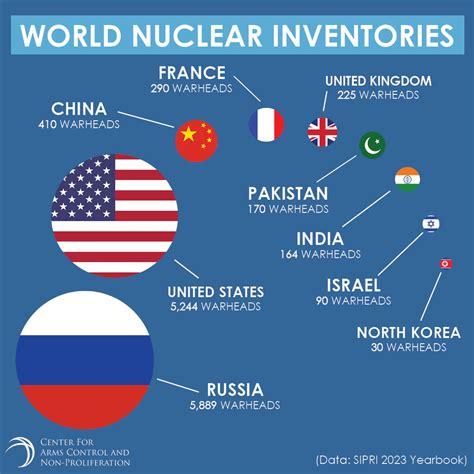
The modern nuclear landscape contains more than 12,300 nuclear warheads worldwide, according to leading defense research organizations. Roughly 9,600 of these remain in active military stockpiles, ready for potential deployment. The rest are retired but not fully dismantled, lingering as physical reminders of past arms races and unfinished disarmament promises. Despite decades of treaties and reductions, nuclear weapons remain central to national defense strategies for the states that possess them.
What makes this distribution so striking is that 86.8% of all nuclear weapons belong to just two nations: the United States and Russia. The remaining seven nuclear-armed countries collectively share a comparatively small fraction of the global arsenal. This imbalance is not accidental. It is the legacy of Cold War logic, industrial capacity, and a strategic doctrine designed around deterrence rather than battlefield use.
The Cold War Logic Behind Nuclear Concentration
The enormous stockpiles held by Washington and Moscow emerged from the doctrine of Mutually Assured Destruction (MAD). This policy assumed that peace could be preserved only if each side possessed enough nuclear firepower to completely destroy the other. The result was an arms race measured not in necessity, but in redundancy. Thousands of warheads were built to ensure survivability even after a devastating first strike.
By the mid-1980s, the world contained more than 70,000 nuclear weapons, most of them split between the United States and the Soviet Union. The Cold War’s end triggered massive reductions, yet the underlying infrastructure, expertise, and strategic thinking never disappeared. Instead, arsenals shrank while remaining deeply entrenched in national security planning.
America’s Nuclear Arsenal and Strategic Doctrine
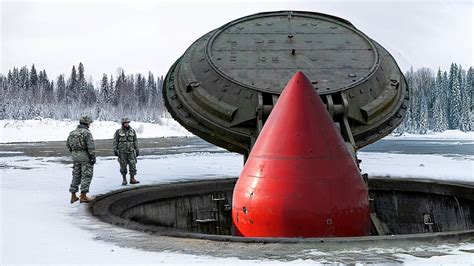
The United States continues to operate one of the most sophisticated nuclear forces ever assembled. As of 2025, it maintains 5,177 nuclear warheads, though not all are immediately usable. About 1,670 are deployed, actively mounted on missiles or stationed at bomber bases. Another 1,930 are stockpiled, maintained in reserve, while 1,477 are retired but still awaiting dismantlement. This leaves approximately 3,700 usable nuclear weapons.
America’s nuclear strategy is built around the nuclear triad, a three-part system designed to guarantee retaliation under any circumstances. This includes intercontinental ballistic missiles, submarine-launched ballistic missiles, and air-delivered nuclear bombs. The logic is redundancy: no adversary can eliminate all three delivery methods at once.
The U.S. continues to modernize its nuclear forces through highly controlled programs spread across multiple facilities, ensuring technological reliability without live nuclear testing.
Russia’s Nuclear Arsenal and Historical Supremacy
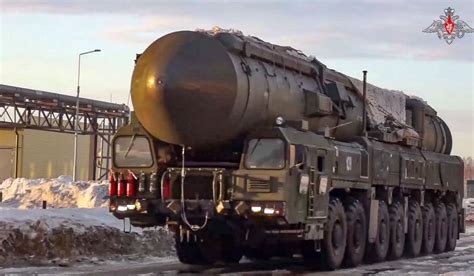
Russia holds the world’s largest nuclear stockpile, a direct inheritance from the Soviet Union’s vast military machine. Today, Russia possesses approximately 5,459 nuclear warheads, surpassing the United States by several hundred. Of these, 1,780 are deployed, 2,591 are stockpiled, and 1,150 are retired, leaving about 4,309 usable warheads.
The Soviet Union once detonated the most powerful nuclear weapon ever built, the Tsar Bomba, a chilling demonstration of excess rather than practicality. That legacy continues in Russia’s modern forces, which include nuclear-armed submarines, strategic bombers, and advanced ICBMs designed for rapid deployment.
Although the numerical difference between U.S. and Russian arsenals is significant on paper, the practical reality is starker: either nation alone retains enough nuclear firepower to cause global catastrophic consequences.
The Rest of the Nuclear World
Outside the U.S. and Russia, nuclear arsenals are far smaller. China, France, the United Kingdom, India, Pakistan, North Korea, and Israel collectively hold just over 13% of global nuclear weapons. Israel remains officially ambiguous about its arsenal, while North Korea continues to test and expand its capabilities under heavy international scrutiny.
These smaller arsenals are typically designed for regional deterrence rather than global dominance. None approach the scale, diversity, or historical depth of the American or Russian nuclear complexes.
Why Nearly 90% Still Matters Today
The continued concentration of nuclear weapons in two countries shapes arms control, crisis stability, and diplomatic leverage. While global totals are far lower than Cold War peaks, the destructive potential remains existential. Treaties have reduced numbers but not eliminated reliance, and notably, neither the United States nor Russia has joined the Treaty on the Prohibition of Nuclear Weapons.
The world today lives not under the shadow of many nuclear powers, but under the weight of two colossal arsenals, each built to ensure that nuclear war never begins, precisely because it would never truly end.