Nuclear weapons represent the pinnacle of destructive potential in modern warfare, capable of annihilating entire cities within seconds. Given their catastrophic power, one would expect absolute precision and accountability in their management. Yet, reality paints a more troubling picture. Over the decades, the United States has lost six nuclear weapons—a disturbing truth that continues to echo through Cold War history and beyond.
The Reality of Broken Arrows
The U.S. military classifies incidents involving nuclear weapons as “Broken Arrow” events. These aren’t limited to just misplaced warheads—they include a wide array of accidents involving nuclear arms, regardless of whether there was a detonation. There have been 32 such Broken Arrow incidents, with six involving the unrecovered loss of a nuclear weapon. These were not simulations. These were not training devices. These were real, armed nuclear warheads that vanished due to catastrophic failures in handling, accidents, or misjudged emergencies.
The Tybee Island Bomb: Georgia’s Quiet Secret
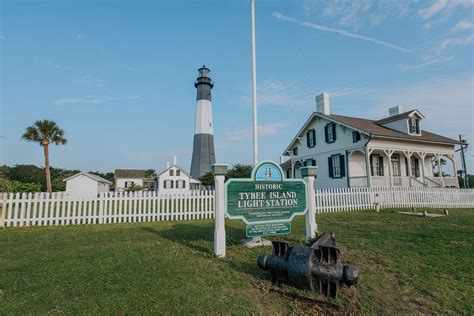
In 1958, a B-47 bomber collided mid-air during a training mission off the coast of Georgia. To avoid disaster, the crew jettisoned a fully armed Mk. 15 hydrogen bomb near Tybee Island. Initially, the U.S. Air Force claimed it was a dummy. That lie held for years—until it was revealed the bomb was real. With a 3.8-megaton yield, this single device is nearly 190 times more powerful than the bomb dropped on Nagasaki. It has never been recovered, and its precise location remains unknown.
Lost in the Pacific: The First Vanishing
Eight years prior, in 1950, a Convair B-36 experienced engine failure and jettisoned a 30-kiloton Mk. 4 bomb into the Pacific Ocean, en route to Alaska. Though it lacked a plutonium core, the device still contained highly radioactive uranium components. The bomber crashed, and while the crew was eventually rescued, the weapon was never recovered. This marked the first known loss of a U.S. nuclear bomb.
Disappearances in the Mediterranean
The Cold War’s volatile tempo gave rise to multiple such incidents. In 1956, a B-47 disappeared during a transatlantic flight while carrying two nuclear cores. The aircraft was last seen above the Mediterranean Sea, and no trace of it—or the warheads—has been found. Then in 1966, a B-52 collided with a refueling tanker mid-air above Palomares, Spain, releasing four B28 thermonuclear bombs. Three were recovered. One plunged into the sea, requiring an extensive underwater search involving submersibles. It was eventually found months later, but the event underscored just how easily these weapons could vanish.
The Goldsboro Incident: Inches from Catastrophe
In 1961, a B-52 broke apart mid-air over North Carolina, releasing two 24-megaton hydrogen bombs. One bomb deployed its parachute and was found relatively intact. The other hit the ground with three of its four arming mechanisms activated. A single switch prevented detonation—a hair’s breadth from turning North Carolina into a nuclear crater. While the core was recovered, significant portions of the device remain buried, and the Air Force continues to secure the area to this day.
The USS Ticonderoga and the Vanishing Skyhawk
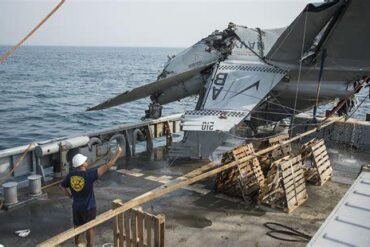
December 1965 saw a bizarre mishap aboard the USS Ticonderoga, a U.S. Navy aircraft carrier operating in the Pacific. An A-4E Skyhawk, armed with a one-megaton thermonuclear bomb, was being moved for routine operations when it rolled off the deck into the ocean, taking the pilot and bomb with it. The Navy disclosed the event more than a decade later. The aircraft and its deadly cargo sank into waters over 16,000 feet deep, never to be seen again.
USS Scorpion: A Deadly Silence Underwater
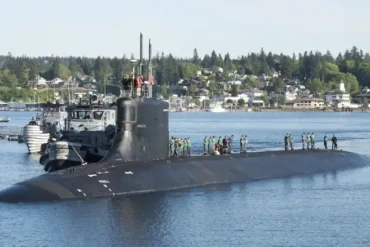
The final known loss occurred in 1968 when the USS Scorpion, a nuclear-powered submarine, sank in the Atlantic Ocean, claiming the lives of 99 sailors and taking two 250-kiloton nuclear warheads with it. Despite locating the wreck years later, the weapons remain unrecovered, entombed within the crushed hull.
Why Recovery Is Impossible
Each of these incidents happened under tense geopolitical conditions, in vast or deep ocean waters, or with weapons designed to self-destruct or be near impossible to access once lost. While there is comfort in the belief that these weapons are unarmed, deactivated, or deteriorated, the truth is some still contain radioactive materials, resting quietly beneath the sea or ground.
The Lingering Threat
While no accidental nuclear detonations have occurred in these cases, the idea that six nuclear weapons lie scattered across the globe—forgotten, buried, or submerged—raises profound questions about security, oversight, and accountability. These are not relics of fiction but historical facts, hidden in declassified documents and faded newspaper headlines. The threat they pose may be small, but the symbolism of their loss is monumental.
In the era of rising geopolitical tensions, the unresolved existence of these weapons is a chilling reminder: even in the most advanced military systems, human error remains a devastating variable.