An Airliner Born Into Uncertainty
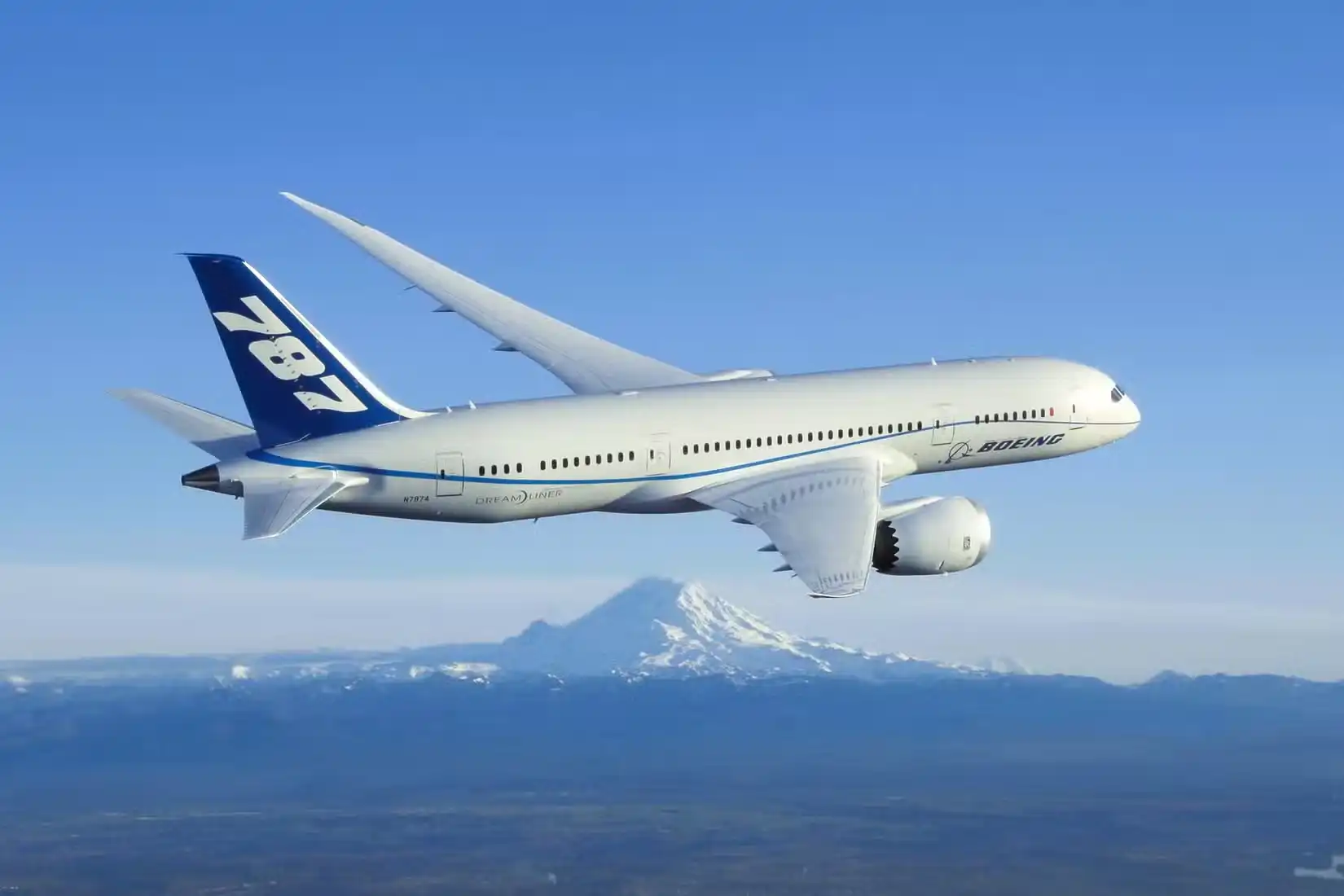
Commercial aviation is filled with aircraft that changed the world by carrying passengers. Yet a rare few reshape the industry without ever flying a single scheduled route. The Boeing 787-8 registered N7874 belongs to this unusual species — a jet conceived for airline glory but destined for experimental immortality.
Originally built as the fourth Dreamliner ever produced, N7874 emerged during the feverish early years of Boeing’s 787 program, when airlines competed to position themselves at the technological frontier. Northwest Airlines was among the boldest. In 2005, the carrier placed a firm order for 18 787-8s, envisioning the composite-built, fuel-efficient widebody as the future flagship of its long-haul fleet.
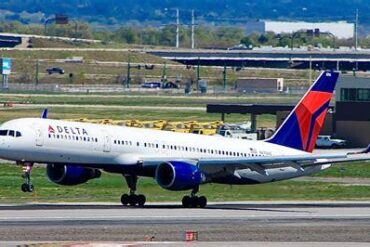
History, however, delights in narrative detours. As development delays plagued the 787 program, Northwest itself disappeared — absorbed into Delta Air Lines through a 2008 merger that reshaped the U.S. airline landscape. Aircraft intended for Northwest suddenly belonged to Delta, an airline whose fleet strategy leaned toward Airbus widebodies and proven Boeing types rather than an untested composite twinjet.
N7874 thus entered the world as an orphaned flagship — built for an airline that no longer existed and inherited by one that never truly wanted it.
From Northwest Colors To Boeing Control
Rather than deliver an unwanted aircraft into reluctant service, Boeing made a pragmatic and visionary decision. N7874 was absorbed into the manufacturer’s dedicated fleet of six 787 flight-test aircraft, joining an elite cadre responsible for proving the Dreamliner’s airworthiness and performance envelope.
Its early assignments were foundational. Engineers pushed the jet through high- and low-elevation airport trials, environmental performance testing, and certification support work. These missions were less glamorous than airline operations but far more consequential. Every data point gathered helped regulators validate the safety and reliability of an aircraft built with unprecedented levels of carbon-fiber composite structure and advanced avionics.
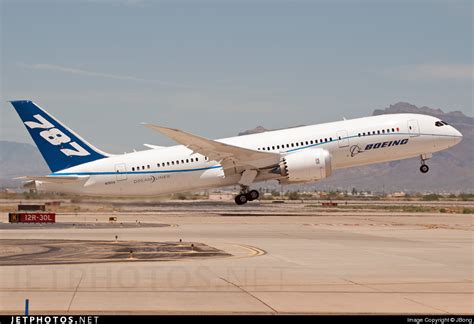
Among its sister test aircraft were historically significant machines: the first Dreamliner to fly, later preserved in Japan; marketing demonstrators used in global “Dream Tour” campaigns; and specialized systems testbeds. Yet N7874 would ultimately outlast them all in operational relevance.
The Test Fleet That Defined The Dreamliner
Boeing’s 787 certification campaign relied on six aircraft, each assigned specialized roles ranging from systems validation to promotional demonstration. While most were retired, preserved, or repurposed shortly after certification, N7874 evolved into something far more enduring — a permanent experimental platform.
By the early 2010s, as the first production Dreamliners entered airline service with All Nippon Airways, the need for full-time certification aircraft faded. Several test jets moved to museums. One was dismantled. Another became Mexico’s presidential transport.
N7874 alone resisted retirement.
Its uniqueness lay in its instrumentation density and adaptability. Packed with sensors, telemetry systems, and experimental architecture, the aircraft was less a passenger jet than a flying laboratory — a platform capable of supporting years of research without expensive structural reconfiguration.
That adaptability set the stage for its most influential chapter.
The ecoDemonstrator Transformation
In 2014, Boeing selected N7874 for its ecoDemonstrator program — an initiative aimed at accelerating environmental and operational efficiency technologies. The decision converted the aircraft from certification veteran into sustainability pioneer.
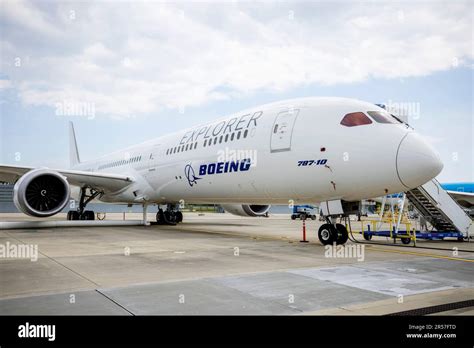
Rather than chase a single breakthrough, ecoDemonstrator campaigns function as airborne technology accelerators. Engineers integrate multiple experimental systems simultaneously, test them in real-world conditions, and evaluate their scalability for commercial fleets.
N7874 became the ideal host.
Among the technologies evaluated were advanced digital connectivity platforms designed to streamline flight operations and maintenance diagnostics. Software-driven fuel load optimization tools were trialed to reduce unnecessary weight and emissions. Remote wireless sensors replaced traditional wiring in some test cases, exploring how to reduce aircraft mass while improving data collection fidelity.
Aerodynamic refinements also featured prominently. Even minute drag reductions can produce substantial lifetime fuel savings across global fleets. Engineers experimented with airflow modifications and surface treatments, validating efficiency gains through controlled flight trials.
One particularly intriguing innovation involved icephobic wing coatings — materials engineered to resist ice accumulation. Reduced icing not only improves safety margins but also preserves aerodynamic efficiency in cold environments, lowering fuel burn during winter operations.
Across its ecoDemonstrator tenure, N7874 helped validate more than 25 discrete technologies. Incremental individually, transformative collectively — many would later be incorporated into production Dreamliners worldwide.
Engineering Sustainability Through Iteration
The environmental impact of commercial aviation is governed by physics as much as policy. Fuel burn correlates with weight, drag, routing efficiency, and propulsion performance. N7874’s ecoDemonstrator missions tackled each variable in layered fashion.
Software optimization alone demonstrated measurable gains. By refining fuel loading algorithms, airlines could avoid carrying excess fuel — a practice that, paradoxically, increases burn due to added mass. Connectivity trials improved real-time data transmission between aircraft and ground operations, enabling smarter routing and predictive maintenance.
The aircraft effectively functioned as a systems integration sandbox. Technologies that proved viable migrated into airline fleets, where small percentage improvements multiplied across thousands of flights.
For an aircraft that never carried paying passengers, its contribution to passenger aviation efficiency became profound — invisible to travelers but embedded in ticket economics and emissions profiles.
A New Mission: Perfecting The Trent 1000
By 2017, N7874’s experimental focus shifted toward propulsion — specifically the Rolls-Royce Trent 1000 engine family, one of two powerplant options for the 787.
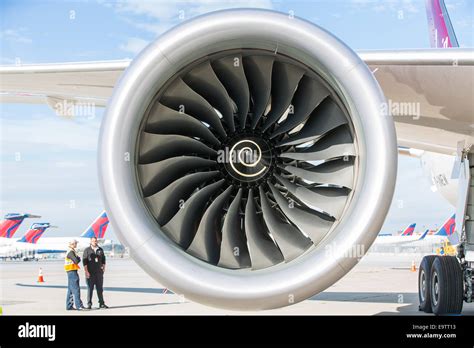
Early Trent 1000 variants had faced durability and “time-on-wing” challenges — industry shorthand for how long an engine can operate before requiring maintenance removal. Addressing these issues required real-world endurance testing beyond ground simulations.
N7874 became the dedicated flying testbed.
Engineers used the aircraft to trial performance upgrades, thermal management improvements, and durability enhancement packages. Flights often involved extreme operating profiles — far removed from the smooth cruise patterns of commercial service.
One mission in August 2017 captured public imagination. During an 18-hour endurance flight supporting ETOPS certification work for the Trent 1000 TEN variant, the aircraft traced the outline of a Dreamliner across the continental United States. The flight path, visible on tracking platforms, transformed an engineering exercise into an aviation viral moment.
Behind the whimsy lay rigorous validation work ensuring long-range operational reliability for twin-engine aircraft flying hours from diversion airports.
Pushing Engine Durability Frontiers
Later campaigns focused on deeper mechanical refinements. Among the most consequential were upgrades to high-pressure turbine components — specifically redesigned blades featuring dramatically improved cooling performance.
Thermal stress is a principal limiter of turbine lifespan. By improving cooling efficiency by roughly 40 percent, engineers aimed to extend maintenance intervals substantially. Durability packages tested aboard N7874 sought to triple time-on-wing performance, reducing airline operating costs while improving dispatch reliability.
Certification required exhaustive testing. In one recent campaign alone, the aircraft completed 34 test missions across 32 flight days, gathering propulsion data under varied atmospheric and operational conditions.
These were not gentle flights. Test profiles included midair engine restarts, asymmetric thrust trials, and performance runs in adverse weather — conditions deliberately engineered to probe system limits.
A Career Measured In Data, Not Passengers
Across its lifetime, N7874 accumulated more than 3,000 flight hours and over 1,200 test cycles. For comparison, commercial Dreamliners often log far higher hours but under predictable operational envelopes. N7874’s hours were denser with engineering value.
Every sortie functioned as an airborne experiment. Telemetry streamed thousands of parameters to onboard and ground teams, converting each maneuver into actionable design insight.
In essence, the aircraft’s productivity was measured not in passenger miles but in validated innovations.
The Final Flight And Retirement
After more than 16 years of service to research and development, Boeing formally retired N7874 in February 2026. Its farewell carried ceremonial weight within the aerospace community.
Low-altitude flyovers of Everett’s Paine Field and Boeing Field honored the engineers, technicians, and flight crews who shaped the Dreamliner program. Captains Heather Ross and Craig Bomben — pilots of the aircraft’s 2009 maiden flight — returned to command its final journey, closing a narrative loop spanning nearly two decades.
The aircraft will now transition to long-term storage at Pinal County Airpark in Arizona, a desert facility known for preserving and parting out historic airframes. Its ultimate fate — museum preservation, part reclamation, or static display — remains undecided.
The Delta Connection That Came Full Circle
Delta Air Lines formally canceled the inherited Northwest 787 order in December 2016, ending any possibility that N7874 — or its sister frames — would wear Delta colors in passenger service.
Yet aviation strategy is cyclical. Nearly a decade later, Delta returned to Boeing’s Dreamliner family, placing an order for 30 of the larger 787-10 variant, with options for 30 more. The airline that once declined the 787 would eventually embrace its most advanced iteration.
The irony is elegant: while Delta never operated N7874, the aircraft’s test work indirectly improved the very Dreamliners Delta would later acquire.
Legacy Of The Dreamliner That Never Flew Passengers
Aviation history often celebrates record-breaking routes and passenger milestones. N7874’s legacy lives in quieter metrics — reduced fuel burn percentages, extended engine maintenance intervals, improved system reliability, and validated sustainability technologies.
It never flew a scheduled airline route. Never carried vacationers across oceans. Never bore a commercial livery beyond test markings.
Yet its influence permeates the global 787 fleet.
Every efficiency gain validated aboard its instrumented fuselage compounds across thousands of flights annually. Every propulsion refinement tested under its wings enhances reliability for airlines and passengers alike.
The paradox resolves itself neatly: the “Delta Dreamliner That Never Was” became one of the most consequential Dreamliners ever built — not by transporting travelers, but by transporting the technology that defines modern long-haul aviation.