The Paris Air Show and the Farnborough International Airshow stand at the pinnacle of the global aerospace calendar. Every edition draws aircraft manufacturers, airlines, defense organizations, government delegations, investors, engineers, and aviation enthusiasts from around the world. While today’s headlines often focus on billion-dollar aircraft orders, next-generation military technologies, and groundbreaking flight demonstrations, the origins of these prestigious exhibitions reveal a much deeper story. Both events emerged during pivotal moments in aviation history and evolved alongside the rapid technological transformation of flight itself, becoming living museums of innovation while simultaneously shaping the industry’s future.
Although they now alternate every year to maximize international participation, the Paris Air Show and Farnborough Airshow followed very different paths before reaching their current global prominence. One originated during the infancy of powered flight in France, while the other grew from Britain’s post-war aerospace ambitions. Together, they have witnessed virtually every milestone in modern aviation, from pioneering propeller aircraft to supersonic transports and next-generation composite airliners.
The enduring prestige of these exhibitions stems from more than impressive aircraft displays. They have consistently served as meeting places where manufacturers unveil technological breakthroughs, governments strengthen industrial partnerships, airlines negotiate fleet expansions, and engineers introduce innovations that redefine commercial and military aviation. Their combined history mirrors the remarkable evolution of aerospace over more than a century.
The Paris Air Show: The World’s Oldest International Aviation Exhibition
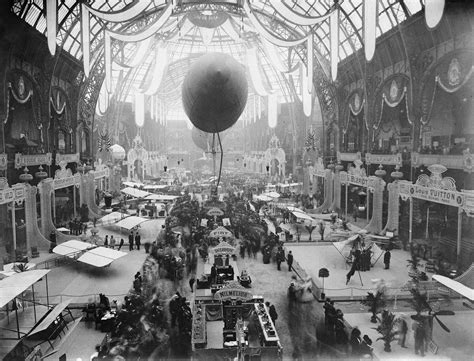
The Paris Air Show traces its origins back to 1909, making it one of the oldest and most influential aviation exhibitions ever organized. The inaugural event followed the overwhelming success of an aviation section featured during the Paris Motor Show the previous year. Recognizing growing public fascination with powered flight only six years after the Wright brothers’ breakthrough, organizers established a dedicated aerospace exhibition inside the magnificent Grand Palais in central Paris.
The first exhibition immediately attracted worldwide attention. Aircraft manufacturers, engine builders, inventors, and aviation pioneers displayed their latest flying machines to crowds eager to witness what many considered the future of transportation. At a time when airplanes were still experimental inventions, the exhibition represented both technological optimism and industrial ambition.
The annual event quickly became a centerpiece of Europe’s growing aviation industry. However, global conflict interrupted its momentum. The outbreak of the First World War forced organizers to suspend the exhibition, reflecting aviation’s transition from experimental transportation into an essential military capability. After aviation advanced dramatically during wartime, the exhibition eventually returned in 1924 with renewed significance.
As aircraft technology accelerated throughout the 1920s and 1930s, the Paris Air Show transitioned from an annual gathering into a biennial exhibition. Another interruption came during the Second World War, but the event resumed in 1946 as Europe entered an era of reconstruction and commercial aviation expansion. Beginning in 1949, the exhibition adopted its modern schedule by taking place every two years during odd-numbered years, a tradition that continues today.
Eventually, the growing scale of aircraft displays outgrew the Grand Palais. The exhibition relocated to Paris Le Bourget Airport, allowing organizers to combine static aircraft displays with dramatic flying demonstrations. This move transformed the event into the format recognized worldwide today.
Farnborough Airshow: Britain’s Post-War Aerospace Showcase
Unlike Paris, the Farnborough International Airshow emerged during the post-war expansion of Britain’s aerospace industry. Although aviation exhibitions organized by the Society of British Aircraft Constructors began at Hendon Aerodrome in 1932, those early events remained relatively modest and were interrupted by the Second World War.
Following the war, Britain’s aircraft manufacturers sought a dedicated venue capable of showcasing domestic engineering achievements to international customers. The first official Farnborough Airshow took place in 1948 at Farnborough Airport, immediately becoming the nation’s premier aerospace exhibition.
Initially, the event served primarily as a platform for British-built aircraft. Domestic manufacturers used the exhibition to highlight engineering excellence during an era when Britain remained one of the world’s leading aviation producers. As international competition intensified during the following decades, Farnborough gradually expanded beyond national boundaries, welcoming manufacturers from Europe, North America, and eventually Asia.
In 1962, the exhibition adopted its familiar biennial schedule, occupying even-numbered years opposite Paris. This arrangement allowed aerospace companies to unveil new products at both events without direct scheduling conflicts, establishing a rhythm that continues to benefit the global aviation industry.
Aircraft That Defined Farnborough’s Growing Reputation
The Farnborough Airshow rapidly became associated with landmark aircraft introductions. One of its earliest highlights occurred in 1949, when the revolutionary de Havilland Comet appeared before international audiences. As the world’s first commercial jet airliner, the Comet symbolized Britain’s leadership in early jet transport.
The following year introduced visitors to additional engineering achievements, including the enormous Bristol Brabazon and the elegant Vickers Viscount, one of the world’s most successful turboprop airliners. During the early jet age, Farnborough regularly unveiled aircraft that represented the future of commercial aviation.
By 1962, visitors witnessed impressive newcomers including the Comet 4C, BAC One-Eleven, and Vickers VC10, each representing Britain’s continued efforts to compete in the rapidly expanding global airline market.
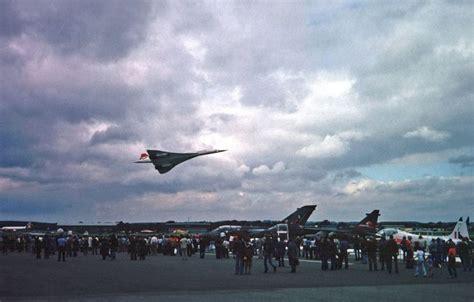
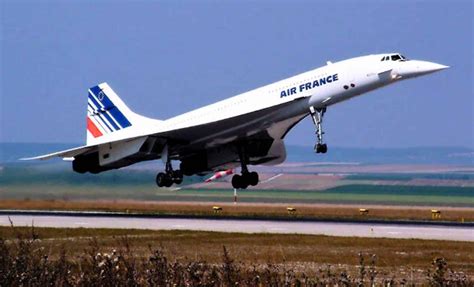
Perhaps the exhibition’s most famous debut occurred in 1970, when Concorde appeared at Farnborough shortly after its introduction in Paris. The supersonic airliner captivated audiences with unprecedented speed and futuristic design, becoming one of aviation’s greatest technological symbols.
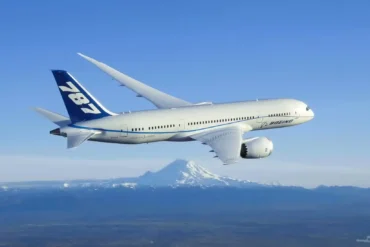
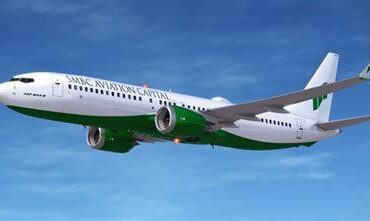
The exhibition gradually evolved into a genuinely international showcase. The Airbus A310 and Boeing 767 appeared in 1982, while the Airbus A380 attracted enormous attention during its 2006 appearance. More recently, the Boeing 787 Dreamliner, 777X, 737 MAX 10, and Mitsubishi MRJ, later renamed the SpaceJet, continued Farnborough’s tradition of presenting cutting-edge commercial aircraft.
Historic Aircraft Moments That Made Paris Legendary
The Paris Air Show has hosted some of the most memorable aircraft debuts in aviation history. Among its greatest milestones came in 1969, when the revolutionary Boeing 747 made one of its earliest public appearances only months after completing its maiden flight. The enormous “Jumbo Jet” fundamentally changed international air travel by making long-haul transportation more accessible than ever before.
The same exhibition featured Concorde’s first flying appearance before international audiences, marking the arrival of commercial supersonic travel. Adding even greater historical significance, visitors also viewed the Apollo 8 command module, linking aviation with humanity’s rapidly advancing space exploration efforts.
In 1971, the Soviet Union introduced the Tupolev Tu-144, the world’s first supersonic transport to fly. Unfortunately, tragedy struck during the 1973 exhibition when the aircraft crashed during a demonstration flight. The accident significantly damaged international confidence in supersonic passenger aviation and remains one of the most remembered incidents in airshow history.
Another unforgettable moment occurred in 1989, when the enormous Antonov An-225 Mriya arrived carrying the Soviet Buran Space Shuttle, creating one of the most iconic aerospace displays ever witnessed.
During the modern Airbus era, Paris continued hosting milestone debuts, including the Airbus A380 in 2005, followed by the A350-900, A350-1000, Boeing 787-10, 737 MAX 9, A330neo, and A220-300 over subsequent exhibitions.
How the Two Airshows Became the Center of Global Aerospace
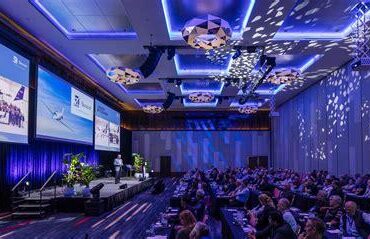
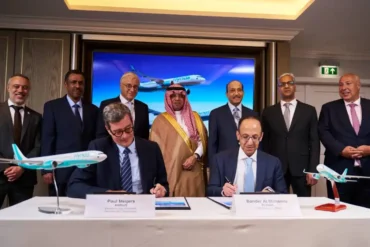
Over the decades, the Paris Air Show and Farnborough Airshow transformed from regional exhibitions into indispensable international trade events. Aircraft purchasing decisions worth tens of billions of dollars are frequently announced during both exhibitions, while manufacturers reveal technological breakthroughs ranging from sustainable aviation fuels to autonomous systems, advanced military platforms, electric propulsion, and next-generation composite airframes.
Their alternating schedules allow aerospace companies to maintain continuous engagement with customers while giving airlines, suppliers, governments, and investors regular opportunities to evaluate emerging technologies. Flying demonstrations remain crowd favorites, but behind closed meeting-room doors, countless negotiations influence the direction of commercial aviation for years to come.
Even global disruptions have failed to diminish their importance. Pandemic-related cancellations temporarily interrupted both exhibitions, yet each returned with renewed momentum, reaffirming its role as a cornerstone of international aerospace collaboration.
The Lasting Legacy of Farnborough and Paris Airshows
The origins of the Farnborough and Paris Airshows reveal far more than the history of two successful exhibitions. Together, they chronicle humanity’s relentless pursuit of faster, safer, and more efficient flight. From fragile wooden aircraft displayed beneath the glass roof of the Grand Palais to today’s composite airliners, stealth fighters, reusable space technologies, and ultra-efficient engines, these events have documented every major chapter in aviation’s remarkable evolution.
More than a century after the first Paris exhibition and nearly eight decades after Farnborough’s official debut, both airshows continue to define the global aerospace industry. They celebrate engineering achievement, encourage international cooperation, introduce revolutionary aircraft, and offer a glimpse into the future of flight. As aviation enters new eras driven by sustainability, digital technology, and advanced propulsion, the Paris Air Show and Farnborough International Airshow remain the world’s premier stages where the next generation of aerospace history is unveiled.