The Airbus A321 and the Boeing 757-200 have spent decades occupying nearly the same corner of the aviation market. Both aircraft were designed to carry large numbers of passengers on short- and medium-haul routes while offering enough range flexibility for longer transcontinental missions. From a distance, they even look remarkably similar. Yet one subtle operational difference has puzzled aviation enthusiasts and frequent travelers alike for years: why does the Boeing 757 commonly board through a mid-cabin door while the Airbus A321 almost never does?
The answer is not rooted in passenger convenience alone. It involves a complex combination of aircraft geometry, airport infrastructure, safety margins, airline economics, cabin flexibility, and engineering philosophy. While the Boeing 757 was optimized in an era where operational versatility often outweighed cabin density, the Airbus A321 evolved into a highly efficient revenue-maximizing platform where every inch of cabin space matters.
Understanding why the A321 rarely boards from Door 2L reveals far more than just a boarding preference. It exposes the radically different design priorities that shaped Boeing and Airbus narrowbody strategy over the past three decades.
The issue also demonstrates how tiny structural differences can ripple through airline operations, affecting everything from turnaround times to premium cabin layouts and even second-hand aircraft values.
By the mid-1990s, airlines increasingly realized that the Airbus A321 could replace the aging Boeing 757 on many routes while consuming less fuel. Airbus continued refining the aircraft, eventually producing long-range variants like the A321LR and A321XLR, aircraft capable of missions once dominated by the 757. Despite these advances, one operational feature never carried over cleanly from Boeing’s jet to Airbus’ narrowbody giant: efficient mid-cabin boarding.
After all, if the aircraft are similar in size and passenger capacity, why does one routinely use dual-door boarding while the other largely abandoned it?
The Boeing 757 Was Designed Around Operational Flexibility
When Boeing developed the 757-200 in the late 1970s and early 1980s, airlines demanded a narrowbody aircraft capable of replacing older tri-jets while handling heavy passenger loads efficiently at congested airports. Quick turnarounds were critical.
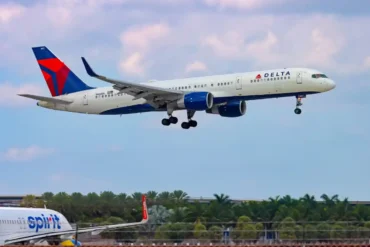
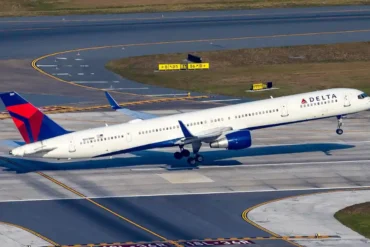
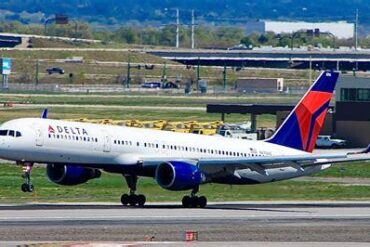
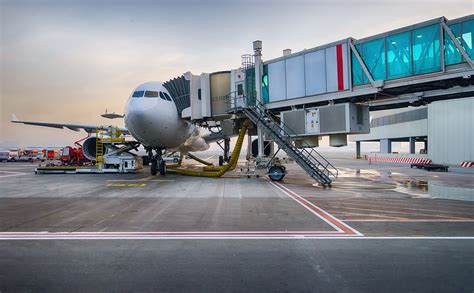
As a result, the 757 featured a boarding configuration that worked exceptionally well with dual-door operations. Airlines could simultaneously board passengers through Door 1L and Door 2L, effectively splitting passenger flows between the forward and rear sections of the aircraft.
This approach delivered several advantages.
Passengers seated near the rear avoided walking through crowded aisles toward the back of the cabin. Premium passengers in first or business class experienced fewer disruptions during boarding. Cabin crews gained more space to prepare for departure service. Most importantly, airlines reduced boarding times significantly, particularly on high-density domestic routes.
The 757’s physical layout supported this process naturally. The aircraft’s second set of doors sat in a relatively practical position away from major interference zones. Jetbridge operators could safely dock at Door 2L without excessive risk of contacting the engines or wing structures.
Boeing also gave airlines flexibility with exit configurations. Some 757s featured overwing exits, while others used additional full-size exit doors. This adaptability made the aircraft attractive across a broad range of operational profiles.
In many ways, the 757 became the perfect “airport operations” aircraft. Ground handlers loved it. Airlines appreciated its efficiency during peak schedules. Passengers benefited from faster boarding and deplaning.
The aircraft earned a reputation as one of the most versatile narrowbodies ever built partly because Boeing engineered it around real-world airport workflows rather than pure cabin optimization.
Airbus Prioritized Efficiency Over Mid-Cabin Boarding
The Airbus A321 entered service during a different era of airline economics. By the 1990s, fuel efficiency, cabin density, and operating cost reduction increasingly dominated airline purchasing decisions.
Airbus recognized that airlines cared deeply about maximizing revenue per flight while minimizing fuel burn. The A321 therefore evolved as a stretched derivative of the A320 family optimized for efficiency rather than airport operational flexibility.
Although the A321’s fuselage dimensions resemble the 757, its proportions differ in important ways. The aircraft has a smaller tail section and different wing placement geometry, which changes where the mid-cabin exits sit relative to the engines and wings.
This detail became critical.
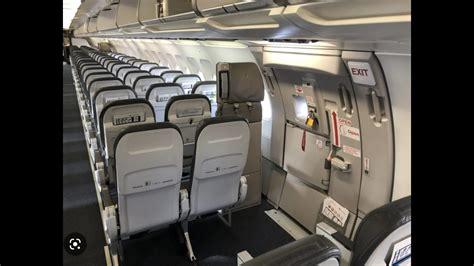
On the A321, Door 2L sits extremely close to the wing root and engine area. While technically usable for boarding, the margin for error when docking a jetbridge becomes much tighter compared to the Boeing 757.
That changes everything operationally.
Ground crews must maneuver jetbridges with greater precision. Certain jetbridge designs lack sufficient clearance entirely. Even at airports where docking is technically possible, airlines face increased risk of expensive damage to engines or fuselage structures during connection and disconnection procedures.
Airlines tend to dislike unnecessary operational risk, especially when the financial upside is relatively small.
As a result, many carriers concluded that boarding solely through Door 1L was safer, simpler, and operationally more consistent.
Why Airlines Avoid Risk Around The A321’s Door 2L
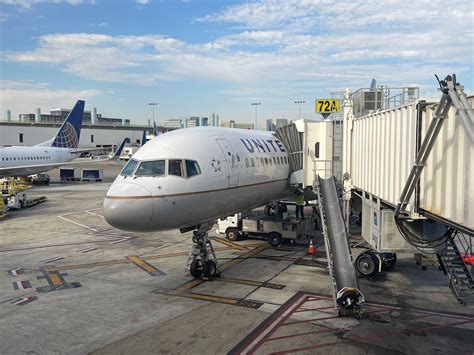
Technically speaking, there is no regulatory prohibition against using Door 2L on the Airbus A321. Several airlines have done so at various points.
Lufthansa still boards some A321 aircraft through Door 2L at select airports. American Airlines briefly used mid-cabin boarding on specialized transcontinental A321s during the early years of operation. Aer Lingus and BMI British Midland also experimented with the concept.
Yet most carriers eventually abandoned the practice.
The reason is simple: consistency matters more than occasional efficiency gains.
Airlines operate across dozens or even hundreds of airports featuring different gate designs, jetbridge heights, ramp clearances, and operational procedures. Creating a system where some airports allow Door 2L boarding while others prohibit it introduces unnecessary complexity.
Ground handling errors can become incredibly expensive. Even a low-speed jetbridge collision with an aircraft engine can trigger millions of dollars in repair costs and significant operational disruption.
Compared to the Boeing 757, the Airbus A321 leaves far less room for operational mistakes.
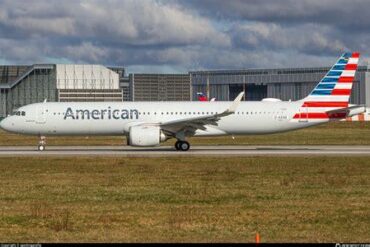
US Airways recognized this issue years ago and placed large “A321” identification stickers near the boarding doors so ramp crews could instantly distinguish the aircraft from the visually similar Boeing 757. American Airlines continues using similar markings today despite retiring the 757 years ago.
That decision alone reveals how operationally sensitive the A321’s boarding geometry became within airline systems.
The Hidden Cabin Space Advantage Of Eliminating Mid-Cabin Boarding
Ironically, the A321’s inability to comfortably support widespread mid-cabin boarding eventually turned into a commercial advantage for airlines.
Since Door 2L is rarely used for routine boarding, airlines gained freedom to redesign the surrounding cabin area more aggressively.
On aircraft where mid-cabin boarding remains standard, airlines must preserve open circulation space around the entrance. They also lose overhead bin volume because passengers need room to enter and exit efficiently.
The Airbus A321 changed this equation.
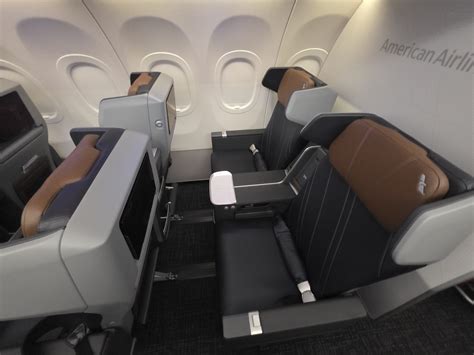
Airlines could install additional overhead bins near Door 2L. Some carriers even added extra seats in nearby rows because the space no longer needed to function as a primary passenger entrance area.
That extra capacity matters enormously in modern airline economics.
Even a handful of additional seats can generate millions of dollars in additional annual revenue across a large fleet. More overhead storage improves passenger satisfaction while reducing gate-check baggage delays. Cabin planners also gain more flexibility when designing premium seating layouts.
Lufthansa provides a visible example of this tradeoff. On some A321 aircraft configured for Door 2L boarding, row 10 exists only on the right side of the cabin because the left-side area must remain clear for passenger movement.
Other airlines that never use Door 2L simply install seats there instead.
The result is straightforward: airlines increasingly decided that the extra usable cabin space was worth more than the boarding-time savings.
The Airbus Cabin Flex Revolution Changed Everything
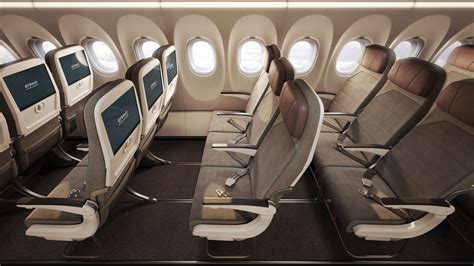
The biggest transformation arrived with the introduction of the A321neo ACF, short for Airbus Cabin Flex.
By the late 2010s, Airbus realized airlines wanted even greater customization flexibility. Rather than forcing carriers into one standard exit arrangement, Airbus redesigned the aircraft’s exit architecture to maximize adaptability.
The ACF layout fundamentally changed the A321’s door configuration.
Instead of maintaining the traditional second pair of full-size mid-cabin exits, Airbus shifted toward a system combining different exit types and optional deactivations. The forward Type C exits near the wing area disappeared entirely on many configurations.
This may sound counterintuitive at first. Why eliminate doors that could theoretically support faster boarding?
Because airlines increasingly prioritized cabin optimization over dual-door operations.
The modern A321neo performs missions that were once impossible for narrowbody aircraft. Airlines now use it on transcontinental routes, long-haul transatlantic flights, and premium-heavy business markets.
In these environments, cabin flexibility becomes extraordinarily valuable.
Removing unnecessary door structures creates more room for:
- Larger business class cabins
- Additional premium economy seating
- Expanded galley space
- More lavatory options
- Increased overhead storage
- Better seat pitch flexibility
For airlines operating premium-focused routes, every square foot matters.
The A321XLR especially demonstrates this shift in philosophy. Many carriers plan to use the aircraft on long, thin international routes where passenger comfort and premium revenue outweigh marginal boarding-time improvements.
The aircraft effectively became a narrowbody widebody substitute.
The Boeing 757 Came From A Different Airline Era
Part of the explanation also lies in timing.
The Boeing 757 emerged during an era when airlines emphasized operational speed, high-frequency domestic flying, and airport throughput efficiency. Boarding speed mattered tremendously because airlines relied heavily on rapid turnarounds to maximize utilization.
The Airbus A321 matured during an era dominated by fuel economics and seat-mile efficiency.
Modern airlines increasingly accept slightly longer boarding times if they can improve profitability through higher seat density or better premium cabin monetization.
This shift reflects broader industry evolution.
Today’s airlines generate substantial ancillary revenue from seat assignments, premium seating, loyalty programs, and upgraded cabin experiences. The cabin itself became a sophisticated revenue-generation platform rather than merely a transportation container.
In that environment, preserving extra open space for occasional dual-door boarding becomes harder to justify financially.
The Boeing 757 represented peak operational versatility.
The Airbus A321 represents peak narrowbody economic efficiency.
Those priorities naturally produce different boarding philosophies.
Why The A321neo Became More Successful Than The 757
Despite lacking the 757’s boarding flexibility, the Airbus A321neo ultimately achieved something Boeing’s legendary narrowbody never could: massive global dominance.
The aircraft delivers exceptional fuel efficiency, enormous route versatility, and highly customizable cabin configurations. Airlines can configure the jet for ultra-low-cost operations, premium transcontinental service, or even long-haul international flights.
That adaptability helped turn the A321neo into one of the best-selling commercial aircraft variants in aviation history.
The aircraft’s economic strengths simply outweighed the operational compromises surrounding Door 2L.
From Airbus’ perspective, the strategy worked brilliantly.
The company standardized production around a flexible modular system rather than producing multiple fundamentally different exit structures. Airlines gained the ability to plug or deactivate exits depending on operational needs. Second-hand aircraft values improved because future operators could reconfigure layouts relatively easily.
Meanwhile, the Boeing 757 gradually disappeared from production entirely.
Ironically, the aircraft that offered superior boarding flexibility lost the long-term market battle to the aircraft that prioritized economics above all else.
That reality says everything about how airline priorities evolved during the 21st century.
Mid-Cabin Boarding Became A Casualty Of Airline Economics
Passengers often assume aircraft design decisions revolve around comfort or convenience. In reality, most modern airline engineering choices revolve around economics, efficiency, and operational reliability.
The Airbus A321’s limited use of Door 2L illustrates this perfectly.
The Boeing 757 excelled at fast, flexible airport operations because it was built for an industry environment that rewarded those strengths heavily. The Airbus A321 succeeded because it optimized the variables airlines increasingly cared about most: fuel burn, cabin flexibility, seating density, and long-term operating cost.
Mid-cabin boarding simply became less valuable than the revenue opportunities unlocked by reclaiming that cabin space.
For travelers, the difference may seem minor. Boarding through one door instead of two adds only a few extra minutes. But for airlines operating hundreds of daily flights across global networks, those design decisions influence profitability on a massive scale.
That is why the Boeing 757 remains beloved by aviation enthusiasts as the “Ferrari of the skies,” while the Airbus A321 quietly became the industry’s dominant narrowbody workhorse.
One aircraft optimized the airport experience.
The other optimized the business model.