Most airline passengers are accustomed to a familiar routine. They walk down a jet bridge, enter through the front door of the aircraft, and make their way toward their assigned seat. Whether flying on a Boeing 737, Airbus A320, or countless other narrowbody jets, the process is largely the same. Yet passengers stepping aboard a Boeing 757 at certain airports often encounter something unexpected: instead of entering through the nose of the aircraft, they board through a door located near the center of the cabin.
This unusual boarding arrangement has puzzled travelers for decades. Some assume it was created to provide a more premium experience for first-class passengers. Others believe it was intentionally designed to speed up boarding. While both assumptions contain elements of truth regarding the benefits, neither explains the real reason behind the feature.
The reality is far more interesting. The Boeing 757’s famous mid-cabin boarding process is the result of engineering requirements, aircraft geometry, evacuation regulations, and operational practicality coming together in a way that no other major narrowbody airliner has been able to replicate successfully.
The Boeing 757’s Unique Position in Commercial Aviation
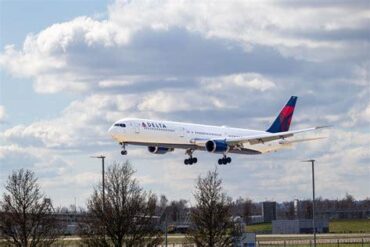
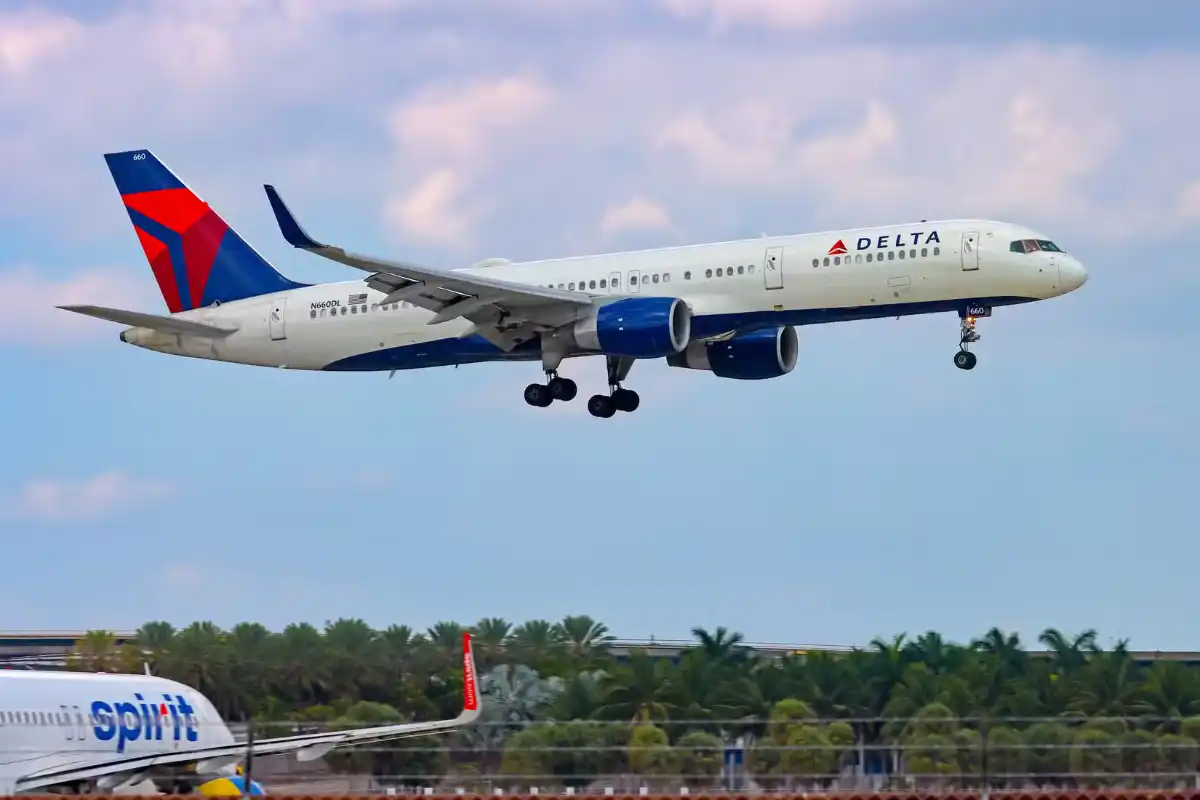
The Boeing 757 occupies a special place in aviation history. Introduced in the early 1980s, it was designed to replace older narrowbody aircraft while offering significantly greater passenger capacity, range, and performance.
Unlike conventional single-aisle jets, the 757 pushed the boundaries of what a narrowbody aircraft could accomplish. It became capable of operating transcontinental flights, high-density domestic routes, and even transatlantic services that were previously dominated by larger aircraft.
At approximately 155 feet (47.24 meters) in length, the Boeing 757-200 became one of the longest narrowbody airliners ever produced.
To appreciate its size, consider how it compares with other popular aircraft:
- Boeing 737-800: 129 feet (39.31 meters)
- Airbus A321: 146 feet (44.5 meters)
- Boeing 757-200: 155 feet (47.24 meters)
That extra length created opportunities for airlines, but it also created challenges that Boeing engineers needed to solve.
By extending the cabin significantly beyond the dimensions of traditional narrowbody aircraft, Boeing was required to rethink emergency exit placement and passenger evacuation capabilities.
The solution would eventually create one of the aircraft’s most distinctive operational characteristics.
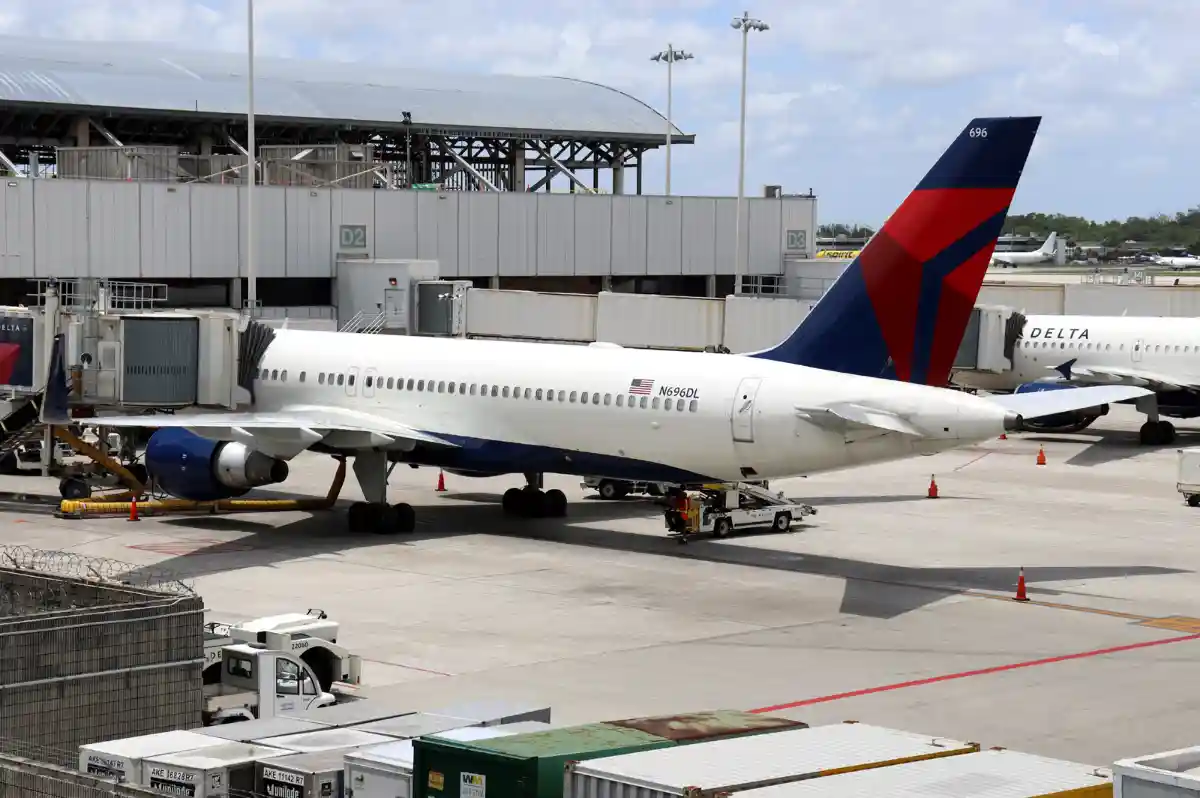
Why Most Narrowbody Aircraft Board Through the Front Door
To understand why the 757 boards differently, it helps to understand how most narrowbody aircraft are designed.
Aircraft such as the Boeing 737, Airbus A319, A320, and A321 typically use the front left door, known as Door 1L, for passenger boarding.
This configuration offers several advantages.
The jet bridge can easily connect to the nose section of the aircraft. Airport infrastructure is designed around this standard arrangement. Ground crews can efficiently service baggage compartments and catering vehicles while passengers board. Most importantly, the cabin layout naturally accommodates a front-to-back flow of passengers.
Everyone enters through a single location and proceeds toward their assigned row.
Although this process is familiar and effective, it creates a common bottleneck. Passengers moving toward seats in the rear must walk through the entire cabin, often waiting while travelers stow luggage or settle into their seats.
As aircraft become larger, these bottlenecks become increasingly noticeable.
Widebody aircraft address the problem differently.
How Widebody Aircraft Reduce Boarding Congestion
Aircraft such as the Boeing 777, Airbus A350, and Airbus A380 routinely utilize multiple boarding doors.
Because these aircraft carry hundreds of passengers and feature twin aisles, airports often connect two or even three jet bridges simultaneously.
One jet bridge may serve first-class and business-class cabins near the front, while another serves economy cabins farther back.
This arrangement dramatically reduces passenger congestion.
Instead of funneling 300 to 500 passengers through a single entry point, travelers are divided between multiple access locations.
The boarding process becomes faster, more organized, and less stressful.
However, this strategy is normally impossible on narrowbody aircraft because their single aisle and structural design do not lend themselves naturally to multiple boarding access points.
The Boeing 757 represents a rare exception.
The Length of the Boeing 757 Changed Everything
The reason behind the 757’s unusual boarding method begins with a simple fact: the aircraft is exceptionally long for a single-aisle jet.
A longer cabin means more passengers.
More passengers mean stricter evacuation requirements.
Regulatory authorities such as the Federal Aviation Administration (FAA) and the European Union Aviation Safety Agency (EASA) require commercial aircraft to demonstrate that everyone onboard can evacuate within 90 seconds during an emergency.
Meeting those standards requires carefully positioned emergency exits throughout the fuselage.
For shorter narrowbody aircraft, a front door, rear door, and over-wing exits are often sufficient.
The 757’s extended cabin length made that arrangement inadequate.
Boeing needed additional exits positioned farther forward to ensure passengers seated in every section of the aircraft could evacuate efficiently.
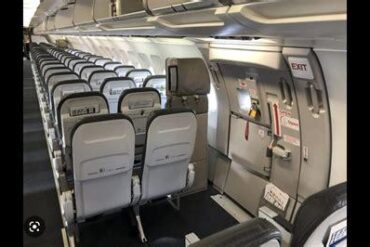
As a result, the aircraft received an additional set of full-size doors ahead of the wing.
These doors became known as Door 2L and Door 2R.
Their placement was driven entirely by safety regulations rather than passenger convenience.
Yet that safety-driven design would eventually create operational advantages that airlines eagerly embraced.
Why Door 2L Is Perfectly Positioned for Boarding
The placement of Door 2L turned out to be unusually fortunate.
Located approximately at the midpoint of the cabin, the door sits near the natural dividing line between premium cabins and economy seating on many airline configurations.
Even more importantly, the door is positioned far enough from the wing and engines to allow safe jet bridge attachment.
This clearance is critical.
On many aircraft, structural limitations, wing geometry, or engine proximity make mid-cabin boarding impractical or unsafe.
The Boeing 757’s unique proportions provide sufficient space for a jet bridge to connect comfortably to Door 2L without interfering with nearby structures.
As airlines began experimenting with boarding procedures, they quickly realized that Door 2L offered significant operational advantages.
Instead of forcing every passenger through the front of the aircraft, they could use the midpoint as a central boarding location.
The result transformed the boarding experience.
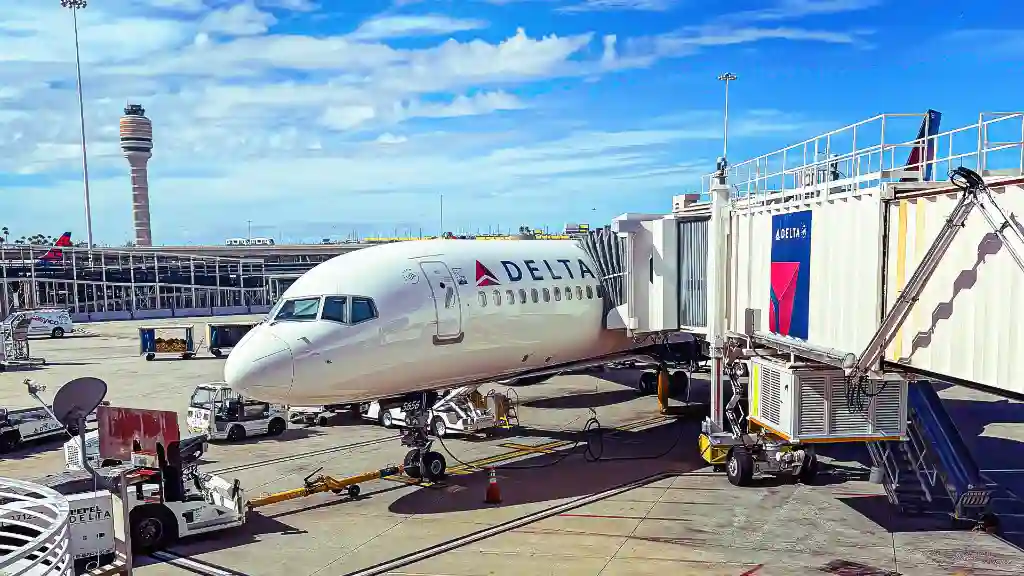
How Mid-Cabin Boarding Works in Practice
When a Boeing 757 boards through Door 2L, all passengers enter through a single jet bridge connected to the middle of the aircraft.
Upon entering, passengers immediately split into two directions.
First-class passengers turn left and move toward the front cabin.
Economy passengers turn right and continue toward the rear.
This simple arrangement creates two independent traffic flows operating simultaneously.
Passengers heading toward first class never need to walk through economy.
Passengers seated in economy never need to pass through the premium cabin.
Instead of one long stream of travelers moving in a single direction, the boarding process effectively divides itself into two smaller streams.
The impact may seem minor, but operationally it can be significant.
Airlines benefit from reduced aisle congestion, faster seat access, and improved passenger flow.
For a busy carrier operating multiple flights each day, even small improvements in boarding efficiency can translate into meaningful schedule advantages.
The Hidden Benefit for First-Class Passengers
Although the mid-cabin boarding arrangement was not originally designed to improve passenger experience, it undeniably creates a more exclusive atmosphere for premium travelers.
On conventional narrowbody aircraft, first-class passengers often sit near the boarding door.
Every economy passenger walks through the premium cabin during boarding.
The front section effectively becomes a corridor for the rest of the aircraft.
On a Boeing 757 using Door 2L boarding, that dynamic changes completely.
Passengers seated in first class enter a space that remains isolated from economy traffic throughout the boarding process.
No continuous stream of passengers walks past premium seats.
No crowd gathers in the first-class aisle while searching for overhead bin space.
The experience feels closer to what travelers expect on a widebody international aircraft.
Many frequent flyers have long regarded this feature as one of the most pleasant aspects of flying on a 757.
Why the Airbus A321 Could Not Copy the Concept
At first glance, the Airbus A321 appears capable of offering a similar boarding arrangement.
Like the 757, the A321 is a long narrowbody aircraft featuring a second set of doors forward of the wing.
Several airlines explored the possibility.
One of the most notable examples involved American Airlines, which operated both aircraft types on premium transcontinental routes.
The airline examined whether the A321 could replicate the 757’s mid-cabin boarding experience.
The idea ultimately proved impractical.
Although the A321 includes a second door, its location differs from the 757.
The door sits much closer to the engine and wing structure.
This reduced clearance increases the risk of accidental contact during jet bridge docking operations.
Airlines determined that the operational risks outweighed the potential benefits.
Consequently, mid-cabin boarding never became a standard feature of A321 operations.
The result further cemented the Boeing 757’s unique status within the aviation industry.
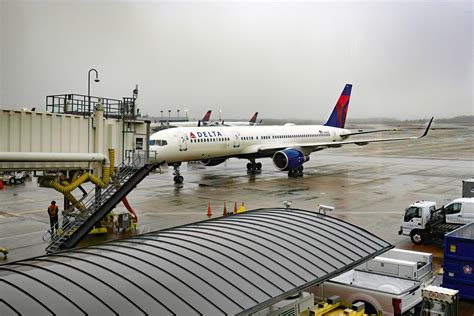
The Airbus A321neo Cabin Flex Configuration
Modern Airbus variants moved even farther away from the 757 boarding concept.
The A321neo Cabin Flex (ACF) configuration significantly rearranges emergency exit locations.
Rather than retaining the traditional forward Door 2 position, Airbus relocated the door farther aft.
The change was designed to maximize usable cabin space and improve seating flexibility.
Advances in emergency exit certification allowed Airbus to replace certain full-size doors with smaller over-wing exits while still satisfying evacuation standards.
As a result, the A321neo gained additional revenue-generating cabin space.
However, the revised layout eliminated any realistic opportunity for a 757-style boarding arrangement.
The relocated door no longer sits near the boundary between premium and economy cabins.
Even if airlines wanted to implement mid-cabin boarding, the geometry would not provide the same advantages.
This demonstrates that the 757’s famous boarding process is not merely about having an extra door. It depends on a very specific combination of aircraft length, exit placement, wing position, and airport infrastructure.
Why Mid-Cabin Boarding Is Not Available Everywhere
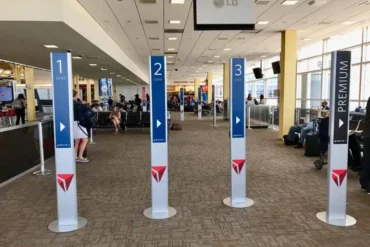
One important limitation often overlooked by passengers is that Boeing 757 mid-cabin boarding depends entirely on airport facilities.
Not every airport gate can accommodate Door 2L.
Jet bridges vary in length, height, articulation capability, and positioning flexibility.
Some terminals were designed long before airlines began routinely using the 757’s center door.
At airports where the jet bridge cannot safely reach Door 2L, airlines simply revert to conventional boarding through Door 1L at the front of the aircraft.
In those situations, the 757 behaves like any other narrowbody jet.
Passengers may not even realize the aircraft is capable of boarding differently elsewhere.
This infrastructure dependency explains why travelers sometimes experience mid-cabin boarding on one flight but not another, even when flying on the same airline and aircraft type.
The Boeing 757’s Legacy in Modern Aviation
Despite ending production in 2004, the Boeing 757 continues to enjoy a remarkable reputation among airlines, pilots, and aviation enthusiasts.
Its combination of range, capacity, runway performance, and operational versatility remains difficult to match.
Many airlines have gradually replaced aging 757 fleets with newer aircraft, particularly the Airbus A321neo and A321XLR.
These modern jets offer superior fuel efficiency and lower operating costs while serving many of the same routes.
However, one characteristic of the 757 is disappearing with its retirement: mid-cabin boarding.
The A321XLR may replicate the 757’s route network capabilities, but it cannot reproduce the unique boarding geometry that made the older aircraft stand out.
For frequent travelers who appreciated the efficient passenger flow and exclusive first-class experience, that distinctive feature remains one of the Boeing 757’s most memorable qualities.
Conclusion
The Boeing 757 boards through the middle of the cabin not because Boeing set out to revolutionize passenger boarding, but because the aircraft’s extraordinary length required additional emergency exits to satisfy evacuation regulations. The placement of Door 2L happened to create a perfectly positioned mid-cabin access point that airlines later transformed into a practical operational advantage.
By allowing passengers to split in opposite directions from a central location, the 757 reduces aisle congestion, separates premium and economy traffic, and delivers an experience rarely found on a single-aisle aircraft. No other narrowbody airliner has managed to combine aircraft geometry, safety requirements, and airport compatibility in quite the same way.
As the Boeing 757 gradually leaves commercial service, its unusual boarding process remains a fascinating reminder that some of aviation’s most beloved passenger experiences emerge not from marketing decisions, but from clever engineering solutions to entirely different problems.